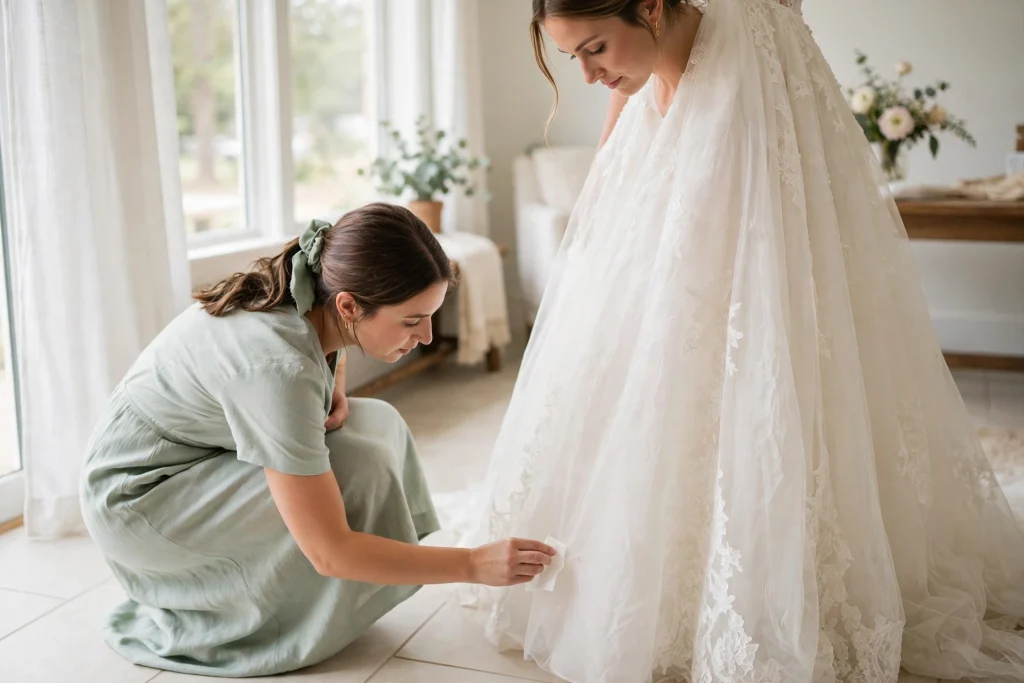
Start at the end, because that is where this product either justifies itself or does not. A bride, forty minutes before photographs, with a foundation smear down the front of an ivory gown where a hug went wrong. Someone in the room has a small sealed packet in a clutch bag. The wipe comes out damp, the smear lifts in two passes without a water mark, and the packet goes in the bin having cost less than the coffee going cold on the dresser. Everything before that moment, the warehousing, the shipping, the shelf decisions, only matters because that moment either happens or it does not.
Work backward one step and the packet is in the clutch because a bridesmaid put it there, and she put it there because the packet was small, flat, sealed, and weighed nothing. Individually wrapped stain wipes in a box of 50 are a distribution product before they are a cleaning product. The format is the whole idea. A bottle of stain remover lives in a laundry room. A sealed single wipe lives in a bag, a car glovebox, a bridal shop’s fitting room drawer, a photographer’s kit. From the freight and wholesale side of the table, products that travel in other people’s bags get bought in a completely different rhythm from products that sit on shelves, and the buying rhythm is what a store or a distributor actually has to get right.
One step further back and the box of 50 is sitting in a stockroom, and here the format shows its cost. Fifty individually wrapped wipes means fifty pieces of foil packaging around fifty small pieces of damp cloth, and the wholesale price of the box is mostly packaging and sealing, not cleaning liquid. Any buyer comparing this box against a bulk tub of wipes on price per wipe is comparing two products that only look alike. The tub wins on price and loses on the only scenario that matters, which is a stain on a dress worn once, in a place with no laundry room, on a day with no second chances. Distribution people learn to ask where a product will be opened before asking what it costs per unit. This one gets opened in hotel rooms and venue bathrooms.
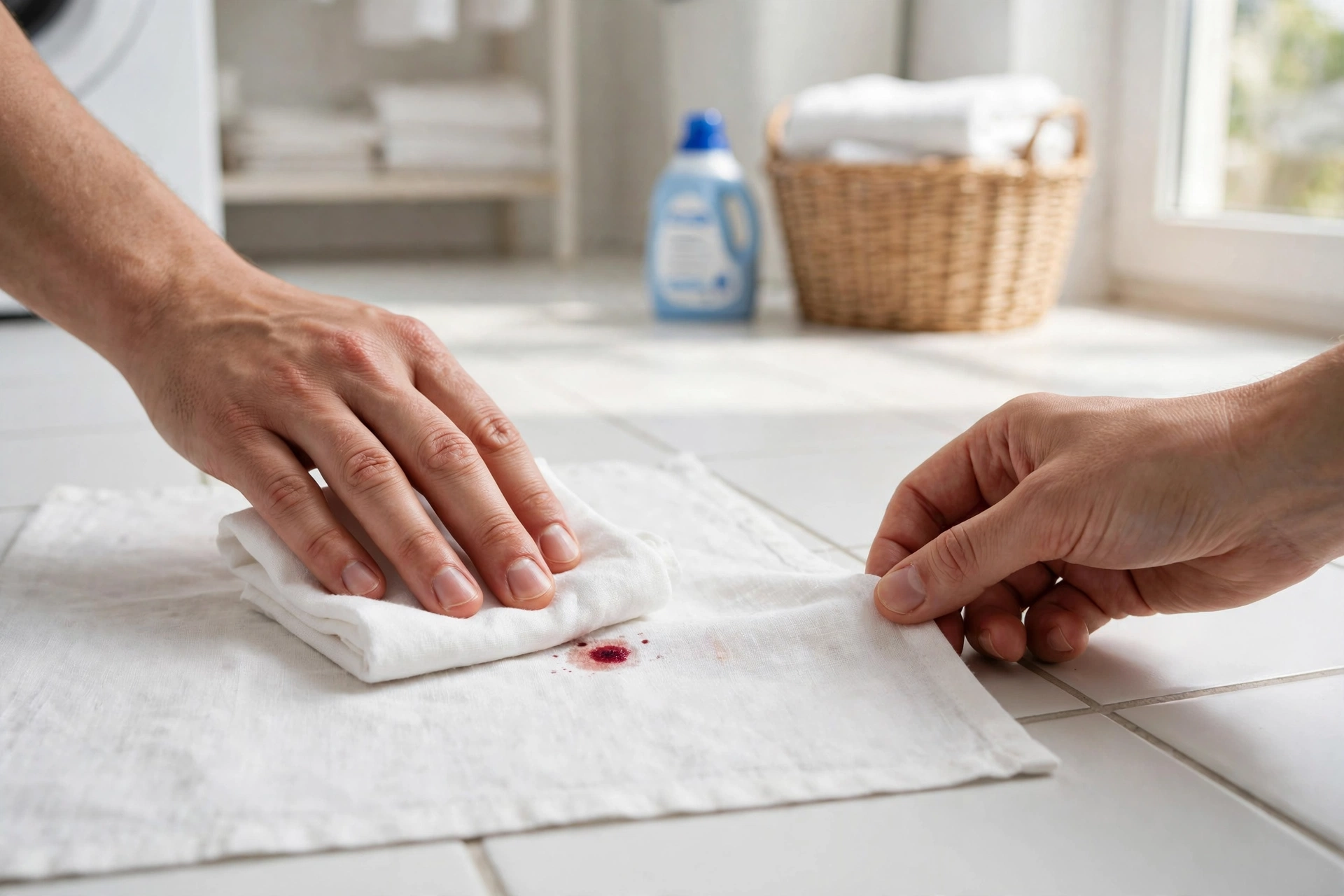
Further back still, the stockroom has a temperature, and this is the part of the chain nobody prints on the box. A sealed wipe holds its moisture for a long time in a cool room. In a hot warehouse, the kind of heat that builds under a metal roof through a summer, the moisture inside those little packets migrates and the seal adhesive tires, and a box that should have been fine for two seasons can come out of storage with the top layer of wipes noticeably drier than the bottom. Dry is a sliding scale here. A wipe at eighty percent of its moisture still lifts a fresh smear. A wipe that has gone to papery is a dead product being sold at a live price, and the customer finds out at the worst possible moment rather than at a sensible one like a Tuesday.
So the stock check for this product is not counting boxes. It is opening one packet from the oldest box, once in a while, and touching it. That sounds too small to be a real quality system until you have seen a retailer pull a whole consignment because a blogger opened a dry wipe on camera. The freight side has a version of the same lesson with cartons. These boxes are light, and light freight has its own trap, which is that light cartons get loaded wherever they fit, including against container walls that sweat on long sea routes. A carton of wipes that arrives with damp outer cardboard has usually protected the sealed packets inside perfectly well, and a carton that looks pristine can hold tired seals if it sat in heat. The outside of the box tells you almost nothing about this product. The packet tells you everything.
The wedding calendar runs this product, not the cleaning aisle
Demand for stain wipes sold as a wedding rescue item follows the wedding calendar with a fidelity that cleaning products sold as cleaning products never show. The peak months for weddings in the northern hemisphere stack the orders into late spring through early autumn, and a store that stocks these beside bridal gowns sees the box move as an add-on, attached to dress appointments and accessory sales, rather than as a destination purchase. Nobody drives to a shop for one packet of wipes. The box of 50 gets broken down by life. A bridal salon keeps a handful in the fitting room, sells or gives a few with each gown, and the rest go home in bags.
That add-on pattern changes the reorder math. A salon does not reorder when the box is empty. It reorders when the fitting room handful runs low, which happens in bursts after busy weekends, so the demand signal arriving at a distributor is spiky even when the underlying weddings are smooth. Suppliers who do not know the bridal calendar read those spikes as noise. Suppliers who do know it hold buffer stock through the season and let it run down in winter, because a wipe box has a shelf life clock ticking on it and winter stock carried into a second summer is where the dry-packet problem breeds. Deadstock in this category is not just money sitting still. It is product quietly expiring in a warm room.

There is a comparison worth making with the other rescue items a salon stocks, because it explains why the wipe format keeps winning shelf space it does not obviously deserve. A sewing kit repairs a problem after it has happened and needs someone in the room who can sew. Fashion tape prevents a problem and does nothing once a mark is on the fabric. The wipe is the only one of the three that works on the most common wedding day fabric accident, which is a fresh, wet, visible smear on a light dress, and it works in the hands of someone with no skill at all, under time pressure, in a bathroom mirror. Products that need no skill travel further. That is a distribution law, not a cleaning tip, and it applies far beyond this little box.
Resellers looking at the bridal side of this trade usually arrive through the dresses first, through something like the wedding dress wholesale catalog, and then start asking what else a salon keeps within arm’s reach of a fitting. The honest answer is a drawer of small, boring, high-turnover rescue goods, and wipes sit near the top of that drawer because the gown sale creates the exact anxiety the wipe answers. A salon that hands two sealed packets to a bride with her gown has not made much money on the packets. It has bought itself a story the bride tells at the reception, which is worth more, though nobody has ever managed to put that on an invoice.
What the wipe cannot do, said plainly
Working backward reaches the product itself eventually, and the chemistry deserves the same plain treatment as the freight. An instant stain wipe lifts fresh surface marks. That is the whole claim that survives contact with reality. Fresh foundation, fresh lipstick kissed onto a collar, a splash of something pale on satin, these lift because they are sitting on the fabric rather than in it. A set stain, a dye stain, red wine that has had an hour to think about its life choices, grass ground into a hem by dancing on a lawn, these are not wipe problems anymore and a wipe worked hard at them can spread the mark or lift the fabric’s own finish. The reviews that savage this product category are heavily populated by people who asked it to reverse time.
Fabric matters as much as the stain does. On smooth satin and on most synthetic gown fabrics a wipe passes over and leaves nothing behind, which is why the featured scenario for the whole category is a bride in ivory. On matte crepe, on some silks, on anything with a surface texture that drinks, a wipe can leave a tide mark as it dries, a faint edge where the moisture stopped. The correct use, blot and then blot wider with a barely damp clean cloth to feather the edge, is printed almost nowhere a panicking bridesmaid will read it. No wait, I take that back, it is printed on some packaging, in type sized for a person with perfect eyesight and no time pressure, which at a wedding is nobody. The knowledge lives in salon staff instead, passed hand to hand, which is a fragile place for knowledge to live.
The same caution culture surrounds every delicate thing in that fitting room, the gowns themselves, a hooded bridal cloak waiting for a winter ceremony, veils that snag if you look at them with intent. A wipe is a small wet chemical event and it should be tested on a hidden seam of the actual garment before it is trusted on the visible front of it. Ten seconds. That test is the entire difference between the rescue story at the top of this page and the other kind of story, the one where the cure shows in the photographs.

Three questions that come up at the trade counter
Fifty wipes in a box. Is that a retail amount or a salon amount?
It is a salon amount wearing a retail costume, honestly. A single bride needs perhaps four packets across an entire wedding day and uses one. Fifty is the count for a business that hands them out, a salon, a venue, a planner with a kit that serves forty weddings a season. A store buying this box to resell as singles is doing the format’s real work, splitting a trade pack into bag-sized pieces, and the margin lives in that split. A bride buying fifty for herself is buying a decade of weddings she will attend as a guest, which some people genuinely do, and the packets will outlast most of the marriages’ first anniversaries in a cool drawer. In a hot one, maybe not, and that uncertainty is the product’s quiet flaw.
The box sat in storage through a hot summer. How do you know if the wipes are still good?
You open one, from the middle of the box rather than the top, and you judge it the way you would judge a sponge. It should feel properly damp through the whole cloth, not damp at the fold and dry at the edges, and it should smell faintly of its cleaning solution rather than of nothing at all. One packet sacrificed per storage season is the cheapest quality check in the entire bridal trade and almost nobody performs it, because counting boxes feels like stock management and opening one feels like waste. The distributors who handle complaint returns on this category can tell you which of those two feelings costs more.
Sea freight takes six weeks. Does the slow boat hurt this product?
Less than the warehouse at either end does. A sealed packet inside a carton inside a container experiences the voyage as a long, warm, dark wait, and the product tolerates that wait when it starts fresh. The damage pattern shows up when slow freight combines with old stock, a box manufactured long before it shipped, warehoused hot before it sailed, warehoused hot again after it landed. Age is additive with this product in a way it is not with a dress. A gown that waits a year is a gown. A wipe that waits a year in heat is a rumor of a wipe. Order smaller, order closer to the season, and the boat is not your problem.
And so the chain ends where it started, except now the little packet in the clutch bag looks different. It is a piece of packaging engineering that survived a warm warehouse, a slow season decision, a spiky reorder pattern, and a drawer in a salon, to be damp at the one minute it was for. Most of the bridal trade’s small goods fail quietly at some link in that chain and nobody ever knows which one. The bride knows only that the smear lifted. Somewhere behind her is a distributor who opened a packet in February just to touch it, and that, more than the chemistry, is the product.