Why does a pack of twelve cloths start an argument about money? I have carried that question for a while now, on the payments side of the apparel trade, where I watch deposits, balances, and the disputes that grow in the gap between them.
The cloths themselves are simple. Microfiber, reusable, sold in a twelve pack for taking makeup off faces and, in the bridal corner of the world, off gowns. The question that follows them into my side of the business is never about the cloth. It is about who pays when makeup ends up on a wedding dress. The bride’s party says the fitting room should have prevented it. The shop says the dress was clean when it left the rail. Somewhere between those two sentences a deposit gets held, a balance gets argued over, and a twelve-dollar pack of cloths becomes evidence.
Start with the fabric of the cloth, since the money follows the physics here as surely as it follows a contract. Microfiber works because its fibers are split into fine strands that lift and hold oils and pigment instead of pushing them around. Weight matters. A cloth in the region of 300 GSM and up has the body to take a full face of long-wear makeup without smearing it into a wider, paler problem. The thin ones, the ones that feel like a free hotel flannel’s poorer cousin, move foundation across skin and cloth alike, and on a white gown that difference is the whole ballgame. One cloth wipes. The other distributes.
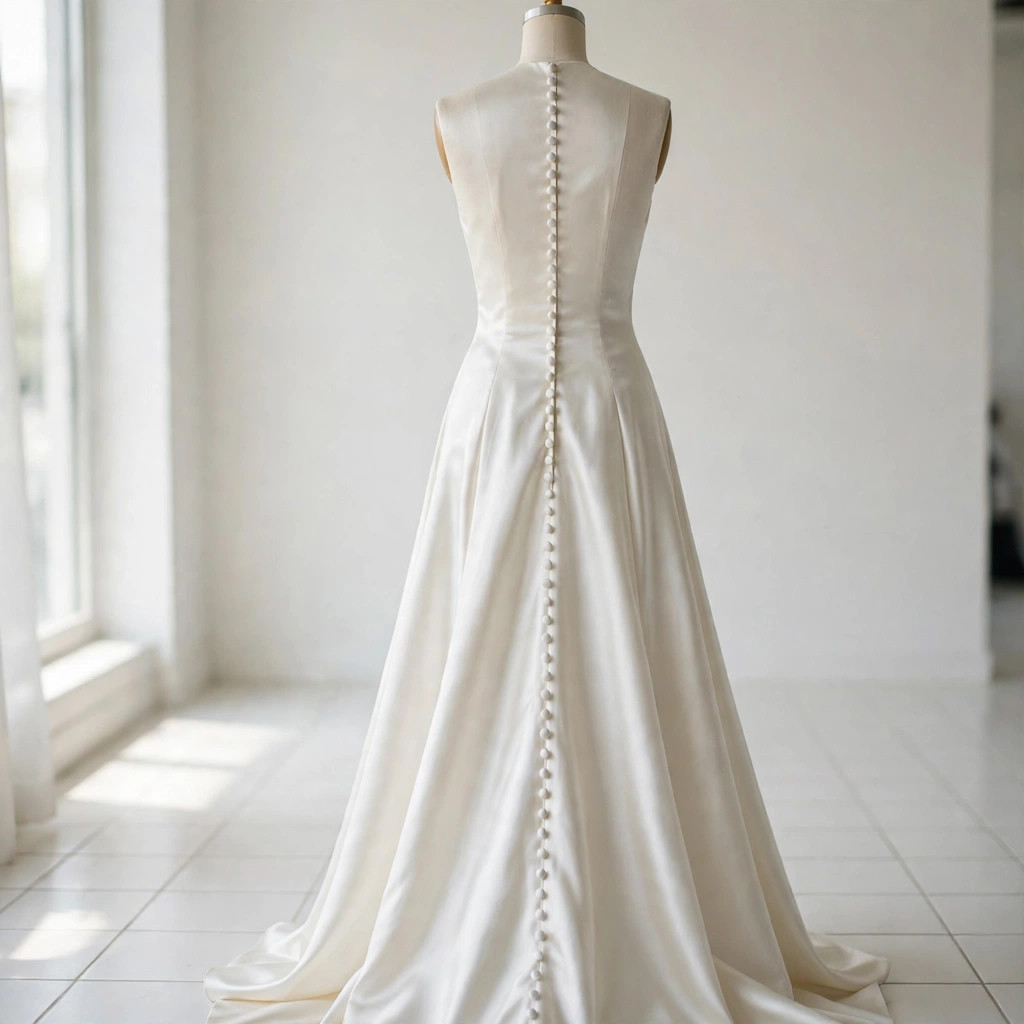
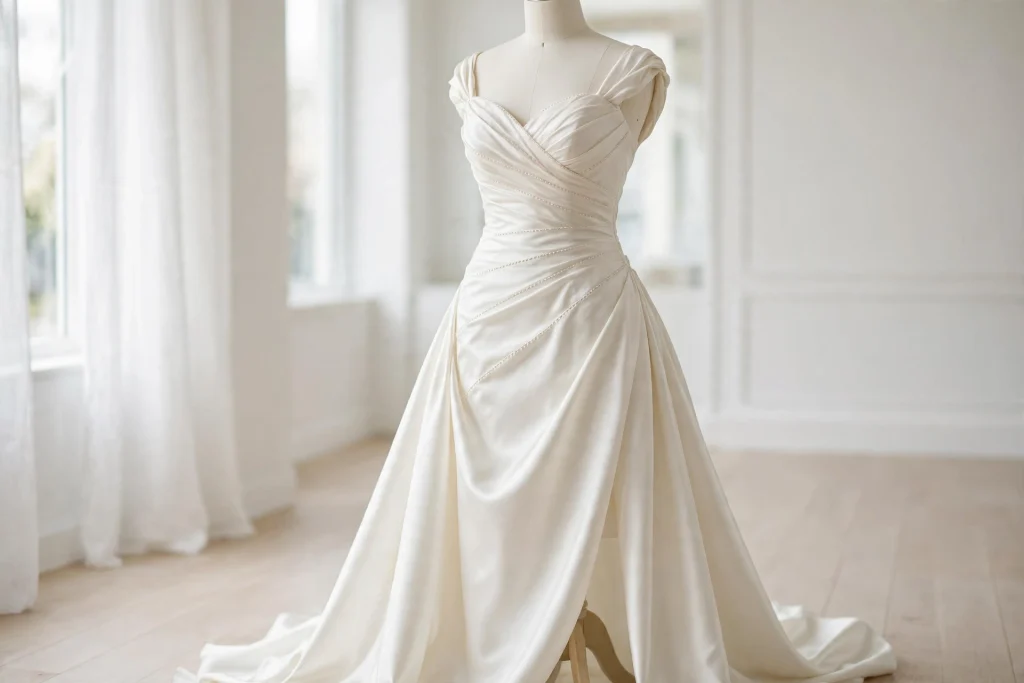
On a face, distribution is an annoyance. On an ivory gown it is a cleaning bill, and cleaning bills on bridal garments do not behave like other cleaning bills. A makeup transfer at the neckline of a sample gown means specialist cleaning, days out of the fitting rotation, and a quiet argument about whether the bride who tried it on owes for the spot she left. Shops handle this every way imaginable. Some keep a fitting fee that quietly covers it. Some hold deposits and become unpopular in reviews for reasons that have nothing to do with dresses. Some absorb it as the cost of selling gowns to humans who wear makeup, which is to say all of the humans.
The question I still cannot price properly
Here it is, the one I keep circling. What is the fair charge for a makeup mark on a gown? The cleaning costs what it costs, and that part is easy. The hard part is the other losses wearing the cleaning bill as a disguise. A sample gown spotted on a Friday misses the Saturday appointments. A sold gown spotted before pickup starts a dispute about whether it is still, in the buyer’s word, new. A custom gown spotted at final fitting has no replacement and no time, and the money argument that follows is really a time argument that money is being asked to settle, badly.
The deposit structures I watch all year are built for exactly this kind of fog. Orders taken at 30 percent deposit see the buyer walk away from the balance about three times as often as orders taken at 50 percent, and factories that accept the lower figure bury a risk premium of roughly 8 to 12 percent in the unit price. The structure that survives disputes is the split one, 40 percent down, 30 at a pre-shipment check, 30 against the shipping documents, each slice small enough to lose without dying. None of that was designed for makeup. All of it gets used for makeup, eventually, because a stain is just a small, visible reason to reopen a big, invisible disagreement about who trusts whom.
Escrow taught the trade the same lesson from the other side. A short inspection window after delivery sounds like protection and behaves like pressure. The goods get inspected, the small fault gets found, a foundation smudge at a neckline, say, and the window stretches while the price gets re-argued. The paperwork releases on documents, not on satisfaction, and everyone involved learns that the clause they skimmed is the clause they live in.
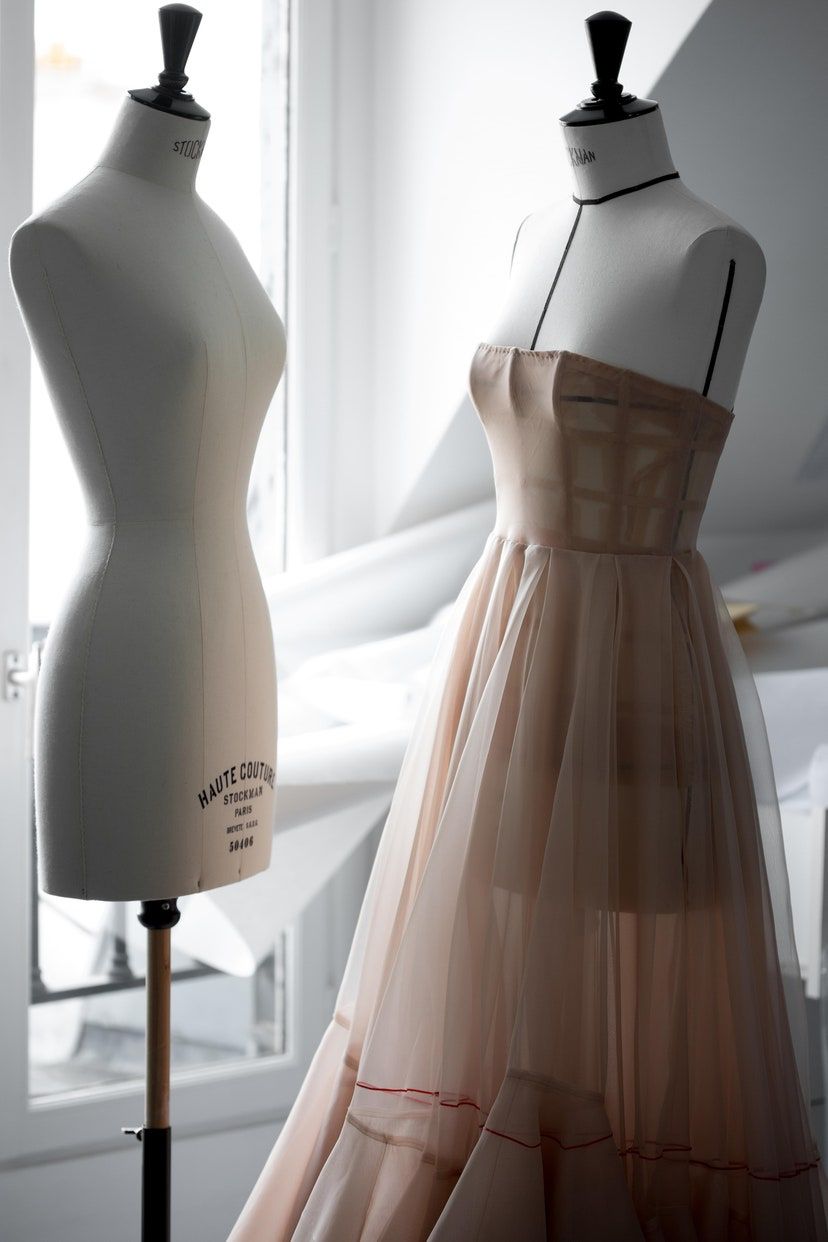
And the custom side is harsher, because custom means no resale. A standard dress returned with a makeup mark can be cleaned and sold to the next buyer at a small loss. A made-to-measure gown returned over a dispute is a garment with one possible owner in the world, and she is the person disputing it. That is why bridal deposits on custom work are structurally stiff, and why the review fights in this category are almost always about the deposit rather than the dress. The dress is usually fine. The money is what got stained.
Back to the cloths, which started all this
A twelve pack exists so that a clean cloth is always available and a used one never gets a second job it should not have. One cloth per face, one per gown emergency, then the wash. The washing is where these cloths quietly succeed or fail as an economy. Microfiber wants warm water, no fabric softener, because softener coats the split fibers and turns a lifting cloth into a skating one. A pack washed wrong by its third cycle is twelve soft rags and a mystery about why the product stopped working. The reviews call it quality. The laundry did it.
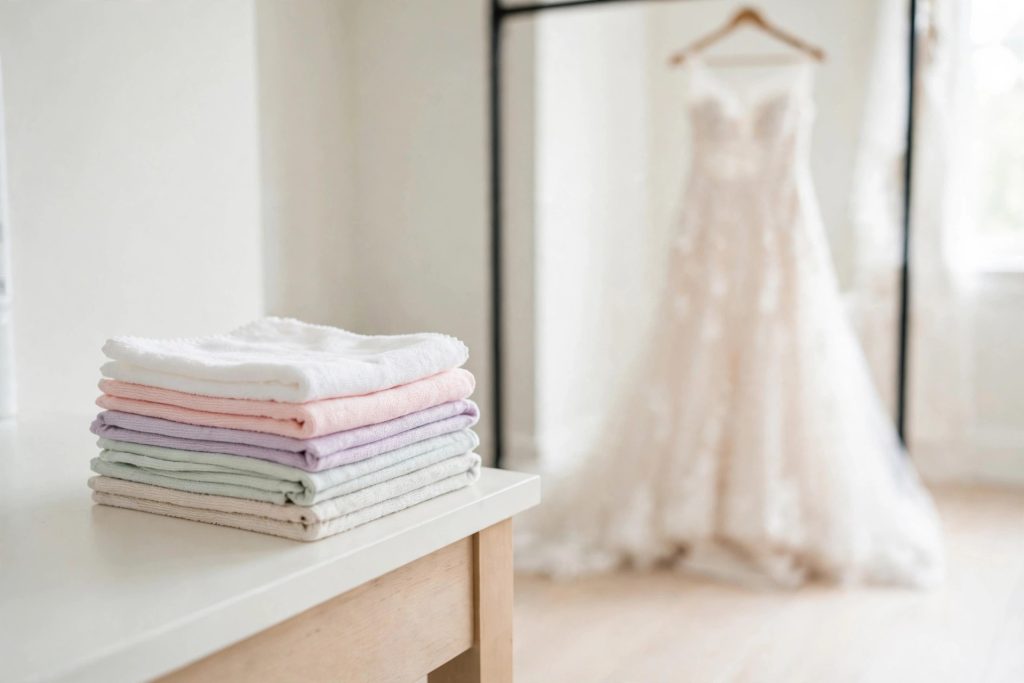
For gown work the technique matters as much as the cloth. Water first, barely damp, blot rather than rub, from the edge of the mark inward so the pigment has nowhere new to go. Foundation lifts. Lipstick mostly lifts. The waterproof mascaras and the setting sprays are the stubborn end of the case, and a cloth is the first attempt, not the verdict. A shop that keeps cloths at the fitting-room door next to the steamer is not being fussy. It is running the cheapest dispute-prevention program in the building, cheaper than one held deposit argument, cheaper than one Saturday with a spotted sample.
Boutiques building their bridal range through channels like the wedding dress wholesale catalog here know the terms that govern the gown side, single-piece custom possible, catalog wedding styles from five pieces per style for wholesale. The cloths never appear in those terms. Nobody writes a line into a bridal agreement about a twelve pack of microfiber. And yet the fitting room, where the cloths live, is where the deposit arguments are born or prevented, one blot at a time.
No. I said the deposit argument is about trust, and I should narrow that, plainly. Half the held-deposit fights I see paperwork for began as a ten-minute cleaning problem that nobody owned in the first ten minutes. The mark sat. It set. It became a specialist job with a specialist price, and the price is what people fight about, not the spot they could have lifted with a damp cloth while it was still deciding whether to be permanent. Timing, not trust, is the cheaper half of the story, and it is the half a cloth can actually buy.
What a shop should keep by the fitting-room door
The wider women’s range a shop stocks, the sort of thing in the women’s apparel wholesale catalog, has its own version of this lesson. Try-on stock gets handled, marked, steamed, and argued over in proportion to how little prevention sits near it. A steamer, a roller, a stack of clean microfiber cloths with a laundry routine somebody owns. The whole station costs less than one custom dispute. I have watched shops spend more than that on a single argument about a neckline, and the argument did not even settle the question. It just moved it to the review page, where “seller kept my deposit” does the kind of damage no cleaning bill ever did.
The bride-side view deserves its sentence too. A bride removing a full face of wedding makeup at midnight, tired, in a dress she may wear once, reaches for whatever cloth is nearest. A proper microfiber cloth, used damp, takes the makeup without asking her to scrub at her skin or, worse, at the gown’s neckline where her hands keep drifting. The twelve pack is sized for a household, really. It survives in bridal because bridal is where the cost of the wrong cloth is printed out afterward, in invoices, where I can read it.
There is a quieter money detail in the cloth story that rarely survives into the dispute letters. A gown that comes back from cleaning has to be re-steamed, re-inspected, and re-photographed before it can be sold or fitted again, and those small labors belong to people whose time is already spoken for. The cleaning invoice is the only part with a number on it, so the number absorbs the blame for all the unnumbered work around it. I have stopped arguing with that pattern. These days I just note, when a shop tells me the cloth station by the door ended the arguments, that the station is doing accounting work as much as cleaning work.
Questions the paperwork raises
A $75 sample, a $12 pack of cloths. Why does the cheap item decide the expensive argument?
Because the argument is rarely about the gown’s price. It is about a cleaning charge that appears after the price was agreed, and small unpriced things are where agreement goes to fray. A simple bridal sample runs $75 on the terms used here, with $35 of it returned per piece when a style turns into a bulk order, and that number is at least written down. The makeup mark has no number written anywhere. Unwritten numbers get argued at whatever value the angrier party assigns them, which is always the higher one.
The shop held the deposit over one foundation mark. Was that ever about the mark?
Sometimes, honestly, yes, when the gown was a sample that missed a weekend of appointments. More often the mark was the handle on a larger unease, a balance the buyer was already reluctant to pay, a fit concern nobody had said out loud. Factories and shops that survive in this trade hold the goods until the balance clears and say so early, in writing, before feelings are involved. The ones who introduce the rule after the mark appears discover that timing is everything, in deposits as in blotting.
Twelve cloths, washed with softener once. Is the pack ruined or just resting?
Mostly recoverable, in my reading of the care guidance and the complaints that follow it. A hot wash without softener strips some of the coating and gives the fibers back part of their grip. Repeated softener is the real decline, cycle on cycle, until the cloths polish instead of lift and the owner concludes the brand failed. The pack did not fail. It was maintained into uselessness, gently, which is how a surprising amount of equipment in this trade dies, gowns included.
I never did price the makeup mark to my own satisfaction. The cleaning invoice is knowable and the missed Saturday is not, and the bride’s certainty that the dress was already marked when she touched it cannot be settled by any document I handle. The cloths sit in the middle of that fog costing almost nothing, preventing the version of the story where everyone behaves reasonably. That might be the most honest product in the bridal building. It does not promise forever. It promises that the first ten minutes are yours, if you want them, and in my line of work the first ten minutes are where the money is decided more often than anyone admits.