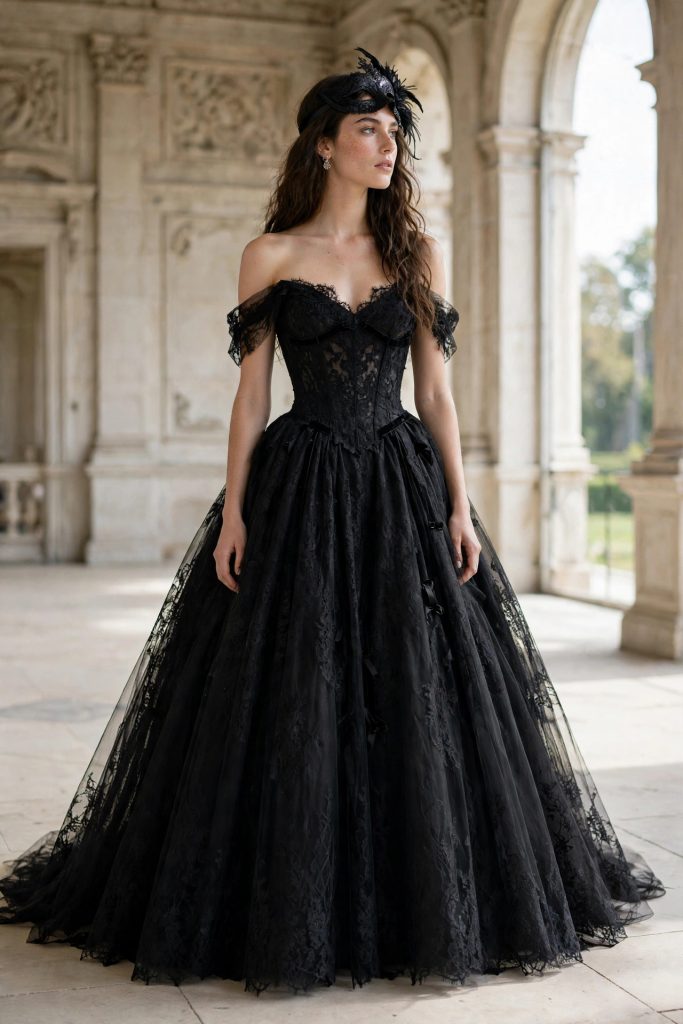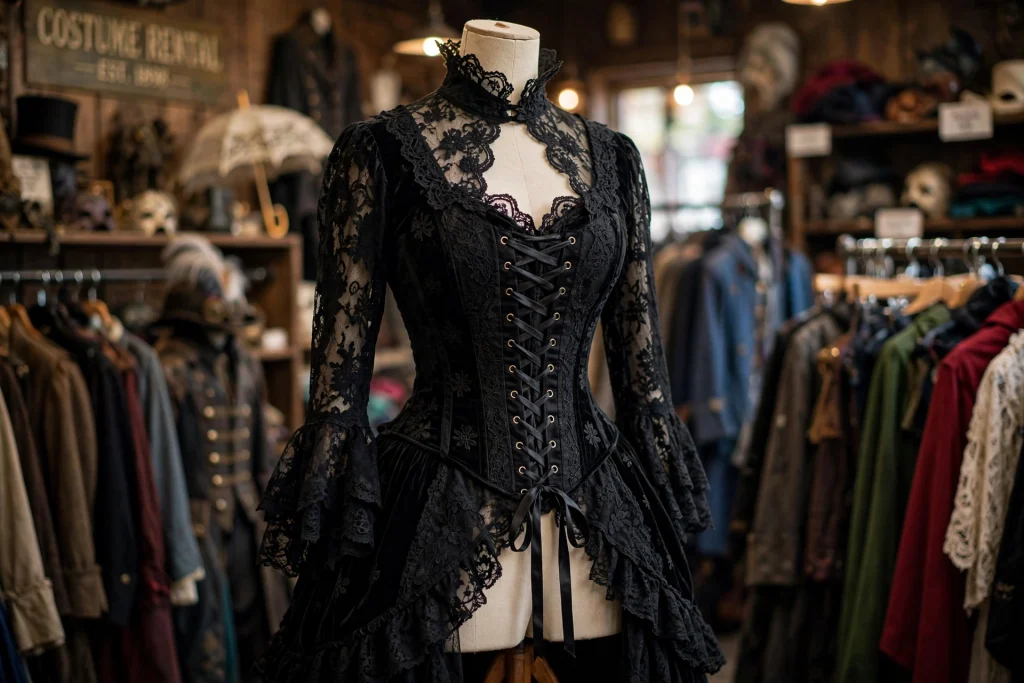
Why does black never stay black? I ask the line this every October, out loud, while a rail of gothic dresses goes past looking handsome and doomed. The answer the line gives, in the order it gives it, is dye, wash, and wishful thinking, with wash doing most of the work. A Victorian gothic dress in the corpse bride line of work is not a costume that gets worn once and forgiven. It gets rented, photographed, worn to weddings nobody’s grandmother approved of, washed, and rented again. Forty washes is my working horizon. Deep black at wash one becomes a tired charcoal somewhere before wash forty if the dye process rushed, and the customer never complains about the fade because the customer wears it once, in low light, and leaves happy. The rental buyer is the one who watches the dress grow old. So am I.
What holds the bodice up when the lacing is pulled hard? Spiral steel boning, in the sizes that matter, and here is where I interrogate myself the hardest because boning is where cheap versions lie most fluently. A costume bodice can carry plastic boning that feels structured in the hand and folds like a drinking straw the first time a wearer sits down in it. Spiral steel bends and recovers. Plastic bends and remembers. When I test a bodice I sit the dress form test that nobody prints on a spec sheet. I bend the boning channel sharply, hold it, release it, and look for the crease that stays. A crease that stays is a dress that will arrive at its third rental with a permanent fold at the waist and a fitting problem nobody can steam out. The factories that set grommets properly tend to bone properly too, which is not a law of nature, it is just the same personality showing up twice in one garment.
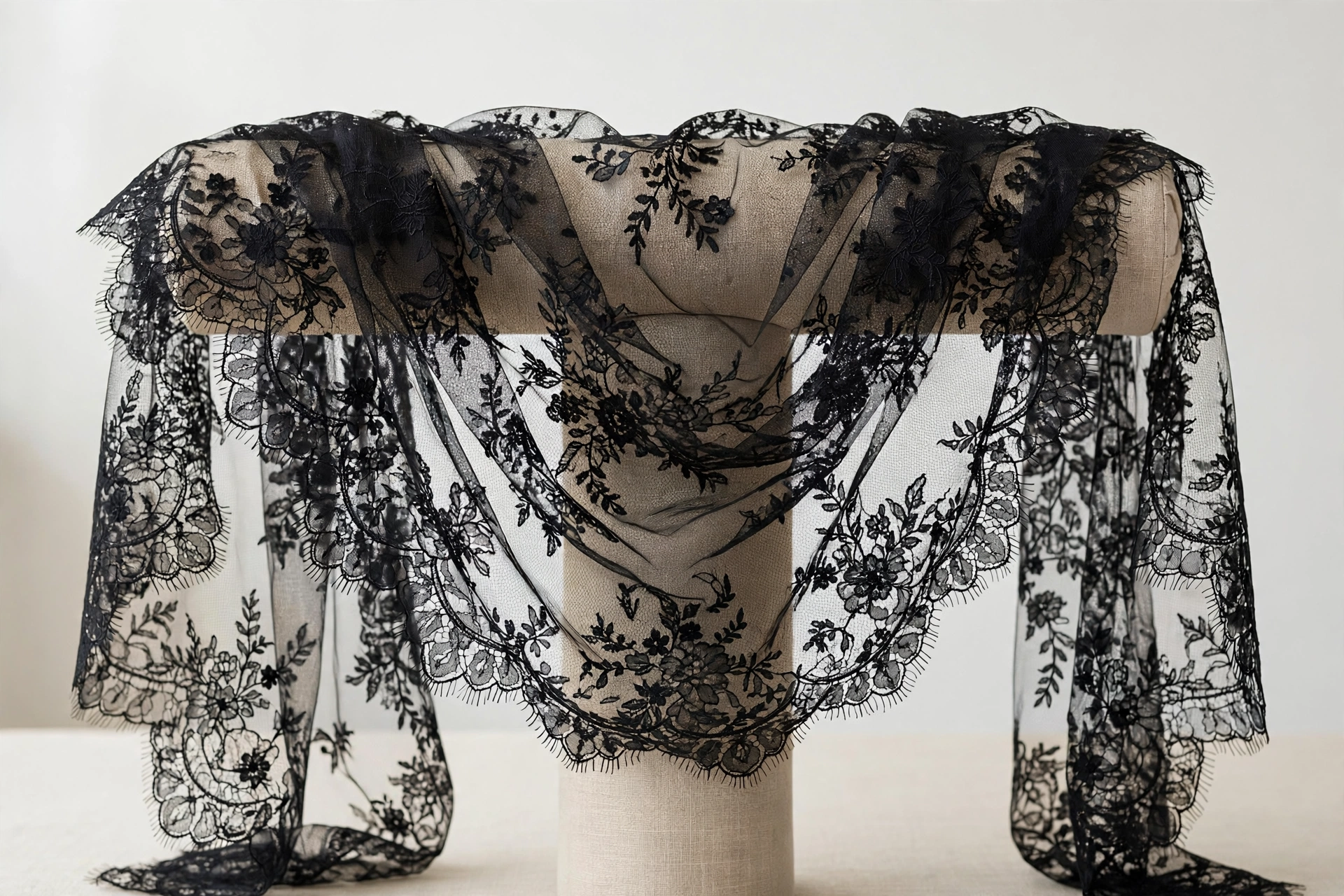
Do the grommets hold? I pull each one. Hard. That is the test, and I make no apology for how unscientific it sounds in a paragraph. The grommet that rips out on the third wear was set with the wrong pressure or the wrong washer, and it announces itself to a firm pull in the sample room the same way it would announce itself to a customer’s hand in a fitting room, except the sample room version does not involve tears and a refund. Corset lacing on these dresses is functional, not decorative, which changes the load entirely. The wearer actually tightens it. The back panel actually carries weight. A dress built to be laced hard needs its grommets set like hardware, and its seam allowances wide enough that the fabric around the hole has something to hold onto. Narrow allowances plus eager lacing equals a slow tear that starts invisible and finishes during a photograph. I have cut open failed samples to look at exactly that tear. It always starts at the hole. It never starts anywhere else.
I keep asking, the dress keeps answering
Why does the same size fit differently across three dresses off the same pattern? This one I ask quietly, because it embarrasses everybody. Grade rules get interpreted, cutting layers shift by millimeters that multiply at the lace-up back, and a gothic bodice is the least forgiving place in a dress for small drift, because the lacing shows every variance as a gap pattern down the spine. A medium that fits like a small is a planning problem. A medium that fits like a small on Monday and a true medium on Thursday is a confession. Rental shops learned to fit every customer in person and never trust the tag, which is good practice and terrible scalability, and the gap between those two facts is where the returns live. When I spec a run of these, I ask for the lace-up range to absorb the drift, extra modesty panel width, longer laces, because the dress that can be adjusted forgives the factory that cannot be perfect, and no factory is perfect, mine included, on a Friday afternoon in peak season.
What does the dye house say about the black? The dye house says black is the hardest color to hold honest, and I believe them because their Monday problem is visible in my returns. Dye calibration resets over the weekend and the first batches Monday morning run before the bath settles to its true strength, which is why two dresses from the same order can arrive a half shade apart and both get called black on the paperwork. Retail light shows a drift that warehouse light hides. A ten percent drift on dark colors is a number I have heard from dye people for years and it matches what my eyes see when a new dress hangs next to last season’s survivor. If you are buying black in quantity for rental stock, hang the sample against your oldest black dress under shop light before you approve the run. The comparison takes one minute and tells you more than a lab report written in a different light.
Where do the patterns, the sizing, and the money meet? On the order form, where they always meet. The Victorian gothic style already exists as a pattern in the OEMOD Factory wholesale catalog world of ready styles, which means a boutique can start at ten pieces per style, sizes mixed, and learn its rental curve before committing to depth. Bring your own gothic design instead and the start moves to twenty pieces per style, sample at seventy-five dollars a piece, thirty-five back per piece when the design turns into a bulk order. Rental math forgives a lot at twenty rentals per dress. It forgives almost nothing at three. The buyer who tests with ten existing-style pieces learns which sizes actually rent in her town, and Halloween demand is a local fact that no trend report can hand you, because one town’s corpse bride is another town’s unsold rail until November first, when it becomes a clearance problem with lace on it.

No wait. I said forty washes as if the number fell from the sky. Let me be honest about it in the second half, the way you are supposed to be. Forty is the horizon I plan around because it is where charcoal becomes undeniable in my wash tests, cold water, gentle cycle, the kind treatment a rental shop can actually sustain. Hot water and a commercial laundry’s enthusiasm will get the dress to charcoal faster, and a home buyer who washes it twice a year will die of old age before the black does. The number is a planning tool for people who wash dresses for a living. It was never a promise about the dress. Numbers in this trade get borrowed out of context and worn as guarantees, and I would rather correct mine here than read it quoted back at me in a dispute next October.
What breaks first, after the grommets pass and the boning behaves? The lace, at the shoulder and the cuff, where hands and door handles and jewelry all take their turns. Lace on a working costume dress is a consumable pretending to be a decoration. Repairs are possible, invisible if the lace pattern repeats kindly, obvious if it does not, and this is where a spare lace motif in the order, a few extra appliques thrown in the carton by a factory that understands rental, pays for itself across a season. Ask for them. The cost rounds to nothing. The first shoulder repair without a matching motif costs a dress, because a mismatched repair photographs as damage and damage does not rent. Small kindnesses from a production line are never really kindnesses. They are the factory admitting it knows what your business does to its dresses after delivery, and pricing that knowledge at almost zero to keep you.
Could a bride actually wear it? Some do, every year, and the alteration questions that arrive with gothic wedding orders are the same as any bridal order with the volume turned up. Can the train be bustled so it survives dancing. Can the black be deepened, no, it cannot, dye does not deepen finished garments evenly, which is a sentence I say monthly to hopeful people. The bridal side of the catalog runs its own terms, one piece custom-made for a single bride, five pieces per style for shops stocking from the wedding dress wholesale catalog, and a gothic bride crosses between those worlds with her eyes open. Her dress will not fade on her day. Fade is a crime of repetition, and her dress gets one glorious wear, which is the one thing rental stock never gets and secretly envies.
The questions I ask so buyers do not have to
The black looks deep in the photos. Will it still be black after a season of rentals?
It will be black for a good while and charcoal eventually, and anybody who promises otherwise is selling you the photograph instead of the dress. Cold washing slows the fade and gentle handling slows it more, but rental is repetition, and repetition wins. Plan the dress as a two-season asset at strong rental volume and price the rentals so the second season is profit rather than apology. I keep one dress from each run unwashed as the control, hanging in plastic, so I can hold the working stock against the truth. That control dress has ended more arguments than any email I ever wrote, usually in the customer’s favor, which is fine. She was right. The drift was real.
Medium runs small on the listing. Should I just order everything a size up?
Order the size range your fittings tell you, not the label the factory printed, and if you buy without fitting, size the customer up and let the lacing take in the rest. The lace-up back is the forgiveness mechanism built into this style, several centimeters of adjustment in each direction, which is why corset dresses survive inconsistent grading better than zipped dresses do. What you cannot adjust away is the drift between dresses of the same stated size, and that is a factory conversation, not a customer one. Measure three samples across sizes when the run lands. If the spread is wide, say so with numbers in your hand. Factories respect calipers. They ignore adjectives, and they are right to.
Three dresses or thirty for a first rental order?
Three is a photograph. Ten is a test, since ready styles start at ten pieces per style and that quantity teaches you your local size curve across a Halloween season. Thirty before you know the curve is a storage hobby. The rental math that makes these dresses profitable, twenty rentals across two seasons, needs the right sizes on the rail in the right town, and no supplier can tell you your town’s curve from their side of the ocean. Buy the test quantity, rent it hard, wash it honestly, and let your own rail write the reorder. I have watched shops skip the test and spend two Octobers discounting the sizes nobody rented. The dresses were fine. The guessing was the defect.
The grommets feel solid on the sample. What else deserves a hard pull before I commit?
Pull the boning channel seams at the waist, where the sitting fold works all night, and pull the lace at the shoulder join, because those two places carry the dress’s working life after the grommets have had their say. Twist the lacing through its full run and check the modesty panel width at maximum comfortable tightness, since a panel that goes narrow at real tightness turns a fitting into an exposure problem. Then wash the sample once, cold, before the run is approved. Half the truths about a black costume dress live on the other side of its first wash, and a sample you have not washed is a sample you have only half met, and I say that as someone who once skipped it in a busy month.
Can this style be made under my own label for my rental brand?
Yes, and the private-label path is the boring, sensible one. Existing styles carry your label at the ten-piece starting quantity. Your own modified design, a different lace, a longer train, starts at twenty pieces per style with the seventy-five-dollar sample and the thirty-five-dollar return per piece once bulk production follows. Rental brands live and die on repeatability, so the label matters less than the pattern staying stable across reorders, which is a conversation to have before the first order, in writing, about grading records and lace sourcing. A factory that keeps your pattern honest across seasons is worth more than a factory that is cheap once. I sign my name to that opinion every October and the rail behind me agrees.
I am standing in front of the October rail as I finish this, control dress in plastic on my left, twenty working dresses in various stages of charcoal on my right, and the question I opened with is still open in the honest sense. I do not know how to make black stay black through forty washes and neither does the dye house, and the difference between us is that I have to look at the result under shop lights while a customer decides if the dress is worth thirty dollars a night. She usually decides it is. The fade bothers me more than it bothers anybody who wears the dress, and I have stopped expecting that to change, and the pulling of grommets, one by one, hard, continues anyway.