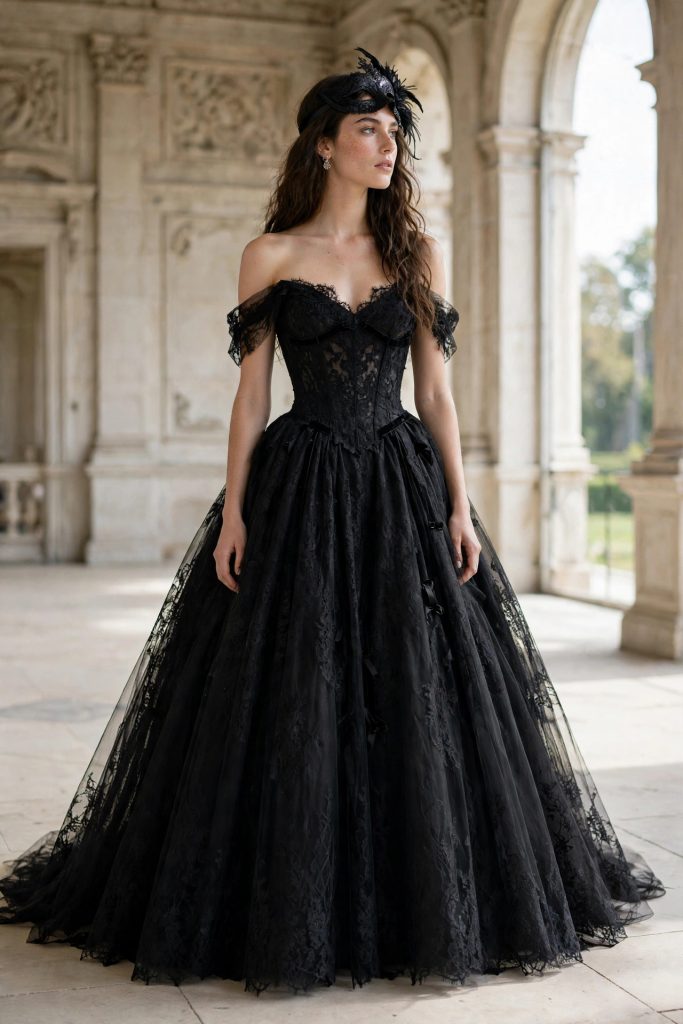
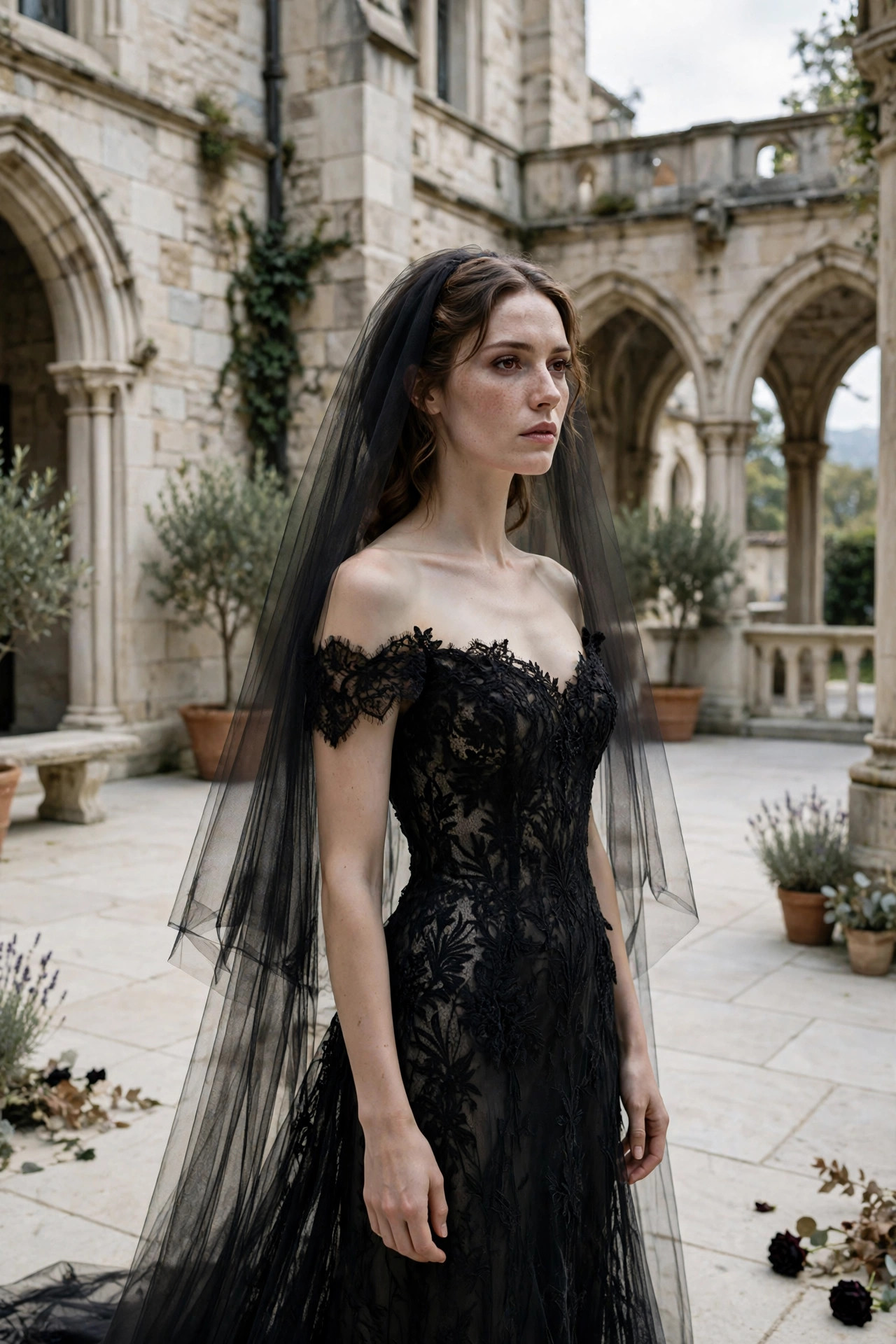
Black first. Always black first, because black is where the vat tells the truth about itself. A black off-shoulder lace gown for a masquerade ball, a gothic bride, a Halloween wedding — whatever the listing calls it, the dress comes out of my dyehouse world, and black is the shade where a half-step of drift does not read as a slightly different black. It reads as red. It reads as brown. It reads as a dress that used to be black, in a photograph, at night, under ballroom light that forgives nothing.
The paper tolerance on a dye lot is 5%. Paper. Under retail spot lighting the drift reads as 10% and better, and dark colors show it worst of all the shades I run. Ivory fights are louder. Black fights are quieter and uglier, because the bride chose black on purpose, as a statement, and a statement with a reddish cast is a statement about the dyehouse.
Vats get calibrated after the first lot runs. Not before. After.
Monday morning’s lot runs on Friday’s settings, in dyehouses everywhere, and the first black lot of the week is the one I would never ship to a gothic bride with a photographer. The settings settle. The second lot is the honest one. Nobody writes this on a delivery note and I am not going to start, but if your black lace arrived with warmth in it that the sample never had, there is a decent chance your gown was a Monday.
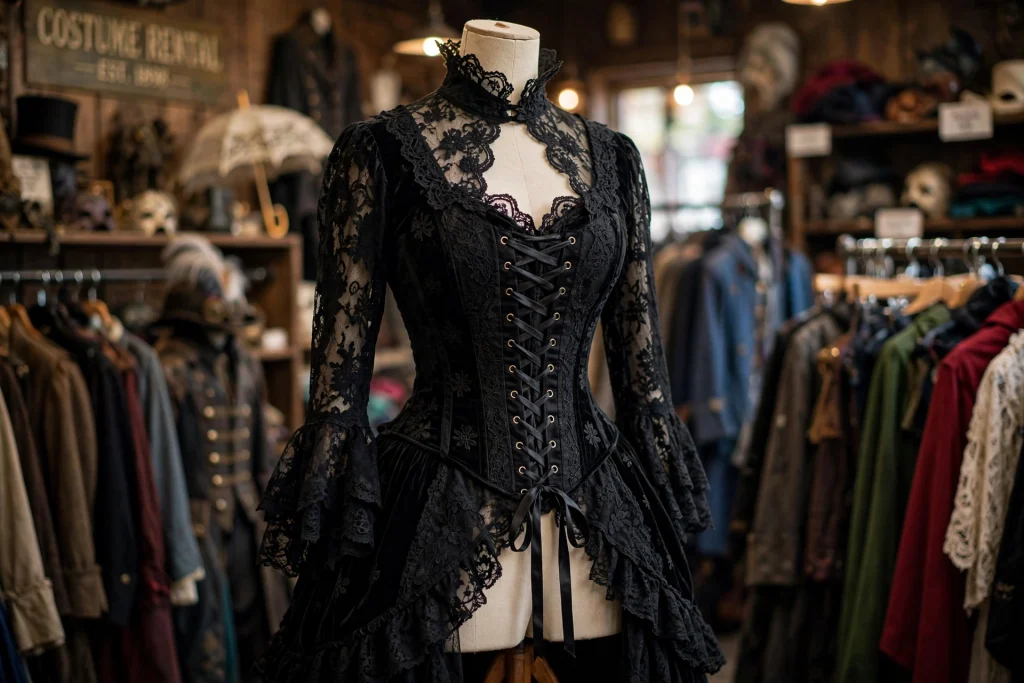
Lace does not take dye as one fabric. The mesh ground drinks at one rate and the corded flowers on top of it drink at another, deeper rate, in the same vat, in the same hour. A black lace gown is two blacks pretending to be one. Close up, in daylight, you can see the marriage lines where ground meets flower. The masquerade listing photograph was taken at the distance where the two blacks agree. A ballroom is not that distance. A dance floor is closer.
Small black orders ride in somebody else’s vat
Under 300 meters, no vat gets opened for you. That is not cruelty, it is plumbing. A small-lot custom black piggybacks on whatever dark lot is already running, and dark lots follow other dark lots, and a vat that ran a deep red on Thursday carries a memory into Friday’s black that the rinse reduces and does not erase. Your twenty-piece order of black off-shoulder gowns did not get its own water. It got a ride in water with a past. Most of the time the past is invisible. The times it is not invisible are the times I hear about, with photographs, at night, from people who used the word unacceptable in the subject line.
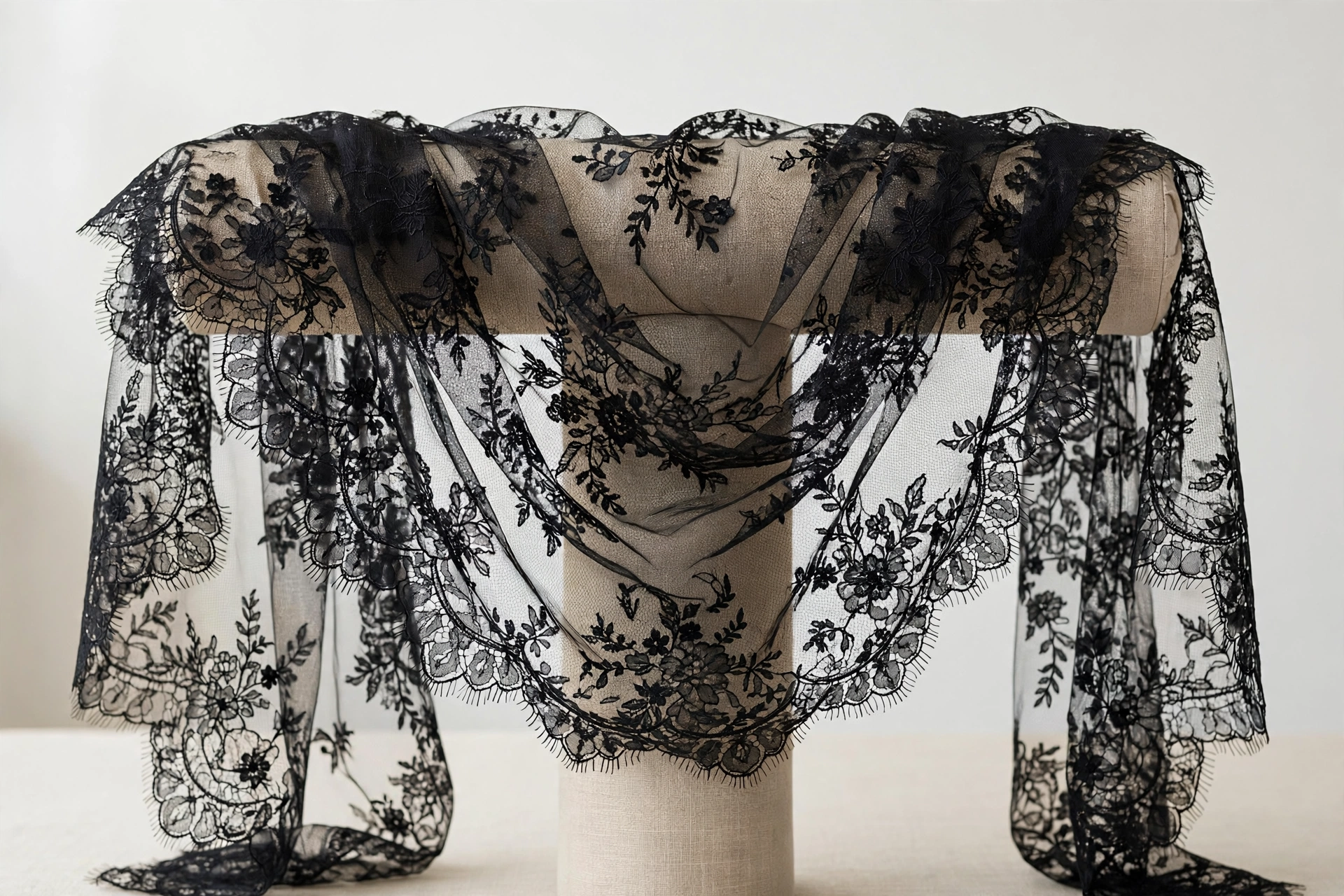
White lace is not bleached white, whatever the listing says. It is optically brightened, usually, and the brightener washes out across two or three washes leaving the grey-beige fiber underneath. Black has its own version of this lie and it is worse: black is built, shade on shade, and the build is only as stable as the fixation, and fixation is certified for 40-degree washing while the steam presses that finish the gown run at 150 to 180 degrees. No certificate covers the steam. Nobody tests for the steam. The gown gets pressed, the color moves a fraction, and the fraction is the fight.
A buyer once approved black lace under my fluorescents and then held it under warm boutique spots and watched it turn. Same lace. Different photons. She accused the vat. The vat accused her lighting. Both of them were right and the gown hung between the two accusations, black in one room and not quite black in the other, which is where black lace lives more often than anyone in this trade admits out loud.
In the March rush the rinse cycle gets skipped to keep the vats turning. Unfixed dye is patient. It waits. It bleeds months later, in a buyer’s steamer, on a gown that passed every inspection anyone bothered to run, and the bleed gets blamed on the steamer, on the water in the buyer’s city, on anything except a skipped rinse in a dyehouse during the busiest month of the year. I know which vats skipped. I keep no list. The vats keep no list either, and that is the point.
The phone flashlight knows more than the color card
There is a test the old hands taught me and it costs nothing: hold the lace to a phone flashlight against a white wall after dark, and look through the lace, not at it. Thin dye shows through. Uneven dye shows through. A black that is really a very dark red confesses through the light in about four seconds. The color card will tell you the lot is within tolerance. The flashlight tells you what the bride’s photographer will find. I trust the flashlight. I have trusted it since a reorder came back six months after approval, same mill, same number on the card, visibly a different black, and the mill said within tolerance and the mill was right, and being right did not give the buyer her season back.
Splitting an order across two mills to save 4% is how you buy this problem wholesale. One mill, one vat, one season after another, and the color complaints go quiet — I have watched a predecessor’s boring discipline produce zero black complaints across years of gowns, while the buyers who chased the 4% got variance that cost them more in return freight than the saving ever amounted to. Dull beats clever at my end of the trade too. The dyehouse remembers what the spreadsheet forgets.
Dark lots cost more to run than anyone puts on a quote. Wastewater compliance is not shade-blind: the deep end of the color range is the expensive end to treat, and mills quietly steer buyers toward lighter shades while charging black buyers a flat per-meter dyeing fee that pretends all colors cost the same to make. The matching work — the strike-offs, the phone calls, the idle vat time while a buyer decides — is uncompensated. The mismatch is free. The match costs. A buyer of black lace who wonders why her shade gets less patience than an ivory buyer’s shade is looking at that arithmetic without knowing it. Anyone comparing what fabrics wedding dresses are made of before they argue about color would at least know which fiber is doing the drinking.
One buyer flies in for every reorder. Stands in the same spot, under the same fluorescents, approves the black with her own eyes, every season, like a ritual. She still gets variance. Showing up reduces it. Showing up does not repeal it. I respect the ritual more than the buyers who approve black from a phone photograph taken under a beauty lamp, because a beauty lamp will make any black look like midnight and any mill can match a photograph — the photograph is the easiest customer in this business, and the bride at the door in daylight is the hardest. When she asks me how to keep the next order honest I tell her what I tell anyone who asks about finding a reliable wedding dress manufacturer: one mill, one vat, your own eyes, and no faith in the card.
The lab dip is the politest lie in my trade. A buyer approves a dip — fifty milliliters in a beaker, dipped by hand, judged under one lamp — and the bulk runs in a five-hundred-liter vat with a weekend behind it, and the two blacks have never met. Dips always match. The beaker has no Monday morning in it, no previous lot, no rush, no memory. I have started telling buyers to approve the dip and then ask, in the same breath, which day the bulk will run and what ran before it, and to watch the mill’s face while it answers. The face is the real lab report. It has never once said within tolerance.
Questions buyers actually ask out loud
My black gowns arrived with a reddish cast the sample never had. Did the dyehouse change my color?
Probably the gown ran early in a vat cycle or rode in a shared dark lot, because vats are calibrated after the first lot rather than before it, and small lots under about 300 meters piggyback on whatever dark shade was already running. A deep red before your black leaves a warmth the rinse reduces without erasing. The paper tolerance says 5% and under warm shop lighting the same drift reads as 10% or more, darkest colors worst. Whether it is a remake or a discount usually comes down to the flashlight test, not the card, and I would run that test before arguing, because the card has never lost an argument it was invited to.
Two blacks, same card number, six months apart, and they do not match. Is the mill lying about tolerance?
The mill is usually telling the truth about tolerance and the truth is the problem, because a 5% paper tolerance on black still reads as a visible difference under retail light. Reorders drift. One mill and one vat across seasons is the only arrangement I have seen hold a black steady, and splitting across mills to save a few percent is how the variance gets bought. I split an order once, years back, for exactly that saving. The return freight ate the saving and then ate the apology too, more or less, and I have not split a black since.
The lace flowers are darker than the mesh they sit on. Is that a defect or just lace?
It is lace doing what lace does in a vat, because the mesh ground and the corded flowers drink dye at different rates in the same bath and the flowers come out a half-shade deeper. On ivory the gap reads as shadow and gets forgiven. On black it reads as a mistake at close range, which is the range a masquerade ball happens at. A good sample shows it too, if you look through the lace against light instead of at it. If your approved sample hid it, the sample was photographed kindly, and bulk rarely gets photographed kindly at all.
She kept the gowns, in the end, the buyer with the warm black and the boutique spots. Sold them as charcoal, at a small discount, to brides who had not seen the original sample and never missed the black that was promised. I think about that when a new buyer stands in front of me demanding a true black, an absolute black, a black with no past and no future in it. There is no such black in a working dyehouse. There are only blacks whose Mondays you never saw. Hers, I saw. I still have not told her which day of the week her dresses were dyed, and some nights that feels like the last professional courtesy I have left in me.