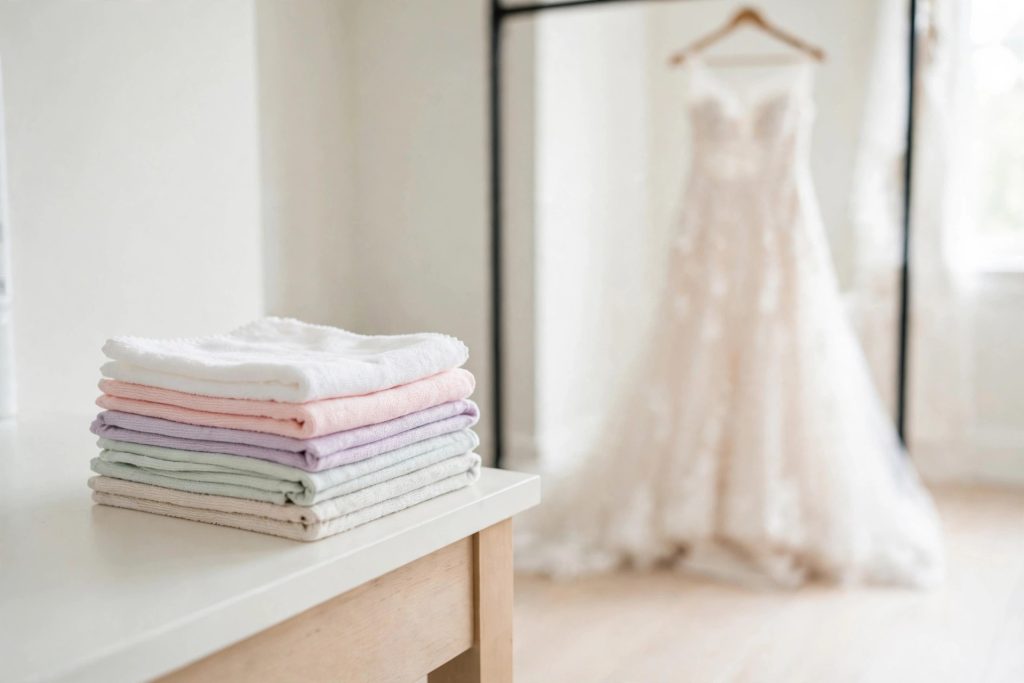
Here is a question I still cannot answer cleanly, after years of comparing garment-care products for sourcing lists: why do some dresses come out of six months of storage covered in pills and fuzz, and some come out clean? The shaver is the easy part of this trade. A rechargeable fabric shaver is a motor, a foil head, and a lint bin, and the differences between a good one and a bad one fit in one sentence — the good one cuts the pill without biting the cloth. The hard part is everything upstream of the shaver: the fabric, the storage, and the strange fact that two dresses from the same order can age differently in the same wardrobe.
Start with what pilling actually is, because the listing language never does. Loose fibre ends work their way out of a yarn under friction, tangle into little balls, and stay attached by a few stubborn strands. Short-staple fibres pill more, because there are more ends to escape. Blends pill in a particular way: the soft fibre breaks, the strong synthetic fibre holds the ball in place like an anchor, which is why a polyester-blend bodice can look frosted after a season of wear while a pure fibre dress sheds its pills and stays presentable. The shaver does not care about any of this chemistry. The buyer should, because the chemistry decides how often the shaver comes out of the drawer.
The foil head is where cheap shavers confess

A fabric shaver works like a tiny lawn mower behind a perforated guard. The guard’s hole pattern decides which pills get in and whether flat weave gets nicked. On open weaves — lace overlays, loose knits, anything with a raised pattern — a coarse guard is a hazard, and this is where the post-wedding use case gets delicate. A bride shaving a lace bodice with a bargain shaver is one moment of impatience away from cutting a thread that matters. The better heads have finer perforations and a guard that rides slightly above the blade. The worse ones save money exactly there, in the stamped metal nobody photographs. When I compare models for a list, the head is the first thing I look at and the battery is the last. A weak battery is an annoyance. A coarse guard is damage.
Rechargeable versus battery-swap sounds like a convenience question and is really a torque question. A shaver under load — pressing into a pilled sweater-knit panel of a dress, say — slows down as the cell fades, and a slowing blade drags instead of cutting, which pulls pills rather than shearing them and can stretch the surface it was supposed to clean. Models that hold speed as the charge drops cost more and advertise it badly, because holding speed is invisible in a product video. It is the whole difference in the hand. Nobody believes this until they have used both on the same garment, one after the other, which is an experiment I recommend any buyer do once.

What the lint bin tells you that the listing cannot
The bin on a well-used shaver is a diagnostic instrument. Fine dust means surface fuzz, the harmless kind. Short coloured fibres mean the garment is shedding its own yarn, which means the shaver is being used too often or the fabric is failing, and those are different problems with different owners. Post-wedding dresses collect a third thing: other garments’ lint, transferred in storage, pale fluff on a dark dress or dark fluff on ivory satin. That lint shaves off beautifully and tells you the dress was stored touching something it should not have touched. The shaver gets the credit. The storage did the crime.
So the unresolved question from the start — why two dresses age differently in one wardrobe — narrows, when you chase it, to contact and friction. The dress stored against a sequined piece comes out frosted where they touched. The dress that travelled in a car boot under other bags pills along the fold lines. Storage is a slow wearing, and the shaver is asked to undo months of it in ten minutes. It mostly can. That it mostly can is why the category survives, and why the remaining failures cluster so predictably on lace, on loose knits, and on whichever dress was stored at the bottom of the pile.
Garment care after the wedding is a small market with practical gear in it, and the rechargeable fabric shaver reviewed for lint removal covers the powered end of that shelf, while the portable stain remover pens for wedding dresses cover the emergency end — the shaver question is different, because it is about what months of storage do to a dress that was perfect in June.

Questions buyers and stores actually ask
Is a rechargeable fabric shaver safe on a lace wedding dress?
It can be, with the fine guard head, a light touch, and the dress laid flat so the lace is not stretched. Work on an inside seam area first. The risk is not the motor; it is a coarse guard catching a raised thread. If the lace is antique or the dress is borrowed, hand-picking the pills is slower and wiser, and no sourcing list will tell you otherwise.
Why does a dress pill in storage when nobody is wearing it?
Storage is friction at very low speed. Garments rub where they touch — against a sequined neighbour, a bag strap, the fold of the garment bag itself — and fibre ends migrate exactly as they do in wear, just slower. A dress stored alone in a smooth bag, not compressed, comes out noticeably cleaner than one stored in a pile.
How often should a stored dress be shaved?
Once, when it comes out, and then the cause should be fixed rather than the symptom repeated. Fibres in the lint bin that match the dress colour mean the garment itself is being consumed, a little per session. If a dress needs shaving every few months in storage, the storage is wrong, and no shaver, however good, is the answer to that.
I still keep two shavers on the comparison shelf — one with a fine head for anything bridal, one coarse and cheap for knitwear that can take it — and I still cannot tell a buyer, from a listing alone, whether a new model belongs with the first or the second. The head has to meet the cloth. Everything else is a photograph of a motor.