“1950s vintage dress” covers a lot of ground — from a gothic black swing dress to a demure cocktail sheath to a full Halloween bridal look. They share a decade but almost nothing else. This guide breaks down the five main styles you’ll encounter — goth, swing, cocktail, Halloween, and wedding — what defines each, and how to pick the right one for your occasion.
The Bottom Line: Pick the Style by the Event, Not Just the Look
Start with where you’ll wear it, then choose the style. A swing dress built for dancing and a gothic gown built for atmosphere are both “1950s vintage,” but they solve different problems. The silhouette, fabric weight, and construction details tell you which occasion each style actually suits — get those right and the look follows.
Goth: Dark Romance
The gothic 1950s style takes the decade’s silhouette — nipped waist, full skirt — and renders it in black. Expect black lace overlays or trims, velvet or heavy satin bodies, and corset-style bodices with visible boning channels. It’s the most formal-feeling of the casual 50s styles and the natural pick for evening events, gothic weddings, and Halloween formals. What to look for: the lace should have finished edges rather than scratchy raw cuts, and the bodice needs real structure (boning you can feel, not just decorative seams) or the whole look collapses by midnight. Black shows every wrinkle and lint speck, so a quick once-over with a lint roller before you leave is mandatory.
Swing: The Classic 50s Silhouette
This is the silhouette most people picture when they hear “1950s dress”: fitted bodice, cinched waist, and a full circle or gathered skirt that flares from the hip. It was made for movement — dancing, twirling, walking into a room. Swing dresses are the most forgiving fit of the 50s styles because the full skirt skims over hips and thighs, and they’re the best choice for daytime parties, retro-themed events, and any occasion involving a dance floor. For the authentic look, a petticoat or crinoline underneath gives the skirt its signature stand-away shape; without one, most modern reproductions fall flatter than the vintage originals. Check the skirt lining — an unlined swing skirt will cling and ride up.
Cocktail: Refined and Knee-Length
The 1950s cocktail dress is the grown-up cousin: knee-length, closer-fitting, less twirl. Think sheath, wiggle, or slim A-line shapes in satin, brocade, or lace, often with boat necklines, cap sleeves, or elegant draping. This is the style for semi-formal evening events — dinner parties, theater nights, holiday parties — where a full swing skirt would be too much. Because the fit is closer to the body, sizing matters more here than with swing styles: pay attention to the waist measurement in particular, since 50s cocktail cuts run trim through the midsection. A dress that pulls across the hips will wrinkle and ride up all night.
Halloween: Costume vs. Wearable Dress
Halloween is where “1950s vintage dress” splits into two completely different products. A costume-grade piece is built for one night of photos: thin fabric, minimal or no lining, glued-on trims, and seams that won’t survive real movement. A wearable dress in a Halloween-appropriate style (gothic swing, witchy cocktail) uses proper lining, sewn trims, and enough seam allowance to actually dance in. The price usually tells you which you’re looking at — under $100 for a detailed-looking dress almost always means costume construction. If you want the dress to survive the party and maybe get worn again, check for a real lining, finished seam edges, and trims that are stitched rather than glued.
Wedding Styles: Wearing 50s Vintage as a Bride
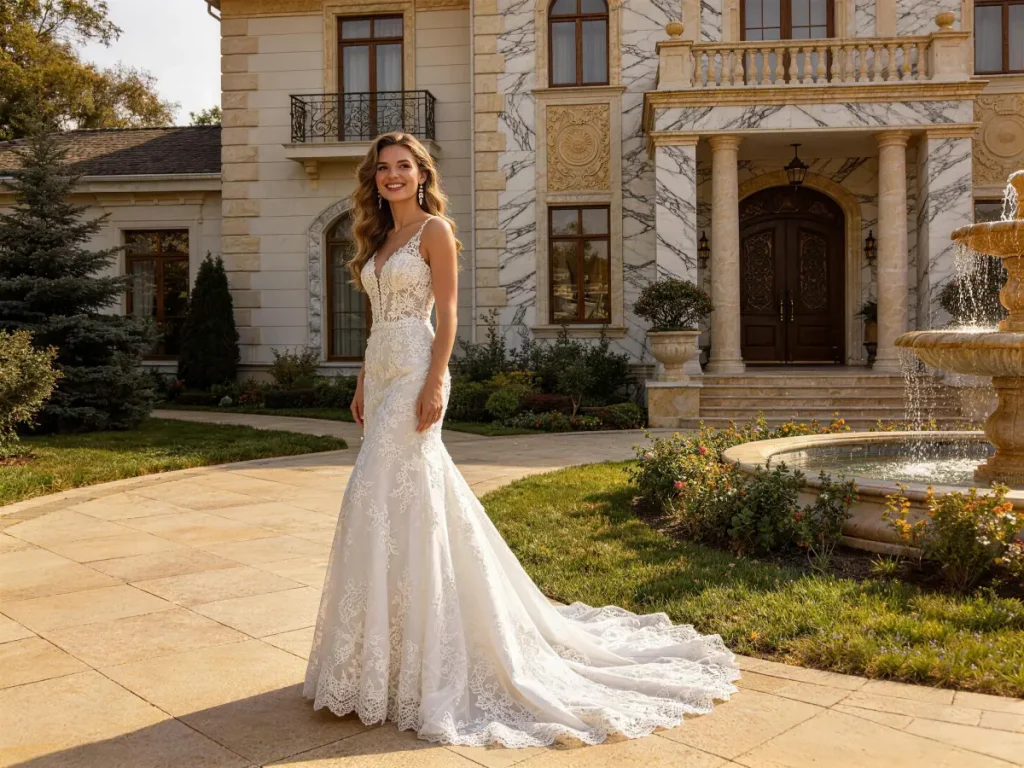
Tea-length 50s-style gowns in ivory, blush, or champagne have become a genuine bridal category — and they solve real wedding-day problems. They’re easier to move in than a ball gown, they photograph beautifully, and they suit outdoor or daytime weddings where a cathedral train would be impractical. But a wedding day is a 12-hour wear test, so construction matters more here than in any other 50s style. Look for a fully lined bodice, boning that actually supports (press the bodice — if it holds its shape off the body, the structure is sound), a sturdy zipper that runs smoothly, and enough seam allowance at the waist for last-minute alterations. A 50s bridal look lives or dies on fit through the waist, so budget for tailoring even if the size chart says you’re fine.
How to Tell Quality Before You Buy
You can judge most of a 1950s-style dress without trying it on. Heavier fabric (a satin with real body rather than tissue-thin costume satin) drapes better and wrinkles less. A full lining — not just a bodice lining — means comfort and durability. Seams should have visible allowance beyond the stitching line, not be trimmed to the edge. Zippers should glide without catching; a zipper that sticks in the product photos’ “detail shots” will fail on the day. And lace should feel soft at the edges — stiff, scratchy lace is the cheapest grade and it will irritate skin within an hour.
Keep reading: corpse bride wedding dress review · gothic bridal makeup set review.
Frequently Asked Questions
What’s the difference between a swing dress and a cocktail dress?
Silhouette and intent. A swing dress has a fitted bodice and full, flared skirt made for movement and dancing. A cocktail dress is knee-length and closer-fitting, meant for semi-formal evening events. Both are 1950s styles; the swing is playful, the cocktail is polished.
Can I wear a gothic 1950s dress to a wedding as a guest?
Only if the dress code allows it — black at weddings is increasingly accepted, but a full gothic look can read as costume at a traditional ceremony. For Halloween weddings or alternative dress codes, it’s perfect. When in doubt, check with the couple.
Do I need a petticoat for a swing dress?
For the authentic 1950s silhouette, yes. Most modern reproduction swing skirts fall flatter than vintage originals without one. A lightweight crinoline petticoat makes the difference between “vintage-inspired” and the real 50s shape.
What’s the difference between a Halloween costume and a wearable 50s-style dress?
Construction. Costumes use thin unlined fabric, glued trims, and minimal seams — fine for one night of photos. Wearable dresses have real linings, sewn trims, and proper seams. If you want to wear it more than once, buy the dress, not the costume.
Are tea-length 50s dresses appropriate for formal weddings?
Yes, for daytime, outdoor, or semi-formal weddings. For black-tie evening ceremonies, a floor-length gown is still the safer choice. The 50s tea-length shines at garden weddings, courthouse ceremonies, and receptions.