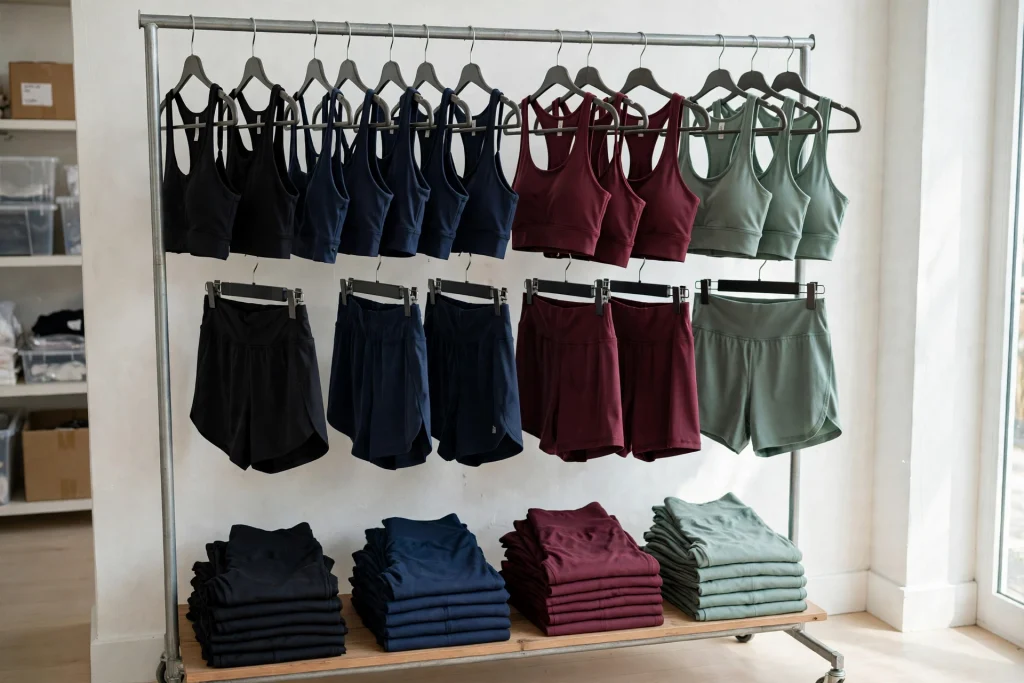
A buyer I work with did the sensible thing, or what looked like the sensible thing at the order table. She had a yoga range that sold, the leggings stayed sold, the tops reordered without drama, and she asked the same factory logic to stretch a little further. Same stretch knit family, same size chart habits, same supplier, new label on the rail. Gym sets this time. Shorts, bras, a cropped top for lifting and classes with actual impact in them.
The gym sets came back with a wording the yoga range had never produced. Not see-through. Not badly made, either, which is what made the messages hard to answer. The word that kept turning up was unsupported. Bras that had measured right on the table let people down twenty minutes into a class. Leggings that had survived a year of slow stretching pilled at the inner thigh in a month of treadmills and bag straps. Nothing had been cheated. The range had simply been judged by a second sport, and the second sport grades on a different paper.
I sit in the middle of orders, between boutiques and the lines that sew for them, and this is the comparison I end up talking people through more than any other in activewear. Yoga wear and wholesale sportswear share a fabric family and a rail in the shop. They do not share a job. Treating one spec as if it covers both jobs is not a saving. It is a return that has not been scheduled yet.
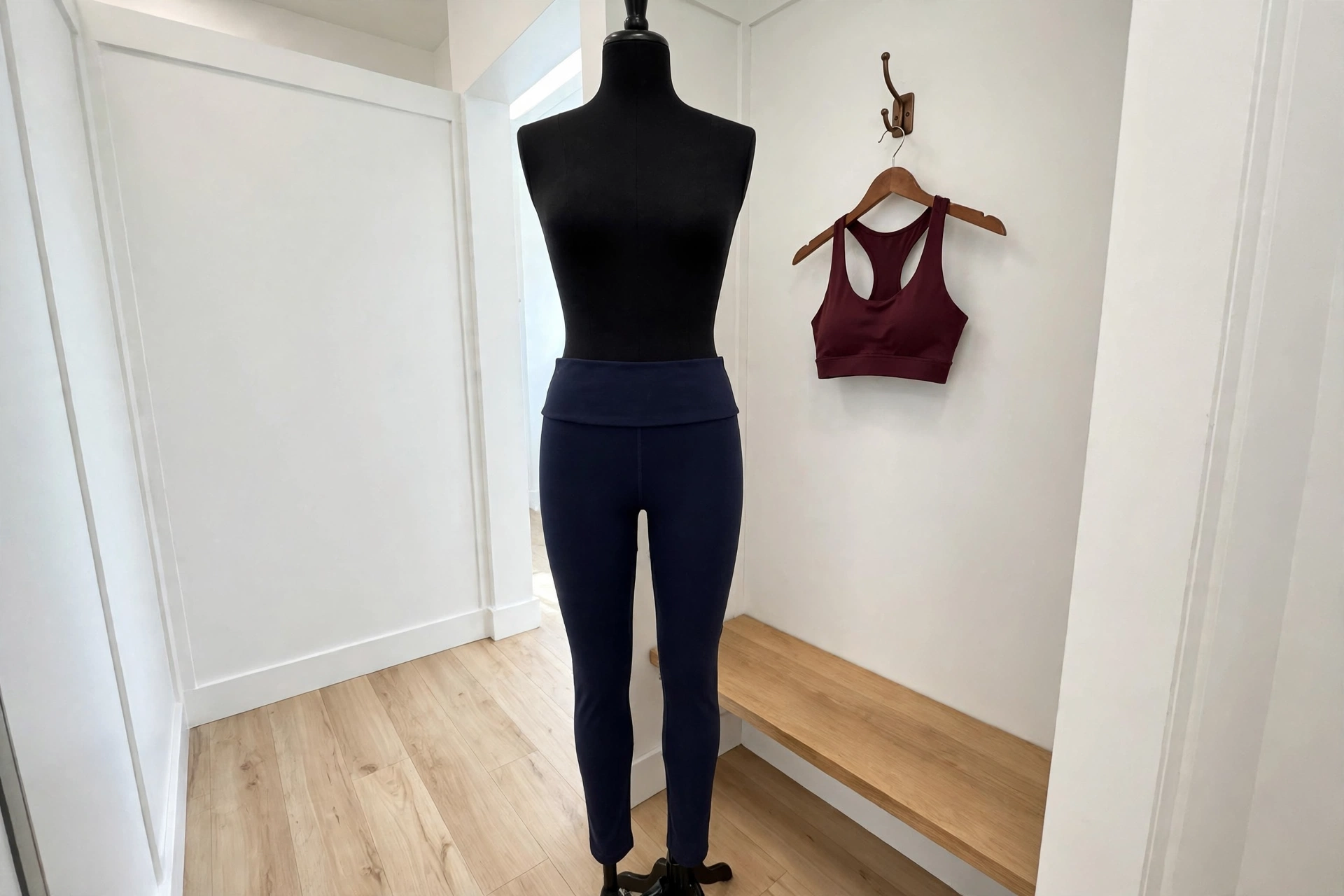
Soft was never the test in the gym
Yoga asks a fabric to stretch, stay covered while it stretches, and come back. The load is slow, the hold is long, and the worst moment is a deep fold in bright light, which is why the stretched-state test the yoga range learned the hard way still matters for any gym legging cut from the same cloth. A set that fails that test fails in both rooms and there is no point pretending otherwise.
The gym adds loads yoga never sets. Impact, for one. A bra in a stretch class is holding still as much as it is holding up, while the same bra on a run or in a jump-heavy class is catching weight that arrives again and again, several times a second. Abrasion, for another. Inner thighs rub under stride in a way they never do on a mat, straps cross the shoulder where a binding sits, and a bar or a bag edge works the same small patch of cloth session after session. And sweat arrives in a different quantity and gets washed out far more often, which quietly changes how long any finish on the fabric can be expected to live.
None of that makes gym wear better made than yoga wear. I want to be plain about that, because buyers hear this conversation as a quality ladder and it is not one. A yoga legging built honestly for its own job, soft hand, moderate hold, seams placed for floor work, is a good product that will be punished for doing a job it was never specced for. A gym set built honestly for its job will feel overbuilt and faintly stern on a yoga rail, and customers there will call it stiff, and they will also be right, from where they are standing. The two ranges fail each other’s exams in opposite directions.
| What is being tested | Yoga-led range | Gym-led range |
|---|---|---|
| Main load | Slow stretch, long holds | Repeated impact, stride rub |
| Fabric job | Coverage under stretch, soft hand | Hold under bounce, abrasion wear |
| Band job | Stay in place in a fold | Carry support after 20 washes |
| Wash pattern | Gentle, less frequent | Frequent, hotter, after every wear |
| Usual return wording | See-through, rolls down | Unsupported, pilled, smells after washing |
Read the last row twice, honestly. Boutiques tend to merge their activewear returns into one bucket and then argue with a factory about a single fault that is actually two different sports filing two different complaints. Split the wording by activity and the argument usually ends, because each side can suddenly see the order it actually made.
The bra gives the game away first
If one garment tells you which sport a range was really built for, it is the bra, and it tells you through its band. Support does not live in the cup fabric the way most spec sheets imply. The cup stretches and recovers on one schedule. The wide elastic under the bust stretches and recovers on another, slower one, and support in wear belongs to whichever of the two tires first. In practice the band tires first. A bra can measure exactly right flat on the table, cup, strap, band length all agreeing with the chart, and still give up twenty minutes into impact work because the band has warmed, stretched, and stopped coming all the way back between movements.
Yoga rarely exposes that, because the band is never asked to catch anything. It is asked to sit still and not dig in, and a tired band can do that job for months while looking, in a fitting room, like support. Move the same bra into running or circuit work and the tiredness becomes the whole product. This is also why a sample approved in a fitting room tells a gym buyer so little. She has tested the garment in the one state, standing, rested, cool, where a weak band and a strong band are almost impossible to tell apart.
Compression grading hides a second trap that I have watched catch careful buyers, people who did check the numbers. Hold the fabric constant and grade the sizes by the same ease percentage, and the pressure the garment puts on the body still changes with size, because pressure spreads differently around a larger curve than a smaller one. The small sizes come back marked digging in. The large sizes come back marked not supportive, about the same style, sometimes in the same delivery. Both customers are describing the cloth honestly. The grading treated pressure as if it scaled with the size chart, and it does not, and no amount of arguing about the medium, which usually feels fine, settles what the two ends are reporting.
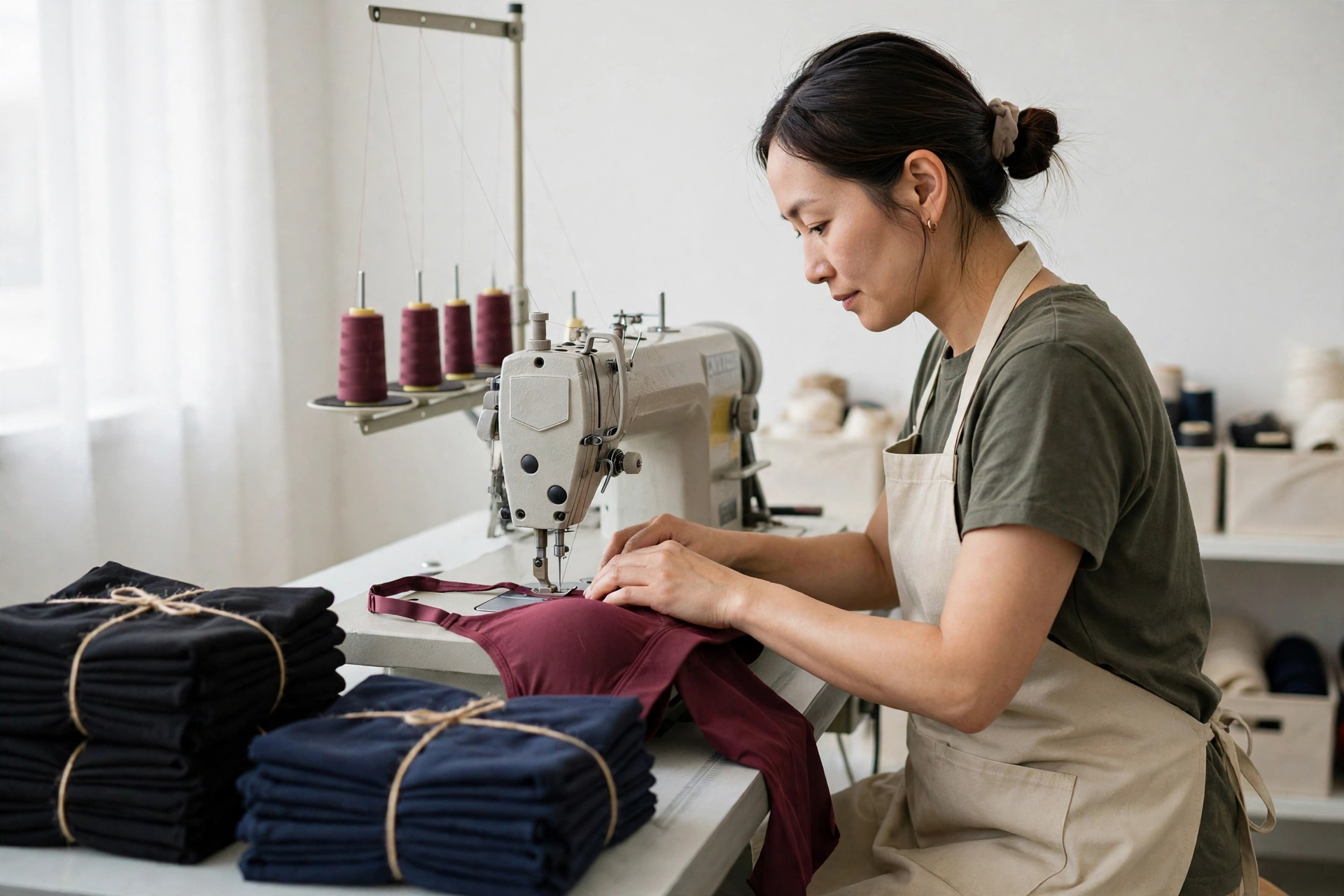
Sweat rewrites the fabric bill
The other place the two sports part company is in the wash, and it parts there in a way that shows up on invoices before it shows up in reviews. A finish that helps sweat move off skin can live in the yarn itself, or it can sit on the surface of the cloth as a treatment applied late in finishing. The late treatment is cheaper, it feels good in the hand at approval, and it washes away gradually, gone in something like twenty washes on many of the treatments factories quote without naming which kind they mean. A yoga customer might take half a year to spend those twenty washes. A gym customer who trains four times a week and washes after every wear spends them in a little over a month, and then writes in to say the top holds sweat and smells in a way it did not when it arrived.
Smell is its own gym problem and boutiques underestimate how much of it is a fibre decision made months earlier. Synthetic cloth that has held hot sweat through a full day in a gym bag keeps a memory of it that gentle washing does not fully clear, and the complaint lands as a quality complaint even when the sewing is blameless. I am not going to pretend one fibre family settles this for every price point, because it does not, and buyers working at a hard retail price have fewer moves here than buyers with room. But a buyer who knows the range will live in gym bags should be asking what the cloth is, not only what it weighs, before the colours get chosen.
The sleepwear side of this site met the wash version of this lesson from the other direction, and what a washed reorder taught the sleepwear buyers applies here with the volume turned up. A reorder is a new lot wearing an old size chart, and in gym wear the lot change that matters most is rarely the colour. It is the stretch fibre source underneath the same stated blend. Swap that source between orders, keep the percentage printed on the spec identical, and the second delivery recovers a fraction slower, pills a fraction sooner, and reads to a regular customer as a quiet downgrade she cannot prove with a tape measure. Locking that source in the order paperwork is dull sourcing work. It is also the difference between a reorder that feels like the first order and one that starts an argument nobody can win with documents.
What I ask before I let one range do both jobs
None of this means a boutique needs two factories, or even two suppliers. It means one range needs to declare its sport before the fabric gets bought, and the declaration has to survive contact with the quote. A quote that prices a sports bra at much the same sewing time as a simple cropped top is a quote I stop and read again, slowly, because a bra is a band purchase and a binding purchase and a cup purchase travelling under one style number, and the cheap version usually saves its money by letting the band be whatever elastic was already in the building. Ask which elastic, at what width, and what it is expected to feel like after twenty washes, and the conversation changes completely.
Colour splits cost more in this category than buyers expect, for a reason that hides inside the garment. A legging in one colour is one dye run. A gym set in one colour can be three, because the main cloth, the mesh panel, and the band or binding all have to land on the same colour, and each of them dyes on its own schedule in its own way. Spread a small order across five colours and you have not made one colourful order. You have made fifteen small colour problems and given each one a handful of sets to carry its cost. Depth in black and one colour the shop believes in, with the rest running thin, looks like caution in the order meeting. From the sourcing chair it just looks like arithmetic that somebody finally did out loud.
This is also where the fabric choice has to be made honestly, before any of it. Before we start sampling, we always photograph the fabrics and send them to you to review and choose from. On sportswear that step is where the sport gets declared in practice, because choosing between a soft yoga-weight knit and a firmer gym cloth is not a hand-feel preference. It is the decision about which exam the range is going to sit. If you are comparing quotes across the wholesale sportswear and private label gym sets in the catalog, the quote that looks heavy for a bra-and-short set is often the one that priced the band and the firmer cloth the gym job actually uses. The light quote is not lying, exactly. It has usually just priced the yoga version of the garment and kept the gym name.
No wait. That is too kind, and I know it because I have signed off on that reading myself to keep an order moving. Sometimes the light quote knows exactly which version it priced. The fitting room will not catch it, the table will not catch it, and the first month of classes will, by which time the paperwork all says the buyer approved the sample. Which she did. She approved a sample of the other sport.
So the working rule I give boutiques now is unglamorous and it survives most arguments. Buy the yoga range as yoga, soft, covered, gentle in the wash, and let it be good at that. Buy the gym range as gym, band first, abrasion checked at the inner thigh and the strap line, wash life counted in weeks of training rather than in seasons. A style is allowed to cross over only after it has been worn, bounced in, and washed the gym way, in its palest colour, at both ends of the size range. Most styles that get put through that honestly decide the question themselves, and the ones that pass both exams are worth reordering heavily, because there are fewer of them than any catalog suggests.
Questions buyers ask me when one range has to do both jobs
The bra measured right on the table. Why did it feel unsupported by the second week?
It felt unsupported because the table measured lengths and support lives in the band, and the band is the part that tires first. The cup cloth and the wide elastic under the bust recover on different schedules, and once the elastic stops coming fully back between sessions the cup has nothing firm to work against, however correct its measurements still are. I get this wrong myself if I only handle a sample cold and rested. A washed band, pulled and watched for how completely it returns, tells you more than the full chart does, most of the time.
Ten pieces per style. Why does a five-colour gym set order price like a much bigger job?
It prices that way because ten pieces per style is the real minimum here, and a gym set in five colours is not one order in five shades. The main cloth dyes as one run, the mesh dyes as another, the band and binding have to match both, and every colour carries those runs on however few sets it holds. The sewing barely notices the split. The colour bill does. Buyers usually end up putting depth into black and one colour they trust, which reads as a compromise in the meeting and is mostly dye arithmetic showing through the quote.
A sample costs $45 to $75. What does that sample never prove for a gym range?
A standard sample proves construction and fit standing still, and $45 to $75 is the general sample fee for a style like this, with involved styles quoted per design. What it never proves is the band after washing, the inner thigh after a month of stride rub, or a finish after twenty washes, because none of those have happened to it yet. Sampling runs about 10 to 15 days and bulk about 20 to 30, and the buyers who use that window well spend it on a worn and washed pre-production set in the palest colour, not on a second standing fitting of the black one.
Same fabric, same grading. Why do small sizes dig in while large sizes feel loose?
Both reports can be honest because pressure does not scale the way a size chart does. The same cloth at the same ease percentage presses differently around a smaller curve than around a larger one, so the small end of the range complains about digging while the large end complains about hold, and the medium in the middle passes every fitting and settles nothing. Grading the larger sizes on a slightly firmer cloth or a wider band is the usual correction. I would rather a buyer found that split in a two-size trial than in a full delivery, which is where it usually surfaces.
What I still turn over, after the orders close, is how easily a good yoga range talks a careful buyer into a bad gym range. Nothing failed at the table. Every number anyone checked was a real number, honestly taken, about a garment doing a different job in a quieter room. The gym was never in the sample. It was only ever in the name on the rail, and names, I have learned, are the one part of a spec that no wash test can correct.
Browse the full range in our Sportswear Wholesale Catalog — new styles added regularly, private label from 10 pieces per style.