Buyers ask me for the steps on a dress like this, a corduroy square neck A-line aimed at the autumn rail, and they usually mean the sewing steps. The sewing is the short part. The order that decides whether this dress makes money starts months earlier, at a fabric counter, in weather that feels nothing like autumn, and every later stage just inherits what that first decision got right or wrong. I have walked enough boutiques through seasonal styles to know the sequence by its failures. The failures are nearly always calendar failures wearing a fabric costume.
The cloth gets booked before the style does
Corduroy is a milled fabric with a season inside it. Mills run the good autumn weights in a window, and a buyer who confirms cloth after the window closes is choosing from what the window left: odd dye lots, lighter wales, ends of rolls. The wale count is where the first real decision hides. A fine wale reads smooth and almost velvety, photographs well, and shows every pressure mark. A wider wale reads unmistakably as corduroy, wears harder, and gives the A-line skirt a stiffer fall. Neither is better. They are different dresses at different prices, and a tech pack that just says corduroy has left the choice to whoever is standing at the roll. Fabric sourcing for this style means naming the wale, the weight and the colour in writing while the mill can still say yes, which for an autumn rail means the conversation happens in early summer, when nobody in the buyer’s office wants to think about autumn at all.
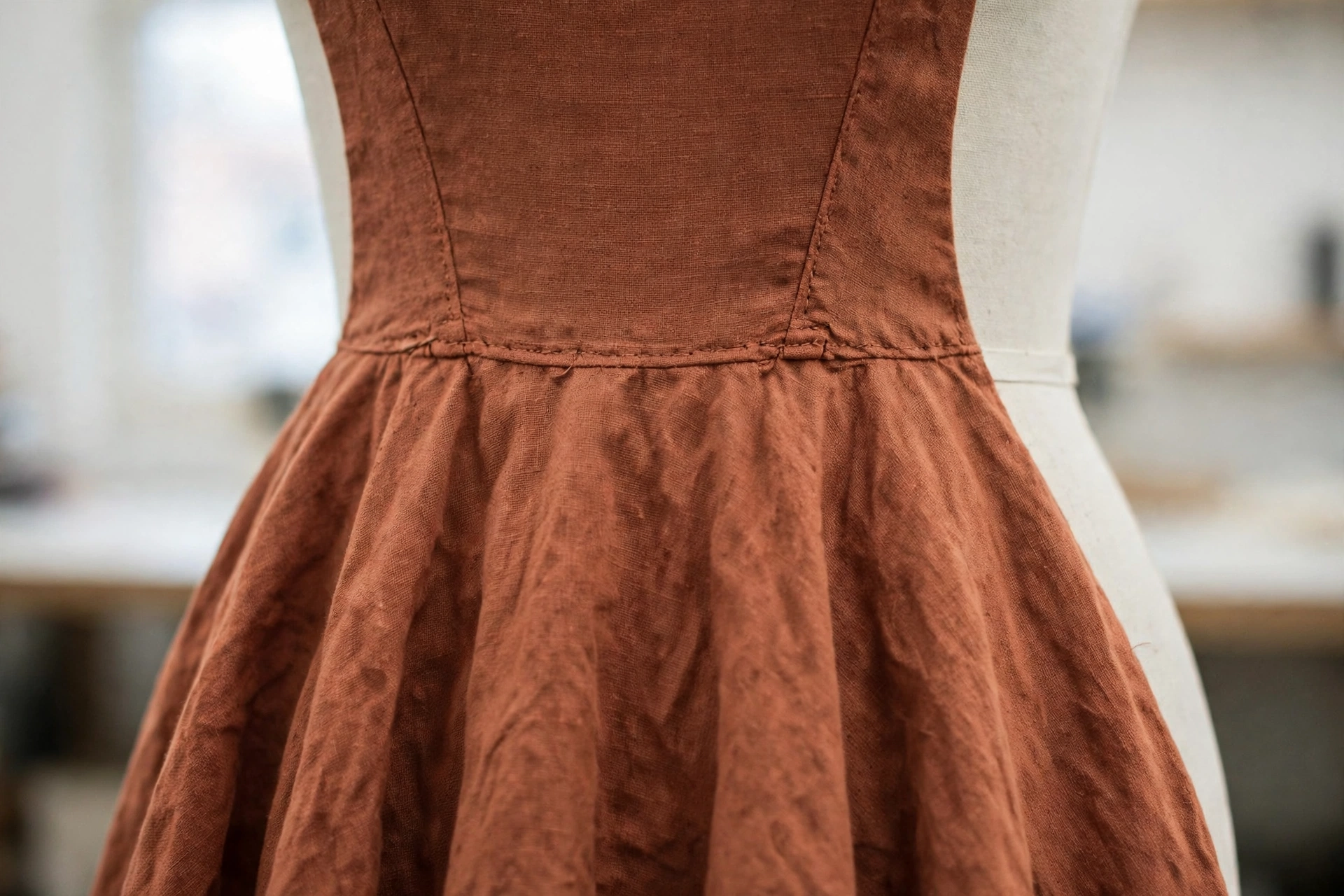
Then the cutting question, and it is the one this fabric asks louder than most. Corduroy has a pile direction, and pile direction is light direction: a panel cut one way drinks the light, its neighbour cut the other way throws it back, and a skirt sewn from mixed directions looks like two dye lots sharing a waist seam. Every panel goes the same way or the dress is two dresses. That discipline costs cloth, because pieces cannot nest head to tail on the lay, and the extra yardage has to be in the quote from the start. A cheap quote on a corded style usually means somebody planned to nest the lay and let the light sort it out. The light does not sort it out. It reports it, at the first fitting, in front of a mirror.
The square neck is graded, not stretched
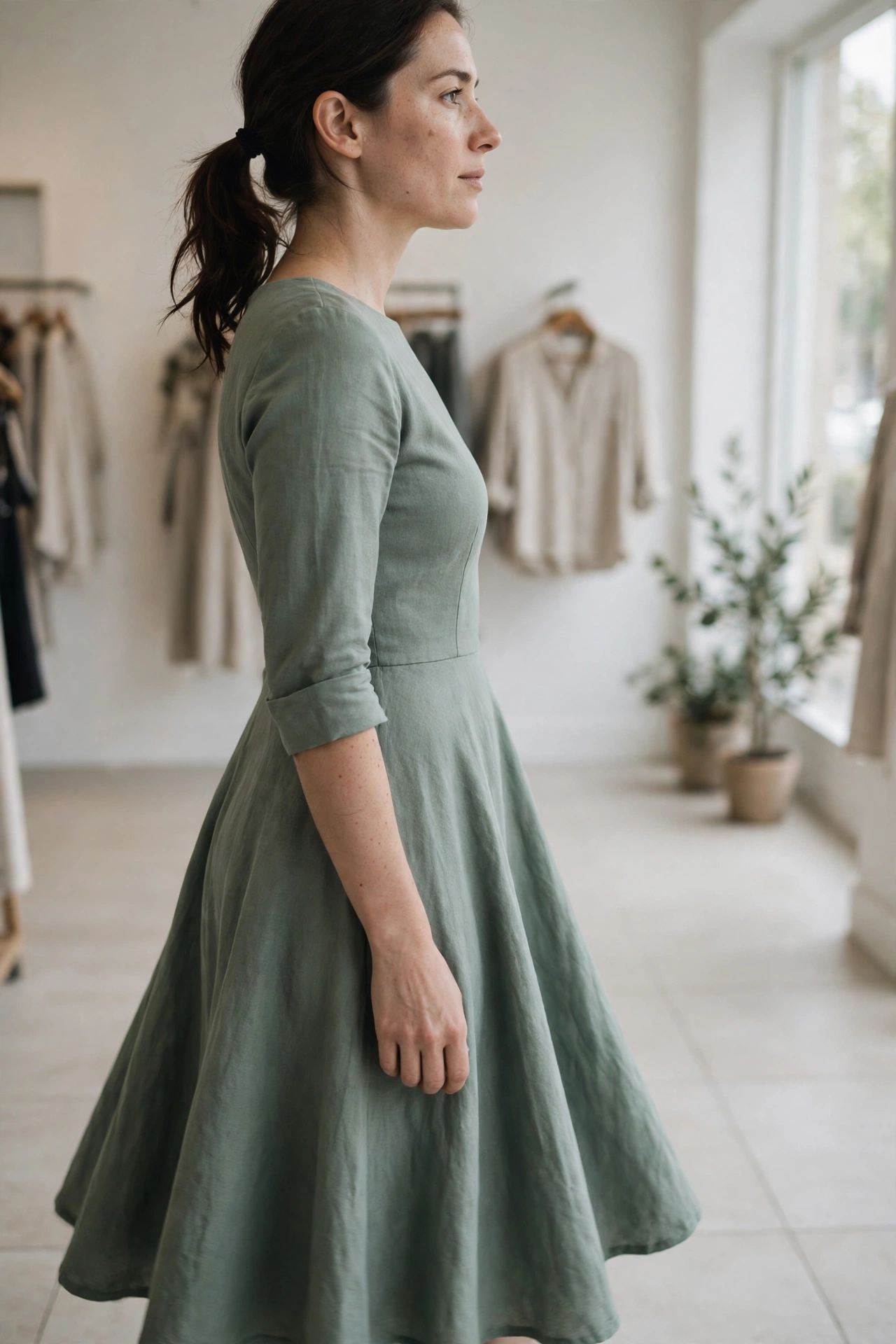
The sample stage is where the neckline earns its keep. A square neck is geometry: two corners that must sit clean, a straight edge that must not bow, and a facing that decides whether the edge behaves after the tenth wearing or only at the first. On the PP sample the corners are the inspection, because a corner that puckers in the sample will pucker at line speed in bulk, faster and worse. Grading is the quieter trap. A neck opening should widen slowly across the size run, slower than the bust grows, or the largest sizes wear a neckline that has drifted from square into wide and low. Old buyers ask for the neck width on three sizes, not one, and the answers tell them whether a pattern maker graded the style or a spreadsheet did. Sampling for this dress runs the usual 10 to 15 days once the tech pack is confirmed, and the pack is only confirmed when the wale, the nap direction and those neck numbers are written down, not agreed in a call.
Bulk follows at 20 to 30 days, and the calendar closes over the whole thing. An autumn dress that leaves the factory in late September has missed the fat part of its season no matter how well it is sewn, because the rail it was bought for turns over in October and the markdown clock starts while the cartons are still on water. No wait, that timing is the optimistic version. Add a revision round on the sample, or a fabric lot that has to be re-dyed because two rolls arrived as cousins instead of twins, and the dress lands in November wearing an autumn name. The buyers who land this style well work backwards from the rail date and let the fabric booking, not the sample, set off first. It feels backwards in June. It feels obvious in October.
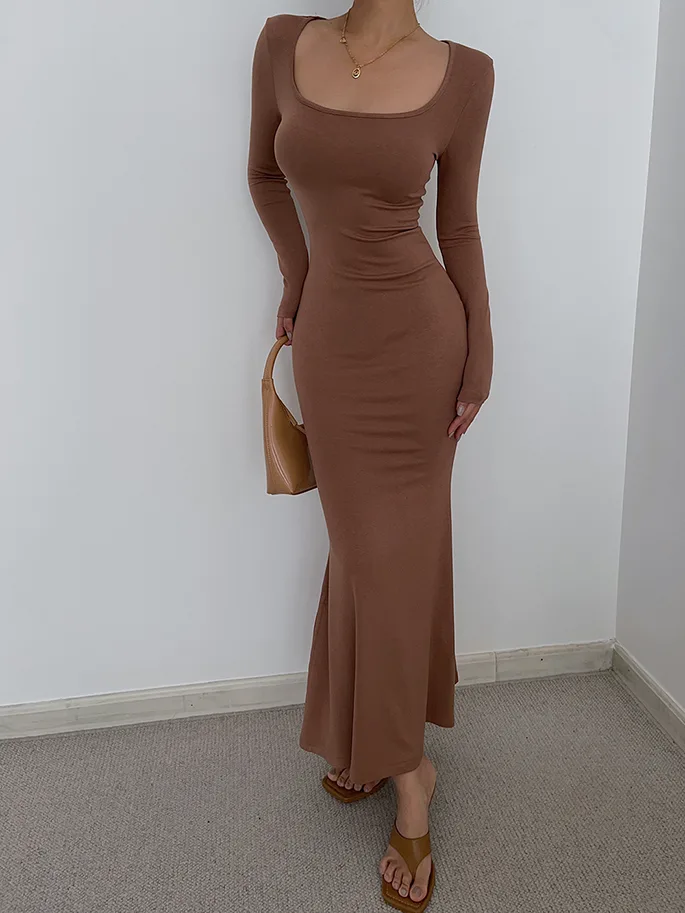
At the sourcing desk this corded A-line is planned beside the elegant formal dresses range, graded against the plus size formal maxi dress review, and checked for midsection behaviour next to the ruched bodycon maxi file, because an autumn dress is a calendar decision wearing a neckline.
Questions buyers and stores actually ask
The mill offers two wale counts at two prices for the same colour. Which one does a boutique pick?
Pick by rail, not by photograph. The fine wale reads smoother and more formal, suits a guest dress at a higher price, and shows pressure marks sooner, which matters for stock that gets handled. The wider wale is sturdier and reads plainly as corduroy, which is what an everyday autumn buyer is actually shopping for. What a boutique should not do is accept whichever arrives. The wale is the dress, in this style, and it belongs in the written order.
Bulk arrived and half the skirts look a shade lighter than the other half. Nothing is wrong with the dye, is it?
Probably nothing, and that is the annoying part. Mixed pile direction on the lay makes one cloth read as two shades, because the panels are throwing light in opposite directions. It is decided at cutting and cannot be washed, steamed or dyed out afterwards. The check belongs before bulk: ask how the lay is planned for a one-way fabric, and listen for whether the answer includes the extra yardage. A one-way lay costs more cloth. A quote that never mentions it is a quote that nested.
Ten pieces per style is the trial size here. What can ten autumn dresses prove by, say, November?
Fit and fabric behaviour, mostly, and those are worth knowing. Ten pieces across the run will show whether the square neck holds its corners, whether the cord marks where it is sat on, and which sizes your customers actually reach for. What ten cannot prove is timing, because a trial ordered late arrives late and its slow sales say more about the calendar than the dress. Order the trial against the season, not inside it, or the lesson you buy is the wrong one.
I do not dislike the dress. A corded A-line in a good brown or rust is one of the more honest autumn styles a boutique can stock, sturdy, warm to look at, and forgiving of the bodies that actually shop in autumn. What I have stopped believing is that it can be ordered in autumn. By the time the leaves turn, the dress has already been decided, at a fabric counter, by whoever was willing to talk about corduroy while the weather was still hot. The rest of us just find out whether they were right.