It starts small, the way these things always do on the fabric side. A roll of ivory velvet comes in for a run of hooded bridal cloaks, and the roll is fine, the color is fine, the hand is fine, and the only thing wrong with it is invisible until a finished cloak hangs under a shop light. The hood reads a shade paler than the body. Same roll. Same dye lot. The nap on the hood panel was cut running the other way, and velvet is a fabric with a memory of direction, it drinks light differently depending on which way the pile leans, and a bride turning slowly in a fitting room becomes a two-tone garment. Nobody made a mistake a checklist would catch. The cutter laid the hood piece the way it fit the marker, and the marker did not know about light.
From the upstream side, the fabric and trim end of the trade, a hooded cloak is not a simple garment wearing a simple shape. It is a large amount of cloth asked to behave like weather protection, ceremony, and photograph all at once, and the cloth gets a vote. The BEAUTELICATE hooded bridal cloak, sold for weddings and for Christmas season wear, sits in a category where the buying questions are usually about length and color and warmth, in that order, and the upstream questions are about nap, width, and lining, in no order at all because they arrive together, usually in October, usually in a hurry.
The second incident in the pile is a width problem, and it belongs to the season. A long cloak with a real sweep wants wide fabric, because the body of the cloak is cut generously and every seam down the back is a line a camera can find. In the main season the mills run cloak-weight fabrics at widths that accommodate that sweep. Late in the year, when Christmas demand has eaten the good stock, the same fabric name turns up in a narrower width from a different source, and the cloak that was one clean expanse becomes a cloak with a center seam and slightly different plans. The fabric name on the invoice does not change. The garment changes completely. Buyers who specify fabric by name and color, without specifying width, have consented to a surprise they have not met yet.
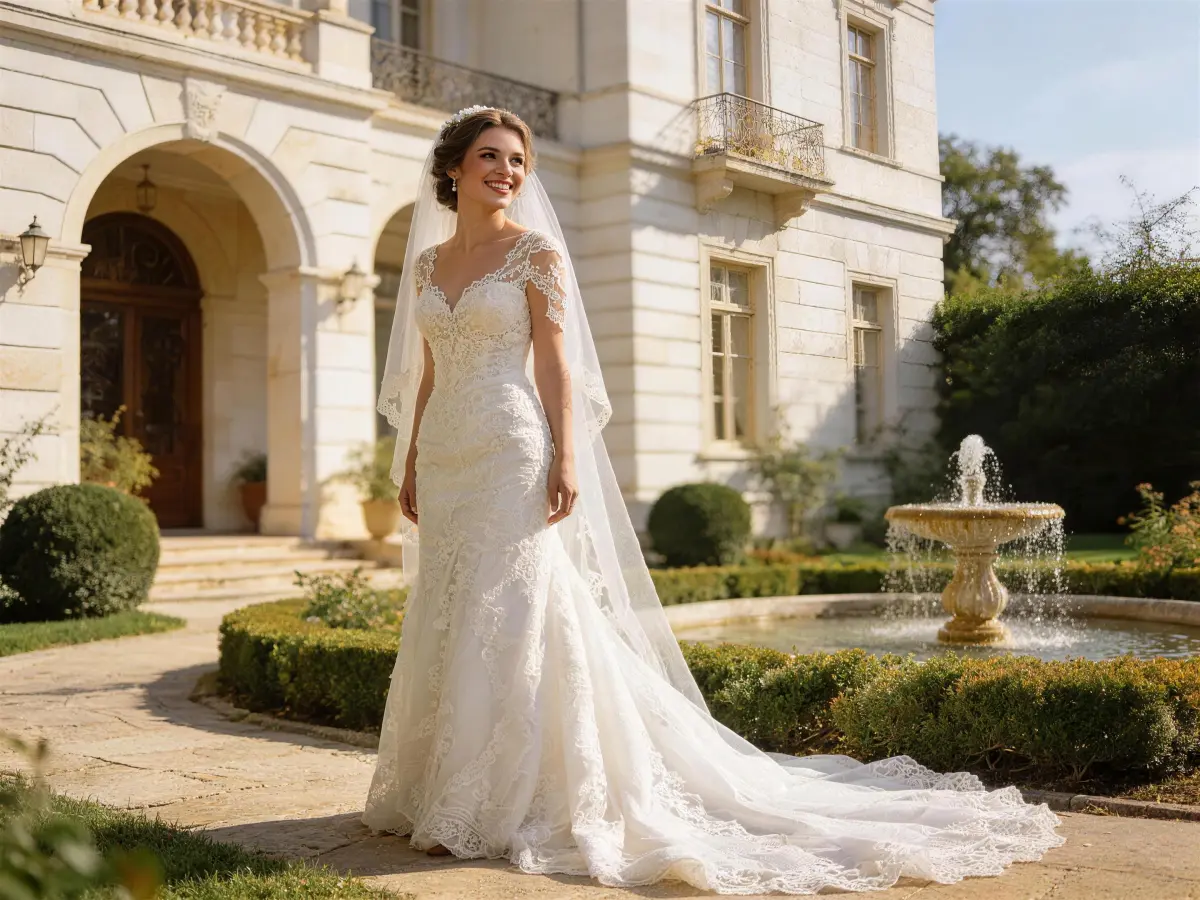
Then there is the lining, which accumulates its own small incidents until they are not small. A cloak lining in a smooth satin-weave is chosen so the cloak slips over a gown without dragging the dress underneath, and that part works. What also happens, in heated rooms in winter, is static. The lining charges against the gown’s skirt, the two fabrics decide they are friends, and a bride walking down an aisle acquires a cloak that is clinging to her legs from the inside while flowing beautifully from the outside in every photograph. Anti-static finishes exist and wear off. Heavier linings behave better and change the drape. The upstream desk hears about this every January, from the same season, in almost the same words, and the fix is never one thing, it is a negotiation between slip and cling that the fabric suppliers and the makers re-argue every autumn.
The hood deserves its own paragraph of accumulation because a hood is a piece of engineering disguised as romance. A bridal hood has to frame a face, sit over hair that has been professionally arranged, and stay up without being held, in a garment whose weight is pulling it backward off the head all day. The weight of the hood is set by the fabric and its lining together, and a hood cut from double layers of a cloak-weight velvet can be heavy enough to slide unless the neckline balance is right. Trim suppliers get calls about this that are really about physics. A bride wants the hood trimmed with something soft at the edge, the trim adds grams exactly where grams do the most harm, at the front edge of a hood that is already losing an argument with gravity.
Christmas red and wedding ivory are not the same job
This cloak gets sold into two ceremonies that treat fabric oppositely. The ivory wedding version lives in bright light, against a white or ivory gown, in photographs that will be examined for decades, and its fabric sins are sins of shade. A dye lot that drifts a fraction warm reads as cream against one gown and as dingy against another, and the tolerance paper allows five percent while the human eye, given a gown to compare against, allows almost none. Red Christmas versions live at night, in warm artificial light, and their sins are sins of depth. A red that sings under shop light can go brown and tired under the yellow light of a hall, and a red with too much blue in it turns theatrical. Same cloak pattern. The upstream problem is that dye behaves like it has a venue in mind.
Sellers who move between the two versions learn to ask the fabric question with the venue attached. Which light. Which gown shade. It sounds precious until a whole short run of ivory cloaks comes back described as yellow, by brides whose gowns were a blue-white ivory the cloak was never shown against. Nothing was yellow. Two ivories disagreed, and the cloak lost because it was the guest in the photograph, not the host.
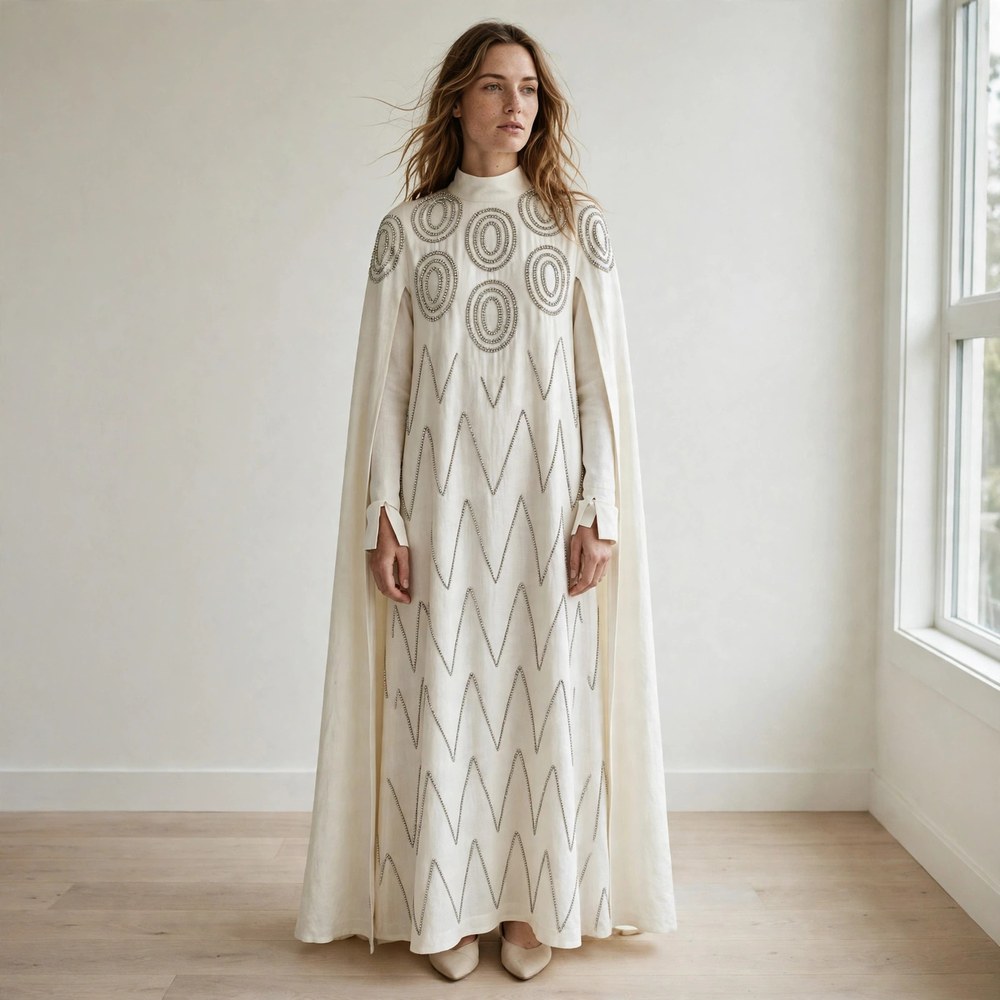
Stores ordering this category for the season, rather than a single bride ordering one cloak, run into the ordering calendar that governs every heavy fabric. Cloak-weight velvets and wool blends are woven for the cold season and the weaving happens ahead of it, which means the fabric a store can get in November is the fabric that exists, not the fabric in the swatch book. The swatch book is a history document by then. Existing finished styles move faster and more predictably, the cloaks and capes already made up in a maker’s current range, which is why the ready pieces in the wedding dress wholesale catalog and the wider ready range turn over while custom fabric dreams queue behind the weaving calendar. A bride with a December wedding and a specific velvet in mind needed to be specific in August. In December the upstream answer is a shorter list, honestly given.
The clasp is the last small incident, and it closes the front of both the cloak and this argument. A cloak hangs from its closure. Whatever sits at the throat carries the garment’s weight distribution and its first impression, and trim sourcing for clasps runs into the familiar trap of the sample and the bulk disagreeing about finish. The sample clasp is bright and clean. The bulk clasps, plated in a faster bath to meet a price, can carry a duller tone that only shows against ivory, where everything shows. One bride in one cloak, this never surfaces. A store’s whole rack photographed for a listing, it surfaces at once, six clasps describing six slightly different ideas of silver. The trim supplier shrugs, the tolerance was met, and tolerance, once again, is a number that has never had to stand next to a wedding dress.
What a buyer can actually check before the season decides
There is a short set of checks that live upstream and cost little. Hang the sample cloak beside the actual gown, or the closest gown shade the store sells, under the store’s own lights and look at the hood against the body for nap shading. Turn the cloak, not just the swatch. Ask the width of the fabric the current stock was cut from, and whether a reorder would come from the same width, because a mid-season reorder from narrower stock produces a related cloak rather than the same one. Work the clasp twenty times and look at it against white afterward. Weigh the hood in the hand, literally, and then imagine it on arranged hair at hour four.
None of this appears in a product title. Product titles speak of hooded, bridal, wedding, Christmas, the words a search box eats. The upstream trade speaks of nap and width and lot, the words a fabric obeys. A cloak is where those two vocabularies meet least comfortably, because it is such a simple-looking object, a shaped blanket with a hood, right up until the light hits it in a church. A made-to-order route with the fabric confirmed in photographs beforehand, the same discipline used on a made-to-order hooded bridal cape, exists precisely because a cloak’s arguments are fabric arguments and fabric arguments can be settled before cutting, in pictures of the actual roll, while they cannot be settled afterward at any price that makes sense.
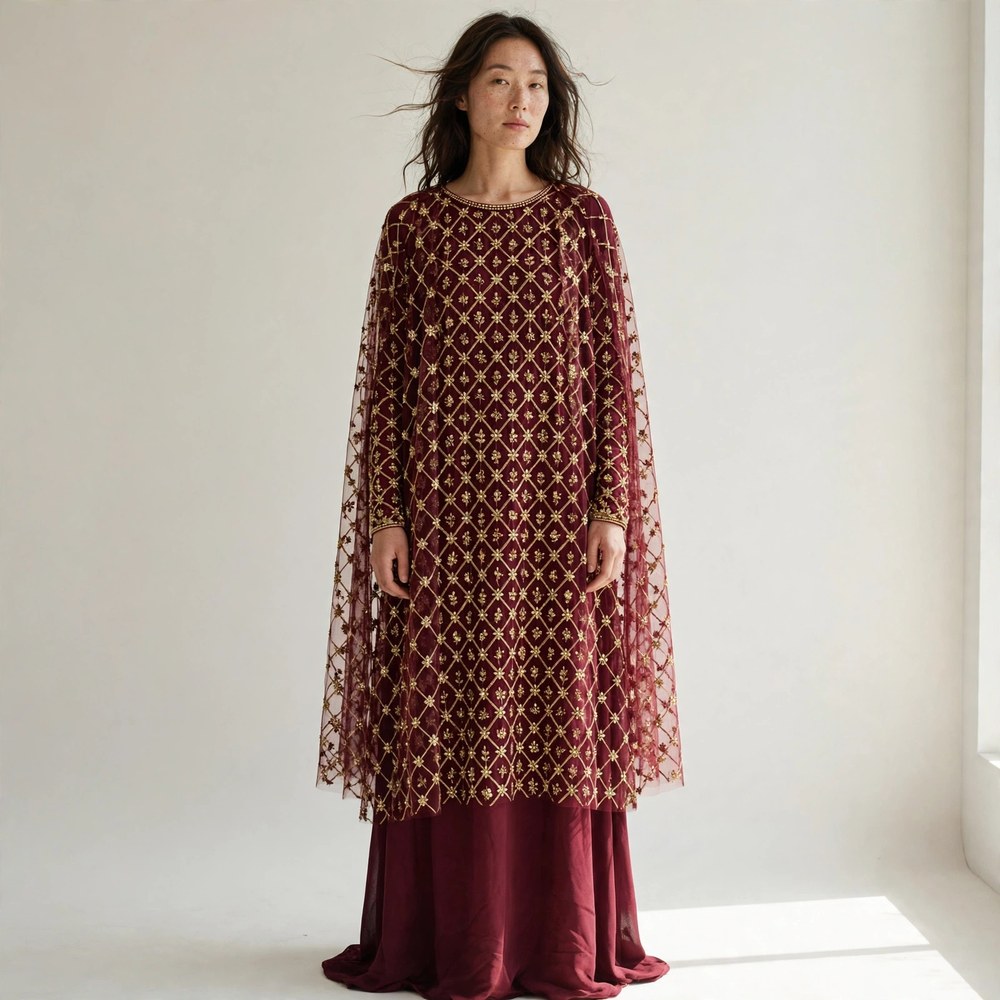
Questions that reach the fabric desk about this cloak
The hood looks paler than the body in the shop. Is the cloak faulty?
Usually the fabric is telling the truth about direction rather than being faulty. Velvet and other pile fabrics shade differently depending on the way the pile runs, and a hood cut against the body’s direction will read lighter or darker even from one roll. On a sample it is worth checking in two lights, because a shop’s spots exaggerate what a church’s soft light may forgive. If the shade step is visible in daylight as well, that cloak should not be sold as a matched piece, and the fix is at the cutting table of the next batch, not in any conversation with the customer. I would rather a store found this on the rack than read about it in a review written in January.
One cloak for a December bride. Why does everyone keep asking when she decided?
Because a single cloak is easy and a December cloak in a chosen fabric is a calendar problem wearing a garment’s clothes. The weaving and dyeing for cold-season fabrics happen ahead of the season, and by December the choice is what exists in finished cloaks and current stock fabric. One piece can still be customized from existing styles and current cloth, and one bride wanting one cloak is honestly the simplest order in the building when the fabric question is answered early. The asking is not bureaucracy. It is the upstream desk trying to learn whether the dream fabric is still a fabric or has become a memory.
Static made the lining grab the bride’s gown. Whose fault is that, honestly?
It belongs to the pairing more than to either garment, usually. A smooth lining chosen for slip will charge against a dry synthetic gown skirt in a heated room, and winter weddings are heated rooms full of dry air and synthetic skirts. A heavier lining clings less and drapes differently, an anti-static finish helps and fades with cleaning, and a bride can be rescued on the day with the old trick of a lightly damp hand passed between the layers. Nobody at the fabric desk enjoys this answer because it offers no villain. The pairing was never tested together, that is the whole story, and pairings are the one thing nobody in the chain owns.
Five cloaks for a wedding party, wholesale. Why did the quote ask about the gown color first?
Because five matching ivory cloaks are a shade-matching exercise before they are a sewing exercise. The gowns set the ivory the cloaks will be judged against, and a cloak lot chosen without that reference can be perfectly ivory and perfectly wrong next to the actual dresses. For wholesale on catalog styles the floor is five pieces per style for wedding range pieces, mixed colors and sizes where the style allows, and getting the shade reference at the start is what keeps those five pieces reading as a set in photographs. A quote that asks first is a quote that has seen the other kind of photograph, the kind where everyone is warm and nothing matches.
So the pile of small incidents stands where it always stands by the end of the season. A hood shaded by direction, a width quietly changed, a lining in love with a gown, a clasp duller than its sample. Not one of them is a scandal. Together they are the difference between a cloak that gets remembered as part of a wedding and a cloak that gets remembered, full stop, and the upstream side keeps its unfashionable counsel, which is that fabric decisions are wedding decisions, made months earlier by people the bride will never meet, in a vocabulary she will never hear, and the photograph at the end grades all of it without appeal.