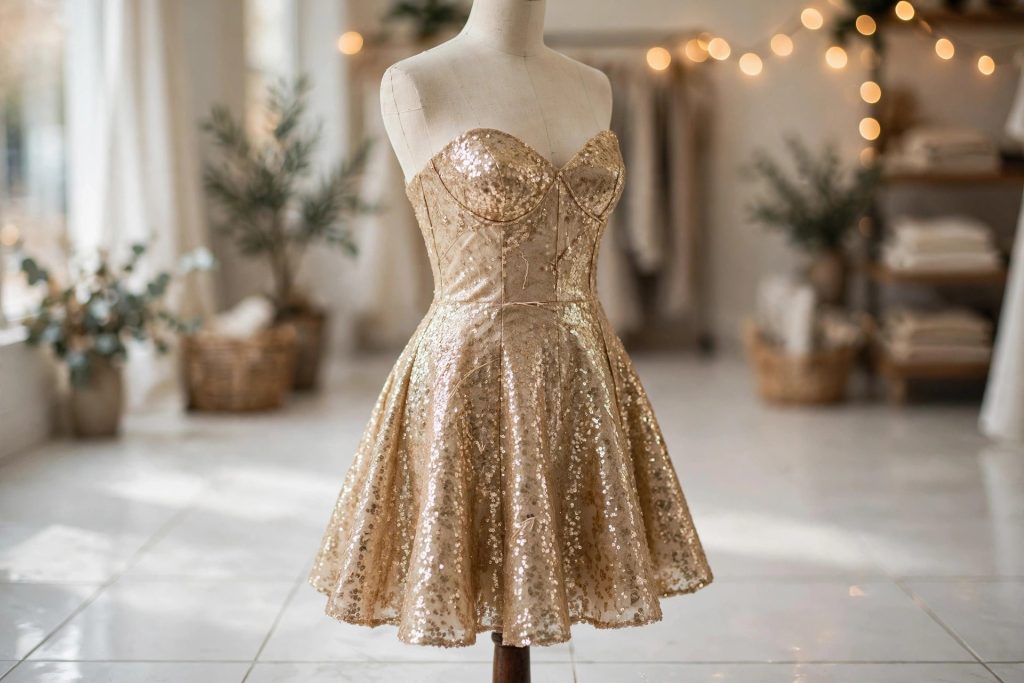
Three. That is the number of anchor stitches holding a machine-tacked decorative flower or a run of sequins on a cost-cut dress, when the sample that won the order had twelve or more holding every cluster down. Three stitches survive a photo shoot. They survive a fitting, mostly. What they do not survive is a December of parties — sitting, dancing, a seatbelt, a hug from somebody wearing a watch — and so the shedding complaints arrive two to four weeks after delivery, right on schedule, every year, as if the dresses were keeping an appointment the buyer never knew they made.
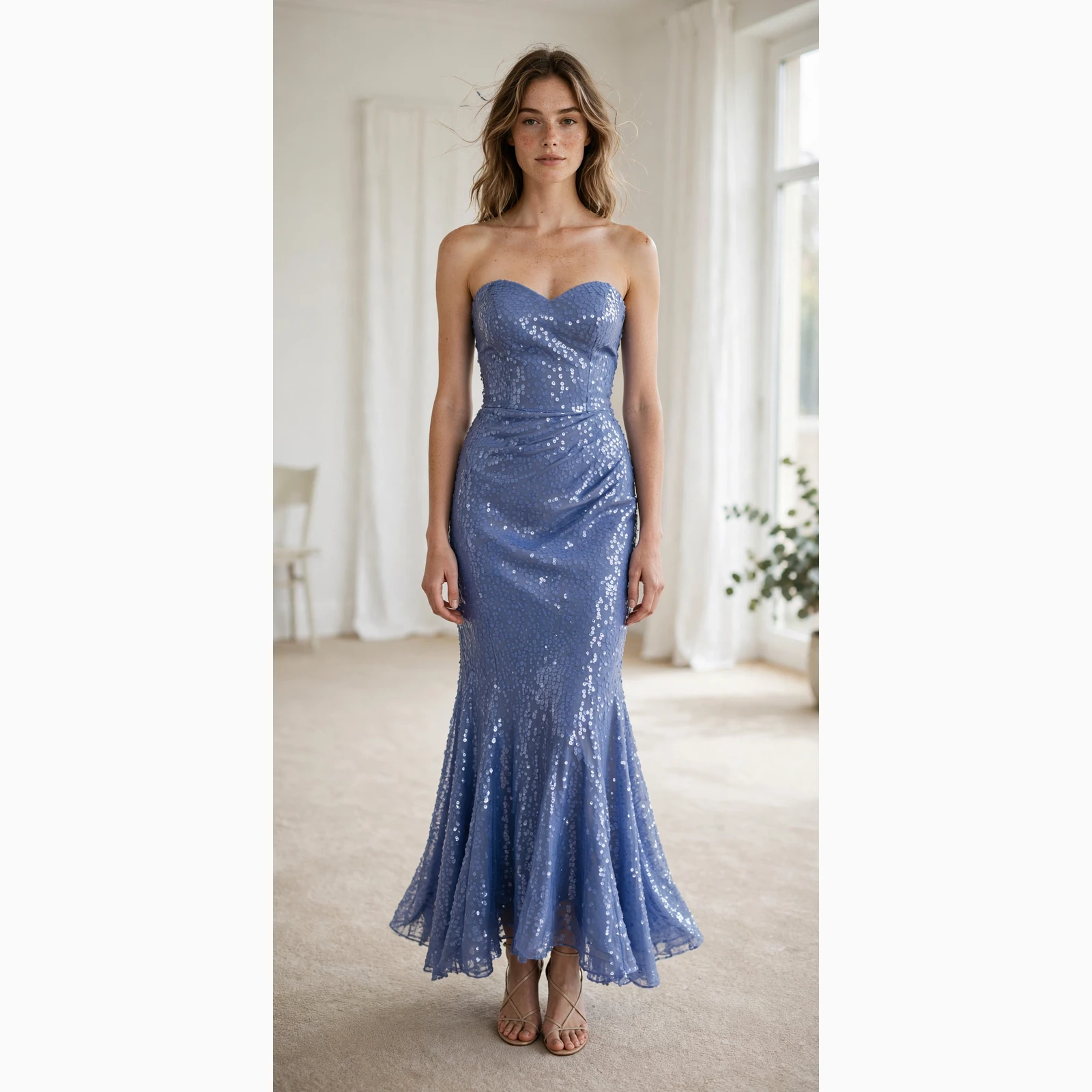
I work the production side of occasion dresses, close enough to the line to know which decisions are made with a stopwatch in the room. The BeryLove sequin style under discussion here — a formal wedding guest and prom dress, all-over sparkle, the kind of garment that sells the whole evening in one photograph — is a useful dress to think with, because nearly everything that can go wrong with it goes wrong at the level of thread and stitch count, long before it goes wrong at the level of design. The design is fine. The design was always fine. Nobody returns a sequin dress because the silhouette disappointed them.
Walk the number backward. A shedding complaint in week three traces to a cluster that let go, and a cluster lets go for one of a short list of reasons that production people recite the way other people recite weather. The thread snapped. The anchor count was thin. The panel was pressed too hot and the thread came out of the press already tired. Under all three sits the same ancestor: the quote got squeezed, and the squeezing landed on the handwork, because handwork is the one cost a buyer cannot see in a photograph. You can photograph sparkle. You cannot photograph how long the sparkle intends to stay.
Thread is a decision, and most people never hear it get made
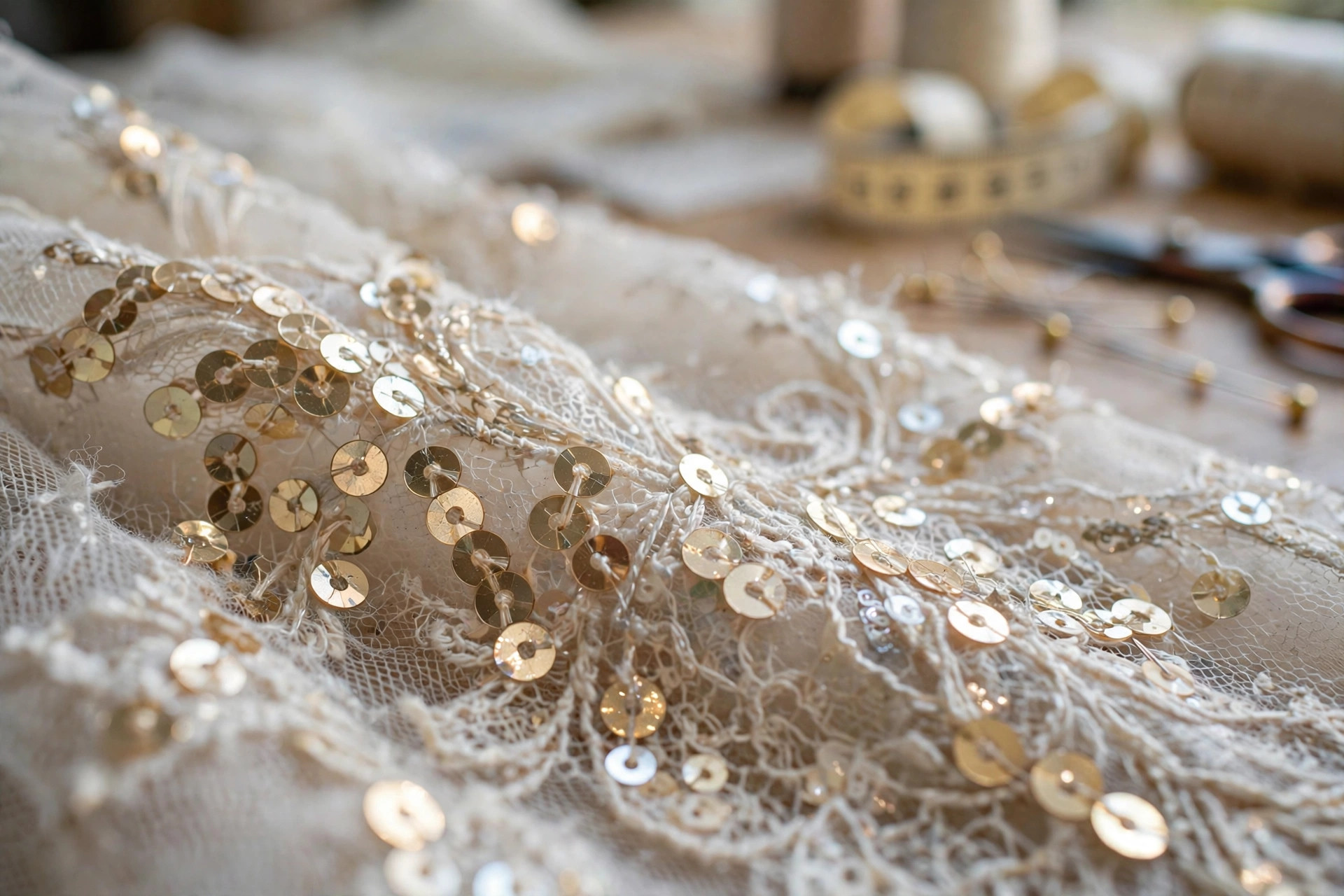
There is thread made for beading and sequin work, and there is regular polyester sewing thread, and the difference between them is not visible across a sample table. It becomes visible across a season. Regular thread snaps under the combined weight and movement of dense decorative work — this is the usual cause of the mystery shedding that buyers report about two weeks after the dresses land, mystery being the word people use for a cause they were never told about. A workshop that switches thread to save a small amount per garment has not made the dress worse in any way a receiving inspection can easily catch. The clusters hold. The tug test at the sample stage — a firm pull, around three kilos of force on a flower cluster or sequin run — passes, because new thread of any kind is strong. The failure is scheduled, not immediate, and scheduled failures are the hardest kind to argue about, because by the time the evidence exists the argument is three weeks old and the dresses are already in customers’ wardrobes.
Bulk inspection does not save you here either, and I say that as someone whose side of the building runs it. On the sample, every cluster gets the pull test. In bulk, the spot check runs at something like one garment in twenty. That ratio is normal across the trade and it is not laziness — a full pull test on every cluster of every sequin dress would add hours the quote never paid for. But it means a bad thread decision sails through inspection statistically invisible, present in every garment, sampled in almost none. Buyers who understand this stop asking for more inspection and start asking a cheaper, better question: which thread, specified where, in the tech pack, by name. A thread nobody named is just whatever was on the machine.
The stitch count tells the same story in a different dialect. Hand-sewn decorative work survives twenty or more gentle wears in the testing workshops talk about among themselves. Machine-tacked work at three anchors survives about five. Five wears is a number with a shape to it — a prom, two weddings, a party, a photo-heavy birthday — and then the shedding starts, and the review gets written by a customer who reasonably believed she had bought a dress rather than a five-use license to sparkle. When buyers ask for a hand-finished look at a machine-made price, the compromise phrase that ends up written into the tech pack is hand-finished, and that phrase is doing more work than any other two words in the document. It means the visible edges got attention. It does not mean twelve anchors became three somewhere nobody looked.
Steam, storage, and the two weeks after the box is opened
Pressing a sequined or beaded gown is a slow, careful business that production schedules resent. Decorative elements soften and can be damaged at high heat, so pressers work low, with a cloth between the iron and the work, and the careful version adds roughly twenty minutes per garment against the fast version. Twenty minutes is nothing on a sample. Across a bulk run in peak season it is a shift pattern, an overtime argument, a supervisor deciding which corners are load-bearing. The corner that usually gives is the pressing cloth. Dyed decorative elements — and a great deal of the sparkle in this price band is dyed rather than color-through — can bleed under steam. The check for it is embarrassingly simple: a damp white cloth, rubbed on the work before the run starts. If color comes off on the cloth, it will come off on something paler and more expensive later.
Storage finishes what pressing starts. Heavy decorative bodices stored on narrow hangers stretch while they wait — the weight of the work pulls the bodice out of shape across days and weeks of hanging, and nobody accounts for that stretch because it happens after the garment has passed every check the factory runs. Flat storage or wide hangers are the boring answer. A dress that arrives slightly longer in the bodice than the sample was not necessarily sewn wrong. Sometimes it was hung wrong, by us, in the gap between final inspection and the carton, which is a sentence production people do not enjoy saying to buyers and which happens to be true often enough that I have learned to say it early.
Peak season bends all of this further. For prom and spring occasion work the ordering peak runs from the start of the year into spring, rush orders placed late carry premiums in the range of twenty to thirty percent, and inside the workshop the season shows up as piece-rate hands working ten to twelve hour days. Speed rises. Stitch count falls. That is not a character flaw in the workers; it is what a piece rate is designed to produce, and any buyer who has ever paid a rush premium while assuming the handwork stayed constant has misunderstood what the premium buys. It buys the slot. It does not buy back the stitches.
The review data, read from the production end, stops looking like customer exaggeration once you know the schedule. Same-category embellished occasion dresses sit in a broad band — call it $120 to $280 for the heavily worked prom styles, ratings clustering around 4.0 to 4.5 — and the one and two star language has a calendar. Bead and sequin loss leads the quality complaints, and those complaints spike in reviews posted two to four weeks after delivery. Not on delivery day. Shedding needs a wear or two to declare itself, and a wear or two is exactly what a three-anchor cluster was built to survive. The timing of the complaint is a fingerprint of the cause, and it points at the thread and the stitch count far more often than it points at the customer.
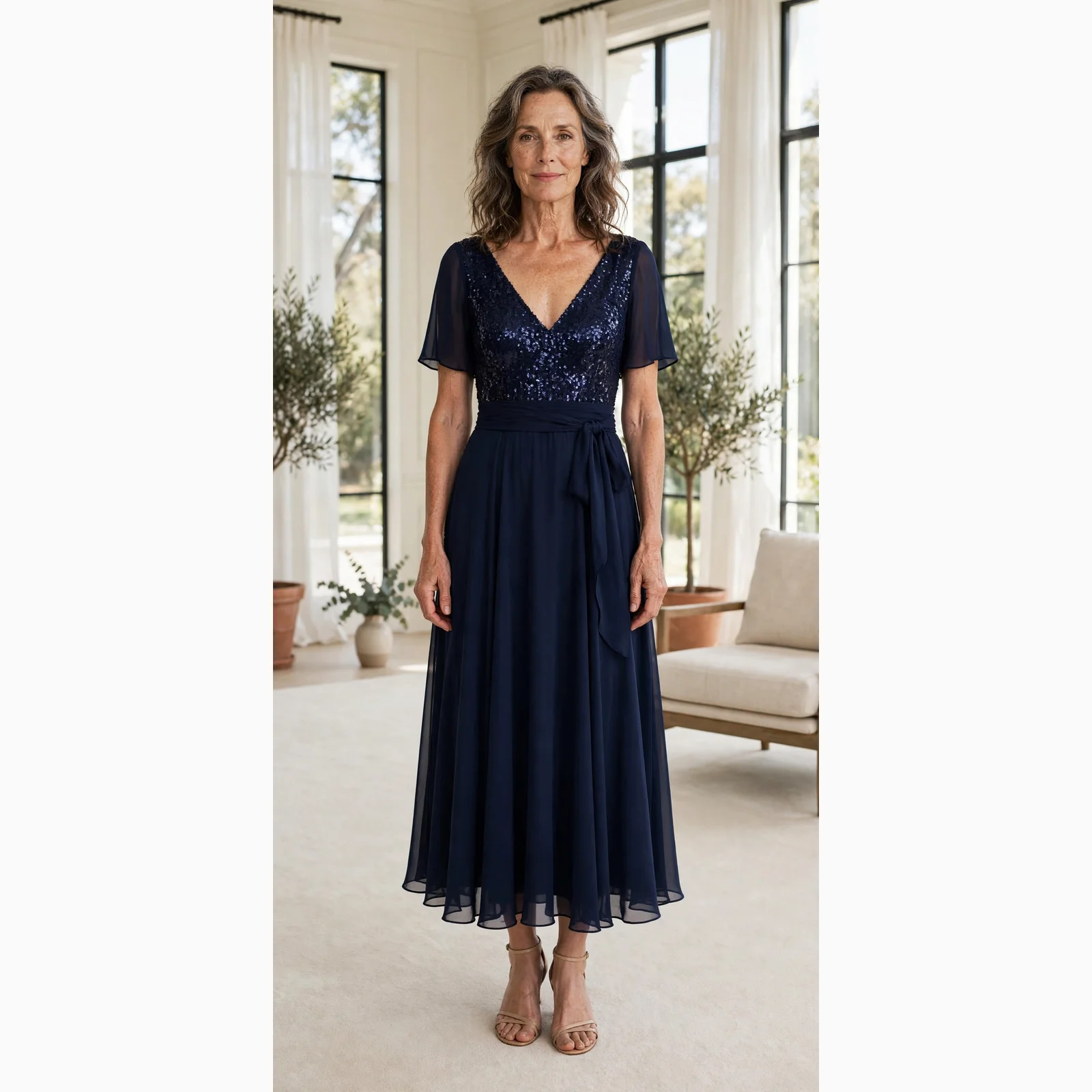
Stores ranging this kind of dress for the guest and prom season usually treat it as the loud piece in a quieter rail — the sequin party style reviewed here is the closest cousin in the current range, the flutter sleeve cocktail dress covers the softer end of the same customer, and the flutter sleeve party dress sits between them in formality. Wholesale entry for women’s occasion styles runs from 10 pieces per style, colors and sizes mixed, and at that entry size the thread specification matters more than the unit price argument, because ten dresses shedding in ten wardrobes is a reputation event, not a rounding error.
What buyers ask production, once the shedding starts
The sample barely shed at all. Why is the bulk losing sequins in week three?
Because the sample and the bulk were probably not built the same way, and the difference is small enough to hide and large enough to matter. The sample gets the patient version of everything — full anchor counts, the specified thread, pressing done slowly by whoever the sample room trusts most. Bulk gets the production version, sewn at piece rate, pressed against a schedule, spot-checked at one in twenty. If the tech pack never named the thread and never fixed the anchor count, nothing was technically violated, which is why these arguments go in circles and end with a credit instead of an answer. I would rather a buyer spent her bargaining power before production, on two written lines about thread and stitches, than after it, on a dispute where both sides are holding dresses that shed and calling it different names.
Twelve anchors down to three. Is anyone actually counting, or am I imagining the gap?
You are not imagining it, and almost nobody is counting, and those two facts live together comfortably in this trade. Anchor counts are countable — a cluster can be turned over and the stitches tallied in under a minute — but counting is not built into most receiving inspections because the inspection standard was written for seams and measurements, not for decorative handwork. The workshops buy pre-finished decorative elements by the hundred when a quote gets tight, instead of building them in-house, and the purchased elements arrive with their own anchor logic already decided by somebody else’s price point. If the count matters to your customers, it has to be counted somewhere, and the cheapest somewhere is the pre-production sample, checked against the number written in the pack. Everything after that is archaeology.
Can pressing really ruin a sequin dress before it leaves the factory?
It can mark it, yes, in ways that only declare themselves later. High heat tires the thread and can shift dyed decorative elements, and steam is the moment where a color that was never fixed for high temperatures decides to travel. The damp white cloth test exists because the failure is predictable — rub the work with a damp cloth in the sample stage and the cloth tells you what the steam will do, weeks early, for the price of a rag. What pressing cannot do is explain shedding on its own, and I correct buyers on this because the single-cause story is always tempting. No wait. Pressing alone, done badly, accounts for some of it. Thread accounts for more. The honest production answer is usually a pile of small causes that all lean the same direction, and the pile is what a rushed season produces.
We paid a rush premium in spring. Did we pay for the same dress, faster?
You paid for the slot, and the dress you got was the dress that a faster line produces. Piece-rate hands working long days do not decide to sew fewer anchors out of spite — the rate rewards finished garments, and the minutes live in the handwork, so the handwork is where the minutes come from. A twenty to thirty percent rush premium that actually protected the decorative work would have to be spent on that work specifically, named and counted, and in my experience it almost never is. It evaporates into scheduling. If the season forces a rush order of an embellished style, the protective move is to reduce the embellishment on purpose — a sparser design, honestly built — rather than to order the dense design and have it thinned for you by the calendar, in places you cannot see, on a schedule you cannot appeal.
What would you check, in my place, before paying the balance on a sequin order?
I would check the things that fail on a delay. Pull a cluster on a bulk garment, not the sample, and count what is holding it. Run the damp cloth over the densest area and look at the cloth, not the dress. Take one garment off its hanger — if it has been hanging narrow while it waits, check the bodice length against the pack before the cartons are sealed, because storage stretch is real and it is much easier to argue about before the goods leave than after. None of that takes an afternoon. It takes an hour, once, and it changes which arguments you are having in December — from arguments about whose fault the shedding is, which nobody wins, to a shorter conversation about a number somebody wrote down and somebody else did not meet. I know which December I prefer, and I have had both.
What stays with me, after years of watching sparkle leave the building in cartons, is how much of the dress’s fate is decided by things too small to photograph. A thread. A stitch count. A cloth between an iron and a bodice. The customer experiences all of it as one event — the dress shed at the party — and writes one sentence about it that will outlive every specification we ever wrote. Production is the art of being blamed in summary for decisions made in detail. I can live with the blame.