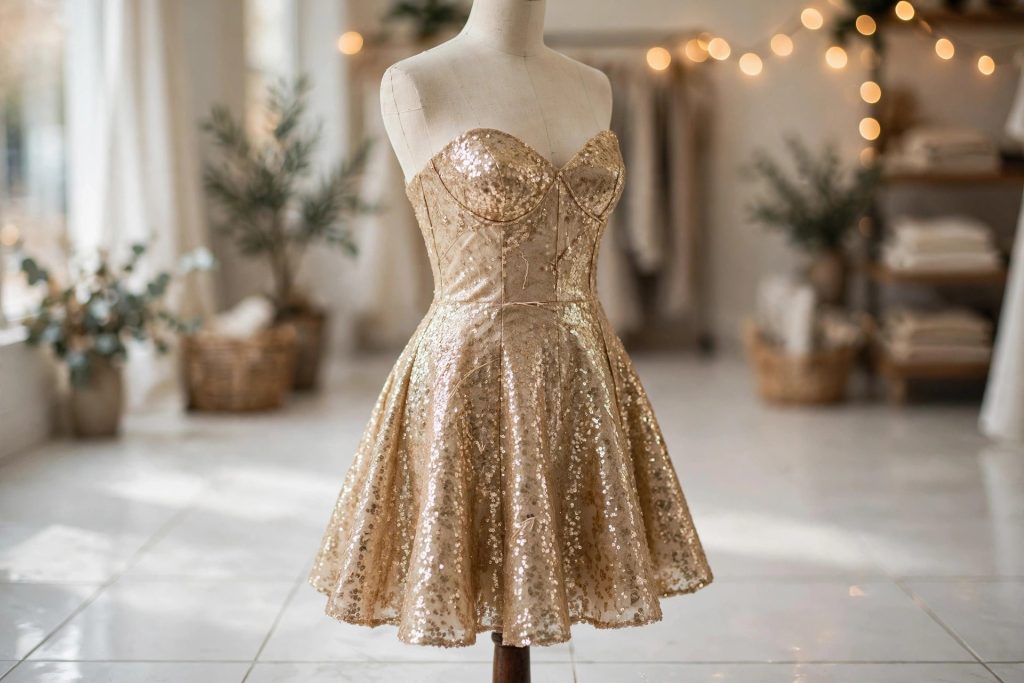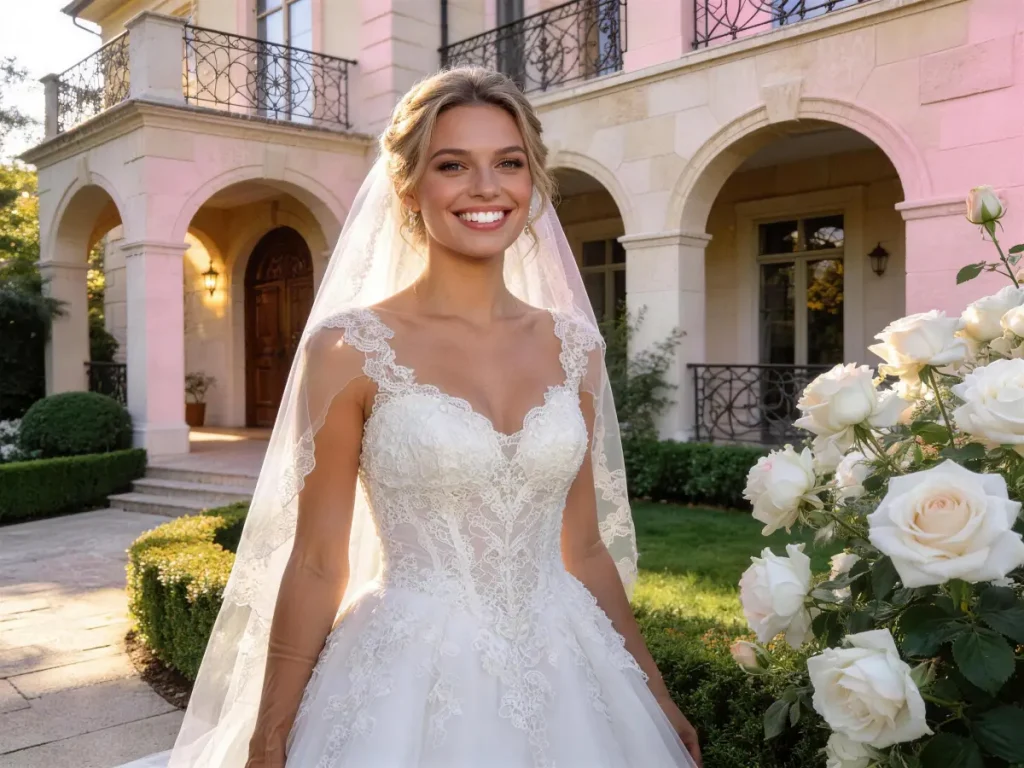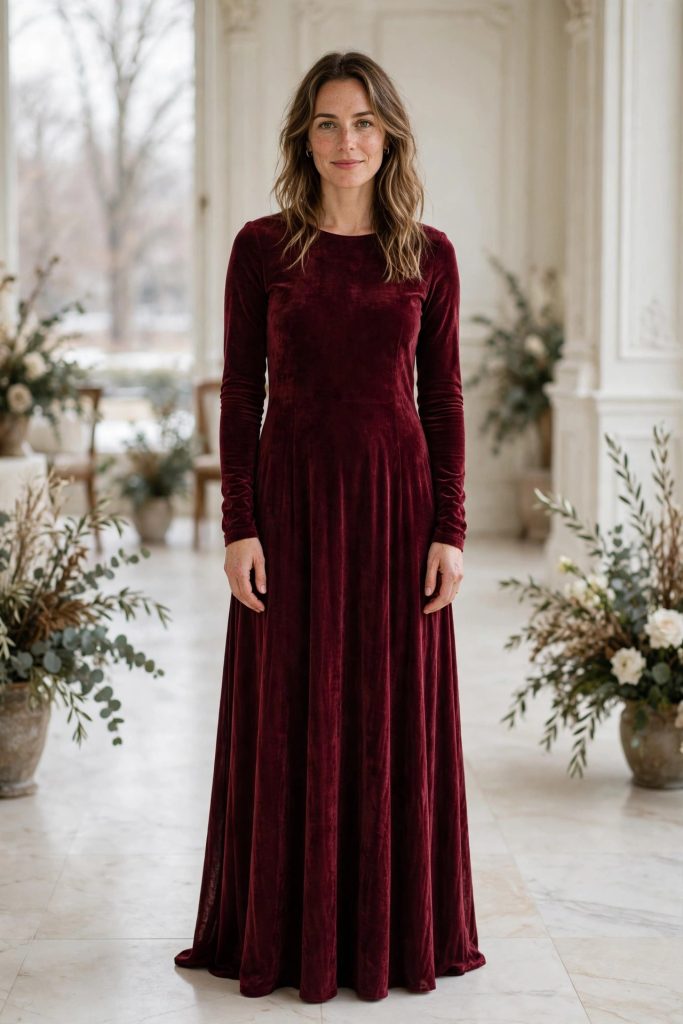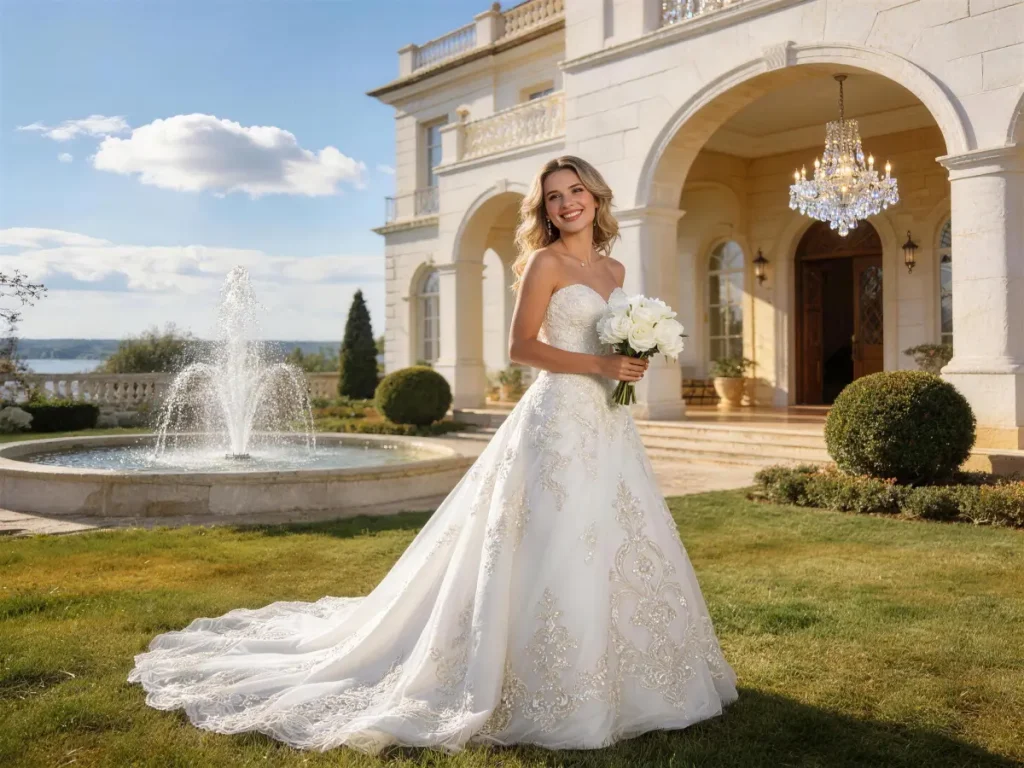
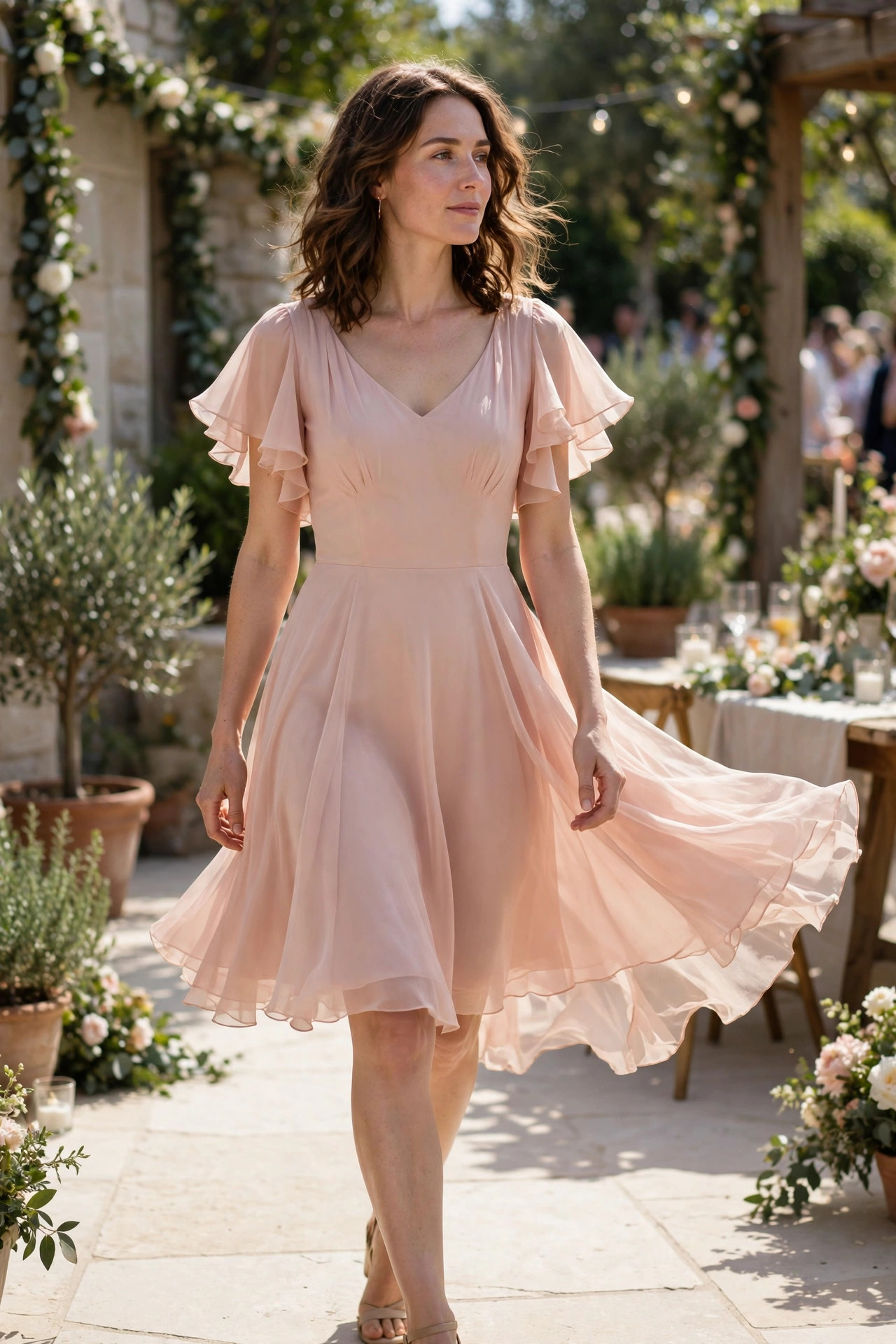
What does a buyer actually pay for when she orders a flutter sleeve cocktail dress for a winter wedding season? I ask myself this every October, sitting on the sourcing side of the table, and I still do not have an answer that fits on a quote sheet. She pays for chiffon, obviously. She pays for a crew neckline and a sleeve that moves. But the longer I do this, the more I suspect she mostly pays for the gap between the dress in the photograph — shot in warm light, in a warm month, on a warm evening — and the dress that has to perform in December, in a cold church, at a reception where the heating is a rumor. The oten 2026 flutter sleeve cocktail dress lives right in that gap. My job, as the person who compares suppliers for a living, is to price the gap before a boutique’s customers have to stand in it.
Can I compare two quotes for this dress in a way that means anything? That is the second question, and it is harder than it sounds. Quotes in this trade are padded in places the buyer is not meant to look, and the padding is rarely where she thinks it is. A unit price is a summary of decisions — what got counted, what got folded in silently, what got left for later — and two quotes for the same cocktail dress can differ by a fifth while describing, on the surface, the identical garment. One of them has priced the lining. One of them has priced the waste. One of them has priced nothing but optimism and a fast sewing line.
What is hiding inside the unit price, and why won’t anyone itemize it?
Start with the least glamorous number in garment sourcing: cutting waste. Fabric gets bought by the roll and used by the garment, and between those two facts lives a percentage that somebody has to pay for. The buyer who asks about yield gets a different conversation from the buyer who asks only about price. Not always a lower price. A more honest one, where the waste is a number both sides have seen instead of a suspicion both sides carry into the next dispute. A flutter sleeve, of all things, is a waste-sensitive pattern piece: a small, curved, floaty shape that nests badly on the roll and leaves crescents of unusable chiffon around it. The sleeve that costs almost nothing to sew costs real money to cut, and the quote that ignores that is a quote that will find the money somewhere else. It always finds it somewhere else.
Then there is the small-order question, which buyers ask as if it were about generosity and factories answer as if it were about machinery. Below a certain quantity, a surcharge appears — in the categories I know best it runs fifteen to twenty percent — and it usually appears without a name, folded into the unit price where it cannot be argued with. Named, it is a setup cost, and setup costs are legitimate: a line that stops, changes thread, changes hands and changes pace for a tiny run loses money in ways that have nothing to do with cloth. Unnamed, it reads as a factory being expensive. The buyer who wants the small order and the honest price has to ask for the surcharge as its own line. I ask.
Lead time has the same hidden architecture. Standard runs for light occasion dresses sit in a band the trade quotes confidently and meets approximately, and the busy months grow a rush line of eight to twelve percent that appears on the invoice like a weather event. What gets left out of the rush conversation is that the line is negotiable in ways the base price is not — combine the urgent order with steadier work booked early, give the factory a January commitment alongside the spring panic, and the rush charge softens. Factories would rather have a calm calendar than a fat surcharge. The surcharge is compensation for chaos, priced by people who would mostly prefer not to be compensated but scheduled.
The lining question, or, who pays for December?
So back to the dress itself, and the question I opened with, because it sharpens every autumn. A flutter sleeve cocktail dress is a warm-weather shape. The chiffon floats, the sleeve is a gesture rather than a garment, the whole design assumes the wearer’s arms live in kind temperatures. Ordered for winter weddings, it meets cold air, and the meeting goes the way it goes. The lined version sells and stays sold. The unlined version comes back with the complaint that it felt thin, which is the customer’s translation of a sourcing decision. Lining this dress properly adds a modest amount per unit — buyers talk about it in low single dollars — and I have come to think of that amount as the cheapest insurance in the occasion dress trade, not because I sell insurance but because I read the returns patterns that arrive when nobody bought it.
Do I actually know the lined version returns less, or do I just believe it because it flatters my side of the argument? Honest answer: the pattern is consistent enough across the stores and platforms whose numbers cross my desk that I would bet my own order on it, and I have. Cold-weather complaints about summer-weight dresses are seasonal in a way that almost nothing else in retail is — they arrive with the first cold month, they use the same vocabulary, and they vanish from the data by spring without anyone fixing anything, because by spring the dress is appropriate again. The dress did not change across those months. The weather did. A buyer who reads a November complaint wave as a quality verdict will drop a good summer style. A buyer who reads it as a calendar verdict will order the lined version for November and the unlined one for June and be right twice.
Inspection is the other place where my side of the table fools itself. The default standard quoted for this kind of work is AQL 2.5 at a general inspection level, and almost no buyer ever asks what the split between major and minor defects actually is under that label. The label sounds like rigor. It is closer to a handshake. For a cocktail dress, the defects that generate returns are not the ones a generic standard weighs most heavily — a floating sleeve attached with a slight twist, a crew neck that sits a fraction high, chiffon that catches. Ask what counts as major for this garment, specifically, and watch whether the answer describes your dress or describes a template. The dresses passed. The customers disagreed, in writing, at scale, and the paperwork saying the order had passed inspection was no comfort to anyone, least of all the boutique that had to frame it.
What do the customers say, and why do I trust it more than the quote?
Platform feedback on light occasion dresses clusters around a few honest complaints, and the sourcing side ignores them at its peril because they are, functionally, free inspection reports written by thousands of unpaid inspectors. Scratchy or itchy fabric runs high in the low-star language for tulle-adjacent and chiffon styles — in the accessory categories I track it sits near twenty-seven percent of one-star reviews, and the dress categories rhyme with it. Color reading differently in person than on screen is the other evergreen, somewhere in the teens. Too short, too sheer, thinner than expected. Read them as a sourcing document and they become a checklist that costs nothing: hand feel first, color under the shop’s own light second, coverage tested standing and seated third. The quote sheet’s job is to make the dress sound finished. The reviews’ job, accidentally, is to describe the dress that actually arrived.
I also keep a small private ledger of my own wrong calls, because a sourcing person who only remembers the factories’ mistakes is a sourcing person mid-delusion. I have chosen the cheaper of two quotes on a dress in this family and watched the saving reappear as a returns problem with interest. I have waved through a sample in July that I would have interrogated in October. No wait. That second one is backwards. I interrogated a July sample as if July were the season it would be worn in, approved the float and the sheerness for summer, and the order was for a winter program. The sample was honest. My calendar was not. Since then I ask one unfashionable question on every occasion dress order — what month will she actually wear it — and I ask it before the price conversation, because it changes what the right price even is.
Boutiques building a winter guest program around a style like this usually range it beside heavier pieces so the rail tells the truth about the season — the 2026 dress trends overview for boutique buyers maps where flutter sleeves sit in this year’s buying, the sequin guest dress review covers the high-sparkle end of the same December customer, and the flutter sleeve party dress in blush is this style’s closest softer sibling. Wholesale entry on women’s occasion styles runs from 10 pieces per style with colors and sizes mixed, which is small enough that the questions in this piece matter more than the negotiation does. At ten pieces, you are not buying bargaining power. You are buying information about whether to come back.
Questions I ask suppliers out loud, with the answers I actually accept
Ten pieces per style. Is the small-order surcharge inside that price, and will you show it to me?
At ten pieces there is a surcharge, whether or not it is shown, because a short run costs a factory more per garment in setup and interruption than a long one — fifteen to twenty percent is the range I see most in light categories. A supplier who shows it as a line is not more expensive than one who hides it. He is more legible. I accept either price. I do not accept being told there is no surcharge at this quantity, because that answer means the cost has been moved somewhere I cannot see it, usually into fabric quality or finishing, where it will wave at me later from inside a customer’s review. Show me the ugly line. I would rather argue with a number than with a dress.
The sample felt fine in the showroom. Why do customers call this fabric scratchy?
Showroom samples get the best-behaved version of everything, and hand feel is the first thing that drifts between a sample and a bulk run. The low-star language on light dresses runs heavily toward itchy and scratchy — near a quarter to a third of the angriest reviews in the neighboring categories — and the cause is usually the layer or finish nobody specified, not the chiffon on the product page. My standing instruction is to judge the bulk sample, washed once, against skin on the inside of the wrist, and to write the lining and finish into the order in words. It sounds fussy. It is less fussy than processing a season of returns in which the word scratchy appears often enough to develop its own weather system over one boutique’s reviews page.
Our event is in December and the dress is chiffon. Are we ordering the wrong dress?
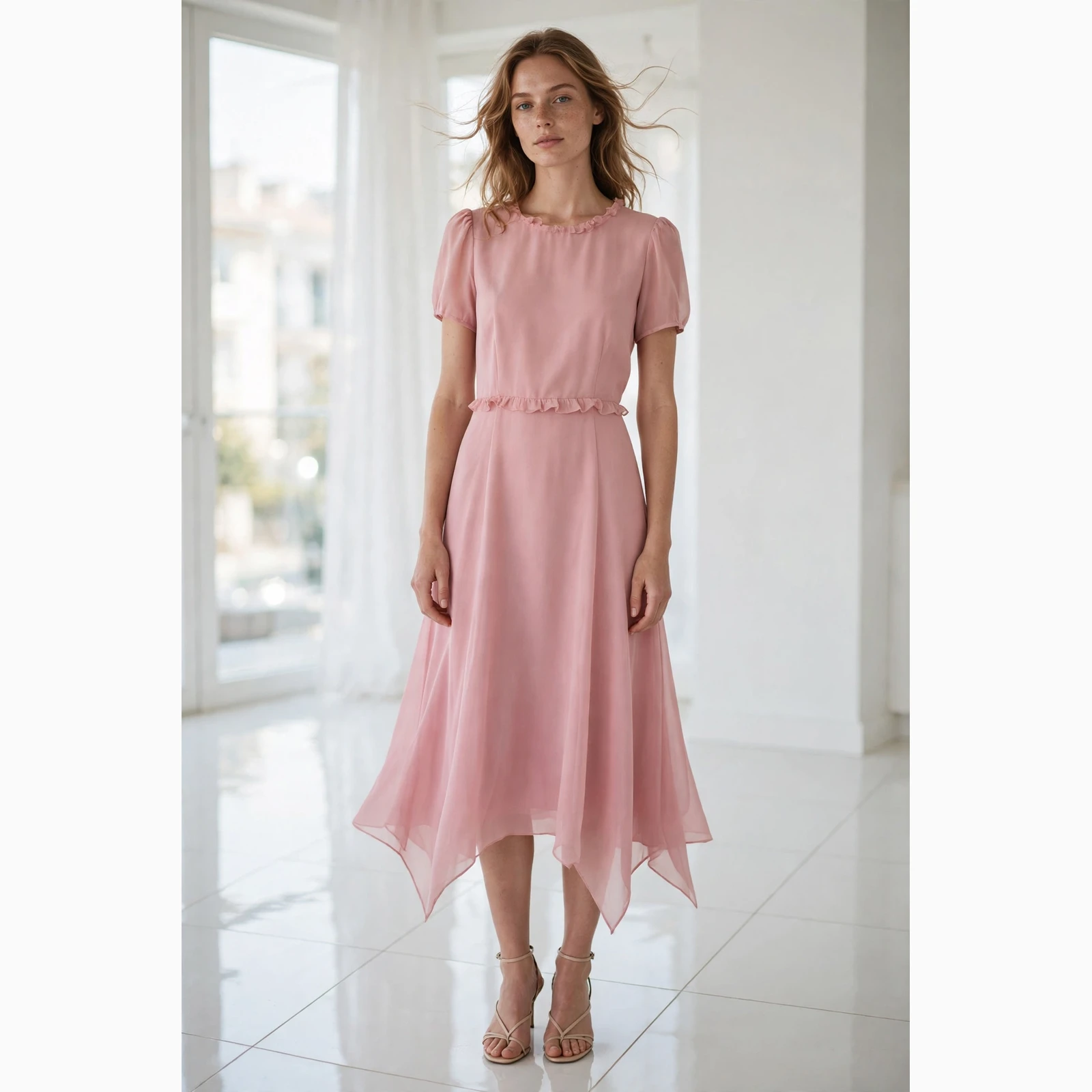
You are ordering a summer shape for a winter date, which is not the same as ordering the wrong dress, as long as the order admits it. The lined version exists precisely for this — a modest per-unit addition that turns a floaty cocktail dress into something a guest can wear through a cold ceremony without performing bravery. What I talk buyers out of is the third option, the one where the unlined dress gets ordered anyway and the problem gets delegated to the customer, who is expected to solve it with a wrap she did not budget for and a smile. She solves it with a return instead, usually, and a sentence about thin fabric that will follow the listing into spring. Order the season you are selling into. The dress will do the rest.
The inspection passed at AQL 2.5. So why are we still getting fit complaints?
Because the standard you quoted measures the defects it was written for, and a flutter sleeve cocktail dress fails its customers in ways a generic standard weighs lightly. A sleeve that twists a fraction, a neckline that sits high, fabric that catches on skin — these can all pass a general inspection and still generate the complaints that matter. The fix is not more inspection, it is a defect list written for this garment, agreed before production, with the major and minor split spelled out. I get this one wrong half the time myself, because the label is comforting and the custom list is work. But every season the returns data grades my homework, and the seasons where the defect list named the dress are the seasons the paperwork and the customers told the same story.
I still do not have a clean answer to the question I started with. A buyer pays for chiffon and sewing, yes, and for waste crescents and setup minutes and a rush line in the busy months, and for the lining if she is wise, and for the calendar if she is not. What she is really buying, I think on my honest days, is a version of the dress that matches the month it will be worn in — and the trade keeps that version just slightly out of focus, behind glass, in a photograph taken in July. It has never once been persuaded by a quote sheet, and neither, in the end, have I.