Here is a question that has followed me around the dye house side of this trade for years, and I still do not have a clean answer for it. Why do two blacks never match?
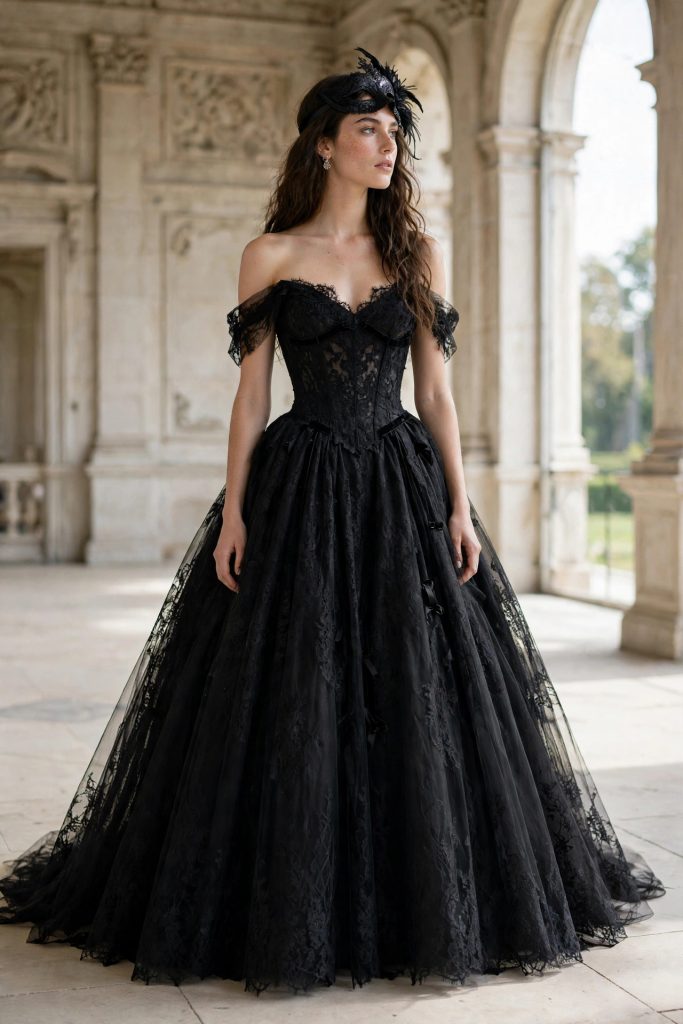
Not close. Close is easy. Match, truly match, under the white light of a fitting room and then again under the warm light of a reception hall, with one black cut in March and the other black cut in June, one on a bodice and one on a cape that hangs two inches from the bodice in every photograph the customer will ever take. That match is the one that fails. A puffy off-shoulder gothic gown with a cape is basically a machine for exposing it, because the gown is a huge amount of black cloth arranged in layers, panels, and separate pieces, and every one of those pieces is a chance for the black to be a slightly different black.
People who have never stood over a dye vat think black is the absence of color and therefore simple. The upstream end knows better. Black is the heaviest dye job in the building. It takes the deepest penetration and the longest fixation, and it punishes shortcuts in ways ivory never does, because ivory hides a half-shade inside its own warmth while black turns a half-shade into a visible border between one panel and the next.
The bodice and the skirt were never the same black to begin with
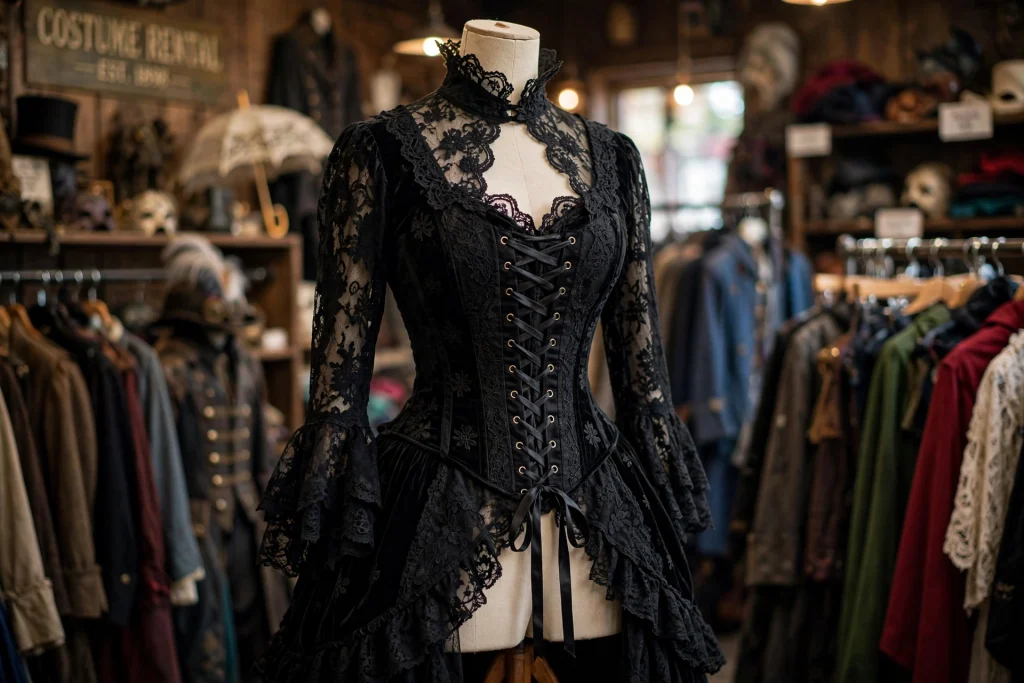
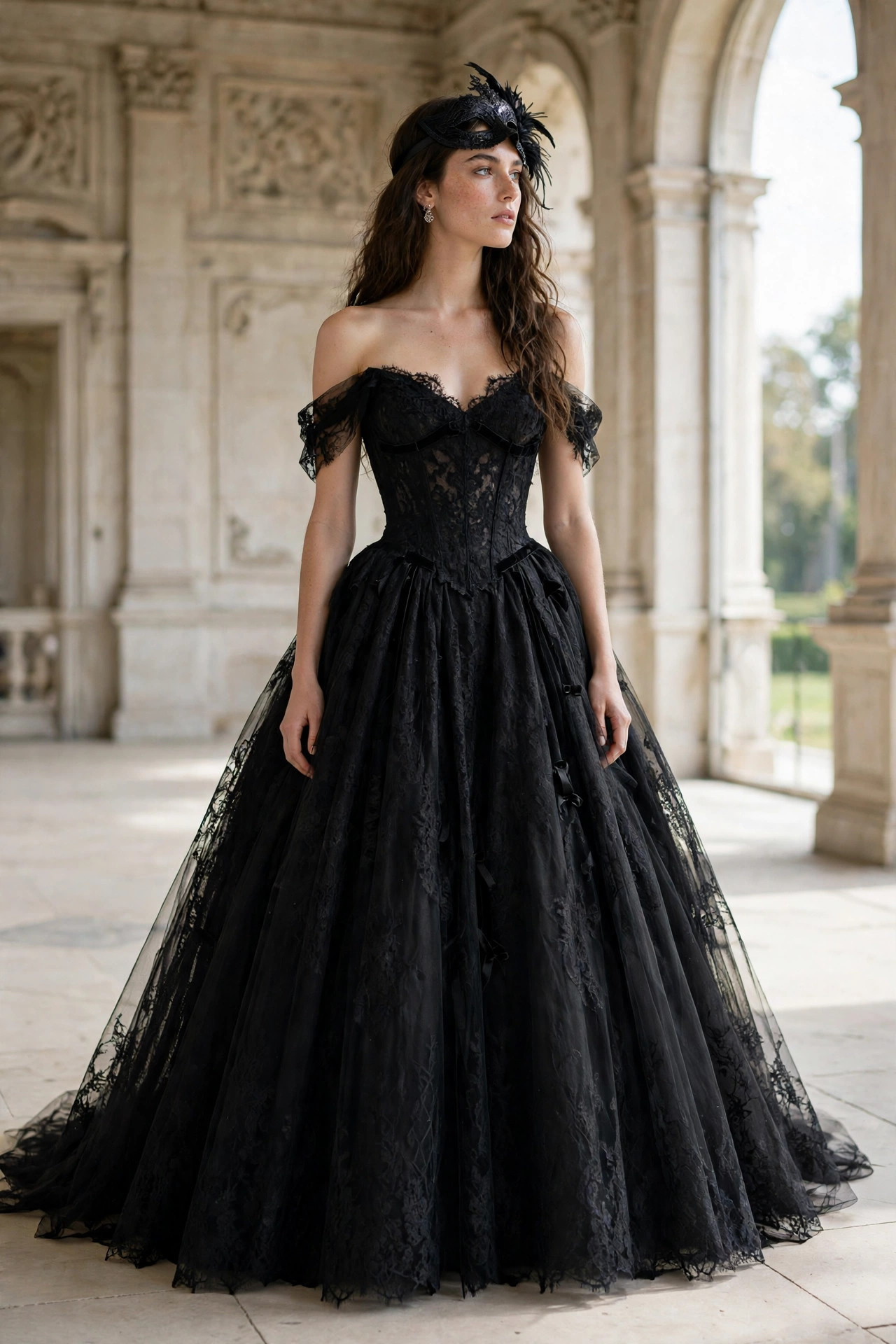
Start with the layers, because this is the piece of upstream knowledge that surprises even experienced buyers. A gothic ball gown skirt is not one thickness of fabric. It is layer over layer of net and lining and outer cloth, and black deepens with every layer you stack. One layer of black tulle over a light lining reads as grey. Four layers read as a soft charcoal. Eight layers are finally, convincingly black. So the skirt can look darker than the bodice even when both were cut from the same roll on the same morning, simply because the skirt is wearing more thicknesses of it. Buyers send photographs complaining that the factory changed fabric. Often nobody changed anything. The layer count changed, and the eye reads layer count as color.
Then there is the roll itself. Fabric is dyed in a long piece and rolled, and the two ends of a roll are not identical twins. The outer end sat in slightly different conditions from the inner end, the tension differed as it wound, and a gown with this much yardage eats a whole roll and starts on the next one. Panels cut from roll one sit next to panels cut from roll two on the same skirt. In the factory’s light, which tends to be a flat industrial white, the join is invisible. Under a customer’s warm home lighting the join can bloom, because dye mixtures that agree under one light disagree under another. That disagreement has a technical name and a very untechnical consequence: somebody’s wedding photos show a two-tone skirt.
The honest check costs almost nothing and belongs in every buyer’s routine for black formalwear. Take the bodice fabric and the skirt fabric and the cape fabric, lay all three overlapping on a windowsill in daylight, then carry the same three pieces under the warmest lamp in the building. Daylight alone will lie to you in the optimistic direction. The lamp round is where mismatches confess. A factory that cuts all three pieces from one roll, in one cutting session, and marks them as a set has removed most of the risk before sewing even starts, which is why serious black gown orders are quoted around roll planning and not just around sewing time.
The cape is a separate garment pretending to be an accessory
The cape deserves its own suspicion. In listings it sits in the title like a bonus, a little extra cloth thrown in with the gown. In production it is a separate piece, cut separately, sometimes sewn in a different corner of the workshop, occasionally, in rushed orders, cut from a fresh roll because the first roll ran out somewhere in the skirt. It then hangs directly against the bodice, the single worst place on the whole garment for a shade difference to live. If the cape is a quarter shade lighter, the photographs will find it. They always find it.
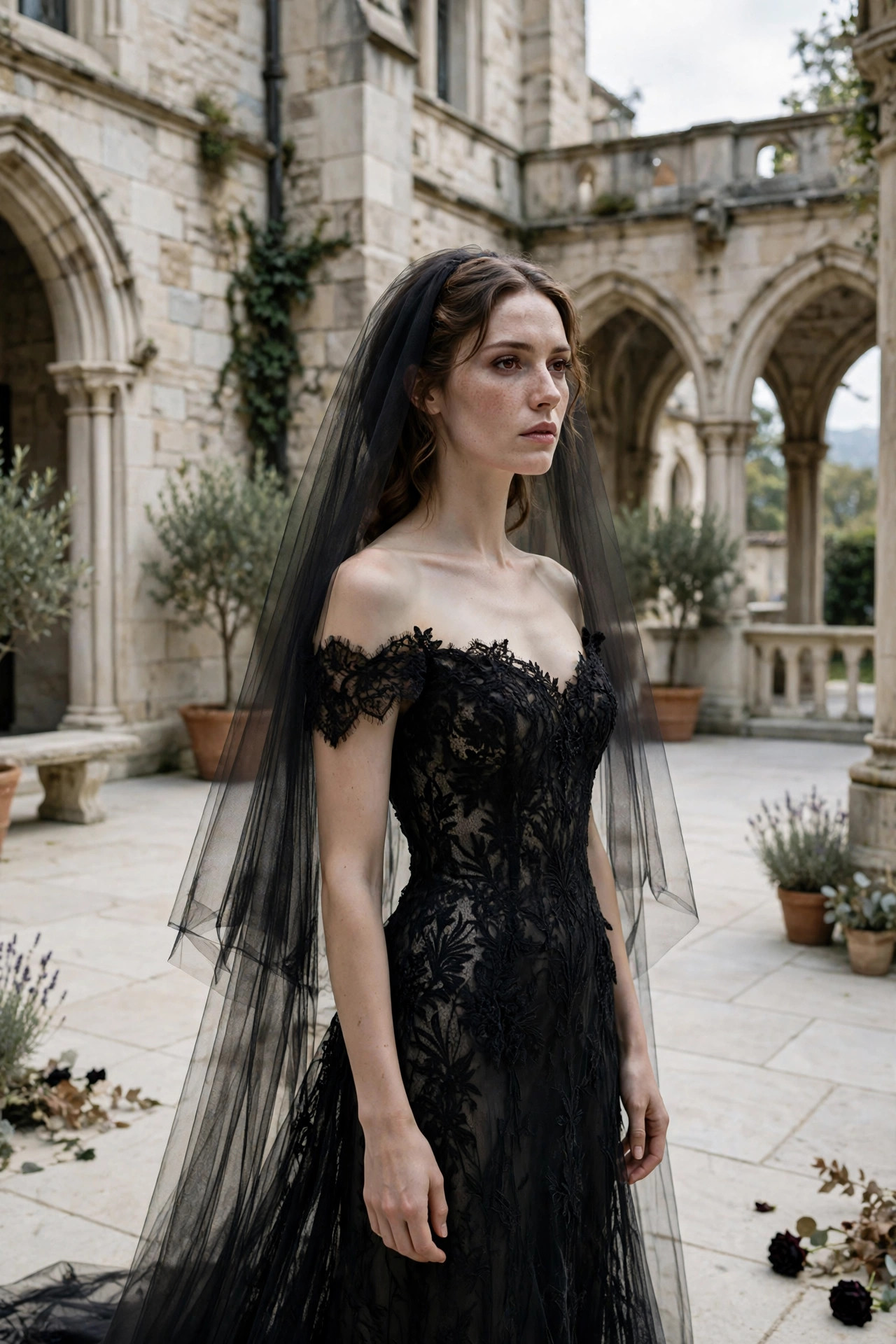
There is a second cape problem that has nothing to do with color. A puffy off-shoulder gown carries its weight in the skirt, and the off-shoulder neckline stays up through a balance of elastic, structure, and friction against the skin. Add a cape fastening at the shoulders and you have added a backward pull on exactly the neckline that can least afford it. The cape drags, the neckline creeps, the wearer spends the evening doing the little shoulder shrug that quinceanera photographs are full of. A well-planned version anchors the cape to the bodice structure rather than to the neckline edge, so the weight hangs from the dress and not from the decoration. Asking where the cape attaches is a small question. The answer tells you whether the maker thought about the gown as one garment or as two listings stapled together.
Washing is the third black-specific trap, and it is the one that shows up latest. Black fabric that was dyed heavily and washed briefly afterwards keeps hold of loose dye for a while, and that loose dye travels. Onto the lining. Onto pale undergarments. Onto skin on a warm evening, in faint grey smudges that look like dirt and photograph like shadows. The proper wash after dyeing takes time and water, and time and water are line items, so the cheapest production quietly shortens that wash. A buyer cannot see wash time in a finished gown. She can rub the fabric hard with a dry white cloth for ten seconds and look at what came off. A good black leaves almost nothing. A rushed black signs the cloth.
I said earlier that black is the heaviest dye job in the building, and I should correct the impression that leaves. No wait. Black is not always the most expensive color to produce, because a mill that runs black constantly, week after week, gets very good at it and the price settles down to something ordinary. The risk is not the color itself. The risk is the small, occasional black order, the one that goes through a line tuned for ivory and pastels, where black is the exception and the exception gets exception handling. Volume, oddly, is the customer’s friend here. A gown style that a factory makes in black every month is a safer buy than a gown a factory agrees to make in black once, as a favor.
How a store should order a black gown, then
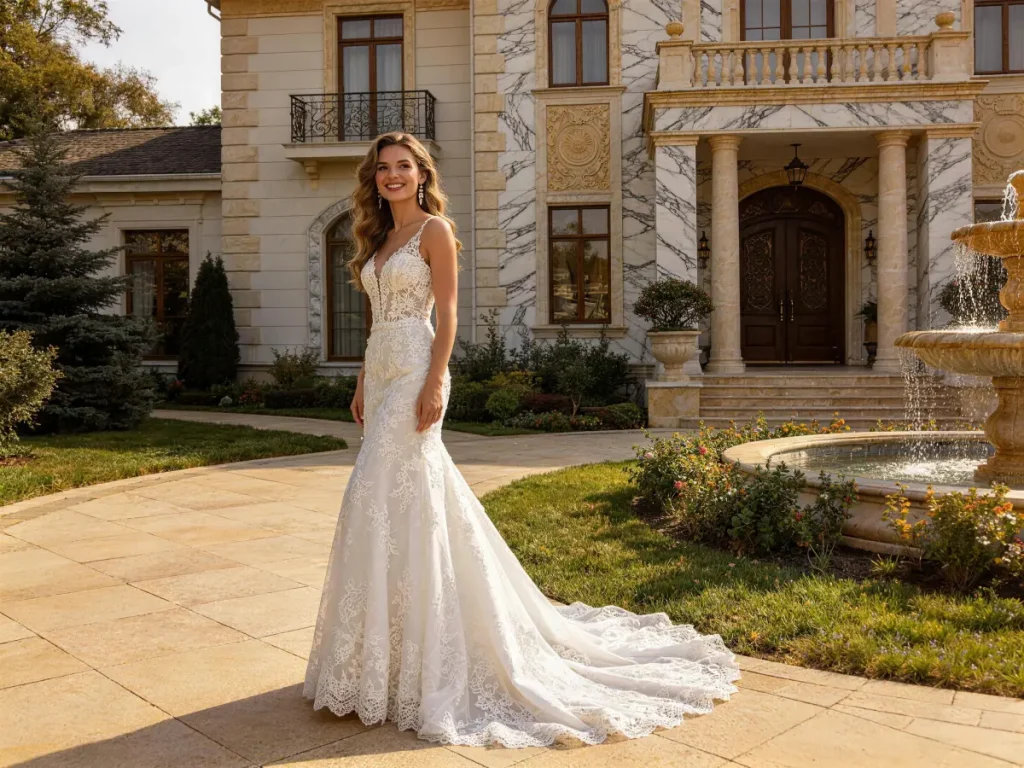
For a bridal store, the ordering shape that fits this style is the one in the wedding dress wholesale catalog: catalog wedding styles start at five pieces per style, with colors and sizes mixed inside the run, and a black gown order should be planned as one cutting session from one roll wherever the yardage allows, cape included, rather than as a gown order with a cape added at the end. Five pieces cut together share a roll and a dye lot. Five pieces cut across two months share a hope.
For a custom black gown, a bride’s own design or a store’s exclusive, nobody honest quotes a sample price from a photograph description alone, and this page will not either. The maker needs to see the design properly, count the layers, the yardage, the handwork on the bodice, and quote that specific gown. Before we start sampling, we always photograph the fabrics and send them to you to review and choose from, and for black that photo step carries extra weight: the fabrics should be photographed stacked, bodice cloth over skirt layers over cape cloth, because that stack is the color the customer will actually see. A single flat swatch of black tells you almost nothing. A stack tells you the truth the photographs will tell later.
The cape question, by the way, is worth comparing with a plainer style. The hooded bridal cloak review on this site looks at a cover-up worn over a gown rather than built into one, and the contrast is useful: a separate cloak can be cut from its own cloth without apology, because it never claims to be the same garment. The gothic gown’s cape makes that claim. Claims are where the trouble starts.
The questions that come back with the photographs
The skirt looks darker than the bodice in photos, but the fabric came off one roll. Is somebody lying to me?
Probably nobody is lying, because one roll can still give you two apparent colors when the skirt stacks eight layers of net and cloth where the bodice wears two. Layer count deepens black in a way it does not deepen ivory, and photographs exaggerate the gap, especially flash photographs taken straight on. Check the pieces in flat daylight, single layer against single layer, before accusing anyone. If single layers match and the stacked skirt reads darker, you are looking at physics rather than a fabric swap, though it still has to be planned for, honestly, because the bride sees the stacked version.
Five pieces per style for a catalog gown. Can those five be split across black and ivory?
They can be mixed on colors and sizes inside the style, but I would argue against splitting a black gown order that way if the black is the point of the order. One cutting session from one roll is what protects the black, bodice and cape together, and a split order invites split cutting. Order the black as its own clean run, even a small one, and let ivory be its own order on its own day. Buyers treat that as fussy until the first two-tone cape arrives. After that they treat it as procedure, which is what it is.
Can a sample of this gown be priced from two photos and a description?
A layered gown like this one cannot be priced honestly from two photos and a paragraph, because the cost lives in things photographs hide: how many layers are really in that skirt, whether the bodice is structured or soft, how the cape is anchored, how much handwork the lace is carrying. A serious maker asks for the design details, works out the yardage and the labor, and quotes that gown, that once. Any instant number offered before that work is a guess wearing a uniform. I would rather wait two days for a real quote than frame a guess and spend a month arguing with it.
I still do not have my clean answer about the two blacks. I have procedures instead: one roll, one session, the windowsill test, the warm lamp, the white cloth rub. Procedures are what a trade builds when the answer refuses to arrive. Somewhere tonight there is a bride turning slowly in a fitting room while three people squint at her cape, and the black will either hold or it will not, and everyone in that room will learn in one second what the dye house knew for years and could never quite say in a listing.