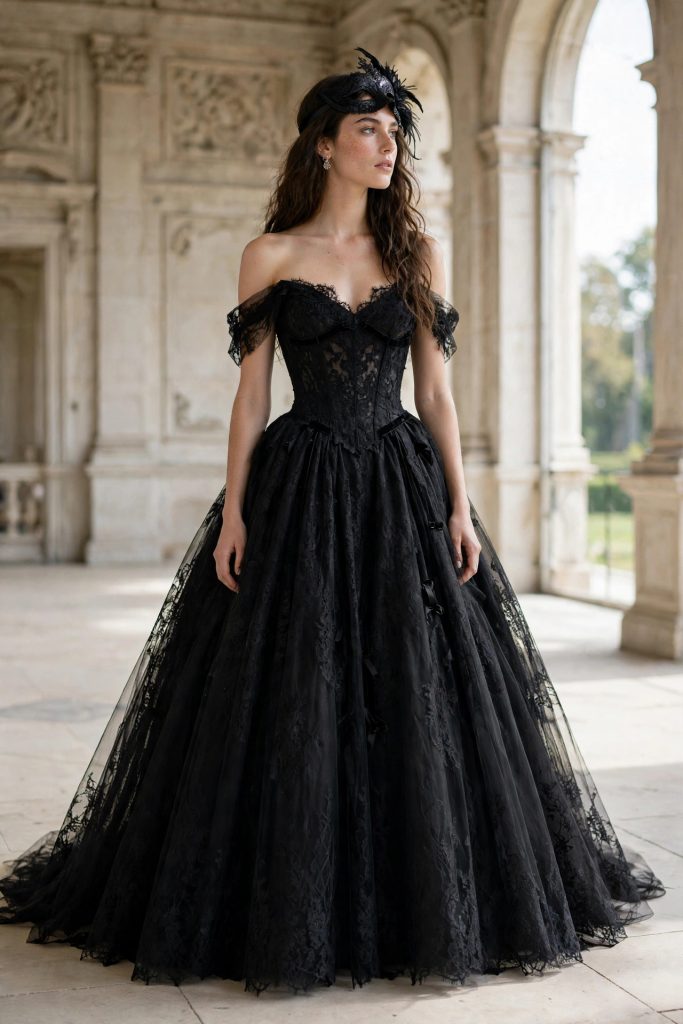
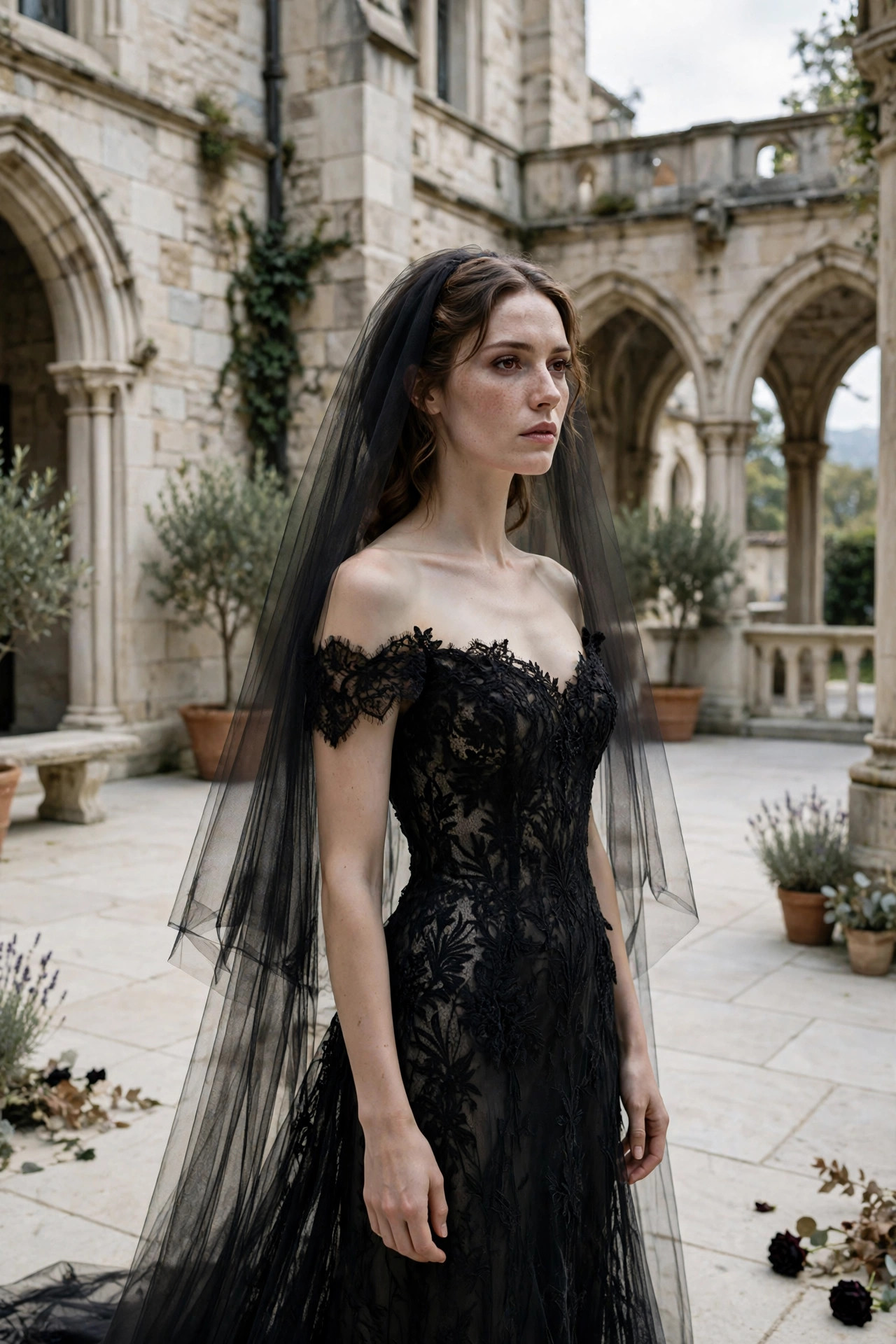
It started with a strike-off. That is the small printed sample a mill sends before a full run of cloth, and on a black-ground floral, the kind the GothDark vintage floral gothic wedding dress is built around, the strike-off is where the whole dress quietly succeeds or fails months before anybody sews a seam. The flowers on the screen file were a clear, almost cheerful red. On the black cloth they came back darker, moodier, halfway to wine. Nobody had made a mistake. Black ground eats light, and a colour that sings on white sits down and lowers its voice on black. One incident. Easy to shrug at. The pattern of this trade is that it never stays one incident.
The second came at the print table. A floral repeat has to land in the same place, flower by flower, panel by panel, or the bodice and the skirt will tell different stories. On a light ground, a small drift in registration hides inside the print. On black, the eye goes straight to the pale edge where a flower missed its outline, because black makes every light mistake luminous. The tolerance that passes on a summer dress in cream fails on a gothic gown in black, not because the printing got worse but because the ground stopped forgiving. A buyer checking a sample of this style should not start with the silhouette. She should start with a hand lens, or just good light and patience, at the point where two printed flowers meet a seam.
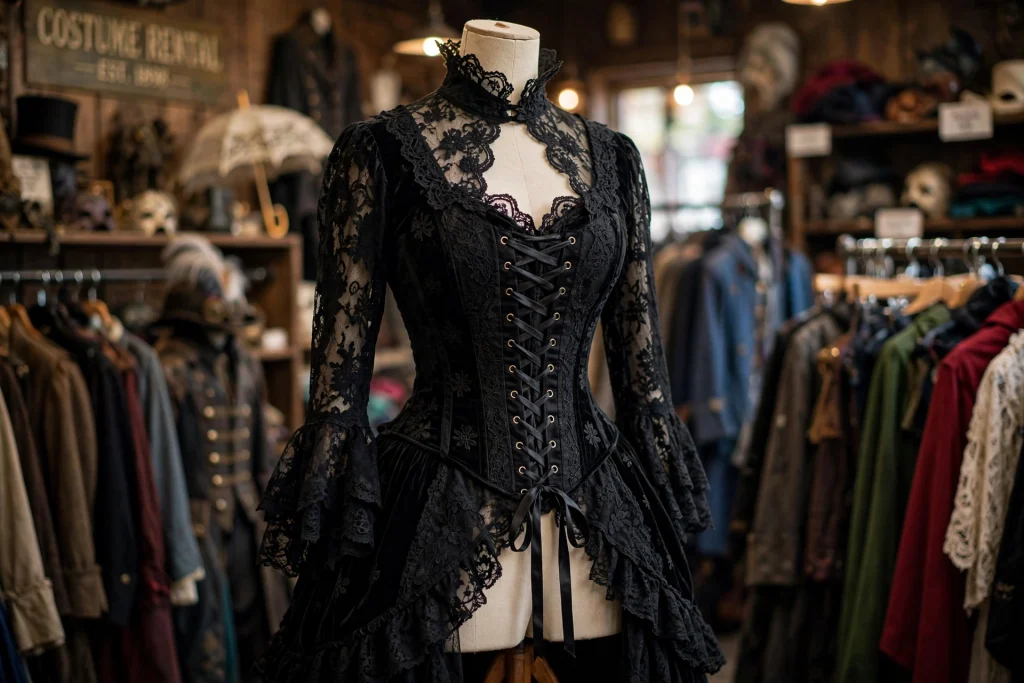
Then the lace arrived, and the lace was the third black in the building that week, and it matched none of the others. Lace for a dress like this is often a different fibre from the shell, nylon where the shell is polyester, or the other way around, and different fibres drink dye at different rates and give it back as different colours. The shell leaned warm, almost brown at the edge. The lace leaned cool. Side by side on the table they were two respectable blacks having an argument. This is the part of gothic wedding dresses that photographs conceal best, because a photograph of a full gown at room distance averages the blacks into one. A bride at mirror distance does not average anything.
Small drifts, added together
The vintage part of the name carries its own accumulation. A vintage finish on a dark dress usually means the black is not meant to be a flat, new black. It is softened, antiqued, sometimes washed toward charcoal at the edges so the dress reads old rather than fresh off a rail. Washing does not soften evenly. A single layer washes one shade. A doubled layer, at a seam, a facing, a hem where the cloth folds over itself, washes lighter or darker than the panel beside it, because the water and the abrasion reach the layers differently. On a finished gown this shows as seams that draw their own map across the skirt in slightly paler lines. Some buyers love exactly that, it is the vintage effect working as designed. Others read it as fading and complain. The difference between those two customers is not taste in the abstract. It is whether anyone told them, before the order, that the seams would draw that map.
By the time the fourth small thing arrived, the shape of the problem was visible. The fourth thing was a reorder. A shop that sold through its first run of a floral gothic style came back for more, and the new run of cloth printed a fraction deeper than the first, because a second print run is a second negotiation with the same inks and never lands in precisely the same place. Side by side in the shop, last season’s dress and this season’s dress read as close relatives rather than twins. For most styles nobody would ever put them side by side. For a bridal party ordering gowns in two batches, or a rental shop building a matched set over time, side by side is exactly where they will live. Dye houses and print shops have a plain rule for this and it is worth stealing. Order the cloth for the full expected quantity in one run, or accept in writing that batch two is a cousin, not a clone.
What the floral print does to the cutting table
A printed floral on a wedding dress is not a pattern in the wallpaper sense. It has large motifs, and large motifs have to be placed. A flower the size of a hand cannot be allowed to sit bisected at the centre front of a bodice unless the design wants it there, and the skirt panels have to carry the print at a rhythm the eye accepts. Placing motifs costs cloth. The cutter cannot nest pieces tightly when each bodice needs its flower in roughly the same position, and the waste that placement creates is real money folded silently into the unit price. As a working figure, a large placed floral can consume around a tenth more cloth than the same dress cut from a plain fabric, sometimes more on the smaller sizes where the motif is large relative to the panel. A quote for a printed gothic gown that matches a plain gown’s quote, line for line, has absorbed that cost somewhere else, and somewhere else usually means the cloth itself got thinner.
No wait. A tenth is the gentle version, and gentle versions mislead. On a full skirt with several wide panels, each panel needing the print upright and the motifs uncut at the waist seam, the loss can run well past a tenth, because the offcuts between placed panels are too broken up to use for anything but facings. The honest check is to ask how the motifs are placed and what the marker efficiency is, in those words. A seller who can answer both numbers has actually cut the dress. A seller who answers with a photograph has only seen it.
The weight question follows the print question around like a shadow. A gothic gown with a full skirt, layers under it, and a printed shell is a heavy garment, and the reviews of this category return to weight again and again, usually as a surprise. It should not be one. Full skirts are surface area, surface area is cloth, and cloth has weight that no photograph records. A bride planning to wear the dress for eight hours, or a shop planning to ship ten of them in one carton, is dealing with kilograms that the listing page will never mention. Ask for the finished weight of the largest size. It is a dull question with an unusually high information content, because a seller who knows the weight has handled the dress, and a seller who does not has handled the listing.
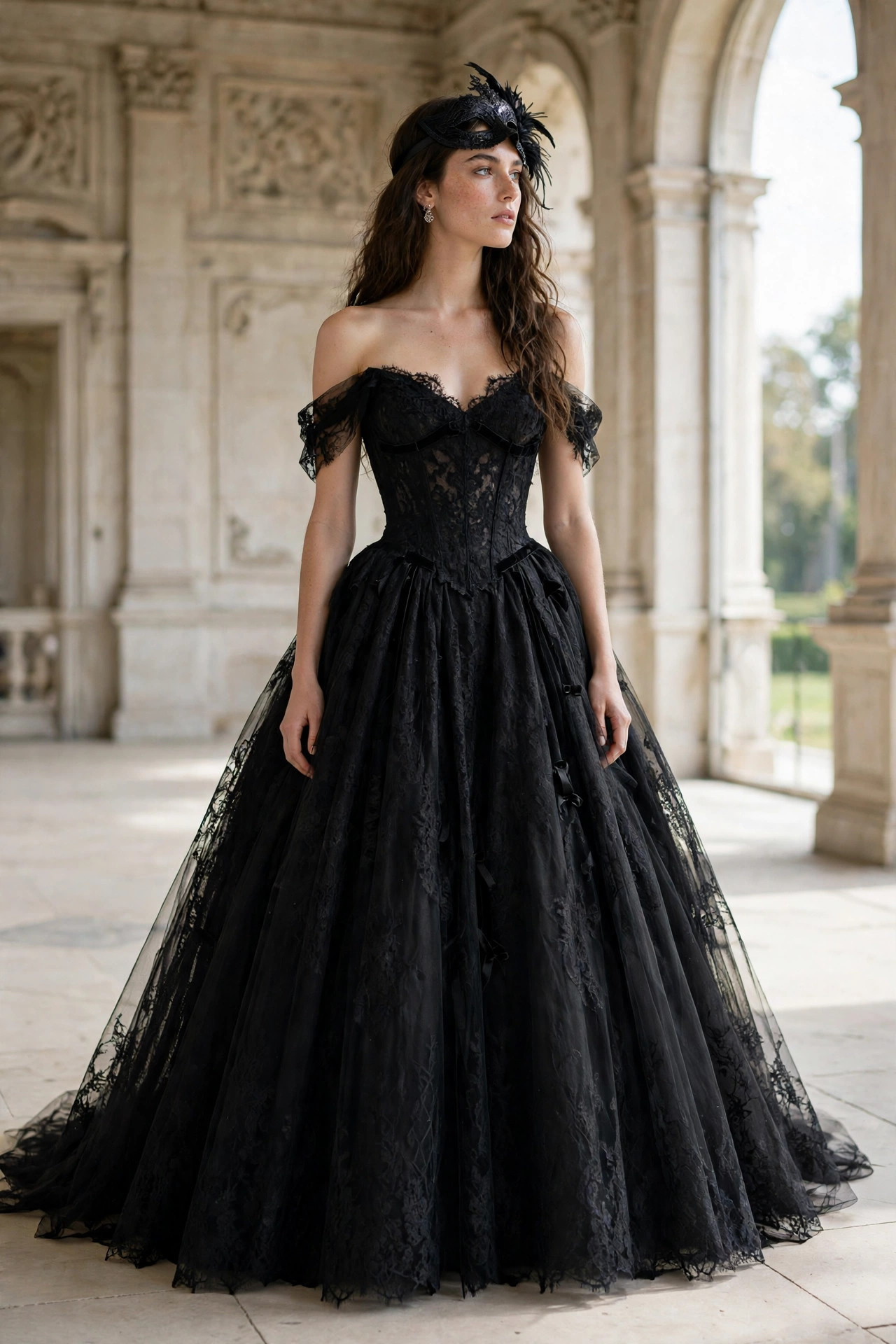
The layers under the print tell a similar story of small decisions adding up. A gothic skirt is usually built over dark net, and the number of net layers is a judgement call disguised as a specification. Too few and the printed skirt hangs closer than the photograph, the floral pattern reading flat against the leg. Too many and the dress gains a stiffness that fights the vintage softness the finish was supposed to create, as well as a surprising amount of weight at the hem, where every extra layer is at its widest. There is no universal right number, because the right number depends on how stiff the net is, and net stiffness varies between suppliers and even between lots. The check that survives all that variation is physical. Hang the sample overnight and look at the silhouette in the morning, not in the hour it came off the machine. Net relaxes. Skirts settle. The dress a bride meets in a shop is the settled version, and any sample judged before settling was judged as a dress that will never actually be sold.
For bridal shops, the commercial frame around a dress like this is the wedding frame, not the party frame. Wedding styles on this site wholesale from five pieces per style, colours and sizes mixable inside that, and a single gown can be custom made for one bride when the order is a person rather than a rail. The full bridal range sits in the wedding dress wholesale catalog. The print and dye checks above are what separate a gown that merely photographs gothic from one that survives being looked at closely, in daylight, by the person who paid for it.
Questions buyers actually ask about gothic floral wedding dresses
The screen file showed bright red flowers. The dress arrived wine-dark. Was the print run wrong?
Usually not. A black ground absorbs light and pulls every colour printed on it down in value, so a red that reads bright in a file reads as wine on the cloth. The check is the strike-off, a printed sample on the real black ground, judged in daylight before the full run. A buyer who approved the colour from a screen approved a file, not a fabric. The mills know this and send strike-offs for exactly this reason, and the argument afterwards is nearly always about which approval counted.
Five pieces per style for wedding wholesale. Can two of the five be a second colour run?
Five pieces per style is the standing wedding minimum on this site, with sizes and colours mixable in principle. In practice a second colour of a printed floral is a second print run, with its own setup and its own minimum logic at the mill, so treat colour splits as a question to settle before the order, not during it. A single gown can also be custom made for one bride. What I would not do is promise a shop two colourways inside one small run and let the print shop discover the promise later.
The seams show as paler lines across the skirt. Is the dress fading already?
Probably not fading. A vintage finish softens black unevenly, and doubled layers at seams and facings soften at a different rate from single panels, so the construction draws a paler map of itself. That is the antique effect working. The failure, when there is one, happened at the selling stage, where nobody said the seams would do that. Hold a sample against a plain black dress in daylight. If the paler seams are the look the shop wants, order with confidence. If they are a surprise, they will be a surprise to the bride as well.
Why does a reorder six months later not match the first dresses on the rail?
Because a second print run and a second dye lot are close relatives, not twins. Inks and dye baths land in nearly the same place, and nearly is visible when two black floral gowns hang side by side. The protection is boring. Print and dye the cloth for the full expected quantity in one run where the style allows it, or accept the drift in writing at the first order. Shops building a matched rental set over a year learn this rule on the second delivery, when the new gown goes onto the rail next to the old one and the two blacks introduce themselves as strangers.
Strike-off, registration, lace, wash, reorder. None of them dramatic alone. Together they are the whole biography of a black floral gown, written in drifts of a few percent each, in a colour family that forgives none of them. The wider bridal range is in the factory catalog for comparison, but comparison is really the point. Put any two black dresses side by side in daylight before you pay for either. The cloth will tell you which factory understood black, and it will tell you in about ten seconds, in a voice too quiet for a product photograph to carry.