A two-tier veil is about forty grams of net, a comb, and a surprising amount of argument. The Yolev-style Halloween bridal veil sits at the crossing of two buying seasons that want opposite things from the same object: bridal buyers want the blusher tier to fall exactly to a photographed length, and Halloween buyers want drama that reads across a room. Supplying both from one listing is efficient. It is also how a veil ends up specified by neither, drifting in that middle ground where the tiers are equal length and please no one completely.
Tier ratio is the whole design
In a two-tier veil the shorter tier — the blusher — is usually cut at roughly half to two-thirds the length of the longer tier, and that ratio is what makes the veil read as designed rather than doubled. When both tiers come out near the same length, the veil gains weight at the comb and loses its line; it sits like a small curtain. Buyers comparing samples should measure both tiers separately and write both numbers down. Listings tend to state one length, the longer one, and let the buyer assume the ratio took care of itself. Ratios do not take care of themselves. They are set at the cutting table, by whoever laid the net that day.
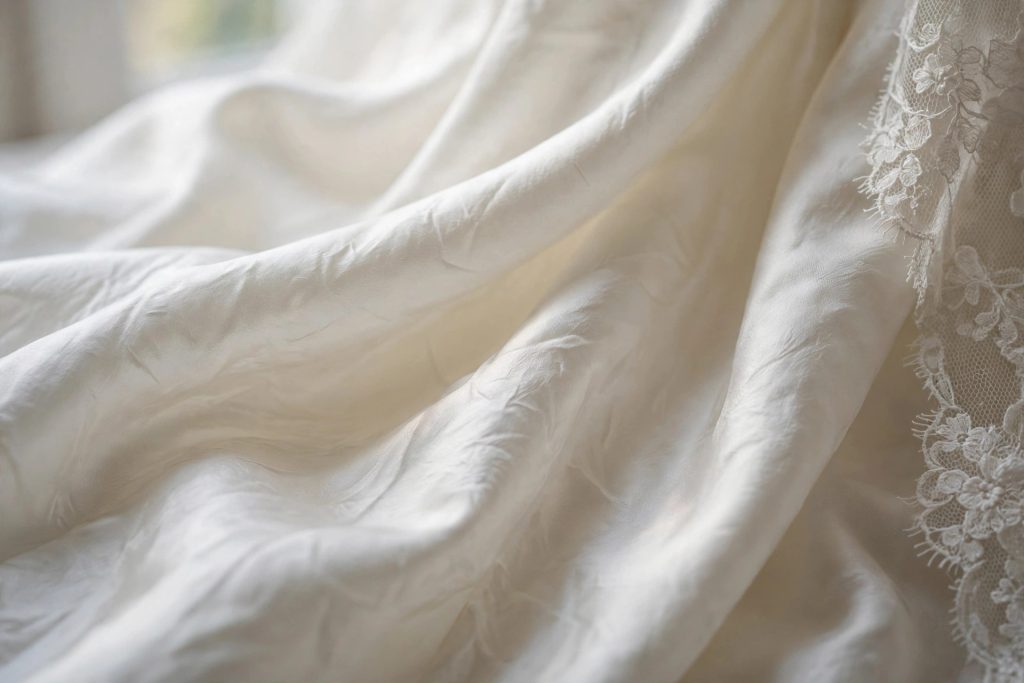
Net stiffness is the second variable nobody lists. Soft bridal tulle drapes and needs the tier lengths to do the shaping; stiffer illusion net holds a shape and can make a short veil stand away from the hair like a halo — which, for a Halloween brief, might be exactly the brief. The same SKU shipped in a softer net after a supplier change reads as a different product in photographs, and the change is invisible in the listing because the material word never changed. It just says ‘tulle’ in both cases, the way a menu says ‘fish’.
The comb decides whether it stays on

Veils fail at the comb, not at the net. A metal comb sewn flat with enough stitches holds through a windy photo session; a plastic comb glued to a gather of net lets go at the first hug. The gather itself matters: net bunched too tightly at the comb makes a hard knot that fights the hairstyle, while a wider, flatter gather spreads the weight and sits quietly. None of this is visible in a product photo, because product photos show the veil from the front, on a head that is not moving, indoors. Every condition that tests a comb is absent from the photograph that sells it.
For seasonal buyers the supply question is timing. Halloween demand for black and ivory veils compresses into about six weeks, and net in seasonal colors is not restocked in October at any price that leaves a margin. A store that sells through its veil stock by mid-September is not looking at a reorder. It is looking at next year’s problem arriving early. The bridal side of the same listing sells all year at a steadier pace, which is why the two seasons sharing one SKU keep surprising the people who planned only for one of them.
Checking a veil shipment in ten minutes
Measure the two tiers on three veils from different cartons. Flex the comb and look at how it is attached — sewn or glued is a one-second check. Hold the net against a window and look for the stiffness match against the approved sample, because drape is a material property, not a style note. Three checks, ten minutes, and most of what can go wrong with a veil order has had its chance to show itself before the stock reaches a rail.
Veil buyers can cross-check tier ratios against the measurements in our short two-tier bridal veil with binding and the style notes in the short tulle veil for weddings and Halloween review before settling a seasonal order.

Questions buyers and stores actually ask
What length should the short tier of a two-tier veil be?
As a working rule the blusher tier runs at about half to two-thirds of the long tier — on a fingertip veil that puts the blusher near the chin or shoulders, which is where it photographs as intentional. When both tiers are cut near the same length the veil gathers into a curtain at the comb. Always measure both tiers on a sample; listings usually state only the longer one, and the ratio is where the design actually lives.
Sewn or glued comb — does it really matter?
It is the difference between a veil that survives the day and one that leaves during it. A metal comb sewn through the gather holds under wind, hugging and dancing. A glued plastic comb is the single most common failure point in budget veils, and it fails suddenly rather than gradually. The check takes one second on a sample and predicts most of the one-star reviews the style will ever get.
Why does the same veil look stiffer from one order to the next?
Because ‘tulle’ names a family of nets with very different stiffness, and a supplier can change the net without changing the listing word. Stiffer net holds the veil away from the hair; soft net drapes. If drape matters to your buyers, approve a physical sample, keep it, and compare each shipment against it by hand against a window. Photographs will not catch the change. Fingers will.
Somewhere there is a Halloween bride wearing a veil whose blusher lands exactly at her chin because nobody measured the short tier. She looks fine. She also looks like she is wearing a lampshade in every photograph where the wind moved, and the veil gets blamed in reviews that never mention a ratio once.