The binding is already curling. That is where this review starts, mid-inspection, with a white satin-edged bridal veil of the kind sold under the Audaisyly name for weddings and, every October, for costumes, and the edge that is supposed to frame the face is rolling inward on one side like a ribbon left near a kettle. Upstream, at the trim and net end of the trade, a veil is three purchases pretending to be one product: a net, an edging, and a comb. The listing photographs the combination. The returns describe whichever of the three gave up first, and it is rarely the net. Shops rounding out an accessories order may also want the white bow veil that gets picked for bachelorette parties and courthouse weddings, since it sells on a very different brief from a formal satin veil.
Satin binding is a second fabric, not a decoration
A satin edge on a tulle veil is a bias strip of a heavier cloth sewn around a cloth that barely exists, and the two behave differently from the first steaming onward. The net gives, the satin does not, and the difference shows up as a wavy edge on a good day and a curling edge on a bad one. Mills and trim stalls know the grades here cold. A binding cut on the true bias follows the curve of the veil and lies flat. A binding cut straight to save cloth fights every curve, and the fight is visible in photographs at face height, which is the one height this product is bought for. When a store asks why one satin veil costs half of another, the answer is usually hiding in that cut, plus the stitch density that holds it, neither of which a listing photo shows.
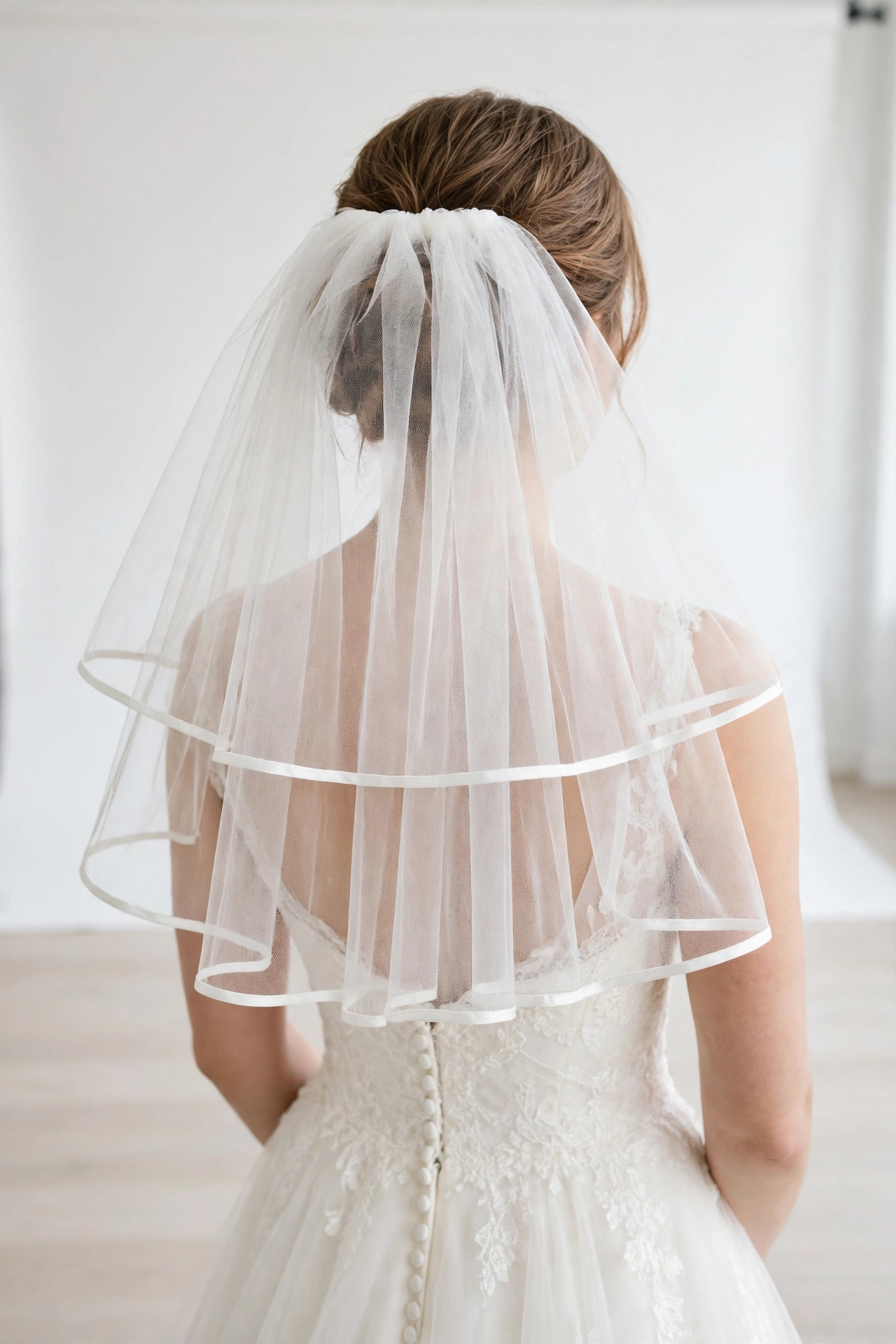
Net weight is the quieter half of the same story. Soft illusion net drapes and blurs; stiff net stands off the shoulders and reads as costume at ten paces. The same veil pattern sewn in the two nets produces a wedding product and a party product, and October is when the party version gets photographed, reviewed, and read back in June as if it were a verdict on the wedding one. Upstream sellers who handle both seasons keep the nets in separate bins and separate listings, because the cloth remembers which bin it came from even when the label does not.
The comb decides whether the veil stays a veil

A veil is worn on a comb, and the comb is the cheapest line in the whole specification, which is why it causes an outsized share of the complaints. A plastic comb flexes, its teeth smooth out, and on fine straight hair it walks backward out of the style within the hour. A metal comb, sewn on rather than glued, can be bent once to the head and then holds. The sewing matters as much as the metal. Glue lets go in a hot car or under salon heat, usually on the day itself, and a veil that detaches during a ceremony is not reviewed as an accessory fault. It is reviewed as a ruined moment, with the date in the first line.
Length naming is the other upstream trap in this category, and it is a naming problem rather than a making problem. Shoulder, elbow, fingertip, and waltz mean different centimetres from different makers, and two veils sold under the same word can land fifteen centimetres apart on the same bride. The stalls that supply careful stores stopped trusting the words years ago. They quote the drop in centimetres from the comb, they photograph the veil on a measured board, and they treat any listing that sells length by name alone as a return that has not happened yet. No wait, that is too kind. It is two returns, one for the bride who wanted it longer and one for the bride who wanted it shorter, from the same box of stock.
What the cloth side checks before a reorder
Curl the bound edge around a finger and let it go; a good bias binding settles flat, a straight-cut one stays rolled. Tug the comb once, firmly, the way a stylist will. Measure the drop in centimetres and write the number on the carton, whatever the listing calls it. Then hold the veil against a face in daylight, because satin edging has a shine that turns grey-yellow under warm indoor light on some dye lots, and a white veil that photographs cream next to an ivory dress starts an argument no size chart can settle.
At the trim counter this veil gets quoted alongside the lace hi-lo dresses file, tried in photographs against the black split cocktail dresses rail, and packed for the same brides who ordered the one-shoulder black maxi dresses line, because October sells all three to the same woman in the same week.

Questions buyers and stores actually ask
Why does the satin edge of a veil curl instead of lying flat?
The binding was most likely cut straight rather than on the bias to save cloth. A straight-cut strip fights the curve of the veil and rolls inward, while a true bias binding follows the curve and settles flat after steaming.
A veil is sold as fingertip length but lands mid-back. Whose fault is that?
The naming, mostly. Length words mean different centimetres from different makers. Careful sellers quote the drop in centimetres from the comb and photograph the veil on a measured board, so the buyer is choosing a number rather than a word.
Why do veils slide out of fine, straight hair?
The comb. A flexible plastic comb with smooth teeth walks backward on sleek hair, and a glued comb can let go under heat. A metal comb sewn to the veil, bent once to the head, is the standard fix stores ask for.
Can one veil honestly serve a wedding and a costume night?
The same pattern can, but the net decides which product it is. Soft illusion net reads bridal; stiff net reads costume at ten paces. Sellers who mix the two in one listing get October reviews read back at June brides.
The veil in the hand at the start of this piece will probably be steamed, worn, photographed, and forgiven. Most of them are. But the next order of the same style is being decided at a trim stall by somebody choosing between two bindings that look identical on a card, and that choice, not the bride, is what the reviews are actually about.