The counterintuitive part first: on a wedding dress, the makeup is rarely the disaster. The rescue attempt is. This post-wedding review of Garnier micellar water, borrowed from the makeup bag and pointed at bridal gowns, is written from the customer side of the counter, where the messages arrive after the wedding with photographs of necklines and bodices marked by foundation, lip colour, and bronzer. Micellar water is made for skin, which is washable and forgiving. A gown is neither, and that gap is where this review lives.
Makeup is pigment plus oil, and gowns meet both badly
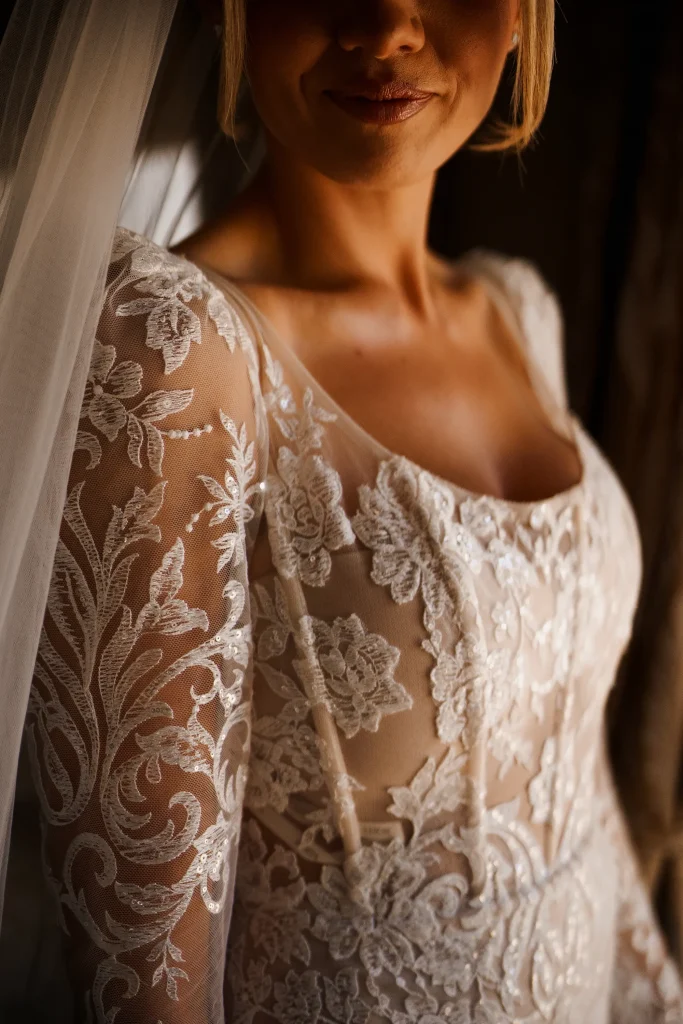
Foundation is colour carried in an oily base, and lip colour is a stronger version of the same idea. On cloth the oil wicks outward through the weave and carries pigment with it, so the mark grows a faint outer edge while the centre stays dark. Rubbing, the instinctive response, works the pigment down between fibres where surface liquids reach it poorly. Lace complicates the picture by holding colour inside the motif, where a pad cannot press evenly. Satin complicates it differently, by showing a wet outline long after the colour itself has faded.
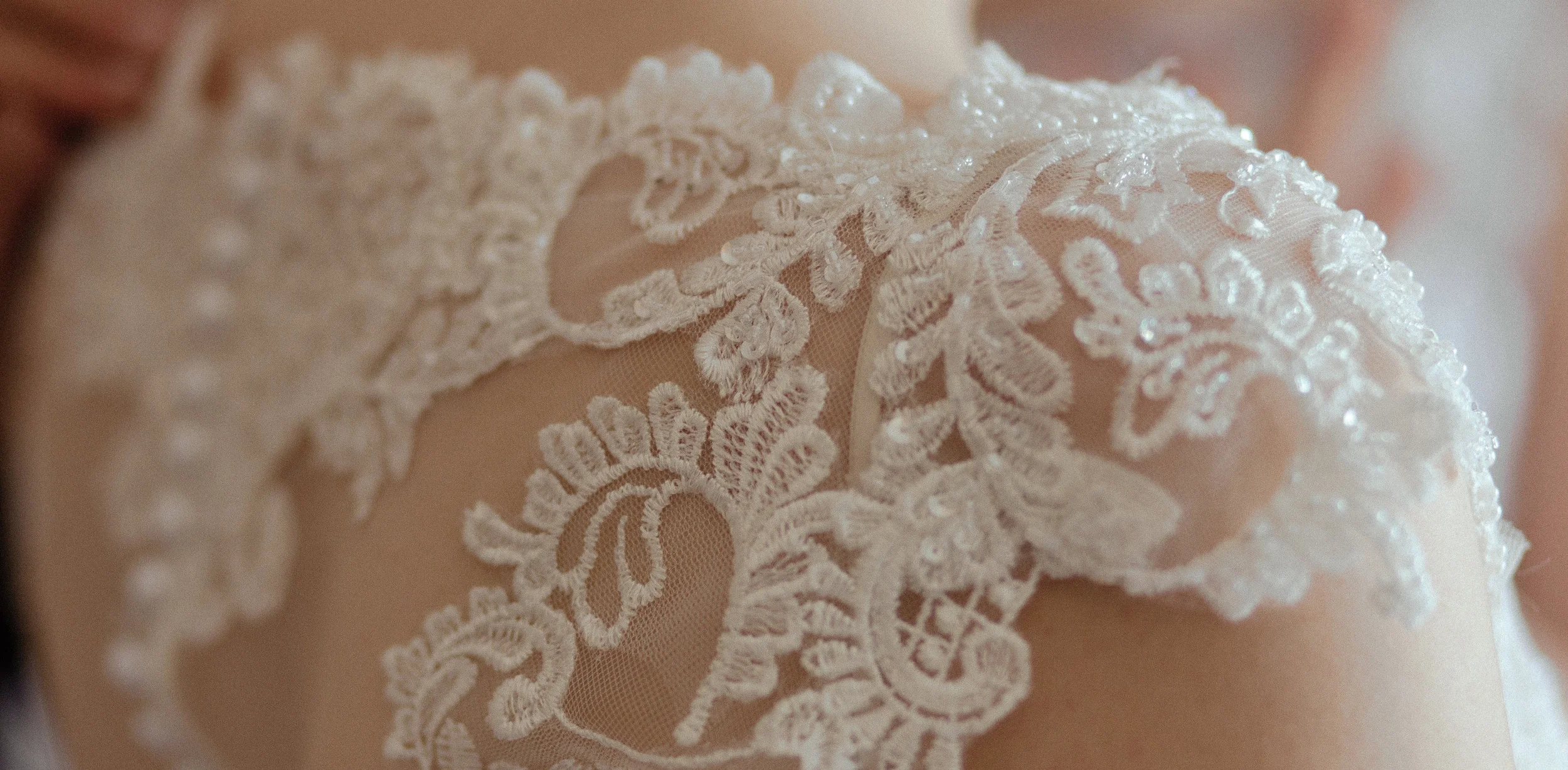
Micellar water lifts makeup from skin by surrounding oily particles so they rinse away. On a gown there is no rinsing step worth the name, so the lifted material has to leave on the pad or it stays in the cloth, redistributed. That limit explains the mixed reports: fresh, light foundation on a smooth, sturdy weave can fade well with patient blotting, while set lip colour on lace mostly moves around. No wait. That is too tidy. Light marks sometimes hold stubbornly too, depending on the product worn and how long it sat. The fabric and the timing argue louder than the brand on the bottle.
The check routine before any liquid touches the dress
Lift off anything sitting on the surface with the edge of a clean card, working inward, without dragging. Read the care label and identify the fibre. Then test: a small amount of the liquid on a clean white cotton pad, pressed against a hidden seam allowance or the underside of the hem, then left to dry fully. Judge the test dry, not wet, because wet cloth darkens and flatters the result. If dress colour shows on the pad, or the test patch dries with a pale outline, stop there. That gown has given its answer, cheaply, at a hidden seam.
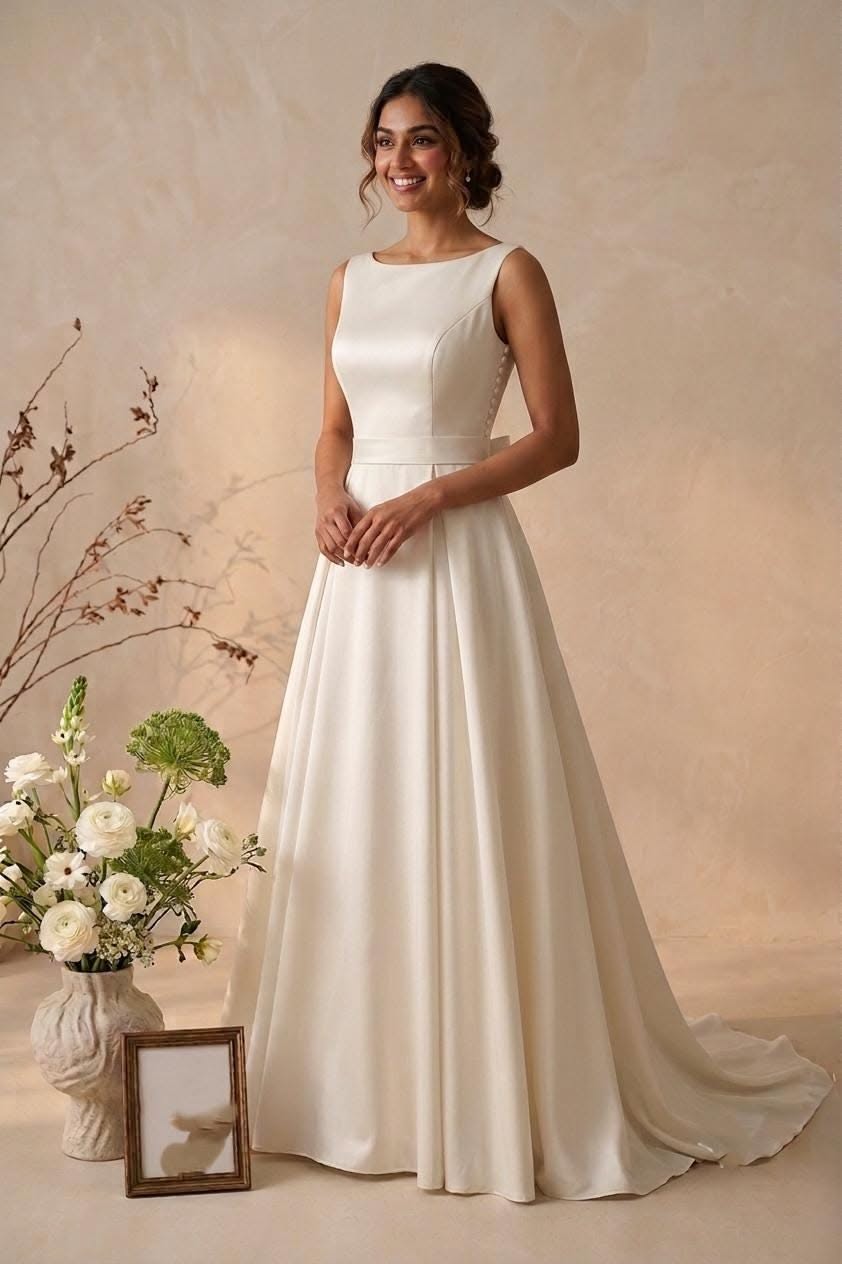
On the mark itself, use a fresh part of the pad for each blot, press and lift rather than wipe, and work from the outer edge toward the centre so the oily edge is not pushed further out. Small amounts, repeated, beat one soaked application, which mostly spreads the base through more cloth. Let the area dry completely before deciding anything. The stop signs are the same as with any borrowed cleaner: colour lifting from the dress, a growing halo, or a texture change under the fingers. Past those signs, the dress belongs to a cleaner who handles bridal wear, told exactly what was put on it.
After the wedding, time and storage change the job
A mark treated in the first hours is loose compared with the same mark found days later, after the gown hung warm or travelled folded. Dried makeup binds tighter to fibres, and home methods answer it weakly. What still helps is unglamorous: air the gown, store it hung by its loops away from heat, and pin a note to the bag naming each mark and what, if anything, was already applied. Cleaners ask for that history because a liquid used earlier changes what they choose next. A silent gown gets a guess, and guesses on lace are how small marks become permanent ones.
Stores sit inside this story too. A bride cleaning her own gown badly tends to remember the dress, not the liquid, when she writes about it. Salons that hand over a short care note with the gown, covering blotting, hidden testing, and keeping heat away until a cleaner sees the dress, collect fewer of those memories. A bridal gown manufacturer shipping private label orders can print the note with the care label run, so a wholesale order at low MOQ carries it without a separate print job. Its absence has a price that arrives months later, in public, with photographs.
The service file keeps this gown’s notes beside the stain wipe post-wedding review, the fabric shaver and lint care review, and the short off-shoulder satin bridal gowns fitting file, because a makeup mark at the neckline usually arrives with questions about all three.

Questions buyers and stores actually ask
Micellar water removes makeup from skin gently. Why the caution on a gown?
Skin rinses and renews itself; cloth does neither. The liquid can lift oily makeup only as far as the pad carries it, and on lace or satin it can leave a dried outline or move pigment sideways. A hidden-seam test, judged after it dries, tells you what the bottle cannot. Gentle on skin is a claim about skin, and the dress was never part of that promise.
Lip colour on lace: blot it at home or leave it alone?
Leave the strong colour alone beyond lifting any surface excess with a card edge. Lip pigment binds hard, lace holds it inside the motif where a pad presses unevenly, and rubbing spreads it into clean net. Note it for the cleaner instead. Leaving a visible mark untouched feels wrong; on lace it is usually the least damaging thing a non-cleaner can do.
A pale outline appeared after blotting. Has the dress been ruined?
Not ruined, but the job has changed. The outline usually means the oily base spread further than the pigment, or the liquid moved dye in the cloth itself. Stop adding liquid, let it dry fully away from heat, and tell the cleaner exactly what was used. Cleaners can often soften an outline they know about; one they discover mid-job is a harder conversation for everyone.
The makeup mark is a week old. Is there any point trying at home?
Very little, and some risk. Dried pigment has settled into the fibres and home blotting mostly threatens a halo around a mark that was at least stable. Air the gown, keep it away from heat, and write down where the mark sits and when it happened. That note, dull as it sounds, is the most useful thing left to do.
What care advice should a salon hand over with a sold gown?
Three plain points: blot rather than rub, test any cleaner on a hidden seam and judge it dry, and keep the gown away from heat until a professional sees any mark. A wedding dress manufacturer can print those lines on the care card inside the garment bag for private label stock, so the advice travels with the dress.
The bottle stays useful, then, within borders it did not choose: fresh light marks, sturdy cloth, a tested seam, a patient hand. Outside those borders it is a face product being asked to do a cleaner’s job, and the gown pays the difference. The dresses that come through with necklines unmarked are seldom saved by a stronger liquid. They are saved by somebody pausing, testing a hidden inch of cloth, and letting the rest wait.