Emerald is not a colour a store stocks by accident. The emerald green formal dress reviewed here is sold across bridesmaid lines, prom nights, and wedding guest rails, and from the distribution end that spread is both the appeal and the trap. A deep green photographs richly, flatters a wide range of skin tones, and holds its depth under indoor light where paler shades wash out. It also commits the buyer. Green this strong does not blend into a general rail, dye lots drift visibly in it, and a size run that misses its season does not quietly become next season’s stock without an argument.
One green, three calendars that peak at different times
Bridesmaid orders land months ahead and want the full size run in one dye lot, because a party of six standing in a line is a colour comparison nobody can edit afterwards. Prom wants the same green in a shorter, sharper window, with the middle sizes selling through first and the ends of the run lingering. Guest wear spreads across the whole year and spikes around winter, when deep green reads as a deliberate alternative to black. A distributor holding one emerald style for all three calendars is holding three different size curves wearing one stock number, and the reorder that suits the bridesmaid curve will strand prom sizes by June.
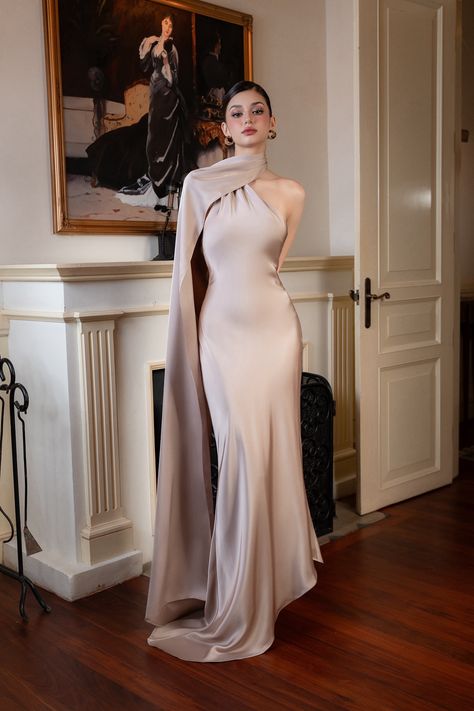
Dye lot discipline is where this colour earns or loses money. Emerald sits in a part of the spectrum where a small shift reads as a different dress, teal on one side, almost black-green on the other, and the shift shows worst exactly where a bridesmaid line stands shoulder to shoulder. Careful garment factories cut a whole party order from one lot and mark the lot on the carton. A store that tops up a selling emerald style mid-season without asking about the lot can end up with two greens on one rail and a customer comparing them under the shop light, doing the quality check the buyer skipped.
Cloth decides whether emerald reads rich or flat
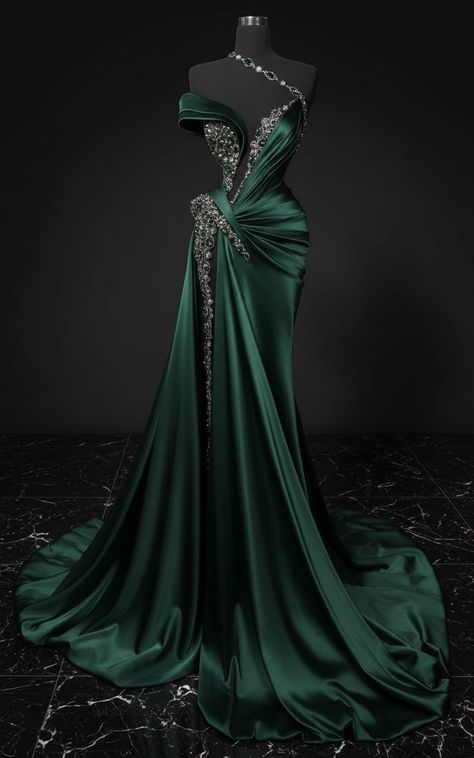
The same green lives differently in different cloth. In a cloth with a soft sheen it deepens and moves, catching light along folds, which is why so many formal versions lean that way for evening wear. In a flat matte cloth it can sit heavy and plain, closer to a uniform than a gown, unless the cut gives it shape to work with. Crepe sits between the two and hides minor fit strain better than either. No wait, hides is the wrong word. Crepe shows strain later, which is not the same favour, because a guest dress returned after the event with strain marks at the seams is a harder conversation than one exchanged before it.
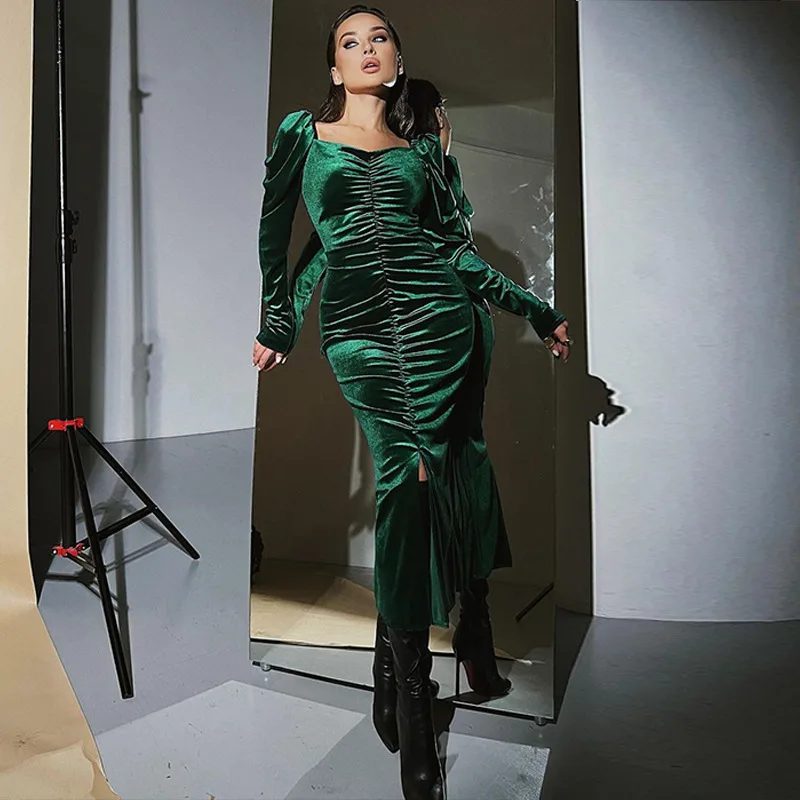
Length and coverage split the style’s markets more than the colour does. A full-length emerald dress reads formal at almost any venue and travels across bridesmaid and guest use without much argument. Shorter or more open versions lean toward prom and party and lose the older guest buyer entirely. Stores sometimes try to cover both ends with one listing and end up with reviews arguing with each other, too plain for the party buyer, too much for the guest buyer, both describing the same dress accurately from different evenings. Distribution learns, slowly, to read those reviews as two markets filing reports in one place.
How a store should plan an emerald run
Name the calendar the run is for before naming the quantity. A bridesmaid-led run orders the full size curve in one lot and holds a small reserve in the middle sizes. A prom-led run orders narrower and earlier, with a hard stop date after which no reorder is chased. A guest-led run can afford to spread across the year and test a second cloth in the same green. For wholesale dresses in a colour this specific, the trial order is where the dye question gets asked, folded sample against folded sample in daylight, because emerald forgives almost nothing once six dresses are standing in a row.
In the distribution plan this green sits one rail away from the one-shoulder belted maxi dresses order, one season away from the sexy slit maxi evening gowns file, and one fitting away from the flutter sleeve wedding guest dresses samples, because a single strong colour has to earn its space in three different months.
Questions buyers and stores actually ask
Six bridesmaid dresses in emerald arrived in two slightly different greens. What went wrong?
The order crossed dye lots. Emerald shows a small lot shift as a visibly different green, teal-leaning against black-green, and a standing line of dresses makes the comparison unavoidable. Order a full party in one lot, keep the lot number from the carton, and check any top-up order folded against the first dresses in daylight.
Why do reviews of the same emerald dress call it plain and also call it striking?
They are usually reports from different evenings. A matte emerald can read plain in daylight and rich under indoor evening light, and party buyers and wedding guests judge the same dress against different rooms. Read the reviews split by occasion rather than averaged, and the dress makes more sense.
Prom run or bridesmaid run. Can one emerald order honestly serve both?
The colour can, the size curve struggles to. Bridesmaid orders need the full run in one lot months ahead; prom sells the middle sizes in a short sharp window and strands the ends. Plan the run for one named calendar and let the other buy its own, smaller order.
What should a boutique ask a dress supplier before a bulk emerald order?
Whether the full size run comes from one dye lot, what the lot number is, and how a mid-season reorder is matched. Ask for a folded sample of the reorder lot against the original dress in daylight. With a low MOQ of 10 pcs per style on private label lines, a small matched trial order settles the question cheaply, honestly.
The green will sell, in some month, in some cut, because it nearly always does. What the distribution desk is still unsure about is whether any single stock number deserves to carry all three of its calendars at once, or whether emerald works best treated as three related dresses that happen to share a colour, planned separately and only ever photographed together.