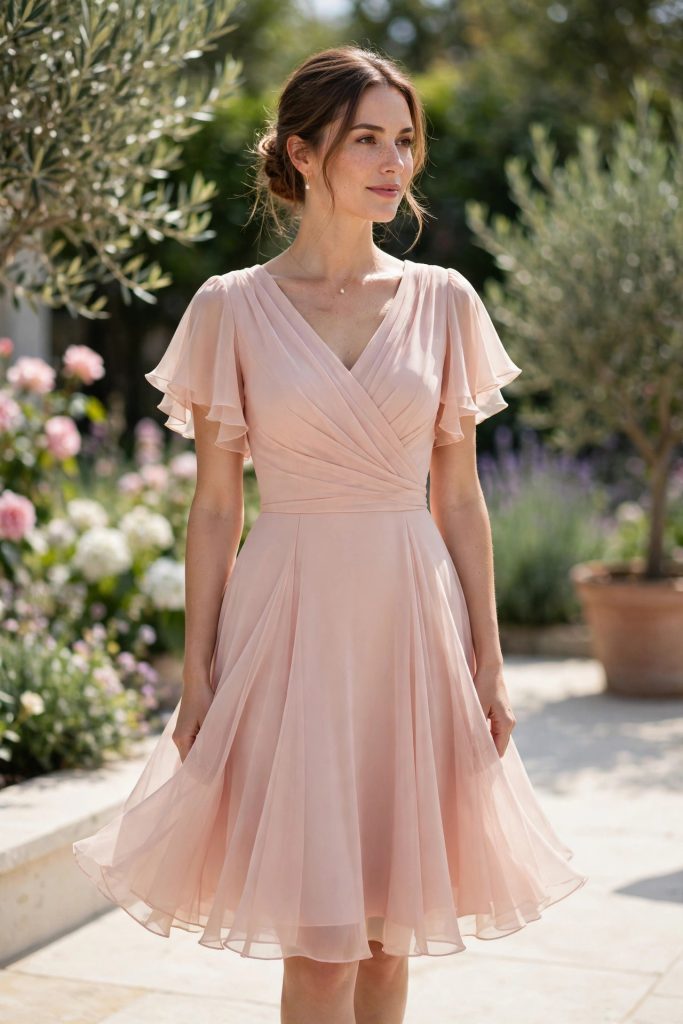
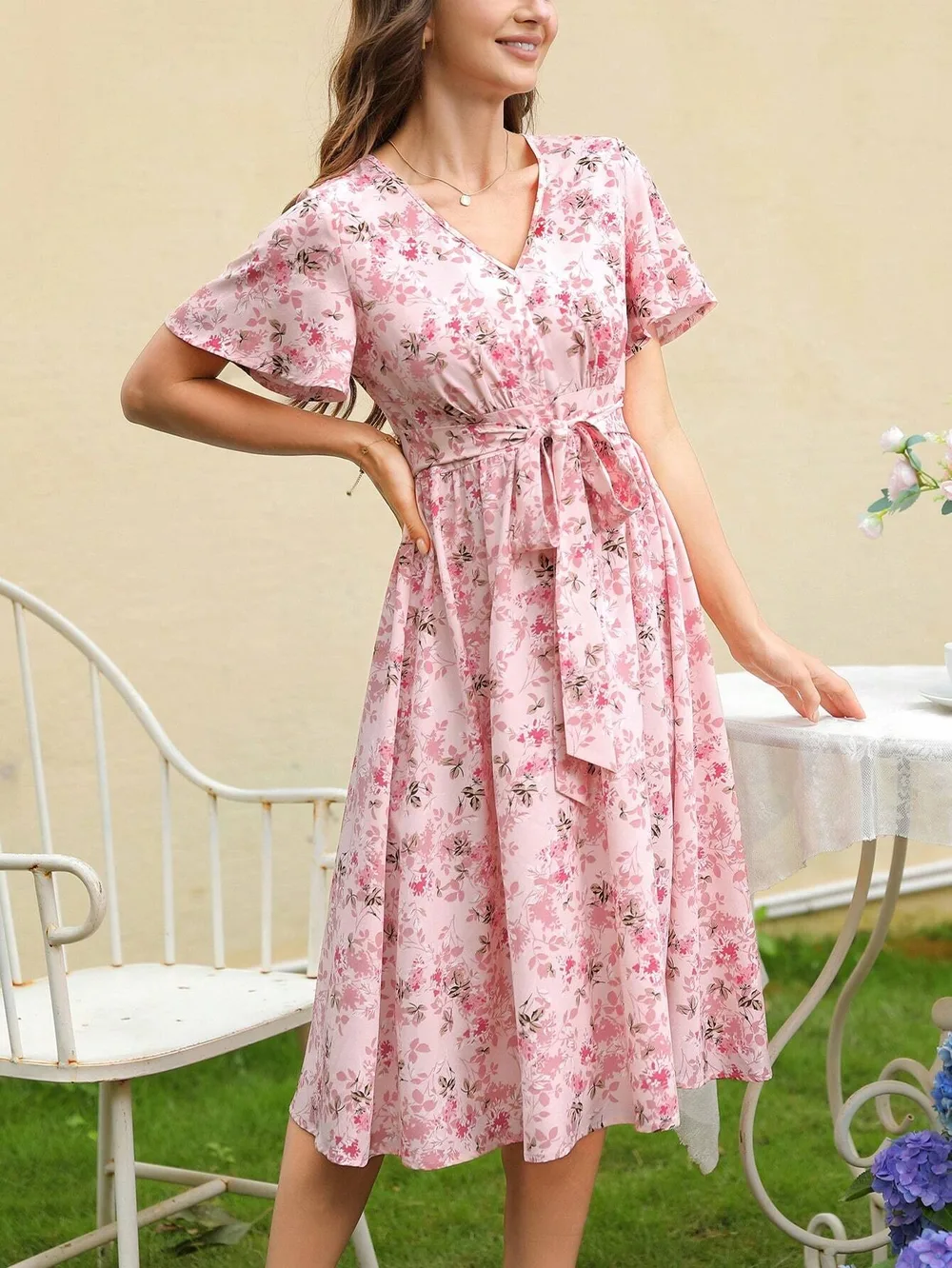
The discount is the loudest number in this listing and the least useful one. The BeryLove women’s formal flutter sleeve wedding guest dress reviewed here arrives wrapped in Black Friday language, affordable in the headline and formal in the photographs, and from the money end of the trade a price cut on a guest dress raises a plain question that has nothing to do with the percentage. What was taken out of the dress to reach the lower number, and was it taken out of the cloth, the making, or simply out of a price that was set high in October so it could fall in November.
A flutter sleeve is cheap to draw and fussy to finish
A flutter sleeve is a small flared piece that falls from the shoulder in a soft wave, and its cost hides in the edge. That curved outer edge has to be finished so it lies flat and does not curl, and on a light formal cloth the finishing choices split sharply by price. A narrow rolled hem done carefully keeps the wave soft. A wider, quicker hem stiffens the flare so the sleeve stands away from the arm like a small wing, which is the version that fills the annoyed end of review sections. The cloth in the sleeve is pennies. The minutes at the machine, multiplied across a bulk order, are where the sleeve’s real price lives, and minutes are the first thing a discount season squeezes.
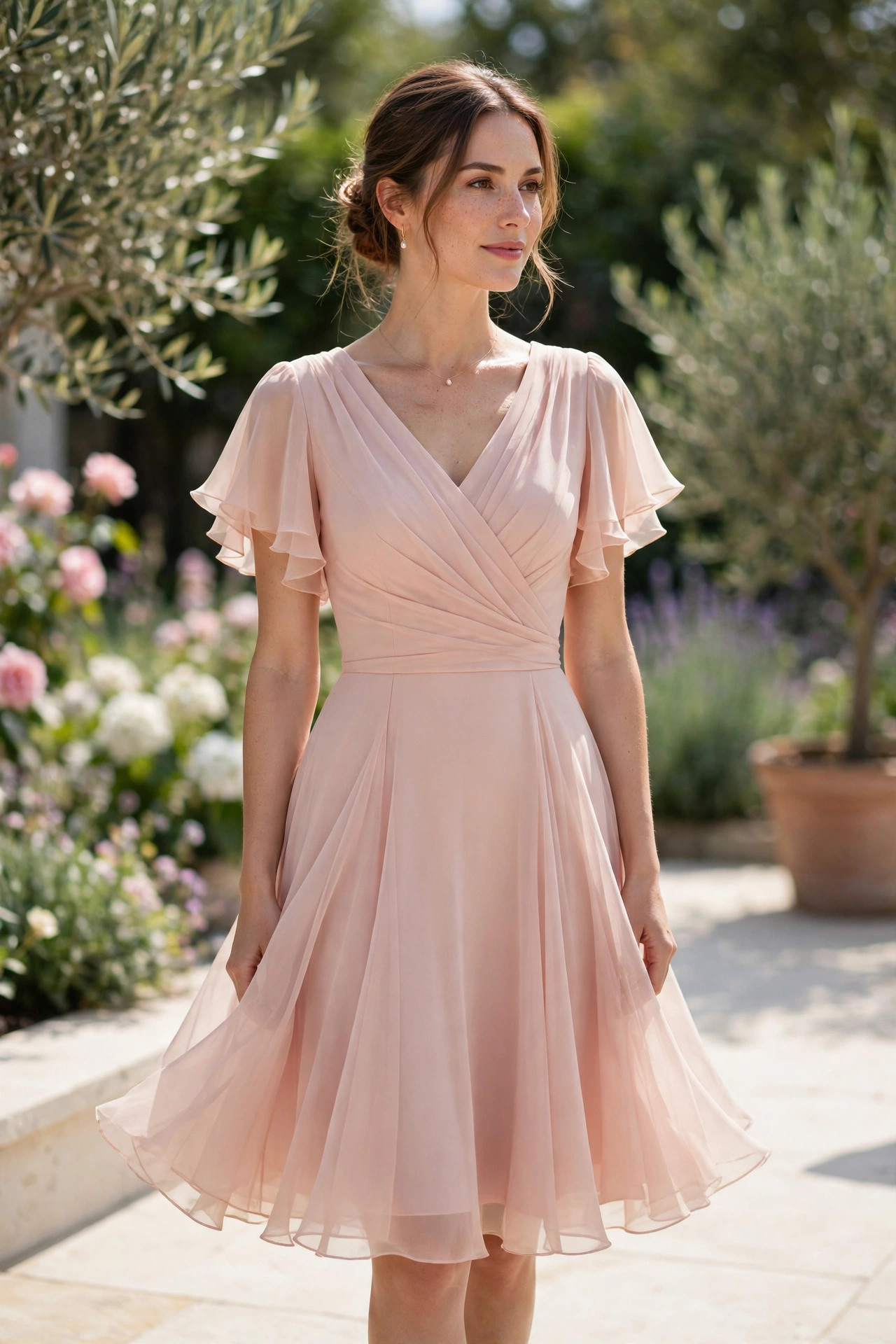
The bodice underneath carries the second half of the cost argument. A guest dress in this price band lives or dies on whether the waist seam sits where a waist sits across the size run, because a flutter sleeve draws the eye to the shoulder and the shoulder line forgives nothing below it. Size grading on a low-priced formal style is often done by the simplest scaling, which moves the waist and the sleeve position together in ways that suit the middle sizes and drift at the ends. Buyers at the money desk learn to ask which sizes the sample was checked in. A style sampled only in its middle size is a price with a gap in it.
Black Friday pricing on a dress with a spring job

A wedding guest dress bought in late November is mostly bought for a wedding that has not happened yet, often months away, and that gap changes what a discount is worth. The buyer cannot fully test the dress against the day, the venue, or the weather it was bought for, and by the time the day arrives the return window has usually closed behind it. No wait, that understates the store’s side of it. Shops also buy this style in the discount window for spring rails, and a dress manufactured must meet the same sampling questions in November as in March, because the wedding it lands on does not care which month it was discounted in.
Where does the money actually go in a dress like this. Cloth first, and guest dresses in soft formal cloth are not cloth-heavy. Then the making minutes, the finishing of that sleeve edge, the pressing and packing that decide whether the dress arrives as a garment or as a crease map. Then the platform costs and the discount itself, taken out of margin that was planned for exactly this week of the year. None of that makes the dress a bad buy. It makes the percentage a poor guide, because two dresses at the same discount can have had entirely different things removed from them on the way down.
How a careful buyer spends the discount instead of chasing it
Spend the saved money on information. Order the trial quantity across the full size range rather than doubling down on the middle sizes, and check the sleeve edge and the waist position on the largest and smallest dresses first. Wash or steam one dress the way a guest will, because a flutter sleeve that curls after its first steam was finished too fast, whatever the tag said. For a boutique building private label stock, a low MOQ trial order in the discount window is a reasonable gamble, as long as the sampling notes are written as if the dress had cost full price.
On the cost sheet this flutter sleeve sits priced against the BeryLove elegant wedding guest dresses file, sewn in the same season as the elegant fall long sleeve formal guest dresses run, and compared line by line with the ruched maxi bodycon cocktail dresses order, because a soft sleeve is a small piece of cloth carrying a long list of charges.
Questions buyers and stores actually ask
A big Black Friday cut on a guest dress. What usually came out of the dress?
Most often making time rather than cloth. The flutter sleeve edge gets a faster, stiffer finish, pressing gets hurried, and grading checks shrink to the middle size. None of that shows in the listing photograph. It shows on the largest size and after the first steam, which is where a careful buyer looks.
The flutter sleeves stand out like little wings instead of falling soft. Why?
The curved edge was finished too wide or too stiff for the cloth, so the flare holds itself away from the arm. A narrow, careful edge finish keeps the wave soft. It is a minutes-at-the-machine question, and it is set long before the dress reaches a sale rail, honestly.
Is buying a guest dress months early in a sale a smart move?
It can be, with eyes open. The return window will likely close before the wedding, so fit and finishing have to be judged at purchase, not at the venue. Buy across the size range if stocking it, steam one dress at once, and treat the saving as a trial order budget rather than a reason to skip checks.
The percentage will be forgotten by the time the wedding arrives, which is the quiet truth under all of this arithmetic. What will be remembered, in a photograph and possibly in a review, is a sleeve edge and a waist seam, two small pieces of workmanship that cost minutes rather than money, and the desk still wonders why the industry insists on discounting the minutes first.