
Start at the end, then. The end is a dress in a returns pile in late December, black, bodycon, ruched down the sides, worn once to an office party by the look of the perfume in the fabric, and sent back with the reason given as fit. Fit. The dress did everything it was designed to do and a customer still wrote fit, and to understand why, you have to walk backwards from that pile, past the party, past the parcel, past the discount weekend that sold it, all the way back to a roll of fabric on my side of the trade, where the whole story was already written in the stretch of a mesh and the temper of a dye bath.
I work upstream. Fabric, trims, the materials end of the dress business, where rolls arrive with their own opinions and a bodycon maxi is, to my eyes, not a dress at all but a negotiation between an elastic fabric and a body that never agreed to the terms. The BORIFLORS style, an elegant bodycon ruched maxi sold as a cocktail dress, lives or dies on that negotiation. Ruching is the mediator. Those gathers along the seams are there to absorb disagreement, to give the fabric somewhere to go when the body underneath changes the math, sitting, walking, breathing through an evening.

One step back from the returns pile is the party, and the party explains the word fit better than any size chart. A bodycon maxi fits at the door and argues by midnight. The ruching across the stomach that photographed as texture at seven in the evening has ridden and bunched by eleven, because gathers migrate toward movement, and the stretch that made the dress forgiving in the fitting mirror has relaxed with warmth and made it cling in places the mirror never showed. The wearer calls all of this fit because there is no box on the returns form for the dress changed its mind during the evening, though that is closer to the truth of it.
Another step back. The parcel, and the price on the parcel, because this dress is famous in the trade as a sale-weekend dress, the kind that moves in volume when a big discount event cuts its price and buyers grab two sizes intending to return one. My side sees the upstream shadow of that habit. Orders for black stretch fabric spike ahead of the autumn sales, and the spike pulls in rolls that would normally be rejected or rested, second-tier stock with slightly uneven stretch across the width. A dress cut from the uneven part of a roll ruches beautifully on one side and grudgingly on the other. Nobody planned that asymmetry. The calendar planned it, months before the customer met the dress, when a buying team looked at a forecast and reached for volume.
Backwards, into the fabric itself
Here is upstream knowledge that never makes it to a product page. Stretch fabric is not one material across a roll. The elastane content can drift by small percentages from one end of a production run to the other, and a bodycon dress, which uses stretch as its entire fitting system, magnifies a small drift into a size argument. A dress with no zip, no darts, no structure except ruching and stretch is a dress whose size chart is written in percentages of recovery, and recovery is exactly the property that varies. When two customers order the same size and one swears it runs small and the other swears it runs large, both can be reporting honestly on dresses cut from different parts of the same roll family. The factory did not change the pattern. The fabric changed under the pattern, quietly, in a way a spec sheet rounds off.
Ruching has its own upstream secret, which is thread and tension. The gathers are held by stitching that has to stretch with the fabric or it becomes a row of tiny locks, and at each lock the fabric stops moving and starts pulling. A dress ruched with rigid stitching wears like a dress with ribs. The gathers look right in a photograph, which is a still thing, and misbehave in motion, which is what a cocktail party is. The fix lives in elastic thread and in a machinist’s patience, neither of which shows in a listing, and both of which cost time that a sale-weekend price has already spent somewhere else.
Black deserves its own step backwards, because black is not a color at my end of the trade. It is a family of colors that agree to share a name. Two dye lots of black stretch fabric can sit side by side under warehouse light looking identical and then part company under the warm light of a venue, one leaning green, one leaning red-brown. A bodycon dress is often cut with panels from more than one lot when volume runs hot, bodice from this roll, skirt from that one, and the wearer discovers at the party that her dress is two blacks having a quiet disagreement across the ruching. Retail light in the shop where she tried it was kind. Venue light is not kind. I have stood at the fabric end watching lots get approved under one light for a dress that would be judged under another, and the approval stamp does not care, because stamps cannot see.
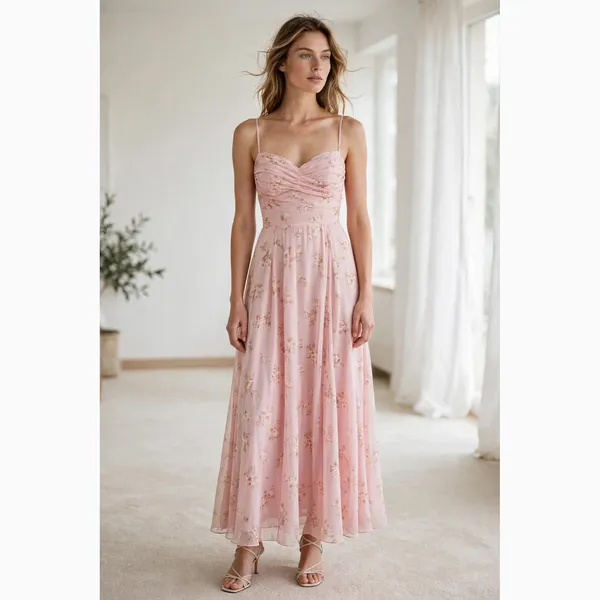
Keep walking back and you reach the roll arriving at the factory, and the question of rest. Stretch fabric wound tight on a roll is a fabric under tension, and cutting it the day it arrives means cutting a material that is still planning to shrink back toward its relaxed state. The dress that results measures correctly on the table and smaller on the body a week later, not because anyone sewed it wrong but because the fabric finished its journey after the dress was made. Workshops that rest their rolls a day or two before cutting produce the same dress a size more honestly. The rest period costs warehouse space and schedule, and in the rush before a big sales weekend, rest is the first thing sold to the calendar. The returns pile in December is, partly, a pile of unrested fabric coming home.
No wait. I have walked past something on the way back, and it matters more than the dye lots. The lining. Or the absence where a lining should be. Many dresses in this style are a single layer of stretch fabric with the ruching doing the work a lining would do in a more expensive garment, smoothing and hiding. Single-layer bodycon shows every seam of whatever is worn underneath, and it shows the outline of the size label’s stitching and the shadow of the care label, small ghosts that read as cheapness in photographs. Buyers blame the fabric’s thinness. Often the fabric is adequate and the missing layer is the story, a cost decision taken at a desk long before the roll reached my end, and I misfiled it under fabric because fabric is my department and we all blame our own department first, out of habit.
At the start of the walk backwards stands the simplest fact, which is that this dress is asked to do something unreasonable and does it surprisingly often. It must fit bodies it has never met, in a fabric that varies, at a price that leaves no room for the slow steps, and it must do it at a party, in motion, under unkind light. The ones in the returns pile are the visible failures. The ones that stayed out all evening, ruched and black and unbothered, are the majority, and they never write reviews that say the fabric was rested and the lots matched, because nobody can see a thing going right. A boutique buyer choosing this style for a shop range, perhaps alongside other cocktail pieces in a women’s apparel factory catalog, is really choosing which invisible things she trusts her supplier to have done. The photograph cannot tell her. The returns rate, three months later, tells her everything, in the past tense.
Boutiques feel the upstream story as a pattern in their own stockroom, since a style bought for a sale weekend arrives in mixed lots more often than a style bought calmly in spring. Shops that also carry proper occasion ranges, the kind a bride’s party browses through a wedding dress wholesale catalog before choosing, learn to hang this dress beside structured garments and let the contrast sell both, the structured dress promising control and the ruched one promising ease. The promise of ease is the honest one to check, though, because ease is exactly what uneven stretch takes away first.

Questions buyers ask me, in the words they use
Same dress, same size, two orders, two different fits. Am I losing my mind?
You are not, and I wish this answer were rarer than it is. A bodycon dress fits by stretch and recovery rather than by cut, and both of those drift a little between fabric runs and even along a single roll, so two dresses with the same label can argue with the same body in different weeks. If one of the pair came from a sale-weekend batch, the odds widen, because that is when rested, first-tier fabric runs out and the calendar starts making decisions. Judge the dress in your hand, not the size in your memory of the last one, and if a shop’s version of this style fits you, buy your second from the same batch rather than the same listing, a distinction most listings will never offer you.
It looked one black in the shop and another black at the venue. Is that my eyes?
It is the dye lots, most likely, and your eyes are the instrument that caught what the warehouse light hid. Black fabrics lean warm or cool depending on the lot, and a dress panelled from two lots can show the seam between two blacks only under certain light, which is why it passed every check before it reached you. Hold the dress under a warm bulb at home before the event, turning the bodice against the skirt. If the two blacks argue in your hallway they will argue at the venue, and that is a return I would make without guilt, because no amount of styling fixes a dress that disagrees with itself.
The ruching looked smooth in the mirror and bunched all night. What moved?
The gathers moved, toward the motion, the way they are built to and the way nobody warns you about. Ruching absorbs difference, and over an evening of sitting and standing it slowly redistributes itself, and stitching that does not stretch freely speeds the whole migration up. A short test helps before the night, wear the dress at home for an hour, sit in it, make tea in it, climb the stairs. The ruching will show you its intentions. And choose underlayers with no raised seams, because a ruched single layer prints what is underneath it onto the surface by midnight, which I have seen mistaken for a fabric fault in more complaint photographs than I can count.
So the dress in the December pile goes back onto a rail, and somebody will buy it at a discount in January and may well love it, because her body and that particular roll’s stretch agree with each other, and the dress will have its good evening after all. That is the upstream view of returns. Not a verdict on the dress. A record of a negotiation that failed once, between a fabric with a history and a person with an evening to get through, written in a single word because the form had no room for the story.