Dear new buyer,
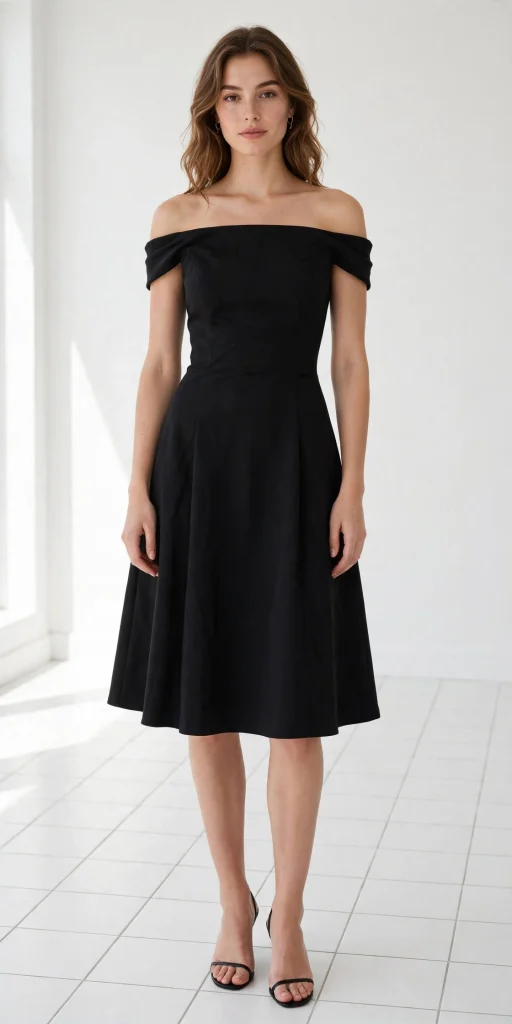
You sent me the listing at midnight your time, which tells me more than the listing does. Thirty-two dollars, marked down from forty-five, black, sleeveless, off the shoulder, and the words wedding dress sale sitting on top of a dress that has never been a wedding dress in its life. You asked if the price is real. The price is real. The forty-five is the part I would not frame and hang on a wall. Dresses at this level live at one price for eleven months and then discover a higher ancestor for exactly one sale weekend, and the ancestor was invented in October, in a spreadsheet, by somebody who has never touched the dress.
I am writing this as a letter because a call would wander and you would buy the dress halfway through it, which might be fine, honestly. It might be exactly the right dress. An off-shoulder occasion dress with a fitted bodice is a proven shape for a reason. It photographs kindly, it forgives a range of bodies, and it does not ask the wearer to perform any structural engineering before dinner. What I want you to understand before the cart closes is which parts of this listing are the dress and which parts are the season talking.
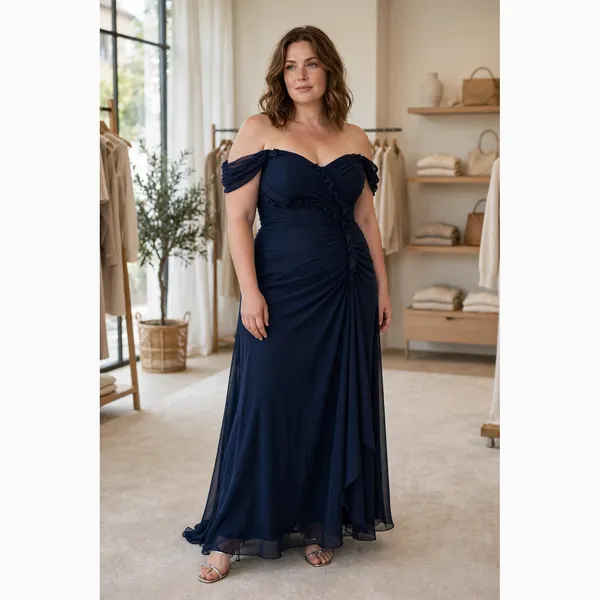
The neckline is the dress. Everything else is decoration around a strip of elastic and a prayer. Off-shoulder construction holds itself up by gripping the upper arm and the top of the chest at the same time, and the grip comes from elastic that has to be strong enough to hold a bodice through an evening of reaching, hugging, and dancing, and soft enough not to leave a red tramline by dessert. Cheap elastic fails in one of two directions and both failures get photographed. Too loose and the wearer spends the night doing the small upward tug that guests read instantly, no matter how casually it is done. Too tight and she stops reaching for things, which at a wedding means she stops being in the party. When you order one piece to test, and you should order one piece before you order thirty, wear it for two hours at home doing normal arm things. Raise a shelf item down. Carry a tray. The neckline will tell you its whole future in those two hours, and it will tell you for thirty-two dollars instead of for a rail of stock.
Sellers of finished dresses and factories that make them quote the same garment in two different dialects, and this is the part of my job nobody sees from the buying chair. A factory quote for a dress like this carries the cutting waste inside the unit price, folded in, never named on the sheet. The buyer sees one number per piece and argues with that number, while the number is actually three numbers wearing a coat, fabric, labor, and the offcuts that fell on the floor because a fitted bodice does not tile neatly across a roll. When a listing at retail shows a price that looks impossibly low, usually one of those three has been quietly thinned. The fabric went lighter, the labor went faster, or the waste got pushed onto a cheaper cloth that drapes like a rumor of the original. You cannot tell which one from photographs. You can tell from the second wash and the first long evening, which is why the sample exists and why impatience is the most expensive line item in this trade.
What the sale weekend hides in plain sight
Small orders carry a surcharge that almost never gets its own name. Run ten or twenty pieces of a style through a line set up for hundreds and the per-piece cost climbs, because the line stops, changes thread, changes feet, changes hands, for a quantity that barely warms the machines. Factories fold that climb into the quote rather than listing it, since a named small-order fee starts an argument and a folded one starts production. I tell you this because your plan, as you described it, is to test this dress shape with a tiny run under your own label and then decide. Tiny runs are a legitimate way to learn. They are just not cheap runs, and a supplier who quotes you the hundred-piece price for fifteen pieces is not being generous. He is being vague, and vagueness bills you later, usually at the balance payment, when the goods exist and your options do not.
The styles already sitting in the OEMOD Factory wholesale catalog run at ten pieces per style to start, colors and sizes mixed, because those patterns are cut already and the line knows them. A design you bring yourself starts at twenty pieces per style, and the sample for it is seventy-five dollars a piece, with thirty-five of that coming back to you per piece once the style turns into a real bulk order. I am putting the numbers in this letter flatly because they are the numbers the whole rest of the conversation stands on. The WOOSEA dress at thirty-two retail is not competing with those numbers. It is competing with your Friday night. Different purchase. Different logic. Confusing the two is how small boutiques end up with a rail of retail dresses they cannot label, cannot reorder, and cannot return, learning an expensive lesson about what wholesale actually means.
March is the month that teaches buyers about rush fees, and since you are new I will hand you this one early. Every factory that dresses the spring wedding season feels the same squeeze at the same weeks, and the squeeze has a price whether or not anybody prints it. Orders placed in the calm months move at the calm price. Orders that arrive when every boutique on two continents wants the same line at the same time move at the speed money can buy, which is slower than the buyer hopes and faster than the factory promised the last person. Your Black Friday dress has a version of this hiding in its delivery estimate. The estimate printed during a sale weekend is the estimate of a warehouse that has not yet met the sale weekend’s orders. Add days. Then add the days you will spend deciding about the elastic. The dress that arrives in time for your December events is the one ordered while everybody else is still reading the discount.
No wait. I said the forty-five was invented in October, and that is too clean. Some of those higher prices were real once, briefly, in the first weeks a style lists, when the seller tests what the traffic will bear before settling where the volume lives. It is still theater, but it is theater with a short honest run at the start, and I have done the same thing with opening prices in my own buying. The discount percentage on the page is a story about a number. Judge the thirty-two on the dress, not on the size of the fall it supposedly took.
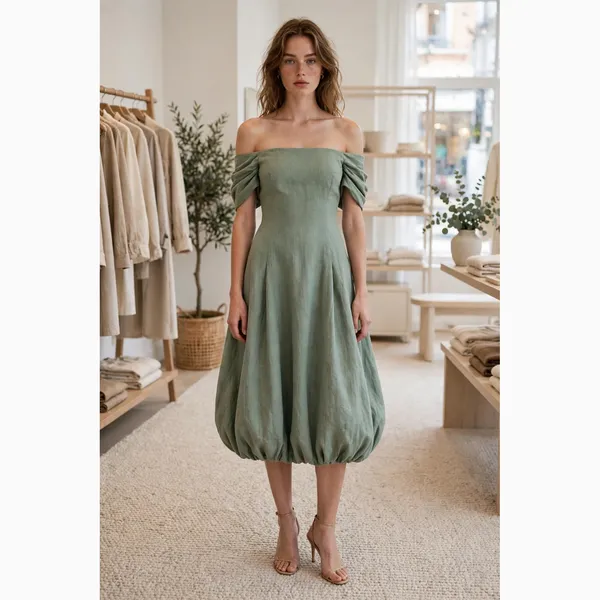
You asked about the wedding label, finally, near the end of your message, as if it were the small question. It is the question that decides who your customer is. A bride who buys this expecting bridal structure will find a party dress, well shaped, pretty, and entirely without the internal architecture a long ceremony leans on. A wedding guest who buys it expecting a party dress will be pleased in exact proportion. The same garment, two verdicts, and the only difference is the expectation the listing installed. Shops that sell occasion dresses as wedding-guest styles, the way the rails in the wedding dress wholesale catalog separate real bridal construction at five pieces per style from everything else on the floor, are doing a modest honest thing that looks like marketing and is actually triage. Put the dress in front of the woman whose evening it fits. The returns desk will thank you in January, quietly, in its own spreadsheet dialect.
One more thing, and it is the thing I check first now after years of reading inspection paperwork I did not generate. A general inspection standard on a quote sheet means the inspector tests against a general defect list. Your dress has specific ways to fail. Elastic tension. Bodice seam grin under strain. The off-shoulder band rolling outward after an hour of wear. If none of those appear on the check sheet for your order, the inspection can pass every piece and still ship you the exact failure your customers will find. Write your three defects down and make them the list. It takes one sentence in the order notes and it changes what gets caught, because people find what the paper tells them to look for and walk straight past the rest with a clear conscience.
The questions you actually asked at midnight
Thirty-two down from forty-five. How much of that drop should I believe?
Believe the thirty-two and ignore the forty-five, is the short version I give every new buyer. The selling price is the only number that ever leaves your account, so it is the only one worth testing against the garment in your hands. Anchor pricing works because a fall feels like a gain even when the starting point was staged, and I still catch the little lift in my own chest at a crossed-out price after all these years in the trade. Order the single piece, run the two-hour arm test, wash it once the way your customer will wash it, and then decide what the dress is worth to your rail. The discount story will not survive the wash. The dress might, and that is the only verdict that stocks a shop.
Ten pieces per style on existing styles. Is that a real starting point or a door-opener?
Ten pieces per style is real for styles that already exist, patterns cut, line familiar, colors and sizes mixable inside the ten. It stops being the number the moment the design is yours, because a new pattern, a new sample round, and a line that has never sewn the style push the start to twenty pieces per style, and anybody quoting you ten on a from-scratch design is postponing an argument rather than removing one. The sample money follows the same honesty. Seventy-five dollars a piece to make yours, thirty-five back per piece when it turns into bulk. I would rather lose a sale to those numbers stated plainly than win one on numbers that melt in March.
The listing says wedding dress sale. Can I sell it as a wedding dress in my shop?
You can sell it as an occasion dress, a wedding-guest dress, a party dress that photographs beautifully at weddings, and all of that is true and sufficient. Calling it a wedding dress in your own shop borrows trouble the listing seller will not share with you, because the bride who feels under-built on her own day does not return the dress to a marketplace warehouse. She stands in your fitting room. Bridal construction is a specific thing, boning, cups, layered support, a skirt built to be sat in and danced in for ten hours, and this garment does not pretend to any of it once it is off the screen and on a body. Sell the dress it is. The guest business is bigger than the bride business anyway, every single weekend of the year.
One sample first, or straight to a small run while the sale lasts?
One sample first, even with the sale clock shouting, because the elastic question costs thirty-two dollars to answer now and a whole rail to answer later. I know the fear underneath the question. The price will rise, the sizes will thin out, the moment will pass. Moments pass every month in this trade and new ones arrive wearing slightly different colors. What does not come back is the money spent learning in bulk what a single piece would have taught at retail. Buy the one. Wear it around your own house with your arms up, putting glasses on high shelves like a woman testing fate. Then write to me again and tell me what the neckline did, and we will talk about runs with evidence instead of hope.
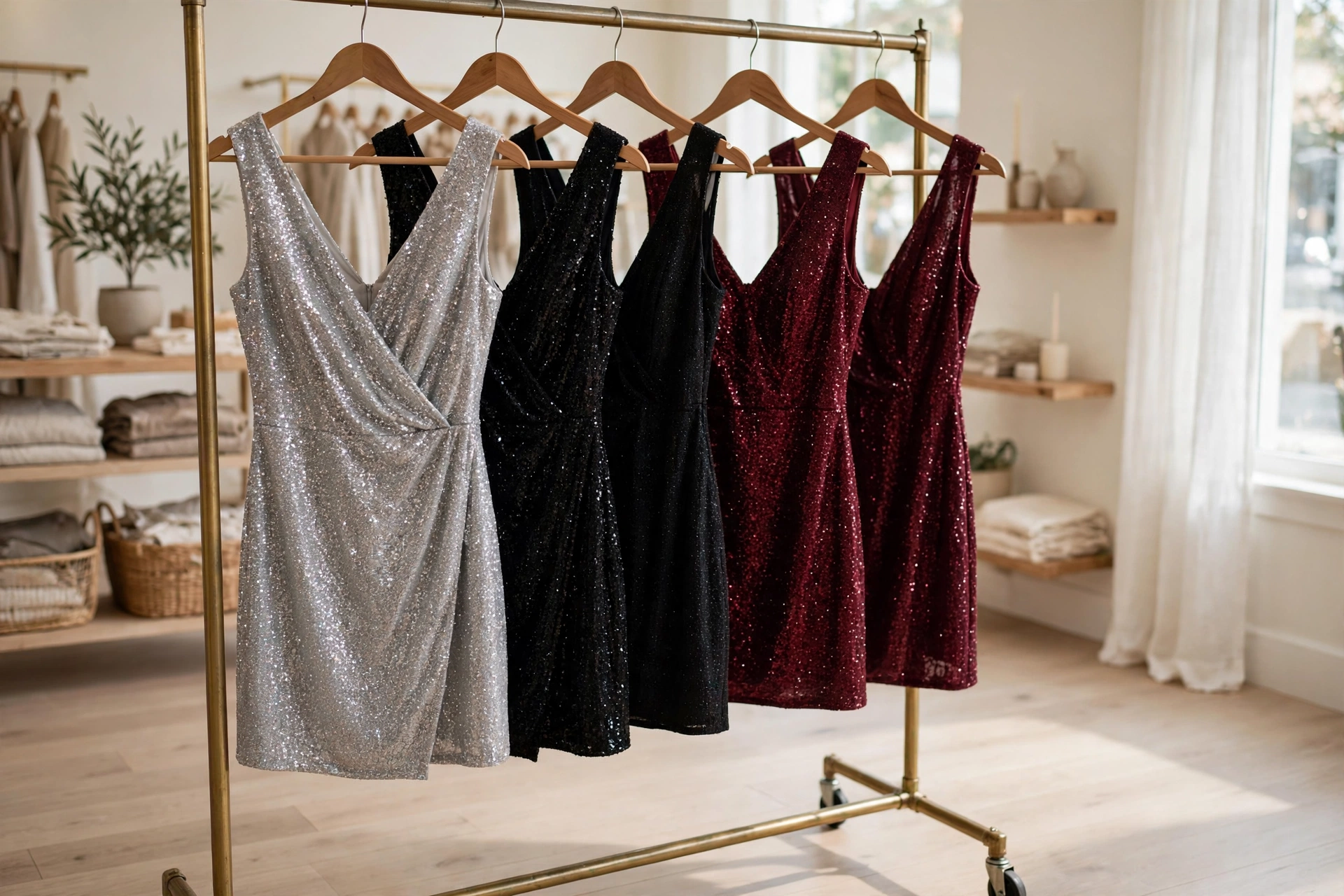
I have reread your midnight message twice now and I keep landing on the sentence where you said you do not want to look naive in front of suppliers. Nobody in this trade can see your naivety. They can only see your order notes, your defect list, and whether your deposit arrives when you said it would. Write those three things like a person who has been burned before, even though you have not been, yet. The dress will be whatever the elastic says it is. I am still not sure the black will hold its depth through a season of shop lights, and I would like you to be the one who finds out with one piece instead of thirty.
Write back after the wash.