Failure one is built into the applicator, and it is the failure this whole review turns on. An instant stain remover pen, the 3-pack of 27ml pens under review here, cleans through a porous tip, and a porous tip keeps what it touches. A pen that has just lifted wine from a white dress is carrying wine in its tip when it moves to the next mark, and it gives some of that colour back. The formula did its job. The tool then undid it. Any list of what goes wrong with these pens that starts with chemistry has started in the wrong place.
The failures, counted the way a sourcing desk counts them
Failure two is the dried-out pen that passes inspection. These pens are bought ahead, stored in handbags, drawers, and glove compartments, and carried for months toward a single afternoon. A pen can look full and deliver a weakened dose because its tip has been drying since the cap seal first broke. Nobody tests a rescue pen in advance, since testing spends it. So the failure is discovered in the only minute the product exists for, in front of a bride, on a dress. From a sourcing view that is a shelf-life question long before it is a user question, and it is why the pack count matters: three pens are not generosity, they are redundancy against the first pen being a souvenir.

Failure three is the wrong stain read as the right one. A pen of this type handles fresh, water-based marks kindly: a splash, a light smear, treated in the first minutes while the colour still sits on the surface of the cloth. It handles oily makeup, set dye, and anything that has dried into lace far less kindly, and rubbing those marks mostly moves them sideways. Listing language rarely sorts stains into those two families, so buyers arrive believing the pen is a general answer, and the dress pays for it in a wider, paler mark.
Failure four is dosage, the quiet one. Twenty-seven millilitres is a sensible carry size, and that sufficiency encourages a generous hand: more liquid, pressed longer, over a bigger area than the mark needs. On white and ivory grounds the liquid itself can leave a faint dried outline where the treated area ends. The mark fades and the outline stays, and the wearer has traded a spot for a halo. A sourcing desk reads that as an instruction problem, since the pen ships with almost no guidance a frightened person can use at speed, and frightened people use more of everything.
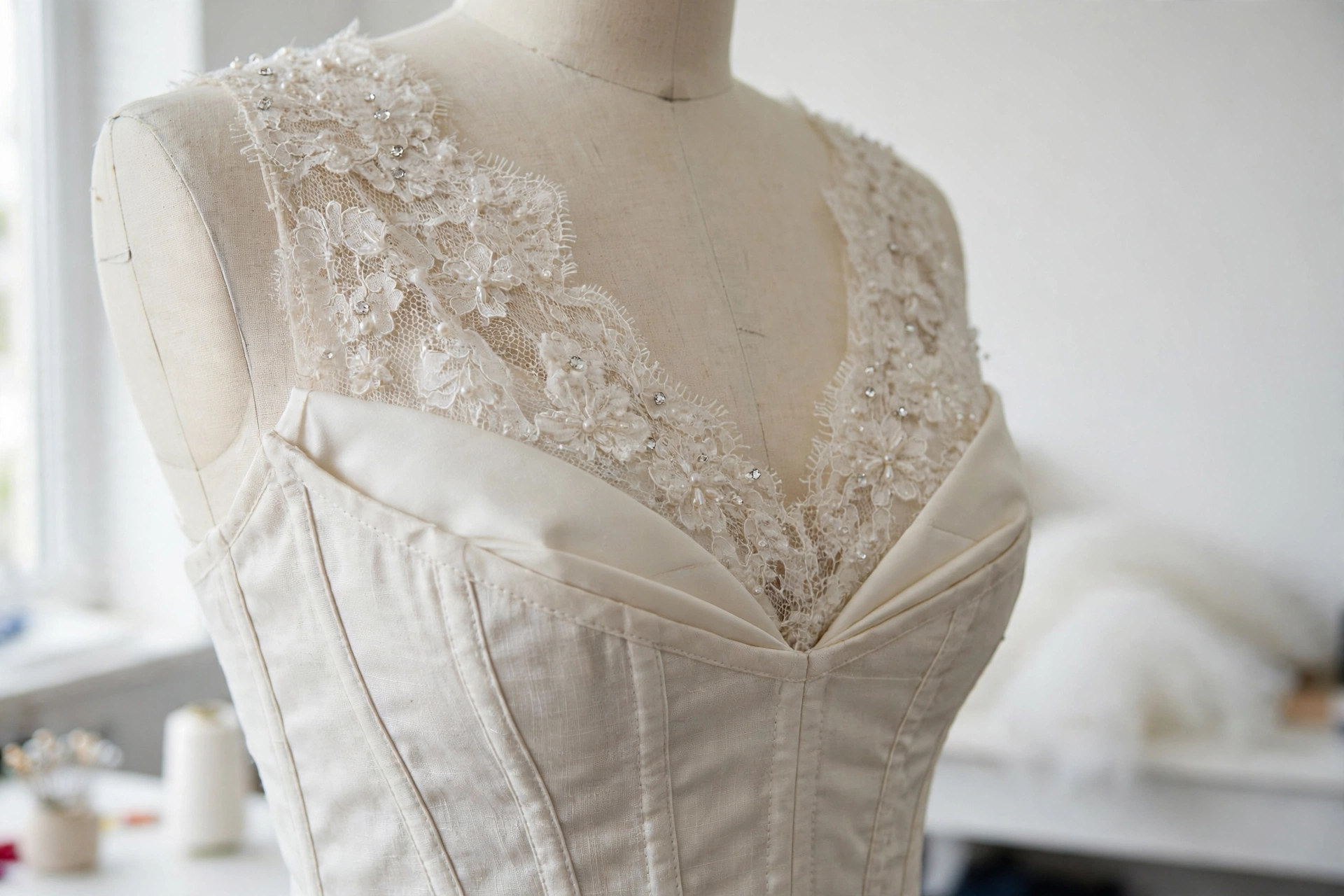
What the numbers on the pack are really saying
Three pens, 27ml each: read as a specification instead of a slogan, the pack is admitting its own weaknesses. One pen contaminates its tip, so there are three. One may have dried in storage, so there are spares. One will be lost to a handbag or a borrowed clutch. None of this is poor design. It is honest design wearing no explanation, and the explanation is the missing part of the product, because a buyer who understood the redundancy would use the pens differently, one per stain, tested first. No, that is too generous to the pack. The explanation is missing because instructions do not sell pens at a till, and everybody in the chain knows it, including, now, the person holding the dress with its new pale outline.
For trade buyers the pen belongs in a kit conversation, not a standalone one. A bridal emergency kit that pairs pens with plain instructions, one pen per stain, test on a hidden seam, blot never rub, stops being a lucky charm and becomes a small system. Stores assembling kits for wholesale can source the pens cheaply enough; the value they add is the card and a spare pen sealed separately for the day itself. A garment supplier shipping gowns with a care card already in the bag has the perfect vehicle, since the card can carry the pen rules to the one reader who will need them, at the one moment she will read anything at all.
The accessory sourcing file keeps this pen beside the lint roller review for bridesmaid dresses, the adult sewing kit review checks, and the bridal emergency kit essentials guide packing list, because the small rescue items tend to be bought, judged, and blamed as a set.

Questions buyers and stores actually ask
The first stain came out and the second got worse. What happened?
The tip happened. A stain pen’s applicator is porous and holds pigment from the first mark, then releases some of it onto the next one. Treat the pen as one stain per tip: once it has worked on a coloured mark, retire it to the spares and open a fresh one. The 3-pack is built for exactly that rotation, even though the packaging never quite says so, which is the most expensive silence in a very cheap product.
How long can these pens sit in a handbag before the wedding?
Months is fine for a sealed pen kept away from heat; the trouble starts once the seal is broken and the tip begins drying. A pen carried loose since last season may look full and deliver a weak dose. Buy the pack reasonably close to the event, keep one pen sealed until the day, and treat any pen that has lived in a hot car as decoration. The test is the wedding, and it is a bad place to discover a storage lesson.
Which stains should a pen be kept away from?
Set stains, oily makeup worked into lace, and anything that has dried for hours. The pen is built for fresh, light, water-based marks treated in the first minutes. Rubbing the other kind spreads the mark and can leave an outline where the liquid dried. Note those stains for a cleaner instead, and keep the gown away from heat meanwhile. Restraint feels like doing nothing. On a dried stain it is the most skilled move available to a non-cleaner.
What should a store write on the card inside a bridal emergency kit?
Four short rules: blot rather than rub, test on a hidden seam first, one pen per stain, and stop if dress colour shows on the tip. A kit assembled for wholesale at 10 pcs per style can carry that card for almost nothing, and the card is the difference between the pen as a system and the pen as a gamble. Buyers remember the store whose card saved the dress, and they remember it in the direction the store would prefer.
The pen stays in the clutch, then, demoted from miracle to tool, which is where it always belonged. Used once per fresh mark, on a tested seam first, with a light hand and a fresh tip for each new stain, it earns its small place in the day. Used as a general answer, pressed hard and shared across stains, it manufactures the very evidence it was bought to remove. The sourcing desk keeps returning to that tip, the little porous witness that remembers every stain it has met, and wonders why nobody prints the one sentence that would save the second dress: new mark, new pen.