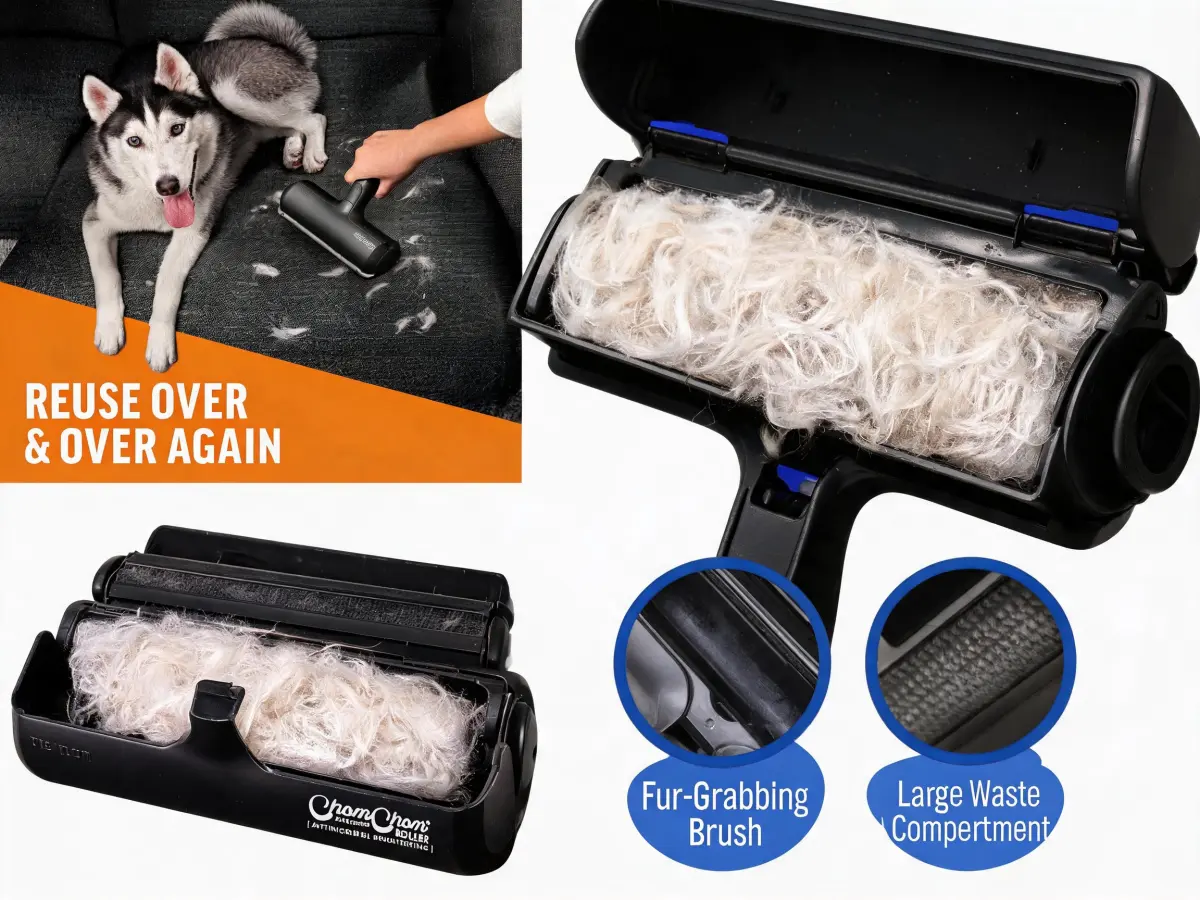
Nobody tells you this about a lint roller: the brand on the handle matters less than the summer the stock spent in a warehouse. Distribution moves these small tools by the carton for the wedding trade, the sheet rollers that live in venue bags and fitting rooms and get run down bridesmaid dresses in the last ten minutes before photographs. A roller is glue on paper, wound around a core, and glue has a memory for heat. Stock that travelled well and stored cool peels clean and grabs hard on its first wedding. Stock that sat in a hot container or a sunlit storeroom can feel tired straight out of the packet, its outer sheets dulled, its grab uneven, and the returns wording then blames the brand, because the brand is the only part of the journey the buyer can see.
Sheets are a count, dresses are the unit
Rollers are sold by sheet count, and weddings consume them by the dress, and the two units do not convert the way the packet implies. A satin bridesmaid dress in a pale shade needs a light pass, a few sheets at most, mostly at the shoulders and the hem where it met chairs and car seats. A chiffon dress in a deep shade, worn through a garden ceremony, can eat a third of a roller: chiffon holds fibres in its texture, deep colours confess every one of them, and static after a car ride pulls a fresh coat of lint onto the skirt in the time it takes to walk to the venue door. A store planning one roller per bridesmaid is planning in the wrong unit. The honest unit is shade and cloth, and a dark chiffon party of six wants more rollers in the bag than a satin party of ten.
Order matters too, in the small choreography of the getting-ready room. Rolling the dark dresses first and the pale ones after is not fussiness; a sheet that has just lifted pale fibres off a black dress will happily hand some of them to the ivory dress that follows. Fresh sheets for the lightest dress, and the lightest dress last, is the sequence the experienced dressers use without thinking about it. It costs nothing. It just has to be known before the room gets busy, because nobody invents a system in the ten minutes before a ceremony, they only repeat the one they arrived with.

The fitting room roller and the till roller live different lives
Shops keep these in two places, and the two stocks age differently. The fitting room roller works daily, on dresses being tried, steamed, and rehung, and it wears honestly and gets replaced. The till roller, sold as an add-on and carried away in bags, is judged weeks later at a venue, by a wearer with no second roller, which is why its quality failures read as betrayals in the reviews while the fitting room’s identical failures read as nothing at all. No wait, that is not quite the difference. The real difference is that the venue roller has no backup standing next to it. Everything about how this small product should be stocked follows from that one fact: the unit that travels has to be the freshest unit in the building.
In the seasonal plan this roller ships in the same cartons as the bridal emergency kit notes stock, gets argued about alongside the wedding day kit prep notes range, and is read against the black short sleeve guest dresses file, because a small care tool sells only as well as the dresses it is stocked next to.
Questions buyers and stores actually ask
One roller per bridesmaid sounds generous. Why does the last dress still wait?
Because dresses do not consume rollers evenly. Pale satin needs a few sheets; dark chiffon, after a garden and a car ride, can take a third of a roller on its own. A count based on heads runs out at the last, darkest dress. Stocking by shade and cloth, with the deep colours planned first, is how stores and careful brides keep the arithmetic honest.
The roller felt weak straight out of the packet. Did the glue fail, or the storage?
Usually the storage. The adhesive on sheet rollers dulls with heat, and the outer sheets suffer first, so a roller from a hot storeroom or a summer container can feel tired before it has done any work. Peeling past the first sheets sometimes finds the grab again. Stock rotated fresh for travel kits, and kept out of heat, is the standing fix on the trade side.
Dark dresses first or light dresses first. Does the rolling order actually matter?
It does, quietly. A used sheet carries pale fibres it has just lifted, and it can hand them to the next dress, which is a poor gift to give an ivory gown. Clean sheets and the lightest dress last is the sequence that avoids the transfer. It costs nothing but forethought, which is exactly why it has to be decided before the getting-ready room fills up.
A boutique keeps rollers at the till and in the fitting room. Which stock should be fresher?
The till stock, without argument. The fitting room roller has neighbours, steamers, and second chances standing next to it; the roller sold into a venue bag works alone, weeks later, ten minutes before photographs. Fresh cartons belong to the bags and kits, and older stock can serve its time in the fitting room, where a tired sheet is a small thing and not a review.
So the trade’s handling of a two-dollar tool ends up oddly careful. Fresh stock rotated to the front for the bags and kits. Older stock burned down in the fitting room, where a weak sheet is a shrug. Cartons kept out of the hot end of the storeroom through summer. None of it appears on the packet, and all of it decides whether the last dress in the line-up, the dark chiffon one, photographed at noon, reads as deep and clean or as a dress that spent the morning collecting evidence. The roller will never be the product anybody remembers from a wedding. That is rather the point of it, and the reason its failures are remembered so clearly when they happen.