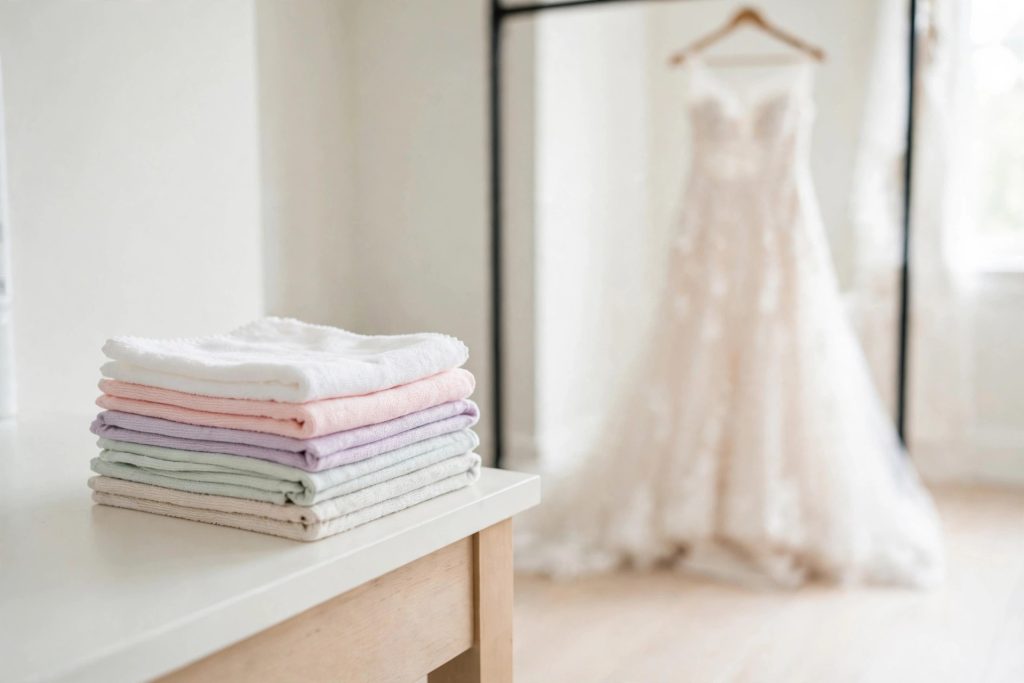
Start at the end, because that is where customer service always starts: the morning after, with twelve cloths in a damp pile, one gown with a faint foundation crescent at the neckline, and a message that says the cloths failed. I work the desk that reads those messages, and this one is so common it has a shape. The HOMEXCEL 12-pack did the job it is built for, on skin, all day. Then, at some point in the evening, it was asked to do a different job, on a dress, and the dress is where the story turns. Work backwards with me. The pile of cloths is the last chapter, not the first.
The evening, read backwards
Before the pile there was the reception, where the cloths were genuinely useful in their real role: a shine reset before photographs, lipstick taken off a chin instead of a collar, an eyeliner slip rescued without a full restart. Microfiber with water does that work well, which is why the packs sell. Before the reception there was the dressing hour, and that is where the neckline crescent was most likely born, because foundation transfers at contact points: a strap, a neckline, the edge a face brushes while a dress is being lifted over made-up skin. The order of operations in that hour, makeup first and dress second, or the reverse, decides more gown stains than any product sold to prevent them. Nobody writes that on the listing. The listing was written earlier still, and it is where the backwards walk ends.

The listing leans on bridal gown language, as if the cloth were a dress rescue tool, and that sentence is the seed of the morning-after message. A makeup remover cloth removes makeup from skin. On fabric it does something else: damp microfiber rubbed over a foundation mark pushes pigment down into the weave and spreads the edge of it, and on lace or any raised decoration the fibres can catch and pull. The right tools for a gown mark are patience, a dry lift, and a professional cleaner for anything that survives the day. A cloth used on a dress is not a failed cloth. It is a skin tool handed a fabric job by a listing that blurred the two, and the blur is worth more in sales than the clarity would be. I say that as the person who types the apologies for it.
Why twelve, asked honestly
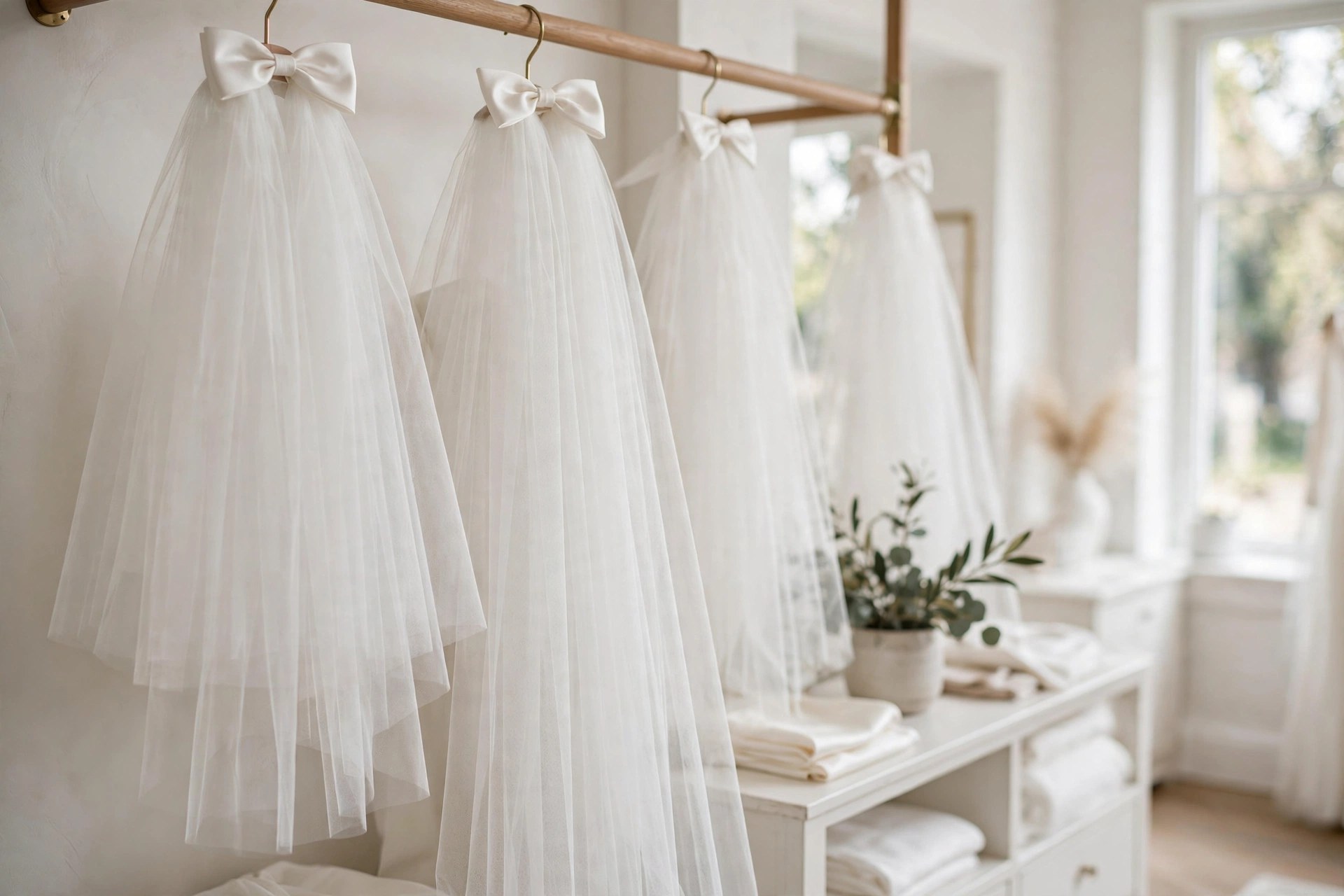
The count that confuses everyone, twelve cloths for one face and one day, makes sense once the day is read as a rotation instead of a single use. A cloth that has taken off one round of makeup is a loaded cloth, and reloading a face with it just moves old pigment around, so a getting-ready room with a bride, a party and a makeup artist working in sequence genuinely works through a stack: fresh cloths for fresh faces, a clean one held back for the bride’s own resets, the used ones dropping into the pile that starts this story. No wait, that explains a stack. It does not explain why the pack is twelve and not nine, and the honest answer is that pack sizes are set by price points and shelf maths as much as by need. Both things are true. The rotation is real, and so is the shelf.
The service desk answers this cloth file beside the bridal emergency kit packing guide, reads it with the wedding day blunders reflection, and cross-checks it against the retractable lint roller review, because all three are small tools whose reviews turn on the job they were actually asked to do.
Questions buyers and stores actually ask
Foundation is on the gown neckline, not on my face. Will the cloth take it off the dress?
Please do not try, is the short version the desk wishes it could send first. The cloth is built to lift makeup off skin. On a gown, damp microfiber rubbed over a foundation mark usually spreads it and pushes pigment into the weave, and it can snag on lace. Blot a fresh mark dry, lift what sits on the surface, and leave the rest for a professional cleaner. The cleaner has solvents. The cloth has enthusiasm, which is not the same thing.
Twelve cloths for one wedding day still sounds like a gimmick. Is there a real rotation behind it?
There is, once more than one face is involved. A used cloth is a loaded cloth, and reusing it moves old makeup around instead of removing new makeup, so a bride, her party and an artist doing touch-ups can honestly work through most of a pack in a day. The exact dozen owes something to shelf maths as well. But the rotation is not invented, and the reviews that complain about running short usually come from rooms that started with three.
The cloth caught on the lace when I wiped a mark. Did I use it wrong, or is microfiber the wrong tool there?
It is the wrong tool there, and the catch is the proof. Microfiber is split fibre, made to grab, and lace and raised decoration give it a thousand small hooks to grab onto. On smooth skin that grab is the whole point. On a bodice it can pull threads and drag a mark wider at the same time. Keep the cloths for faces and hands, and let dress marks wait for dry lifting and a cleaner.
My message to the store said the cloths failed. Reading it back the next day, what did I actually ask them to do?
Probably two jobs, only one of which they were sold, in your head, to do. If they took makeup off faces all day and stumbled only on the dress, the cloths did not fail; the expectation did, and the expectation was set by listing language about gowns. It is a fair complaint to make, aimed one level up, at the copy. Stores hear it often enough that the honest ones have started rewriting that line themselves.
Read forwards, then, the cloths are a modest success with a misleading sentence attached. Used on skin, in rotation, they earn their place in the getting-ready room, and the brides whose reviews glow are the ones who never asked them to touch a dress. The gown with the crescent will go to a cleaner, who will likely lift most of it, and the message that opened this story will be answered with an apology and an explanation in some order. What stays with me, at the desk, is how much of the disappointment was written months earlier, in one blurred line of listing copy, by somebody who never has to read the morning after.