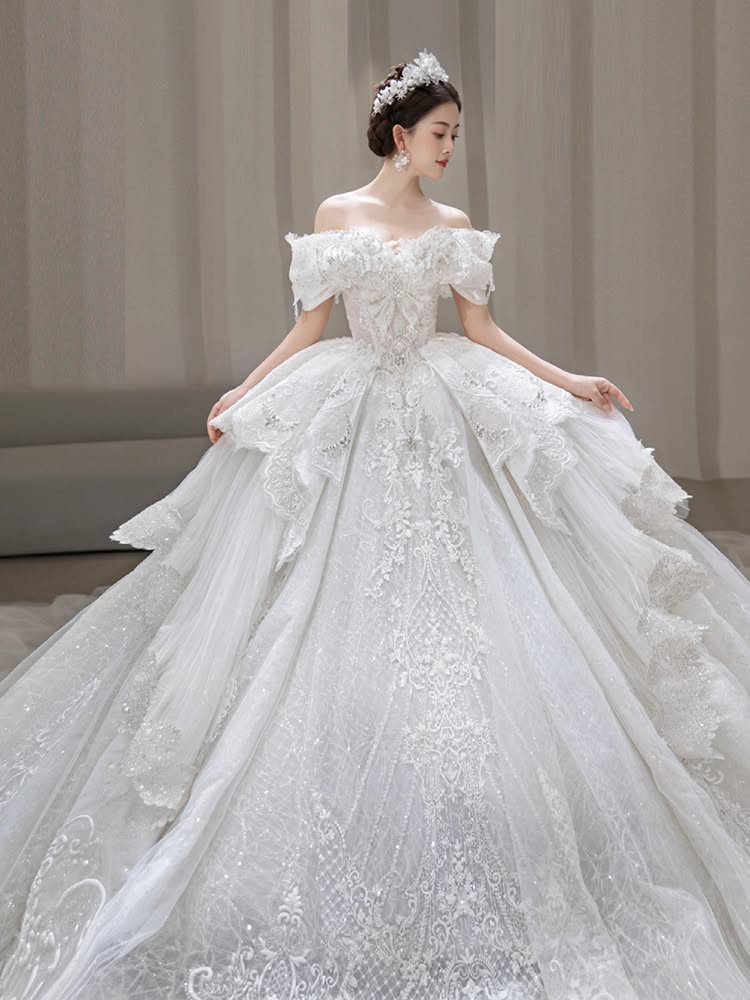
So the quote lands, and the photograph at the top of it could be selling either of two dresses that happen to share a picture. That is the sourcing problem with a heavy beaded sequin mermaid prom gown, stated as plainly as I can state it. The gown in the photograph is a silhouette and a shine. The gown in the quote is a set of decisions about attachment, lining and seam allowances, and those decisions are where the price lives. A buyer comparing two quotes for this style is not comparing two prices for one dress. She is comparing two dresses, and the cheaper one is cheaper in places the photograph cannot reach.
Read the attachment, not the sparkle
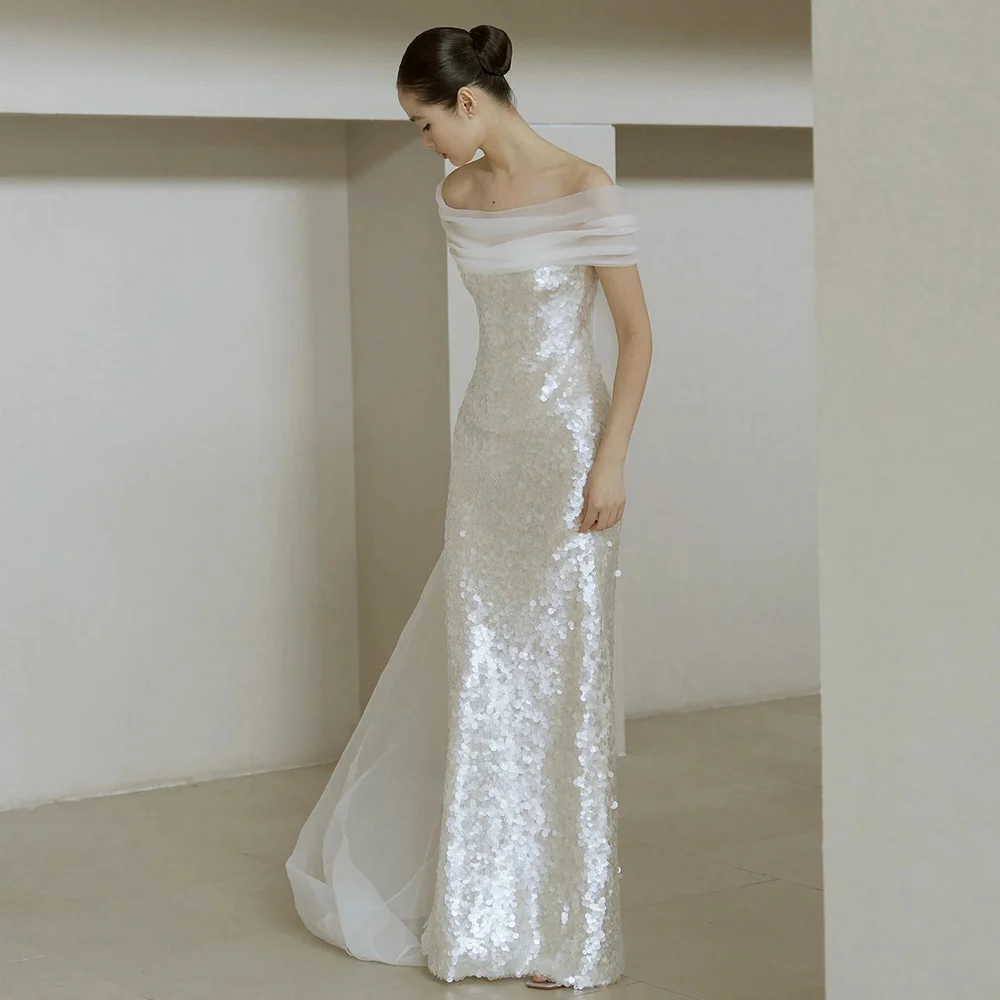
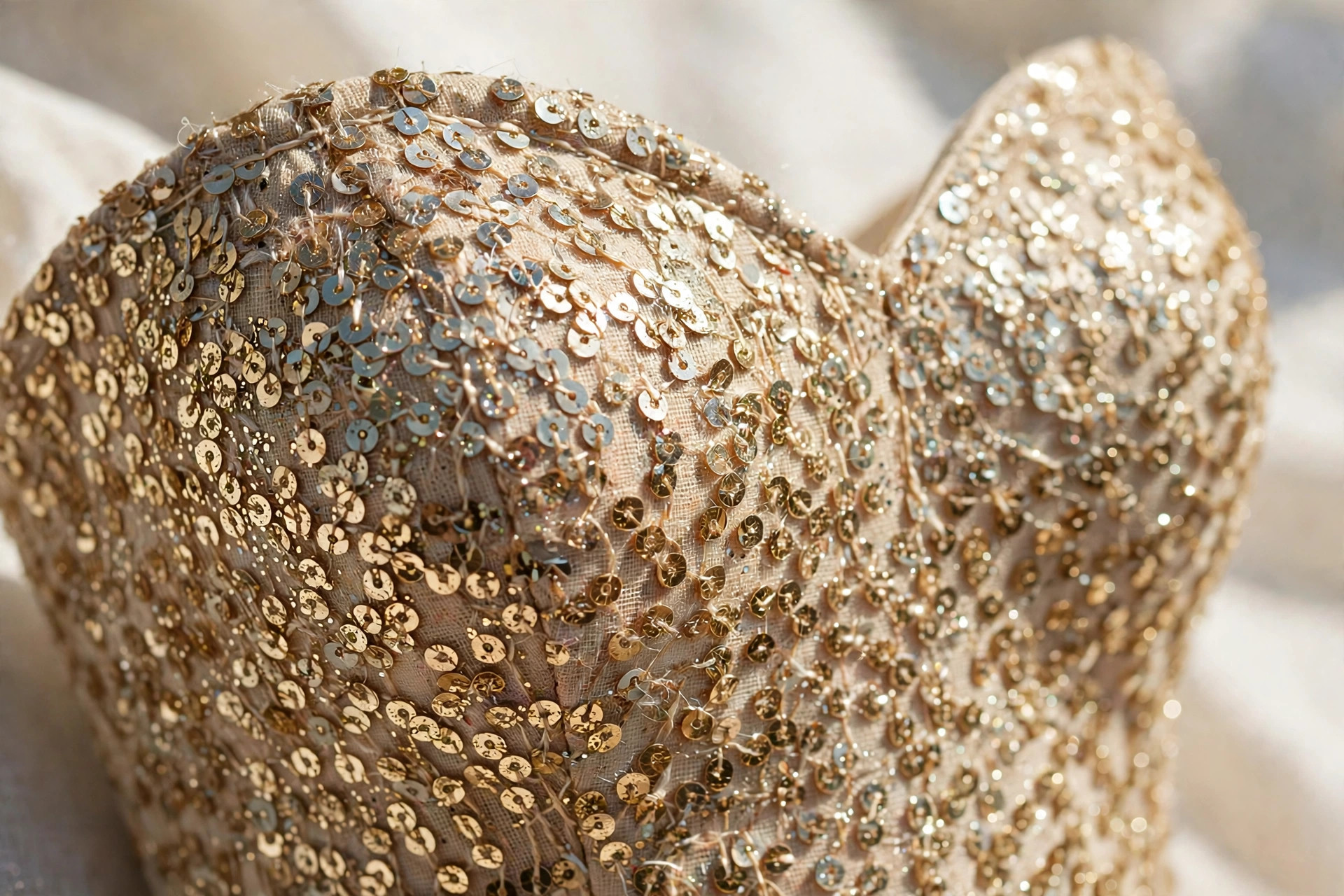
Beads and sequins are held on by a method, and the method is a line item whether the quote names it or not. Work that is knotted at intervals holds its losses locally: a bead goes, its neighbours stay, the damage is a bead. A single running line of stitching holds a whole motif on one thread, and when that thread is nicked the loss travels along the row like a ladder in a stocking. Both methods photograph identically on delivery day. They part company around the third wearing, which for a prom gown may be the only wearing that matters, and for a boutique it is the wearing that gets reviewed. A sourcing conversation that does not ask how the decoration is attached has not started yet, whatever else it covered.
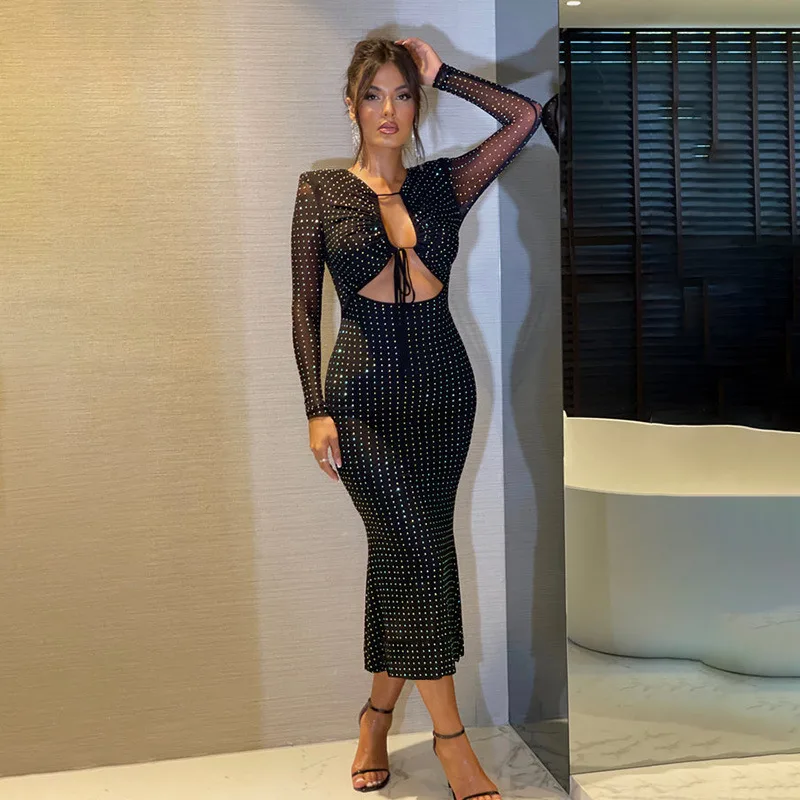
The second place quotes hide is the back. A mermaid zip carries the strain of the whole fitted hip, and if the zip tape was sewn straight through decorated cloth, the needle has punched through hard pieces all the way down, and the tape carries those holes into every wearing. Sound work clears the decoration out of the seam allowance before the zip goes in. That clearing is hand minutes, and hand minutes are exactly what a low quote removes first. The lining is the same story told quieter. Kilos of decoration hang off the face cloth, and something has to carry that weight to the waist and shoulders. A lining quoted as a word is not a lining quoted as a structure, and the difference is a number a buyer can ask for: what the lining is, and whether it has its own support inside it.
| Beading density | Coverage of the bodice | Hand-sewing time, relative | Weight and drape effect |
|---|---|---|---|
| Scattered accents | Under about 20 percent | Baseline | Light, drape unchanged |
| Medium coverage | Roughly 20 to 60 percent | Typically 2 to 3 times the scattered time | Noticeable weight, bodice stiffens |
| Full coverage | Over about 60 percent | Typically 4 to 6 times the scattered time | Heavy, the bodice carries itself and the skirt has to balance it |
Coverage is a percentage pretending to be an adjective
Heavy, in this category, should be a coverage figure: how much of the bodice and skirt carries decoration, at what density, over what base cloth. Written that way, a sample can be checked against an order. Written as an adjective, it can drift between the sample a buyer approved and the bulk that arrives, a little sparser at the sides, a little thinner below the knee, each drift too small to photograph and large enough, in total, to be the margin the quote was won on. No wait, drift is too innocent a word for some of it. Some of it is planned. Which is why the buyers who survive this category write the coverage, the attachment and the zip treatment into the order itself, and treat a supplier’s reluctance to write them down as a quotation in its own right.
The sourcing desk reads this prom file against the sequin and glitter dress review, prices it beside the high neck split dress range, and checks its grading questions next to the plus size formal maxi dress review, because decoration, fit and grading are three budgets that all come out of the same dress.
Questions buyers and stores actually ask
Two quotes, same photograph, one is 40 percent lower. Which lines should I ask to see split out?
Three lines, and the request itself is diagnostic. Ask for the decoration attachment as its own line, the lining described by material and structure, and the zip treatment where the tape meets decorated cloth. A quote that can split those out is a quote that knows what the dress is. A quote that answers with a single lower number and a compliment about quality has told you where its margin hides, even if it never says so.
Beads came off in a line, not one by one. What does that pattern say about the dress?
That the motif was held by a running line of stitching rather than work knotted at intervals, most likely. Local attachment loses single beads and stops. A running line, once nicked, unzips along its own path, and the loss pattern draws you a map of the thread. It is worth photographing before any repair, because that photograph is the clearest sentence in any later conversation with the supplier.
The sample zip ran smooth. The bulk zips catch at the waist. What changed?
Usually the seam allowance did. Samples often get the careful treatment, decoration cleared away from the zip path by hand. Bulk, sewn at line speed, can go straight through decorated cloth, and the needle holes and hard fragments in the tape make the zip hesitate exactly where the hip strain is greatest. Opening one bulk dress and reading the inside of the zip tape answers the question faster than any email exchange.
Coverage is quoted as heavy. Heavy compared with what, and how do I write it into an order?
Compared with nothing, which is the problem with the word. Write it as coverage instead: which panels carry decoration, roughly what share of each panel, and what the base cloth is underneath. Photograph the approved sample bodice, side and hem beside a ruler and keep those photographs with the order. Heavy cannot be argued with later. A photographed coverage figure can at least be pointed at.
A trial at 10 pieces per style. What can ten prom gowns actually prove before a reorder?
More than buyers expect, if the ten are worn and not just inspected. Ten dresses across the size run will show whether decoration loss stays local, whether zips survive a full evening of sitting and dancing, and whether the weight carries to the waist or drags on the shoulders by midnight. What ten cannot prove is drift over time. That is what the written spec is for, and why the reorder should quote it back, line by line.
None of this makes the gown a bad buy. A beaded mermaid at prom is a deliberate piece of theatre, and theatre is allowed to cost money. What sourcing owes the buyer is a quote that shows its workings: attachment named, lining described as structure, coverage written as a figure instead of a compliment. The suppliers who provide that paperwork cheerfully are rarely the cheapest on the page. They are, in my experience of reading these files, the ones whose dresses are still being worn in the photographs taken at midnight, which is the only review this category cannot buy its way out of.