It starts with a cuff. Not a torn seam, not a dramatic failure, just a cuff on a long sleeve wedding guest maxi dress that sits a centimeter short on one wrist and right on the other, in a fitting where the buyer assumes her arms are the uneven part. Arms do differ. So do sleeves, once a production run gets tired, and the distance between those two explanations is where I have spent a working life on the production side of dressmaking, watching small drifts accumulate into the dress that arrives.
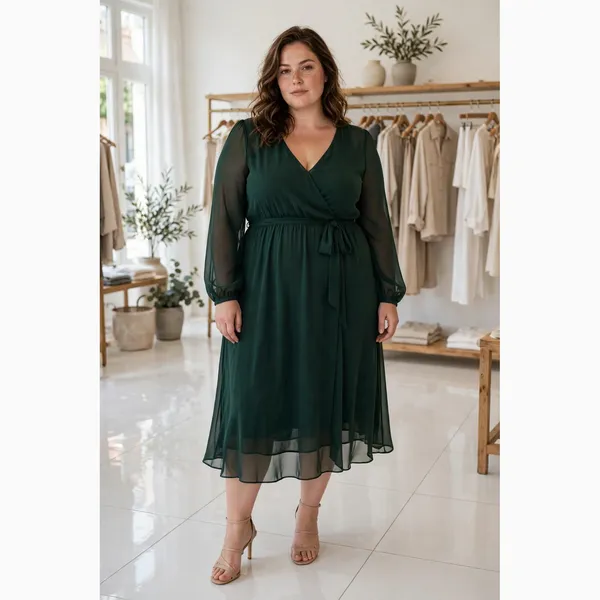
A long sleeve maxi in the style of the REORIA dresses looks forgiving on a screen. Stretch fabric, an empire or gathered waist, length that pools a little. Forgiving is a word the production side distrusts, because it describes how a dress looks standing still and says nothing about how it was made, and a winter wedding guest dress gets made in the busiest, darkest corner of the production calendar, when every factory is cutting long sleeves for somebody and the good machinists are a resource that buyers fight over without ever knowing the fight happened.
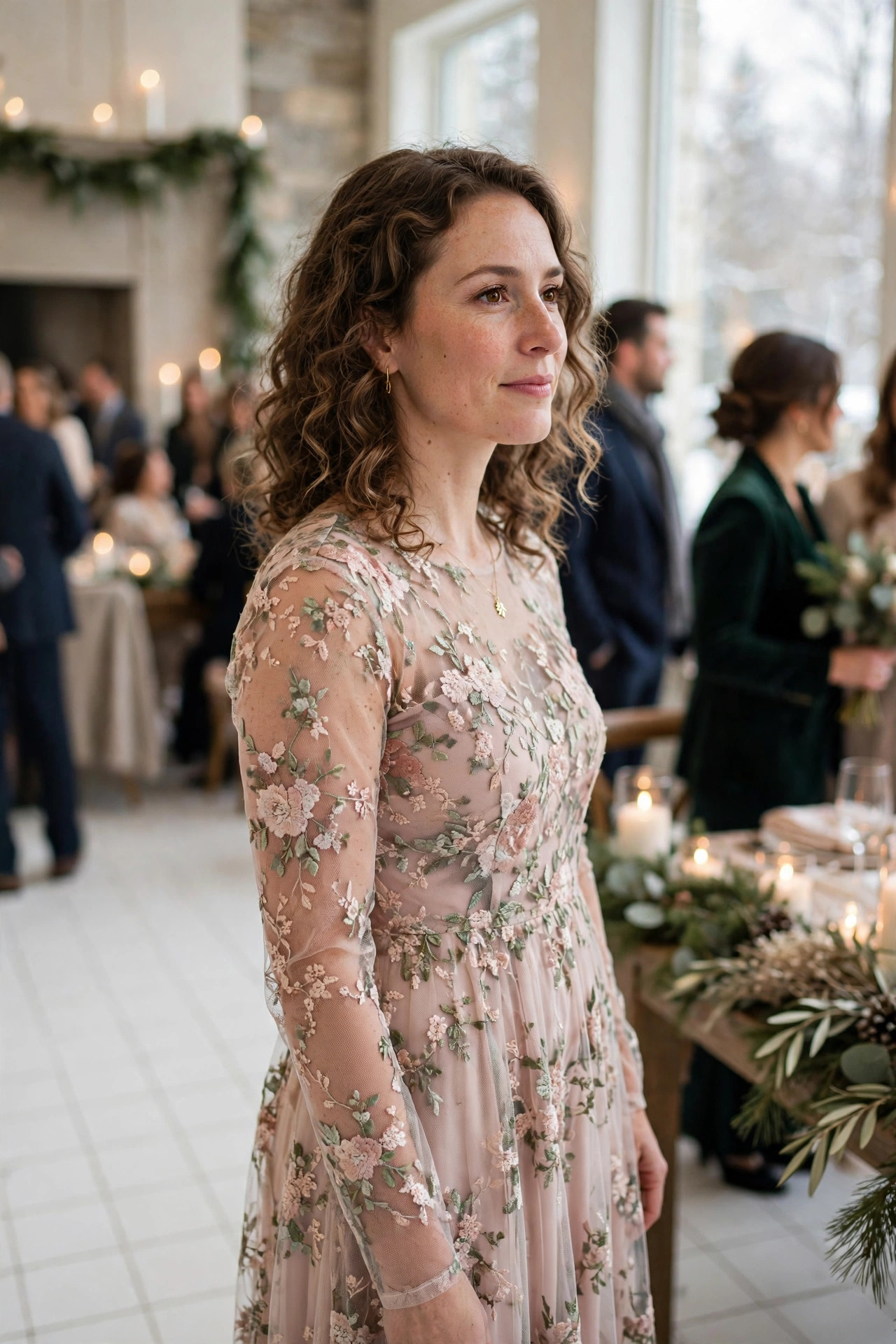
The first small incident is always the fabric. A stretch jersey or mesh overlay for a winter maxi comes in rolls that vary more than the spec sheet admits, and the variation that matters is recovery. Cut a sleeve from the start of a roll and from the end of a roll where the fabric sat wound tight for weeks, sew both the same, and one will hang a touch longer by evening because its stretch was already half spent before the scissors arrived. The production side knows to rest cut fabric, to let the pieces lie flat and take their natural length before sewing. A rushed run skips the rest. Nobody decides to skip it in a meeting. The schedule decides, quietly, the way water decides to flow downhill.
Then the second incident, which looks unrelated. The winter colors. Burgundy, forest green, navy, black. Dark dyes on stretch fabric need more time and more rinsing than pale shades, and a dark maxi that was not rinsed long enough will keep giving up color onto skin and undergarments through its first few wears. The complaint arrives at a shop worded as a quality scandal. On the production floor it was a queue problem, vats and rinse tanks booked solid in the autumn rush, minutes shaved where minutes could be shaved, and the shaving shows up months later on a customer’s white clutch bag. I am not excusing it. I am locating it, because a buyer who knows where a flaw is born can ask the one question that prevents it, and a buyer who only knows the flaw exists can only demand a cheaper dress and get the same queue problem at a lower price.
Where the small drifts gather
Sleeve setting is the third place the accumulation gathers, and it is the one I would check first on this style. A long sleeve on a soft dress is set into a low armhole for comfort and drape, and the ease, the small extra fullness worked around the sleeve head, has to be distributed by hand and eye. A tired machinist at the end of a shift distributes it toward the back. The dress looks fine on a hanger. On a body, one shoulder pulls faintly and the cuff twists a degree or two, and the wearer spends the wedding adjusting a sleeve she cannot diagnose. Multiply that by a production run and you have the pattern of reviews for this whole category of dress, the ones that say lovely dress, something odd about the fit, cannot put my finger on it. The finger, most of the time, belongs on the sleeve head.
Length is the drift that tall and short buyers feel in opposite directions. A maxi is graded across sizes by adding length in set steps, and the steps are honest in the middle sizes and approximate at the ends, where the pattern maker’s assumptions about proportions stop matching the bodies that buy those sizes. Add stretch fabric that grows under its own weight on a hanger, a heavy skirt pulling the bodice down a centimeter over a day’s wear, and a maxi bought for a winter wedding with heels in mind gets tried on in socks at home and judged too long or, after an hour of gravity at the event, suddenly right. Production knows about the growth. Good workshops cut a fraction short to allow for it. The fraction is a judgment, and judgments vary by workshop, which is why the same dress from two production runs can measure differently and both can be, by their own floor’s standard, correct.
And the waist seam, since a gathered or ruched waist on a stretch maxi carries the whole skirt from a single line of stitching. The elastic or gathering inside that seam decides whether the dress sits at the waist it was designed for or migrates south through an evening of sitting and standing and dancing. A waist that migrates makes the bodice look too long and the skirt too short at the same time, a confusing pair of complaints that are really one complaint about an elastic grade. This is also where a boutique’s own range matters, since a shop ordering this style alongside other long sleeve occasion dresses from a women’s apparel factory catalog can compare waist construction across styles side by side, and the comparison tells them more in ten minutes than a season of customer messages will.
The fourth incident is the smallest and the one that stays with me. It is the smell. A dress stored in its shipping bag in a warm warehouse through the weeks between production and a December wedding can come out carrying a chemical sweetness from dyes and finishing, faint, deniable, and strong enough to make a first try-on feel cheap. Airing fixes it in a day. But the first impression was already made in a bedroom, not a boutique, and impressions are the currency this category trades in. Production can prevent it with airing before packing. Some do. The ones running late pack warm and sealed, and the lateness travels with the dress all the way to the customer’s hallway.
No, I have the order of these wrong in one respect. The fabric rest I mentioned first is not the first incident. The first incident is at cutting, where a stretch fabric pulled slightly too taut on the cutting table gives back that tension later as a shorter sleeve, a narrower bodice, a dress that measures right on the table and wrong on the body. Cutting tension is invisible in every photograph ever taken of a dress, and it decides more about fit than the pattern does. I get this wrong myself when I walk a floor too fast, looking at seams when I should be looking at how the layers lie before a seam exists.
For buyers sourcing this style rather than wearing it once, the production questions that matter are unglamorous and specific. How long does the cut fabric rest. Who sets the sleeves on the larger sizes. What elastic goes in the waist and has it changed since the sample. A dress from the existing range of a factory, the kind listed in a wedding dress wholesale catalog and its occasion lines, runs at ten pieces per style to start, while a buyer’s own design starts at twenty, and a simple sample is 75 dollars with the usual arrangement when it converts to bulk. Those numbers are the frame. The drifts I have described are what happens inside the frame, run by run, and they are why two quotes for the same photograph are never the same dress.
Questions buyers ask me, in the words they use
One sleeve is a centimeter shorter than the other. Is that inside tolerance or do I send it back?
A centimeter on a stretch sleeve sits at the edge of what most workshops call tolerance, and honestly I argue with myself about this one. Measure both sleeves laid flat, unstretched, from the same point at the shoulder, because on the body your own posture will invent differences that are not sewn in. If the gap survives flat measuring, it is a cutting or setting drift and a good supplier treats it as their problem. If it vanishes on the table, the dress is fine and the mirror was the issue, which happens more often than either side enjoys admitting at a returns desk.
The burgundy rubbed off on my bag at a December wedding. Is the dress ruined, and am I next?
The dress is not ruined and neither are you, though the bag may keep its blush. Dark stretch fabrics can release surface dye for the first wears, especially where friction and a little warmth meet, at a waist, under an arm, against a clutch held all evening. Wash or rinse the dress once, gently, before its next outing and the release usually settles, because what is leaving is the dye that never fixed, not the color of the garment itself. What I would rather is that the rinsing had been finished where the dress was made, in a tank, on a schedule that had room for it, and your clutch is evidence about a queue you never saw.
It fit at noon and felt longer and lower by the reception. Am I imagining the dress growing?
You are not, and this is the complaint I believe fastest when it lands. A heavy stretch skirt pulls its own waist seam down over hours, and the fabric itself relaxes with body heat, so a maxi that skimmed at noon can pool by evening and a bodice can sit lower than it did in the mirror. Trying the dress on for ten minutes at home tells you almost nothing about hour six. Wear it around the house for an afternoon before the event, sit in it, climb stairs in it. The dress will show you its evening self, and a hem adjusted to that version is the one that survives the photographs.
My boutique wants this style in three winter colors, ten pieces each. What do I check before I commit?
Check the dark colors as separate products, not as one product in three shades, because their dye behavior and their rinse needs differ and the cheapest quote often treats them as identical. Ask how long cut pieces rest before sewing and who sets sleeves on the largest size in the run, and listen for specifics rather than reassurance. Ten pieces per style is the standard start for an existing style, so your order is a normal one, and a normal order deserves a normal answer about the waist elastic grade. If the answers come back vague, the drifts in this article will come back as your reviews, worded by strangers, in December.
The sample was perfect and the run is close but not the same. Where did it wander?
Samples are made slowly, by the best hands in the building, from fabric that rested as long as it wanted. A run is made at production speed by whoever the schedule assigns, and the wandering usually lives in the three places samples never reveal, cutting tension, sleeve ease, and elastic grade. Name those three when you query it. A factory that can tell you which one moved respects the question. A factory that only insists the run matches the sample is asking you to disbelieve your own tape measure, and tape measures, in my experience, are poor liars and worse flatterers, they just tell the number and stop.
The cuff from the fitting is still the image I keep. One wrist covered, one wrist bare by a centimeter, and a buyer turning her arms over like the fault must be in her own skeleton because the dress was new and the mirror was honest. The dress had a history by then, rolls and queues and a tired shift and a warm warehouse, none of it visible, all of it present. That is what a long sleeve maxi is by the time it reaches a winter wedding. A sum of small decisions, most of them defensible, a few of them not, worn by somebody who only ever sees the total.