By the third week of June, the rack tells the truth.
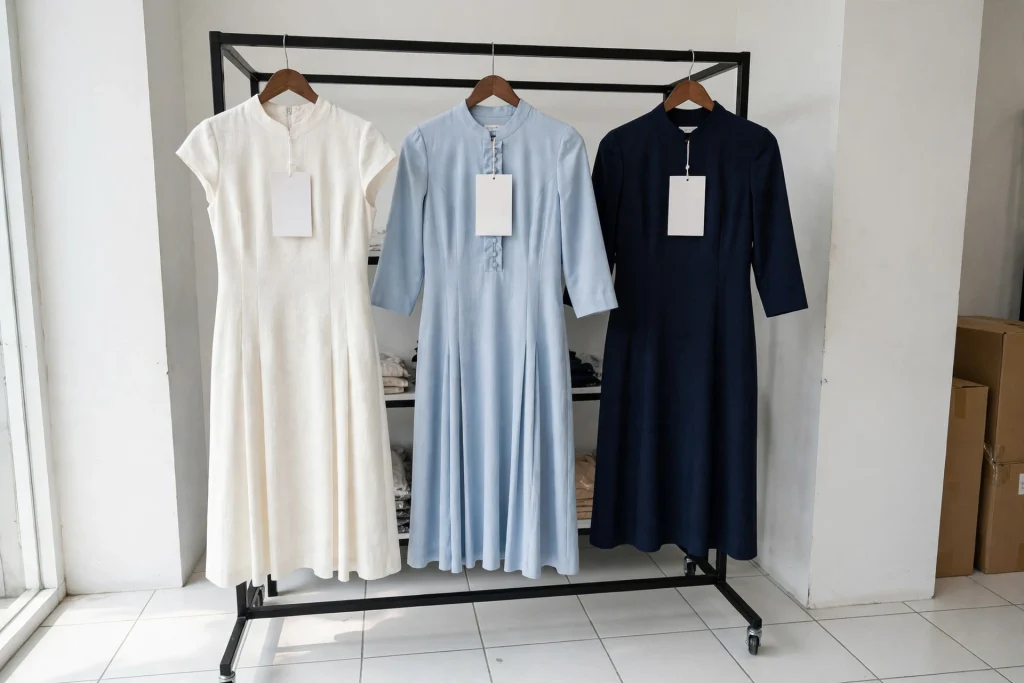
That is where this starts, at the end. A boutique buyer I work with on the supply side sent me a photograph last June of what was left after graduation season: a short rail of modest graduation dresses in white and two pastels, most of them in the middle sizes, nearly all of them marked down once already. Nothing was wrong with the sewing. The dresses had simply arrived at the part of the calendar where their reason to exist had finished. Graduation ceremonies in the United States bunch into a few weeks in late May and June, and about two weeks after the last ceremony the demand does not taper. It stops. A dress that did not sell by then is not early stock for next year in any useful sense, because the buyer has to store it, and the girl who needed it has already graduated.
So the June rack is not a June problem. Walking backwards from it is the only honest way I know to explain modest graduation dresses, because every mistake on that rail was paid for months earlier, in a different season, by somebody who thought they still had time.
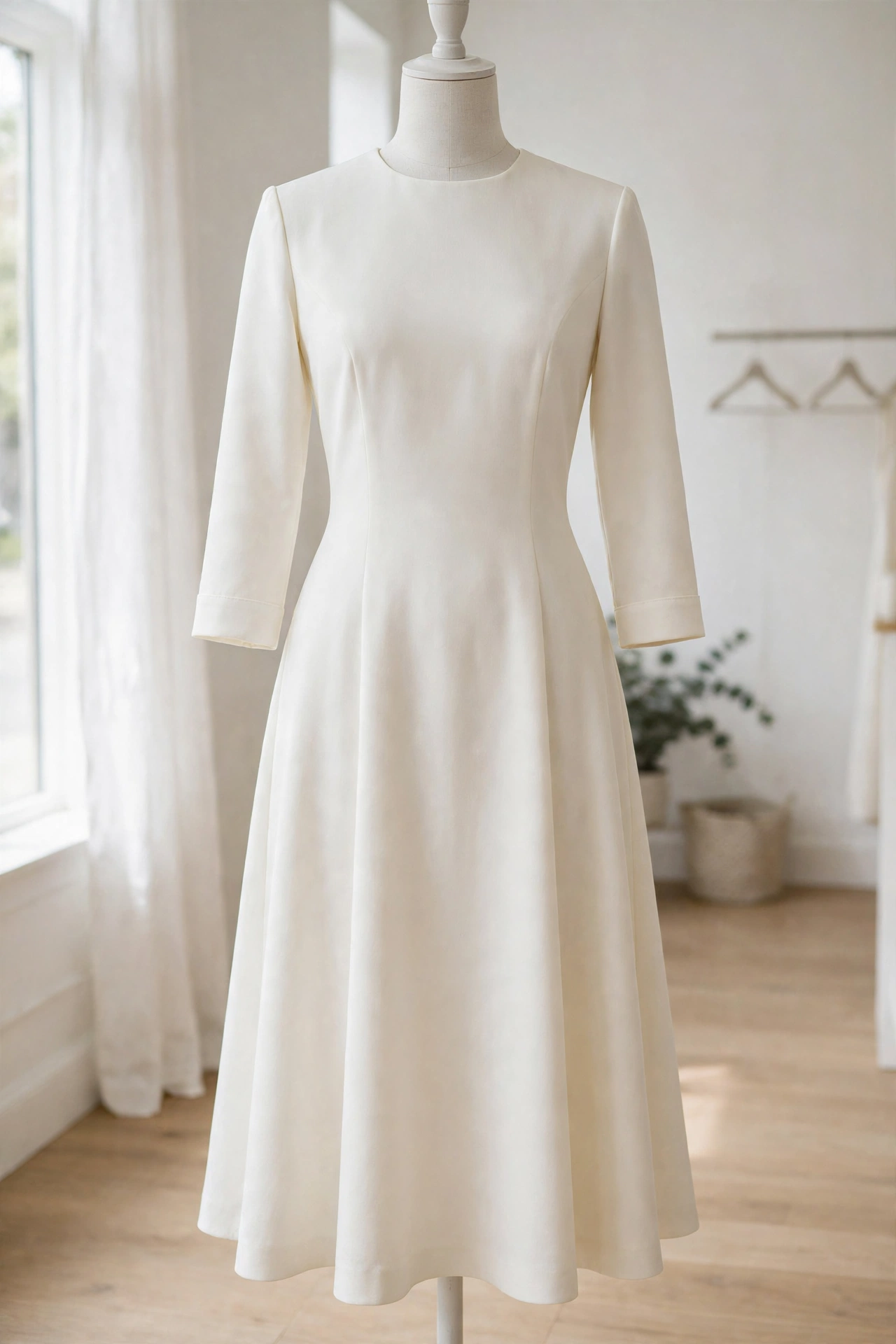
June is honest about May
May is the selling month, and May gives a buyer about two to three weeks of reorder window and no more. That is the first number worth keeping. A style that moves in the first week of May can be reordered once, in a small batch, if the fabric is a stock colour and the factory direct line is not full. A style that moves in the third week cannot. There is no second production run hiding behind it, only air freight arithmetic that eats the margin the dress was bought to make.
The returns that come back in May and June have a pattern I did not expect when I started on this side of the business. Some come back with the reason written plainly enough: not allowed. The dress was modest by the standards of the photograph the buyer ordered from. It was not modest by the standards of the school the girl attends. Schools publish their own dress codes for graduation, and those codes are the real spec sheet for this category. Strap width gets measured at some schools. Hem length gets measured at others, usually against a knee or a fingertip rule, and neckline depth is judged on a seated girl in a row of chairs, not on a standing model. Two schools in the same town can run two different codes, and the buyer stocking for both towns has to buy to the stricter one or accept that part of her stock is unsellable to part of her customers.
Nobody at the factory end can see that from a tech pack.
The other return cluster is about light. A white modest dress gets worn under a dark graduation gown for the ceremony and without it for photographs afterwards, and camera flash is less forgiving than a shop window. Dresses came back described as see-through that had looked perfectly decent on a rail in March daylight. The lining was there. It just was not the lining the dress needed once a flash went through a layer of chiffon, which is a thing I have written about before when I looked at what a fully lined modest dress actually has to survive. Graduation adds flash photography to that test and then adds a deadline after which nobody cares about the result anymore.
April in a carton, February on a line
Walk back one more step. April is when the dresses land, and April is unforgiving in a quiet way. A carton that arrives in April with the wrong size grading in it cannot be corrected, only discounted. Graduation buyers skew younger and narrower than a boutique’s usual occasion customer, and a size curve copied from an evening dress order puts too many units at the top of the range and too few where the actual graduates are. The June rail in that photograph was heavy in exactly the sizes the buyer had over-ordered in November. She had graded the order like a prom order. Prom and graduation look like cousins from a distance and behave like strangers on a size chart.
February is production, and February is where colour stops being a word and becomes a dye cylinder. Chiffon for modest styles gets dyed by the cylinder, one colour per cylinder, and each cylinder carries a minimum quantity of fabric before the dye house will run it. A buyer ordering six colours at ten pieces a style is asking for six cylinders of fabric to make a small batch of dresses. The per-dress fabric cost on that order is not the per-dress cost on a single-colour order of sixty, and the difference is not factory greed, it is minimum dye lots being spread over fewer garments. White makes this worse in its own way. At a lot of schools white is not one colour option among six, it is the required colour under the gown, so the white part of the order is the part that has to be right. Three whites from three cylinders can sit together happily in a warehouse and then separate under ceremony lighting, one reading warm, one reading grey. Locking the white to one cylinder and checking the whole batch in daylight is dull work. It is also the whole job.
The lining has a calendar too. On a chiffon modest dress the outer fabric and the opaque lining are bought as a pair, and when the lining roll runs late the style does not start late by the same number of days, it stops. I have seen lining arrive three to five days behind the chiffon and push a style across a shipping window it could not afford to miss. No wait. On the order I am thinking of it was closer to a week, because the missed window was a weekly consolidation and the next one was seven days later, not five. Either way the start date for a lined style is the lining’s arrival date. Buyers who plan from the chiffon date are planning from a fiction.
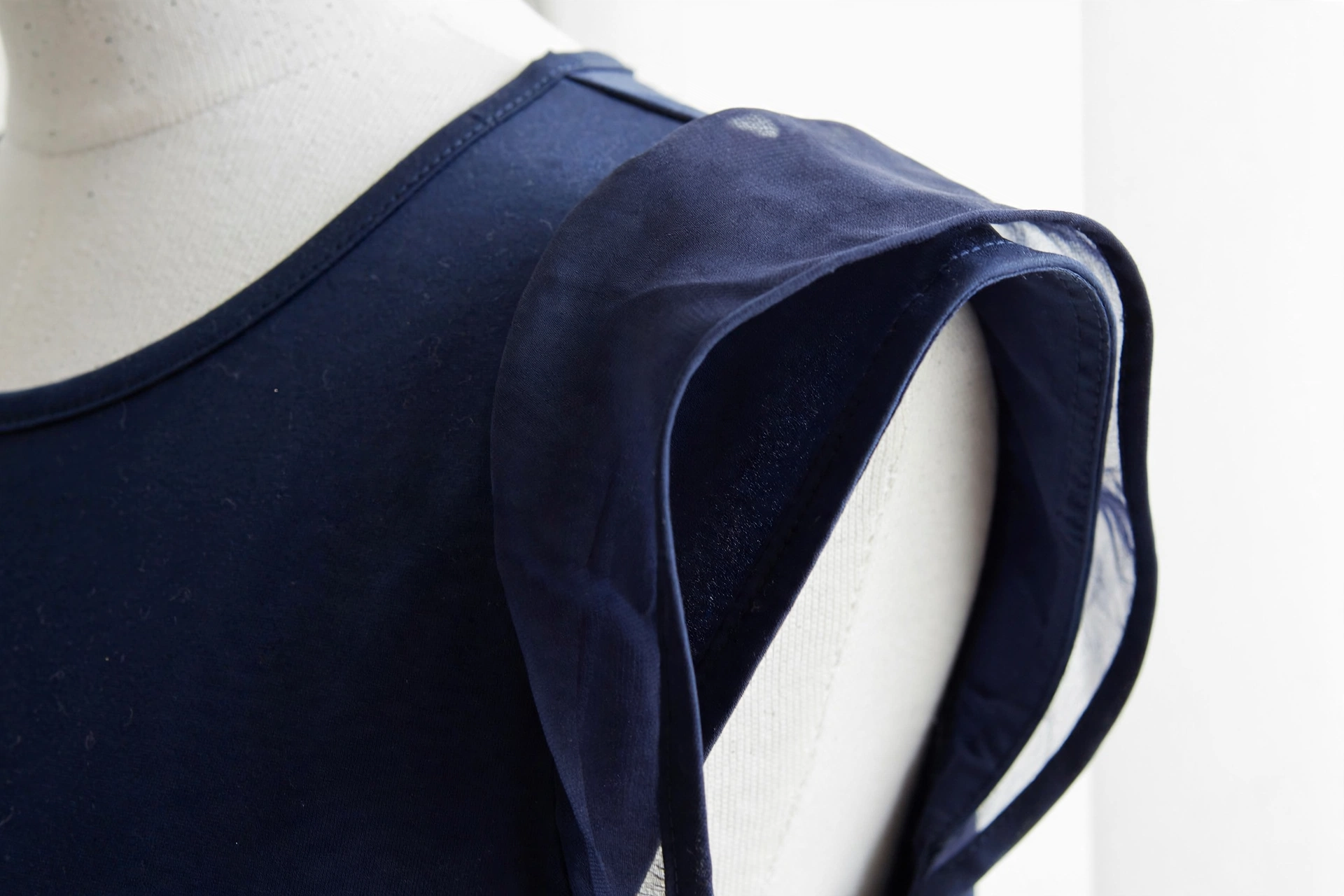
And then there is the smallest item on the order, which delays more graduation stock than any sewing problem I know. A private label woven label takes about seven to ten days in bulk production once the spelling is locked. Ten pieces per style is a real low MOQ on the dress itself, the sewing is rarely the bottleneck at that size, but the label runs on its own clock. A buyer who confirms her brand name spelling in December for a November order has quietly given away a week of February. The dresses wait for the labels. The labels do not hurry.
Modest graduation dresses are a November order
Which brings the walk back to now. Modest graduation dresses are ordered in November, sampled in December, and argued about in January, or they are not really ordered at all, they are improvised later at worse prices. The Canton Fair’s clothing phase in Guangzhou has just closed, the sourcing trip notes are still fresh, and this is the week when a boutique buyer can still put a graduation range together with a Guangzhou clothing factory while every date after this one is still negotiable. By January the conversation changes. By February it is mostly apologies.
November is also when the dress code homework has to happen, and it is buyer homework, not factory homework. The buyer who did it last year sent her factory the strictest local code she stocks for, written into the tech pack as numbers: a neckline that stays where it is when the wearer sits, sleeves or straps at the width her strictest school asks for, a hem that clears the knee rule with room to spare because hems ride up on a stage. Sampling then tests those numbers on a seated fitting, not a standing photograph. A neckline that behaves standing and travels sitting is the single most common sample failure in this category, and it is a ten-minute test that gets skipped because the standing photograph looked fine.
Before we start sampling, we always photograph the fabrics and send them to you to review and choose from. That step matters more on this category than on most, because the choice being made is not really about colour. It is about whether the chiffon and its lining, held together against strong light, stay opaque. A buyer choosing fabric from separate swatches, outer in one hand and lining in another, has not seen the dress yet. The pair has to be judged as a pair, in front of a window, before a single sample is cut. If you are building the range from existing styles rather than your own designs, the modest and Muslim dress wholesale catalog is the faster starting point, and the sampling argument above still applies to anything you adapt from it. Buyers who are still comparing suppliers at this stage will find the factory-side questions in our guide to buying wholesale Muslim dresses for a boutique worth an hour in November, because those are the same questions a graduation order gets judged by in February.
Size grading belongs in November too. A graduation range graded on a younger curve, with depth in the smaller and middle sizes and a thinner tail at the top, will leave a shorter June rail than a range graded like evening wear. This is not a subtle point and it gets missed constantly, because the buyer places one order for prom and graduation together in November, uses one curve for both, and discovers in June which of the two seasons the curve actually belonged to. The factories will grade it either way. Grading is an instruction, not a judgment, and the judgment is the buyer’s to make while there is still time to make it.
Questions buyers ask me in November, not May
Ten pieces per style. Why does a six-colour graduation order still price like a small batch?
Ten pieces per style is the real minimum, and a six-colour order still prices like a small batch because the fabric underneath it is six dye cylinders, not one. Each colour carries its own minimum dye quantity, and that minimum gets spread across ten dresses instead of sixty, so the fabric cost per dress climbs even though the sewing cost barely moves. Buyers who want the colour story and the low MOQ both usually end up putting the depth into white and one pastel and running the other colours thinner, which is not a compromise I love, but it is how the arithmetic actually lands.
The ceremony is in May. So why is February already too late to fix a neckline?
February is too late because the neckline fix is a pattern change, and a pattern change in February restarts sampling inside a production slot that was booked in January. The dress itself might only need a centimetre, honestly I get this one wrong myself sometimes and assume small changes move fast, but the change has to be re-fitted seated, re-approved, and re-cut, and the lined styles behind it in the queue do not move aside. What February can still fix is labels, packing, and size stickers. The shape of the dress is a November and December conversation.
White is one colour. Why do three white dresses in one order photograph as three different dresses?
Three white dresses photograph as three colours when the fabric came off more than one dye cylinder, which happens on split orders more often than buyers think. In warehouse light the difference hides. Under ceremony lighting and flash it shows up as one warm white, one flat white, and one that reads slightly grey next to the other two, and a graduation photograph is exactly the wrong place for that to be discovered. The fix is boring: one cylinder for the white, the whole batch checked together in daylight before it ships. I would rather argue about that in February than read about it in a review in June.
A dress passed the dress code in March. Why does it still come back in June?
Usually because it passed one school’s code in March and got sold into another school’s ceremony in June. The codes differ, sometimes within the same town, and a dress that clears a fingertip hem rule can still fail a stricter knee rule two districts over. There is also the seated problem, a neckline checked standing in March that behaves differently after three hours in a folding chair. If you stock across several schools, my honest answer is to buy to the strictest code you serve and accept the slightly plainer dress. The plainer dress at least stays sold.
I still have that June photograph somewhere, and I still do not know whether the buyer kept those dresses for the next season or cleared them at whatever price the rack would take in July. She never said, and I never asked, because by the time I thought to ask she was already sending me next year’s list. It was November again by then. The list had one curve for prom and graduation on it, same as the year before.
Follow our channels for new styles and factory updates: WhatsApp Channel · Telegram Channel