The return arrived on a Tuesday, still smelling faintly of perfume, with the security tag looped through a seam it was never designed to go through. Off-shoulder cocktail dress, ordered for a Christmas wedding, worn for roughly six hours judging by the makeup line along the neckline, then sent back with the reason ticked as sizing. Sizing. The dress measured exactly what the size chart said it measured. What actually failed was the elastic inside the off-shoulder band, because a neckline that has to stay up through dinner, dancing and a December taxi queue is not a sizing problem at all. It is a grip problem, and grip is the first thing that quietly disappears when a factory trims cost out of a style like this.
I work the returns side of cross-border apparel, which means I read the complaints nobody in the product meeting wants to read. Off-shoulder styles generate a very specific cluster every winter party season. The band slips. The sleeve twists. The wearer spends the night doing that small upward tug at the bodice, and by the third photograph she is holding the neckline with one hand and a glass with the other. None of that shows up in a five-star review written the day the parcel arrived. It shows up in week three, in the return reasons, in language that gets coded as fit and filed away.
The band is the whole dress
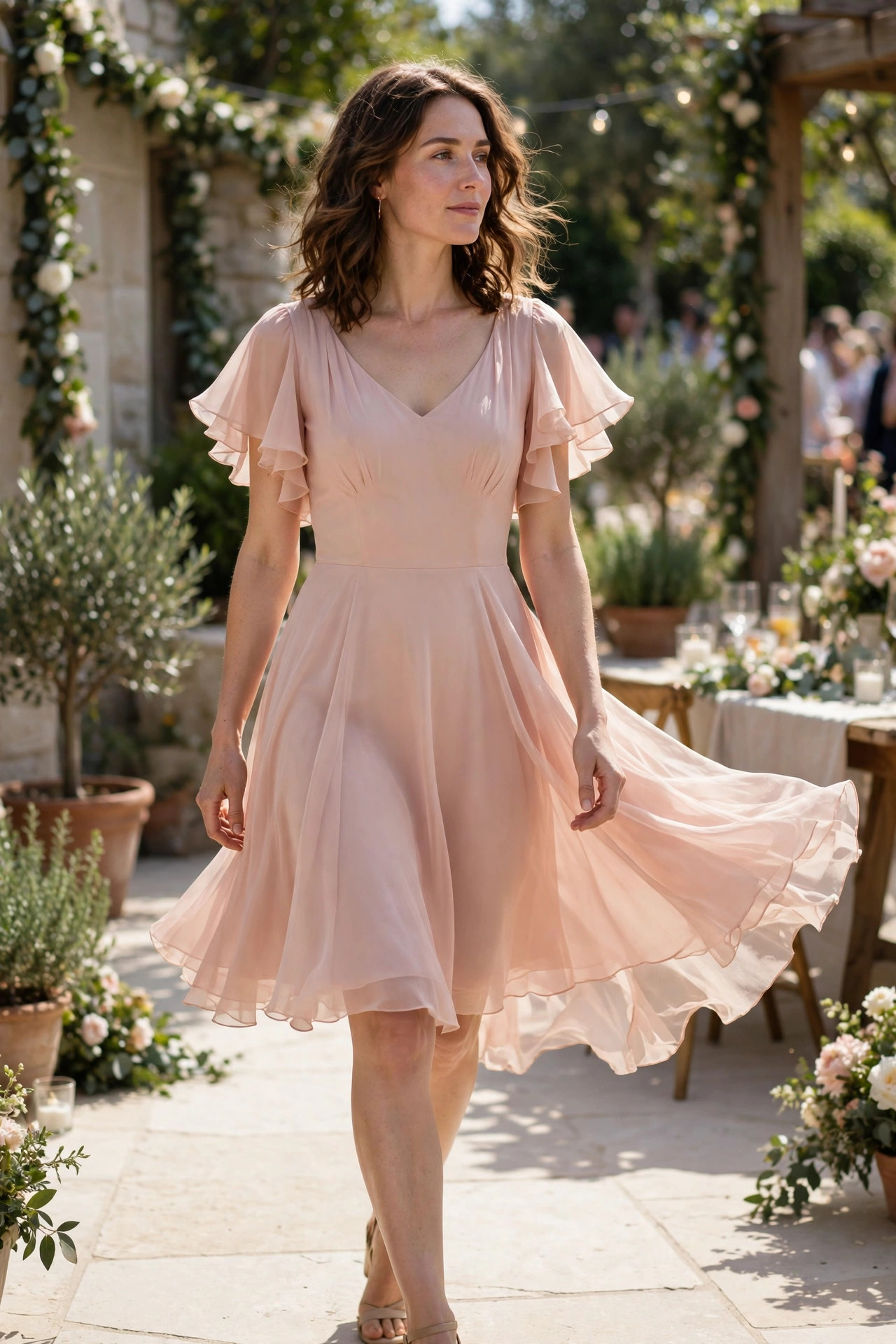
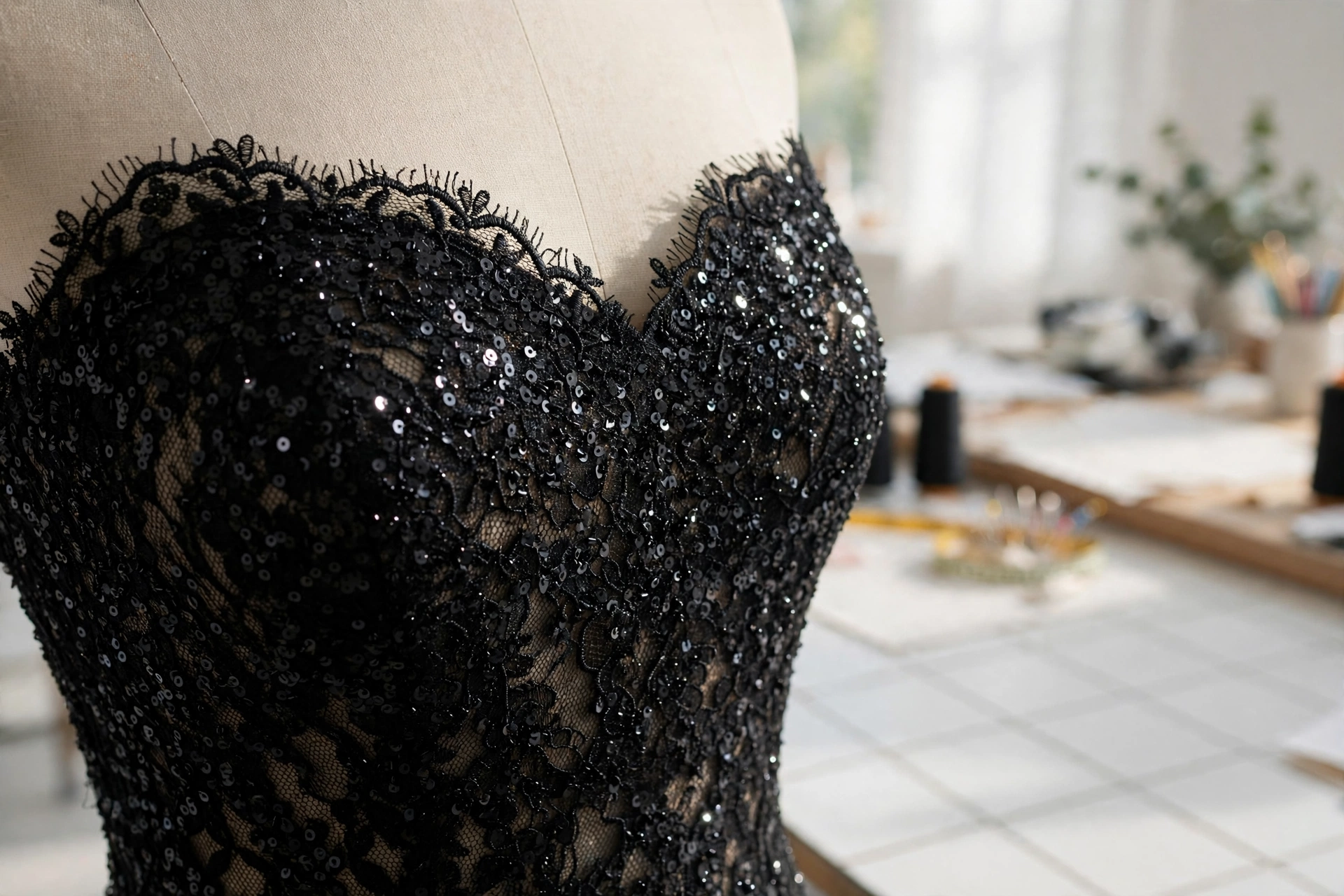
An off-shoulder neckline stays in place three ways, and a buyer should know which one a given style uses before ordering a single unit. A silicone gripper strip sewn inside the band works until it meets body lotion, after which it works noticeably less. A firm elastic channel holds better and costs a little more per unit. A structured bodice with light boning holds best of all and costs the most, which is why it tends to appear in the sample and evaporate somewhere between the sample and the bulk. I have compared samples against bulk deliveries on this exact point more than once. The sample grips. The bulk dress slides down two centimetres by the second hour of wear, and two centimetres is the difference between elegant and annoying.
Christmas-themed weddings make it worse in a way nobody budgets for. December events run long. There is heating indoors, cold air outside, dancing, photographs, a meal that lasts two hours. A band that behaves for a twenty-minute fitting at home has not been tested at all. When I look at return data for off-shoulder party dresses, the spike is not random across the year. It clusters in the two weeks after the big party dates, and the written comments mention the neckline far more often than the size.
What the review photos never show
Marketplace photos for this kind of dress are shot standing still, shoulders back, arms relaxed. Nobody photographs the reach test, the sit-down test, the carrying-a-tray test. A store buyer ordering for the holiday season should run those three movements on a sample before committing, because a dress that only works standing still is a dress that comes back in January. January returns are the expensive kind. The selling window has closed, the style is seasonally dead, and the unit goes to clearance at whatever the market will pay.
There is also the colour question, which the consumer side feels first. Deep reds and forest greens photograph beautifully under warm event lighting and look almost black under office-white fitting room bulbs, so a share of December returns are brides and guests who simply saw a different dress than the one in the listing photo. No wait. That share is smaller than I first wrote down here. The neckline complaints still outnumber the colour complaints on off-shoulder styles, roughly two to one in the returns I have coded. Colour is the bigger problem on plain satin styles with no texture to break the light.
The same winter pattern runs through the Christmas wedding dress and halter cocktail styles covered here before, and through the Dresstells formal cocktail dresses for Christmas weddings — different necklines, same January paperwork.
Questions buyers and stores actually ask
The listing says true to size, so why do guests keep sending this style back in January?
True to size describes the measurements, and on this style the measurements are usually honest. The returns come from the neckline behaving badly over a long evening, which gets coded as a fit problem because there is no return-reason box for the band slipped all night. When you read January feedback on off-shoulder dresses, read the written comments rather than the ticked reason. The comments talk about tugging, adjusting, holding the bodice up in photographs. That is a construction issue wearing a sizing label, and it follows the style from supplier to supplier until somebody specifies the band properly.
Ten pieces per style to start. Is that enough to learn anything useful about a party dress?
Ten pieces across a colour or two will tell you about construction and packaging, and almost nothing about returns, because return behaviour needs a few dozen wears across different bodies and different evenings. What ten pieces can tell you is whether the band grips, whether the zip runs clean, whether the colour matches the photographs you are selling from. Those are the cheap lessons. The expensive lesson, the January return cluster, only shows up at volume, which is why the sample wear-test matters more than the first small order for this category.
A Christmas wedding guest dress in deep red — will the colour I receive match the screen?
Close, not exact, and the gap widens under different light. Deep red dye lots drift more visibly than pastels because the eye catches small shifts in dark saturated colours, and event venues run warm lighting that pushes red further red. Ask for a daylight photograph of the actual bulk fabric next to the listing colour before the order ships. It takes the supplier ten minutes. Stores skip it because the sample looked right, and then the bulk was cut from a neighbouring dye lot that also, technically, looked right.
The sample gripped fine but the bulk feels looser. Did the factory change something, or am I imagining it?
You are probably not imagining it. The usual change is quiet rather than dramatic. A slightly narrower elastic, a gripper strip shortened by a few centimetres, a stitch density eased off. Each change is small enough to pass a glance inspection and large enough to feel at hour three of a wedding. Compare the bulk piece against your retained sample inside out, band to band, and measure the elastic width. If it differs, you have a specification conversation to have, with the sample in your hand as the evidence. Keep the sample. Always keep the sample.
For a boutique, the practical move is not complicated, it just rarely happens. Order the sample in the exact colour you plan to sell, wear it for an evening rather than a fitting, and check the band construction against the product photos with the dress inside out. If the gripper strip is missing or the elastic feels decorative rather than load-bearing, that is the dress your customers will be tugging at. A supplier who makes this style regularly will not be offended by the question. The ones who get offended are usually the ones who changed something.