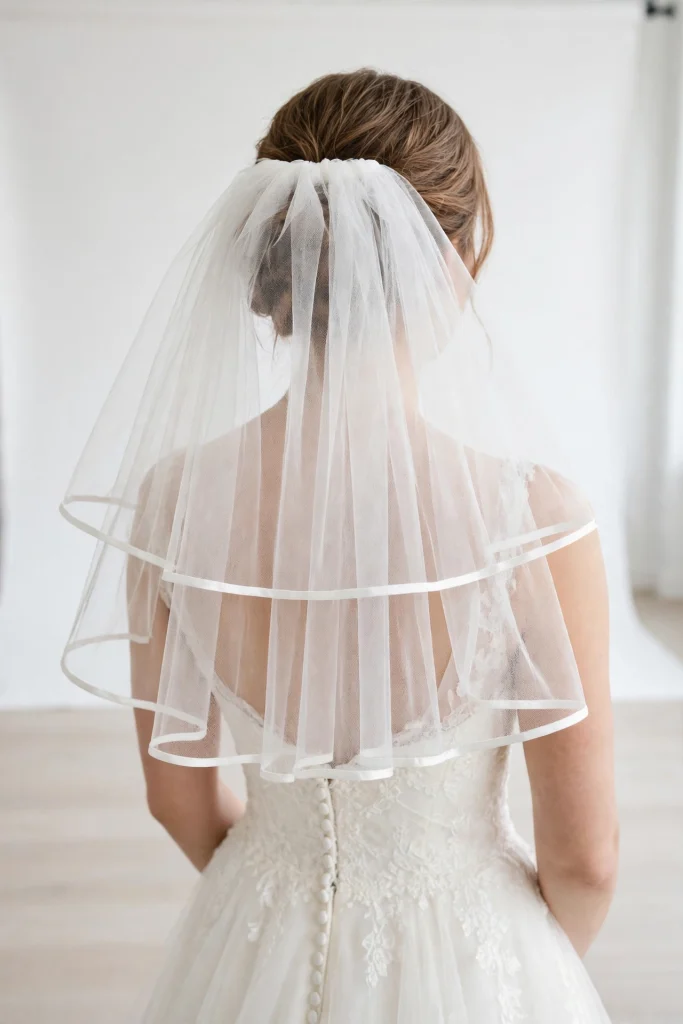
Two tiers. That is the whole argument, every time this veil comes back or gets praised or gets photographed from the wrong angle and sent to customer service with three question marks. A short two-tier bridal veil with white binding looks like the simplest object in a wedding order. It is a piece of tulle, a comb, and an edge. And yet the returns desk sees it again and again, because two tiers means two lengths, two edges sitting at two different heights on the same head, and a listing photograph that only ever shows one of those heights clearly.
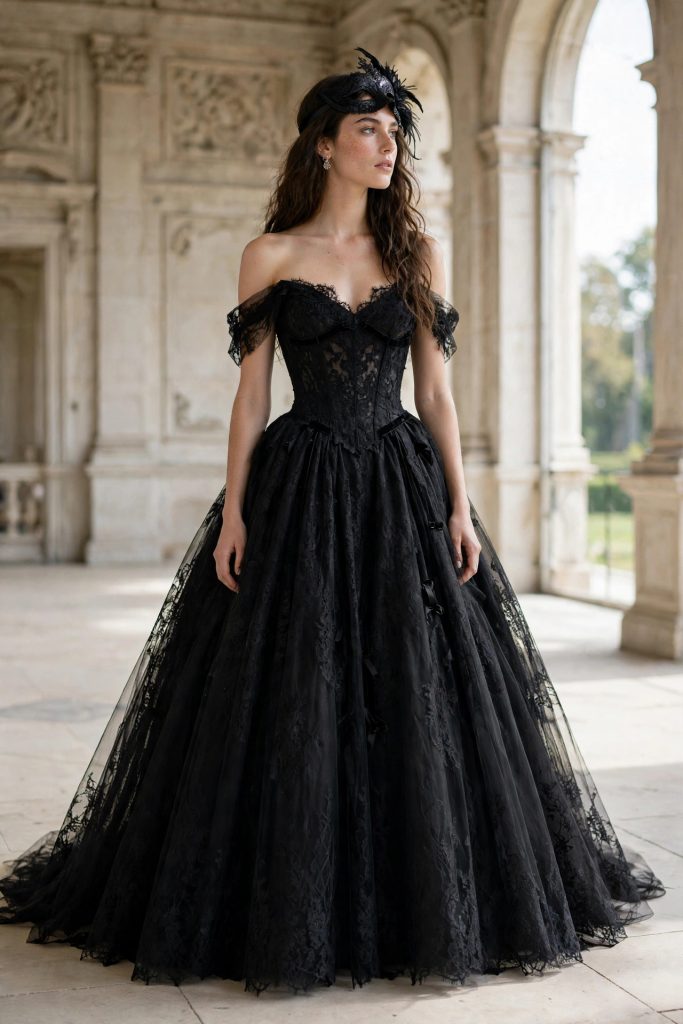
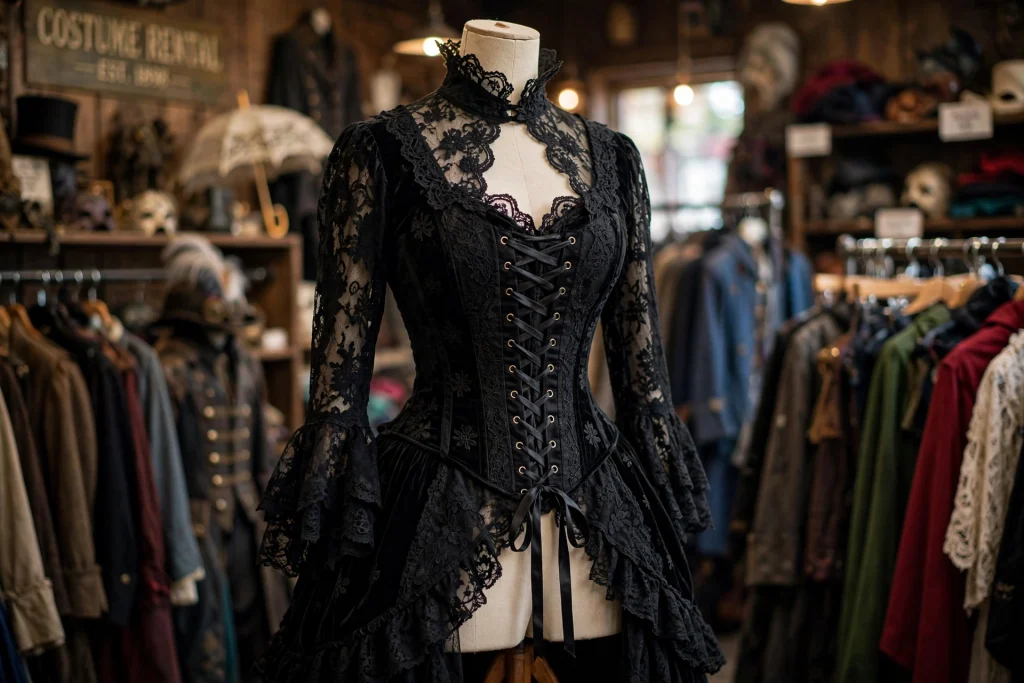
I work the consumer side of this trade, the side that reads the messages after the wedding, after the party, after the photographs come back. My side does not cut tulle. My side learns what buyers thought they were buying, which is a different product from the one that shipped, and the gap between those two products is where I spend my days. A halloween wedding veil sits in that gap more than most, because half the people ordering a short white veil in October are planning a ceremony and half are planning a costume, and they describe the same object in completely different words.
The number behind this veil is not the price. It is the drop. The top tier on a short two-tier veil usually falls somewhere around the shoulders or just past them, and it is meant to be lifted forward as a blusher or pushed back to sit over the second tier. The lower tier reaches further, toward the elbows on a shorter style or the fingertips on a longer one, and sellers do not all measure from the same point. Some measure from the comb. Some measure the tulle alone. That small disagreement, maybe eight or ten centimeters, is the difference between a veil that lands where the bride pictured it and a veil that lands on her upper arms and gets called too short in the review.

Binding is the part nobody talks about until it shows in a photograph. A bound edge gives the tulle a visible line, a white cord or satin strip stitched along the hem, and that line is what the camera finds. Unbound tulle disappears into soft focus. Bound tulle draws its own outline. On a white binding against white tulle the outline is gentle in person and stronger on screen, and buyers who chose the binding for a clean finish sometimes meet it again in their gallery as a hard white edge they did not expect. The binding also changes how the edge behaves. It adds a small amount of weight, so the hem hangs straighter and lifts less in a breeze, which outdoor ceremonies notice within the first ten minutes.
Here is a pattern from the consumer side that a factory listing will never tell you. Short veils come back for length far more often than long veils do, and the reason is naming, not sewing. Elbow length on one seller is fingertip on another, because bodies differ and the measuring point differs, and a bride who ordered by the name instead of the centimeter count has nothing solid to argue with. The careful buyers, the ones who almost never write to us afterwards, measured from the top of the head down the back to where they wanted the lower edge to stop, and they sent that number with the order. Everyone else ordered a word.
The comb decides more than the tulle does
Ask the returns desk what actually fails on a short veil and the answer is rarely the netting. It is the comb. A metal comb sewn flat to gathered tulle needs hair with some texture to hold against, and fine, freshly washed, very straight hair lets it slide within the hour. The complaints arrive worded as a quality problem. The veil fell. The veil would not stay. Underneath the wording sits a fitting problem that a few pins crossed over the comb would have solved on the morning itself, except nobody told the buyer that, because the listing showed the veil already sitting perfectly still on a styled head with more pins in it than the product photo admits.
Gathering matters here too. A two-tier veil carries more tulle at the comb than a single layer does, since both tiers attach at the same point, and the gather can sit high and round on the head if the bride expected something flatter. Stylists call that lift the pouf, and some brides love it and some spend their getting-ready hour pressing it down with a palm. The photograph on the listing page was taken after someone arranged that gather by hand. Tulle out of a packet has creases from folding, and it wants a hanging day and a little steam before it behaves like the picture, a step that gets skipped when the parcel arrives two days before the wedding.
October adds its own wrinkle. Orders for white veils climb steeply in the last two weeks of September and through October, and a share of those veils are bought for Halloween costumes, worn hard for one night, and then sent back with makeup on the binding. The returns team can tell a ceremony veil from a costume veil in seconds. Foundation sits along the edge that touched the face. Glitter sits everywhere and answers to nobody. Shops that sell this veil learn to state their worn-item policy plainly in autumn, because the argument about a worn return is longer and uglier than the argument about a short tier.
White is three colors wearing one name
A white veil against a white dress sounds like a solved problem. It is not, and the consumer side keeps the photographs to prove it. Dress fabrics called white run from a blue-white that looks almost icy to a soft warm white that sits close to ivory, and tulle dyed to a standard white can look grey next to one gown and yellow next to another. The binding makes this worse in one specific way. The cord on the edge is often a slightly different material from the tulle, it takes dye differently, and under venue lighting the edge can read as a separate color drawing a line around the whole veil.
The check that saves people is dull. Hold the veil against the actual dress, in daylight, not against a phone screen showing the dress. Screens lie about white more than about any other color, and a boutique that sells both gowns and veils will tell you the mismatch complaints almost always involve two items bought from two different sellers in two different months, each described with the same single word. Brides building a full look from one place, the way buyers do when they browse a wedding dress wholesale catalog and add the veil from the same dye family, run into this far less. That is not loyalty talking. It is dye lots.
And the blusher question. The top tier only works as a blusher if it is long enough to come forward over the face and sit without pulling the comb loose, and on the shortest two-tier styles that tier barely reaches the chin. A buyer who pictured the walk down the aisle with the blusher down, then lifted, needs to count that tier separately. Sellers should state both tier lengths. Many state one number, the longest, and let the shorter tier surprise people. I have read too many messages that begin with the words my veil arrived and it is lovely but. The but is always a measurement nobody printed.
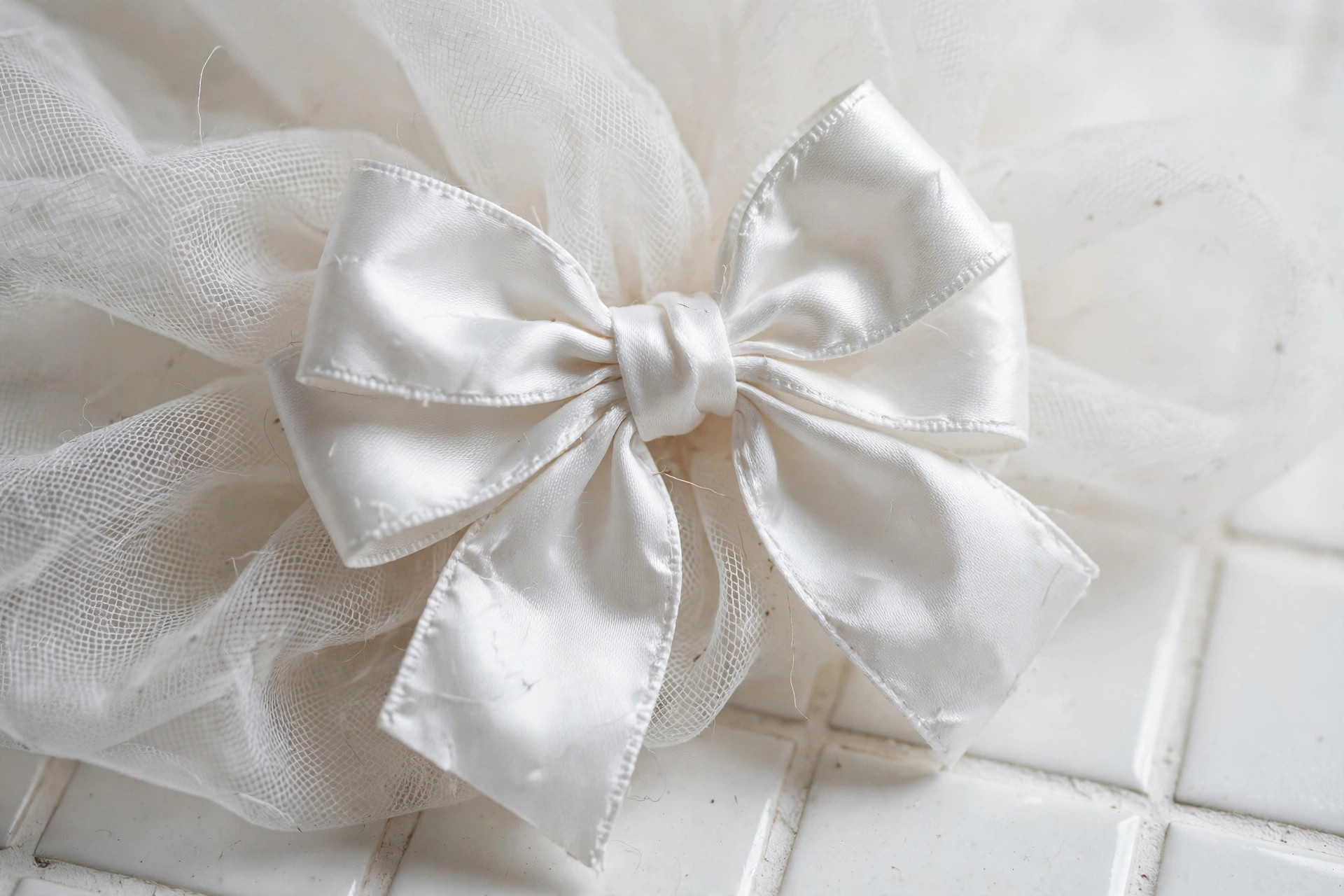
Care is the quiet part of this product. Tulle creases, binding can kink where it was folded in the packet, and the fix is patience rather than heat. Hang the veil in a steamy bathroom and the folds relax. Run a hot iron anywhere near it and the netting shrinks into a wavy scar that no steaming will undo. Buyers do iron them. Every season, somebody irons one the night before, and the message that follows asks whether a replacement can arrive by Saturday. It cannot, usually, and the veil budget gets spent twice on the same item.
The pins that save a sliding comb, by the way, usually live in somebody else’s bag, which is why a veil wearer benefits from the same thinking behind a bridal emergency kit put together before the day rather than during it. Storage after the day matters if the veil is being kept or resold. The binding holds its line better rolled than folded, and white tulle stored against colored tissue can pick up a tint over months in a drawer. None of this is dramatic. That is the point. Almost everything that goes wrong with a short veil is small, specific, and knowable in advance, and almost none of it is printed where the buyer is standing when she clicks.
No wait. I said earlier that length complaints are the biggest group on this veil, and that is true across the full year, but in October the comb complaints pass them for about three weeks. Costume wearers move more, dance more, wear the veil over wigs that give the comb nothing to grip. The season changes which failure leads. A seller who only reads the yearly total will prep the wrong advice for the busiest month, which is the sort of small blindness my side of the desk exists to catch.
Questions buyers ask me, in the words they use
The listing says elbow length and it stops above my elbows. Did they send the wrong veil?
Probably not, and that is the annoying part. Elbow length is a name, not a measurement, and sellers measure from different points, some from the comb and some from where the tulle leaves it. Send the seller a centimeter count from the top of your head to where you want the lower tier to end, taken while you stand straight, and compare that against what arrived before calling it a mistake. Names drift between shops. Numbers mostly do not, and I would rather argue with a tape measure than with a word.
Two tiers sounded fuller. Why does mine sit so flat in the photographs?
Because flat is how it travelled. Two tiers of tulle folded in a mailer arrive pressed together, and the fullness in listing photos comes after the veil has hung for a day and been steamed or shaken out tier by tier. Hang yours the day it lands, separate the layers with your fingers, give the bathroom steam an hour to do its work. If it still lies flat after that, the gather at the comb is the next suspect, though nine mornings out of ten it was the folding all along, which is a relief and an irritation at the same time.
White veil, white dress, so why does the binding look grey next to my gown?
The binding is a different material from the tulle and it takes color differently, so a bound edge can read half a shade off the netting beside it, and warm venue light pushes that gap wider. Check the veil against the dress in daylight before the day itself. If the edge is the only part that fights the gown, a stylist can sometimes soften how much of it shows by how the veil is pinned. Sometimes it cannot be softened, and then the honest move is a plain cut edge instead, and I wish more listings admitted that trade exists.
It is for a Halloween wedding in three weeks. Is a short veil going to survive the party half of the night?
Short is the safer length for a party, since there is less tulle to catch on chair backs and door handles, and a two-tier style reads bridal in the ceremony photos and costume-adjacent after dark, which is what most Halloween weddings actually want. Pin the comb properly, crossed pins, not one hopeful clip. The veils that die at parties are the ones that were already sliding during the vows, and everyone politely pretended not to notice until the dancing started.
I still think about how much argument one small word causes. Two. Two tiers, two lengths, two jobs for one veil to do, ceremony and party, photograph and memory. The veil itself is fine, most of the time, when it lands. What fails is the description standing in front of it, thin as tulle, letting buyers picture a veil that was never quite the one in the packet.