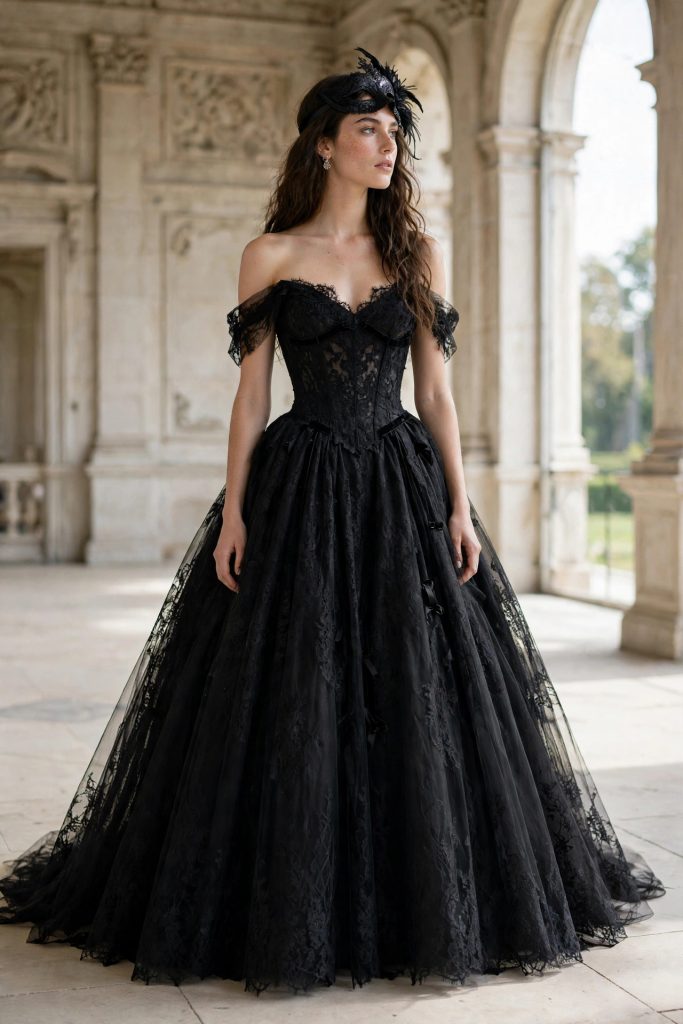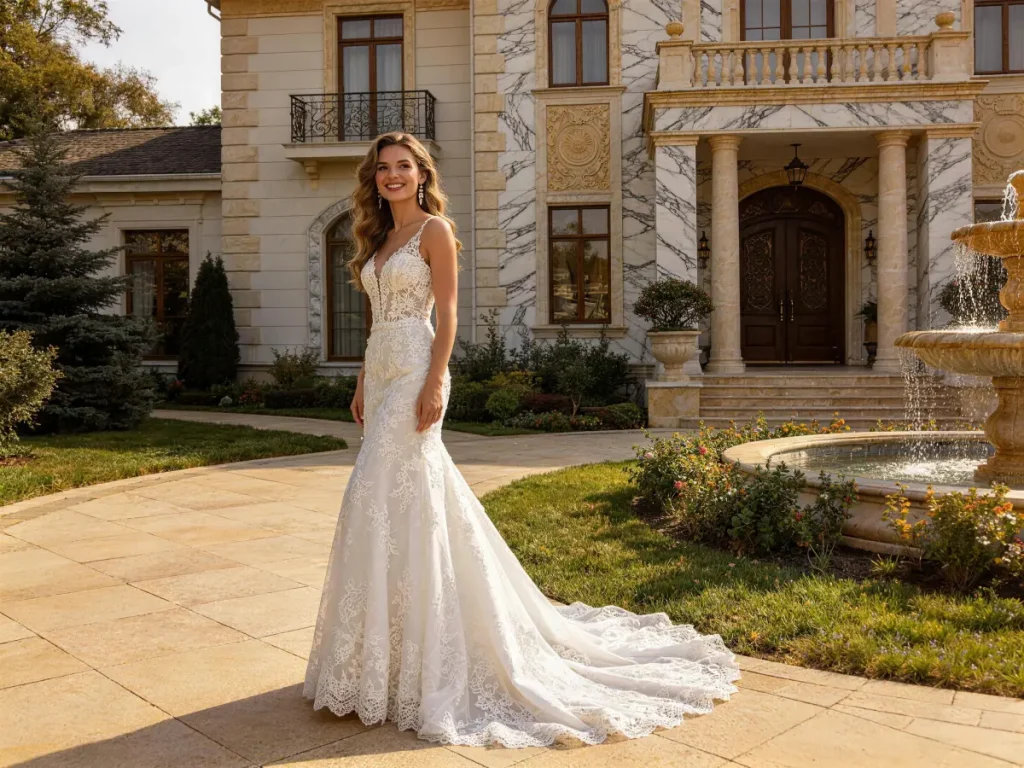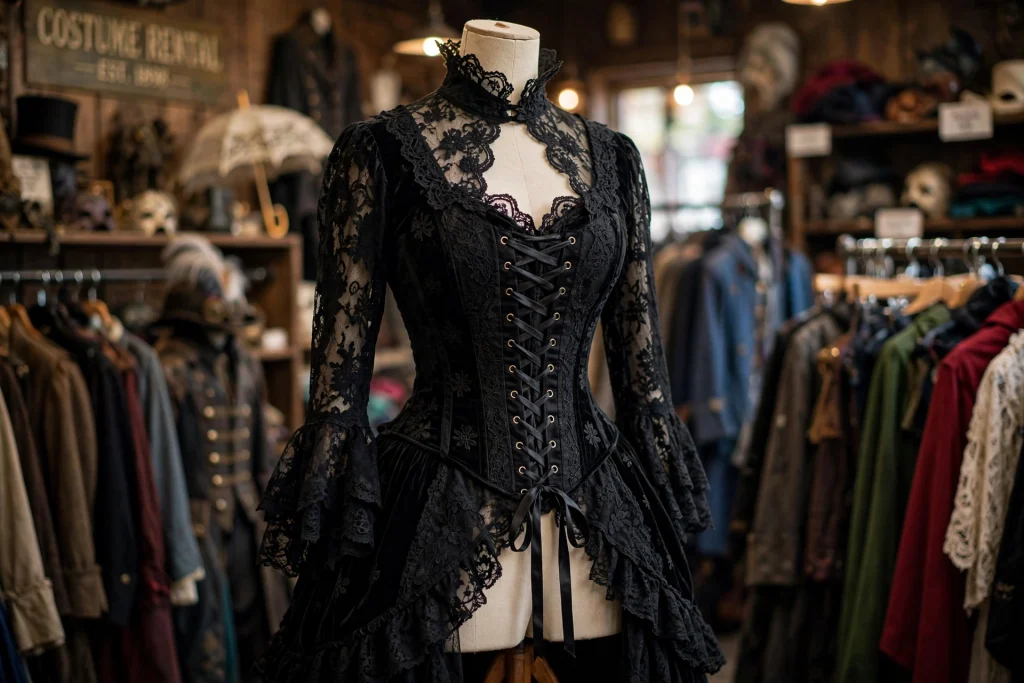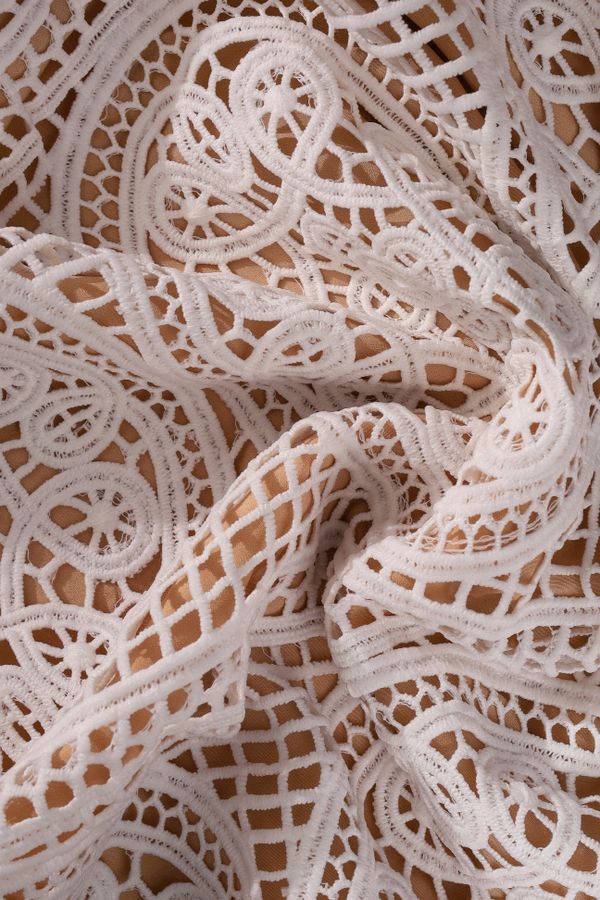
The money question about Spanish lace is not what it costs. It is what the word Spanish is charging for. A vintage themed wedding, vampire or otherwise, runs on drama, and heavy lace with bold motifs is where the drama lives, so buyers pay a story premium on top of a cloth price and rarely separate the two. The finance side separates them for a living. Under the story, this lace is a guipure style product, motifs joined without a net ground, made on machines, priced by motif density and repeat size and the waste those two create at the cutting table. None of that is Spanish in the shipping sense. All of it can still be worth the money, which is the part of the conversation people skip when they discover the story was a style name.
Guipure charges by the motif, not by the metre
Lace pricing confuses buyers who are used to cloth sold by length, because the cost driver here is how much thread the pattern carries and how slowly the machine can lay it. A bold floral guipure with dense filled motifs can carry several times the thread of an open chantilly style lace off the same machine bed, and the machine time follows the thread. Then the repeat takes its second cut at the budget. Large motifs repeat over a long distance, and a cutting room placing those motifs on a bodice throws away the lace between placements. The waste is not a factory failing. It is geometry, and it belongs in the quote where buyers can see it, instead of buried inside a per metre price that pretends lace is wallpaper.
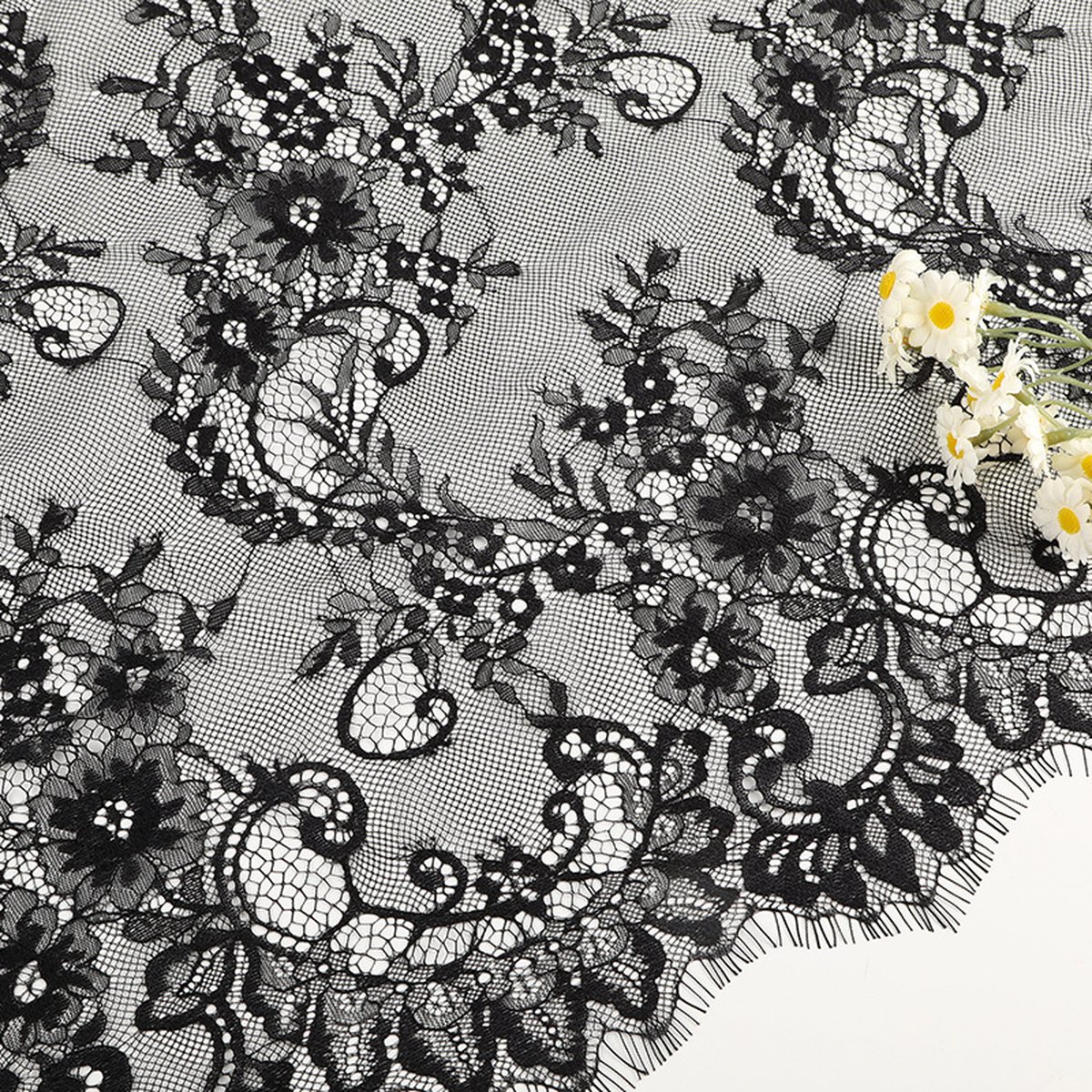
Black changes the invoice again, quietly. A deep true black on this kind of lace costs more than ivory, partly in dye work and partly in rejection: lots that read brown or grey under daylight get refused by themed buyers, who are stricter about black than mainstream bridal buyers are about ivory, and every refused lot is a cost the accepted lots end up carrying. Sellers price that risk in whether they say so or not. A suspiciously cheap black guipure is usually a quote that has not met its rejection rate yet, and the buyer meets it instead, one washed out costume at a time.
What a fair quote shows, and what it hides
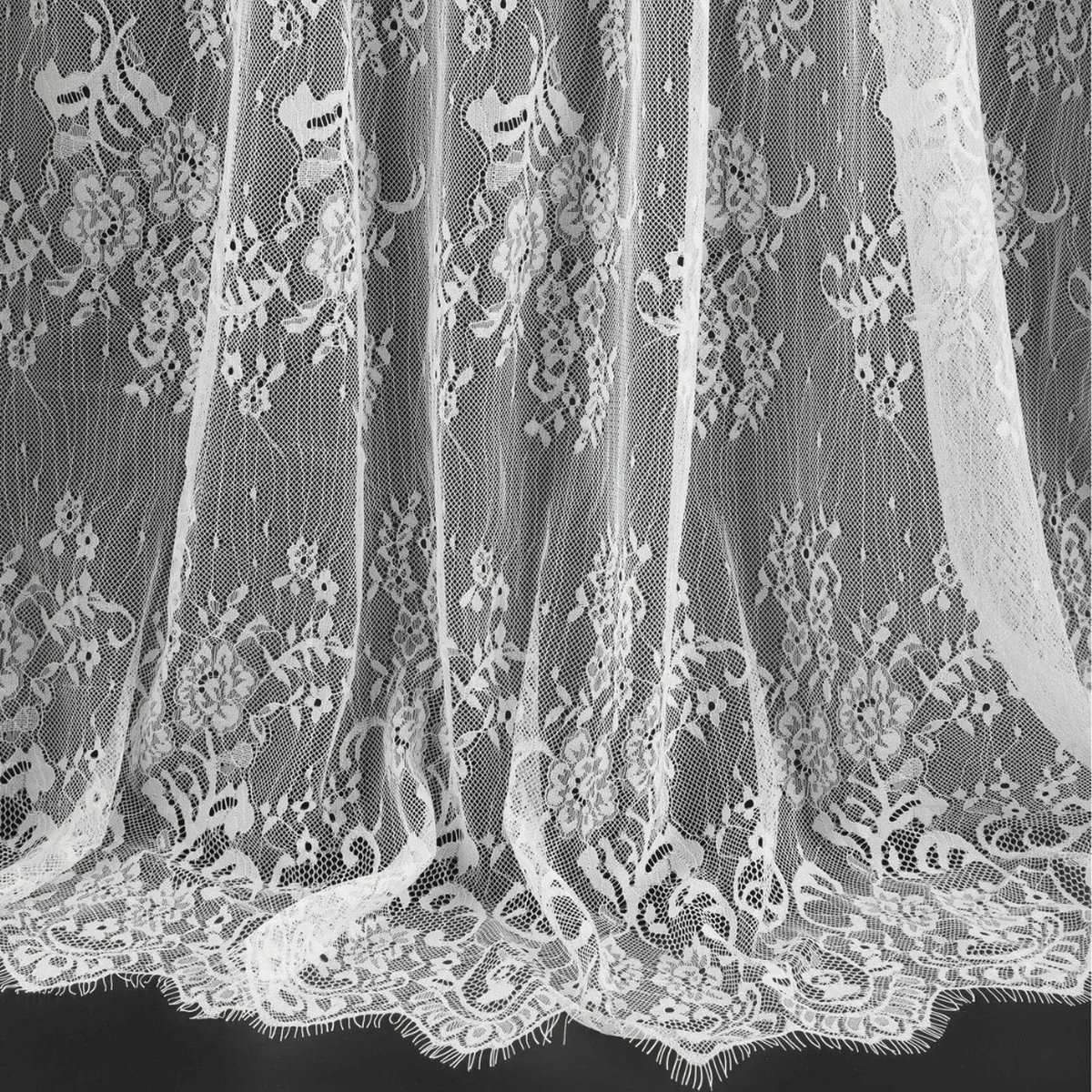
A fair lace quote separates three things. The lace itself, by weight of motif as much as by length. The placement waste for the garment it is headed for. And the sampling, because lace this bold has to be seen on the body, in the buyer’s own light, before a bulk order makes sense. Sampling fees on a style like this run inside the usual made to order range, and a store ordering a private label vintage range should expect the sample stage to argue about motif scale before it argues about price. A motif that sings on a sample bodice can overwhelm a smaller size and vanish on a larger one, and grading a pattern is one thing while grading a motif is another, slower conversation entirely.
The MOQ story is kinder than buyers fear. Ten pieces per style is a workable trial quantity even for a heavy lace garment, because the lace, not the sewing, carries the cost, and lace can be bought for a short run at a known waste rate. What small runs cannot do is spread the placement waste thin. The per dress lace cost on a ten piece trial will sit visibly above the per dress cost on a hundred piece run, and that gap is honest arithmetic, not a small order penalty invented at the quoting desk. No wait, penalty is the wrong frame entirely. It is the same waste divided by fewer dresses, and seeing it written that way has settled more arguments in my experience than any discount ever offered.
The costing file keeps this lace beside the sheer lace wedding sleeves sleeve notes, prices it against the lace mermaid gowns with flare sleeves range, and reads it next to the gothic bustle wedding dresses file, because themed lace money is always spent across three products at once and argued about one invoice at a time.
Questions buyers and stores actually ask
The quote just says Spanish lace, one price per metre. What is missing from that number?
The waste, mostly, and the motif density behind the price. A per metre figure treats lace like plain cloth, but a bold guipure gets placed, not just cut, and the lace thrown away between placements is real money the buyer will pay somewhere. Ask for the placement waste as its own line and the density the price assumes. A seller who can answer both is quoting a product. A seller who cannot is quoting a description.
Black guipure costs more than the same lace in ivory. Dye, or storytelling?
Dye, rejection risk, and then a little storytelling on top, in that order. True black is hard to hold on lace, weak lots read brown in daylight, and themed buyers refuse them at rates ivory never sees. The refused yardage gets carried by the accepted yardage. If the black premium looks small enough to be pure story, enjoy it, but check the first delivery at a window before the bulk money moves, because that is where the story usually ends.
A 10-piece trial in heavy lace costs far more per dress than the 100-piece quote. Is the small order being punished?
It is being divided, not punished. The placement waste on a bold motif is roughly fixed per garment layout, and a short run spreads the cutting loss and the lace buying minimums across ten dresses instead of a hundred. The sewing labour barely changes. Ask the factory to show the waste line separately on both quotes and the gap usually explains itself, which does not make it smaller, just harder to resent.
Sampling this lace costs real money before any order. What should that sample actually settle?
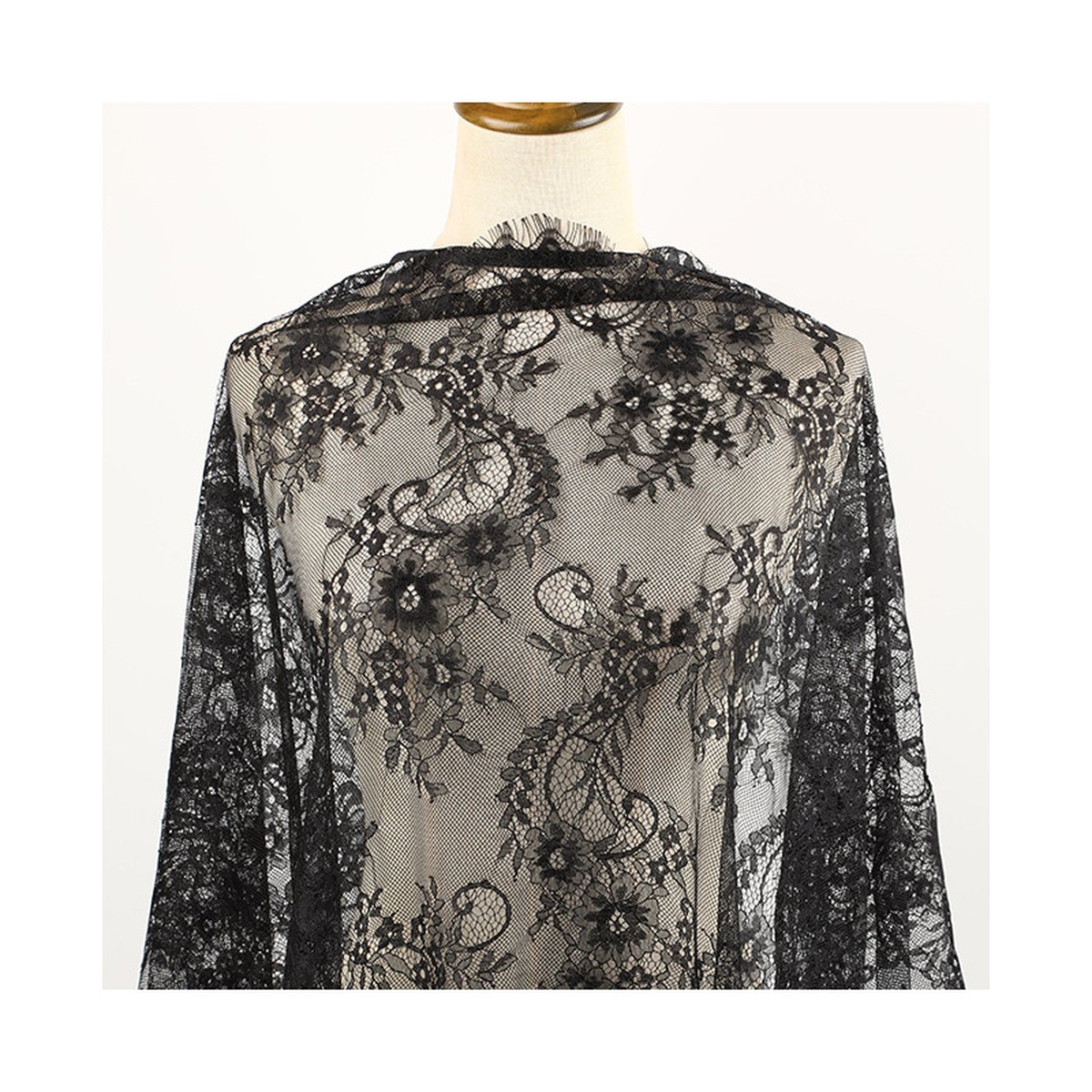
Motif scale on a real body, in real light. Not the colour card, not the hand feel, those travel fine by post. Scale is the thing photographs lie about: a motif that looks romantic on a sample size can crowd a smaller frame and get lost on a larger one. Settle scale at sampling and the bulk order becomes a sewing job. Leave it open and every size in the run becomes its own argument, priced accordingly.
Whether the word Spanish earns its premium is a question I have stopped expecting the market to answer cleanly. Buyers are not only buying lace. They are buying the right to describe the lace, on a listing, to a customer who wants a castle in her head when she opens the box. The cloth underneath the word is good cloth when it is dense, well dyed, and cut with its waste admitted. It is bad cloth at any name when it is not. The invoice can tell you which one you are holding, if you make it itemise the story separately from the thread.