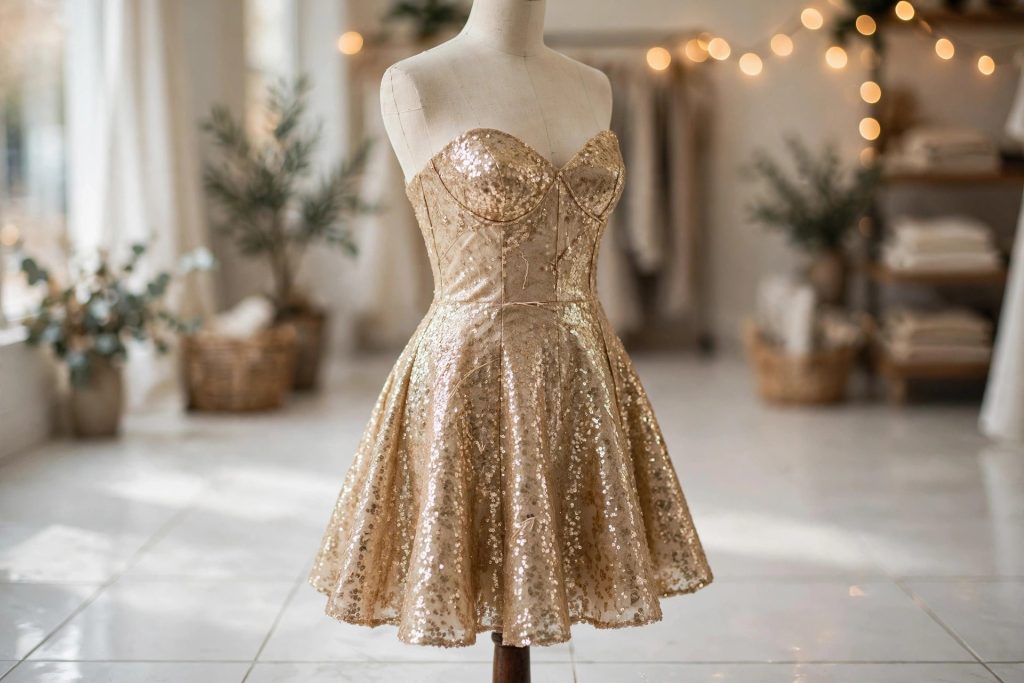
Red formal dresses produce the most honest reviews in the returns pile, because red forgives nothing and reviewers say so. A red that looked rich on the product page arrives orange under home light, or wine-dark, or somehow both on the bodice and the skirt of the same dress. This BeryLove red formal style, sold for wedding guests, proms, and the Christmas party run, sits in the middle of that pile every year. From the consumer side of the counter, the dress itself is rarely the problem. The problem is that red is not a colour. It is a family of colours sharing one word, and every step between the dye bath and the customer’s hallway can move a dress from one member of the family to another.
Red is a dye lot argument waiting to happen
Blue-based reds and yellow-based reds pass each other in a warehouse without comment and fight the moment they share a rail. A store that orders this style in two batches for the party season can end up selling two visibly different dresses under one listing, and the second batch’s reviews will use the word different more than any sizing word. The habit that keeps a red honest is the same boring one that keeps black honest: one order from one lot, a kept swatch, and reorders matched against the swatch in daylight. Red adds one extra trap. Party-season reorders land in a hurry, hurry is when substitute lots get sewn, and December light in a customer’s home is the least forgiving light of the year.

Fabric sheen moves red as much as dye does. The same red in a matte crepe reads formal and grown-up; in a shiny satin it reads evening and loud; in a thin jersey it can read cheap at any price, because thin cloth shows every seam allowance through the colour. Buyers for this category learn to ask what the cloth is before they ask what the red is called, since the name on the listing, scarlet or burgundy or wine, tells them almost nothing that a swatch would not say better.
Three occasions, three different dresses hiding in one style
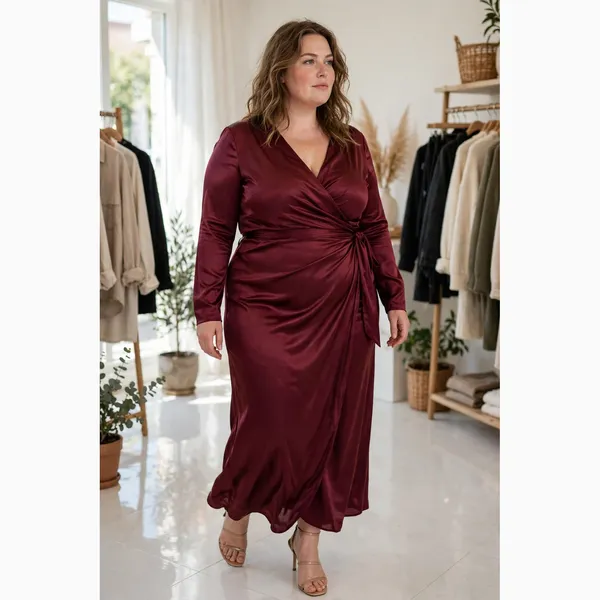
The listing sells one dress to wedding guests, prom shoppers, and Christmas parties, and the returns notes show three different products. The wedding guest wants the red quiet enough to sit in photographs next to a bride. The prom buyer wants the loudest red in the room and returns the dress when it photographs tamer than the page. The party buyer wants to wear it four times in December and judges the seams by the third wearing. None of them is wrong. A store stocking this style has to decide which of the three it is actually selling, then write the listing, the size advice, and the colour description for that buyer, because a page that promises all three reds delivers each buyer somebody else’s dress.
Sizing complaints in red run hotter than in black for a plain reason: there is nowhere to hide. A fitted red bodice shows a gap, a pull, and a wrinkle at full contrast, where a black dress swallows the same faults in shadow. Customer service learns to read fit reviews on red styles as pattern information rather than customer fussiness. If three reviewers in a row say the waist sits high, the waist sits high, and in red everyone can see it.
What to check before this dress goes on the rail
Hold two sizes from the same carton side by side in daylight and look for the lot split. Sit in the sample; red shows bodice strain earlier than dark colours do. Photograph it with a phone flash in a dim room, because that is the light it will be judged in, and check that the colour on screen is a colour the store is willing to defend. Then read the listing’s colour word and delete it if the swatch disagrees. The word is free to change. The reviews are not.
The returns desk reads red dresses alongside the spring lace cocktail dresses notes, the multi-occasion formal dresses range, and the slit maxi evening gowns file, because the same guest often tries all three styles before she keeps one.
Questions buyers and stores actually ask
Why does a red dress look different at home than on the product page?
Two reasons cover most cases. The dress may come from a different dye lot than the photographed sample, and home light is warmer and dimmer than studio light, which shifts red more than most colours. A daylight swatch check before ordering is the standard guard.
Why do red dresses collect more fit complaints than black ones?
Contrast. A fitted red bodice shows gaps, pulls, and wrinkles at full visibility, while black hides the same faults in shadow. Fit reviews on red styles should be read as pattern feedback, not dismissed as picky customers.
Can one red dress honestly serve weddings, proms, and parties?
The cut can; the colour story cannot serve all three at once. Wedding guests want a quieter red, prom buyers want the loudest one, party wearers judge seam strength. A store should pick its main buyer and write the listing for her.
What should a boutique check on a red formal sample?
Daylight colour against a kept swatch, two sizes side by side for lot splits, a seated fit check, and a phone-flash photo in a dim room. Those four checks catch nearly every complaint this category produces.
She kept the dress, in the end, the reviewer who said it was not the red in the picture but it was a better red. That sentence is the whole category in miniature: the dress survived because the colour it actually was turned out to be a colour she wanted. Stores cannot build a season on that luck, but they can build one on swatches, daylight, and honest colour words.