It starts small, the way print trouble usually does. A red flower at the hem comes back from a first wash with a pink shadow on the cream ground beside it, faint enough that the wearer argues with herself about whether it was always there. Then a second dress from the same order shows the same shadow, stronger. Then the store stops arguing. This review of the red floral V-neck dress for holidays and weddings follows that slow build, because a floral print rarely fails in one loud moment. It drifts, wash by wash and batch by batch, until the drift is the product.
Red is the colour that tells on a print shop
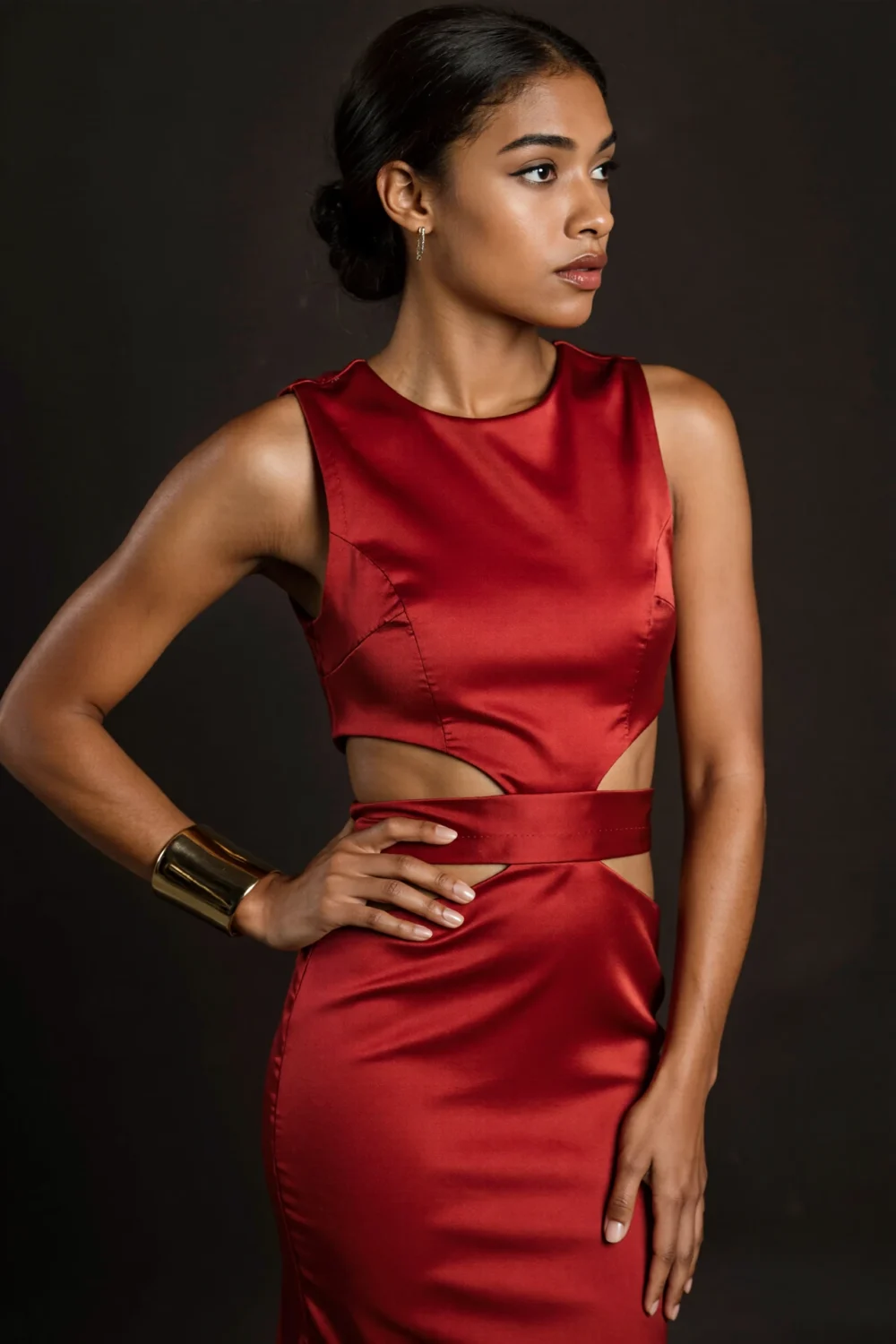
Red sits badly next to pale grounds. The dye family behind strong reds is the least settled of the common dress colours, and on a floral, where red petals touch white or cream in a hundred places per garment, any looseness in the dye shows at the edges of the flowers first. A solid red dress can hide a small shade shift inside its own field of colour. A red floral has nowhere to hide it, since every petal carries its own pale outline waiting to be tinted.
Washing is where the promise gets read. Heat, detergent strength, and how long the dress sits wet in a machine all pull at the colour, and home washing varies far more than any lab wash a mill runs. A print that survives a gentle test cycle can still bleed in a warm family wash in December, which is the wash a holiday dress actually gets.
The strike-off is not the bulk run, and the gap grows quietly
A strike-off is printed slowly, on fresh screens, often by the strongest hand in the shop, and it is the version everybody approves. Bulk printing runs faster, screens wear as the run goes on, registration slips by small amounts, and the red can sit a shade away from the approved piece while still looking red to anyone not holding the two side by side. One dress reads fine. Ten dresses on a rail read as a family. A hundred dresses across two deliveries can read as two different dresses sharing a name.
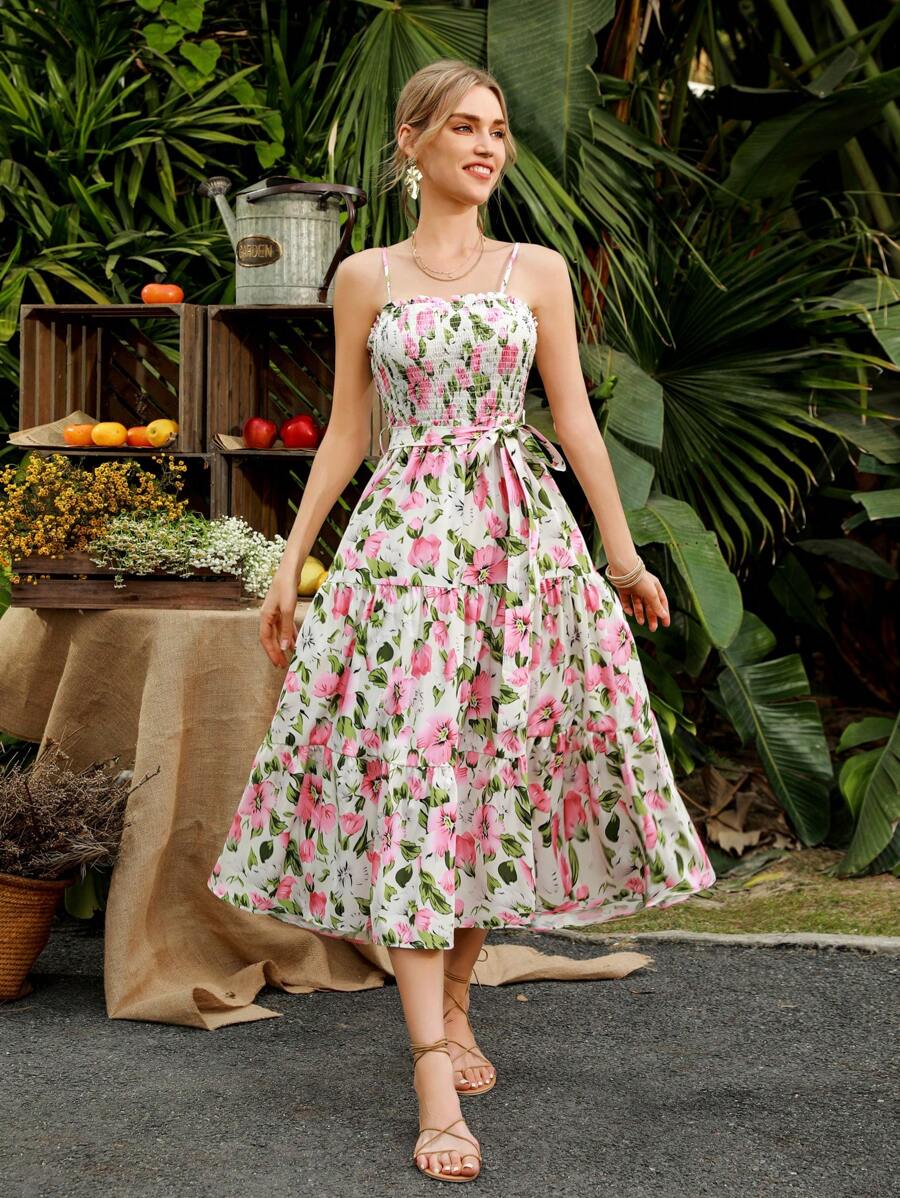
The sleeveless V-neck cut is the quiet good decision inside this style, and it deserves saying plainly. Sleeves are where floral matching usually breaks, because carrying a flower pattern across a sleeve seam takes time and cloth that this price band rarely gives. A sleeveless bodice removes that fight. The V leaves the print to do the talking, which suits a dress whose whole value is the print. Where the cut asks more of the print, it also protects it.
Fabric sourcing sets the ceiling before printing starts. The same red floral design printed on a stable, tightly woven ground holds its edges through washing far better than the same design on a loose, cheaper ground that moves under the screen and drinks unevenly. No wait. Ground cloth is most of it, not all of it. Dye discipline and curing time argue back, and a good shop can save a middling cloth while a careless one can ruin a good roll. The honest version is that the buyer sees one dress and the causes sit in three places at once, which is why single-cause arguments about prints go nowhere useful.
What a store should settle before the holiday order ships
Settle the wash expectation in writing while the order is still a sampling conversation. Ask for a washed sample, not just a printed one, and keep it: that piece is the standard the bulk order gets judged against in December. Lock the ground cloth by name in the tech pack, set the colour tolerance against the washed sample under daylight, and agree what happens on a reorder if the print house changes screens between runs. A garment factory that prints its own floral runs can hold those points; one that buys printed cloth in should say which print house, because the name of the house is half the answer.
The print file for this style sits beside the elegant formal dresses for guests and bridesmaids rail notes, the floral mesh maxi dress review, and the black short sleeve wedding guest dress review file, because holiday orders tend to be compared against all three before a store settles its December rail.
Questions buyers and stores actually ask
Three washes in, the white flowers have pink edges. Did the store sell a faulty dress?
Usually the print was borderline from the start rather than broken on arrival. Red dye sitting next to a pale ground is the hardest neighbour in printing, and a warm home wash finds the weakness a gentle test cycle missed. Hold the dress against an unwashed piece from the same delivery under daylight. If the tint grew with washing, that is a print stability point to raise with the supplier, with the washed sample as evidence.
Why does the reorder look slightly different from the first delivery?
Screens wear, dye lots shift, and a fast bulk run registers the flowers a fraction off the approved strike-off. Each change alone looks like nothing. Together they read as a different dress on the rail. A tech pack that names the ground cloth and holds a washed approval sample gives a clothing manufacturer something firm to match on the second run, instead of a photograph and a memory.
Is a sleeveless floral easier to buy in bulk than a sleeved one?
Yes, and the reason sits in the seams. Sleeves force the print to match across joins, which costs cloth and time and often gets quietly dropped at this price. Sleeveless removes that argument, so more of the money can stay in the print itself. For a wholesale order at a low MOQ of 10 pcs per style, that simpler construction is part of why the style can hold its price at all.
What should a buyer ask a garment factory before ordering this print?
Ask how the print is wash-tested, at what temperature, and whether a washed sample can be kept as the bulk standard. Ask which ground cloth, by name, and what the colour tolerance is under daylight. The answers do not need to be long. They need to exist before the deposit, because after the run the same questions become a dispute instead of a specification, and disputes about red are the ones nobody wins cleanly.
The dress itself, worn once to a December wedding with the print fresh, does its job well. The doubts live in month two, in the second wash and the reorder carton, in the small pink shadow that either stayed home or moved in. Holiday dresses are bought on a feeling and judged on a calendar, and this one will keep being judged long after the party photographs fade, by a hem held up to the light in a laundry room, which is a stricter room than any fitting room the dress will ever stand in.