Eight to ten RMB a metre. That is where this article starts, because it is the number the whole product hangs on: the floral lace edging of a long wedding veil, bought at real volume, against three to four RMB a metre for the fine tulle the edging is sewn to. I sell lace and trims to the factories that make veils. From my side of the counter, a long floral lace veil is not a cloud with a price tag. It is a length of tulle, a much longer length of lace edge, a comb, and the minutes it takes to marry the two without a wobble. The Ursumy long veil in front of us, chapel to cathedral territory, is a fair piece to price honestly.
The factory behind veils like this sits in Guangzhou and works across bridal and women’s dresses for boutiques and private label buyers. Catalog bridal styles, veils included alongside the gowns, run from 5 pieces per style, the wider wholesale dresses range runs at a low MOQ of 10 pieces per style, and a single custom bridal piece can be made from 1 piece. Sampling takes 10 to 15 days once the pattern and materials are confirmed, bulk production runs 20 to 30 days, and a general style sample fee is $45 to $75 per piece with half returned against the bulk order. Freight on small lots under 20 pieces runs about $17 to $22 per kilo. A boutique stocking veils against its own gown rail is the buyer this supply is built for.
| Item | Figure |
|---|---|
| Category | Long floral lace wedding veils |
| Catalog bridal styles | From 5 pcs per style |
| Wholesale dress range | 10 pcs per style |
| Single custom piece | From 1 pc |
| Sample lead time | 10 to 15 days |
| Bulk lead time | 20 to 30 days |
| Sample fee, general styles | $45 to $75 per piece |
| Freight, under 20 pcs | About $17 to $22 per kg |
Length is lace, and lace is the bill
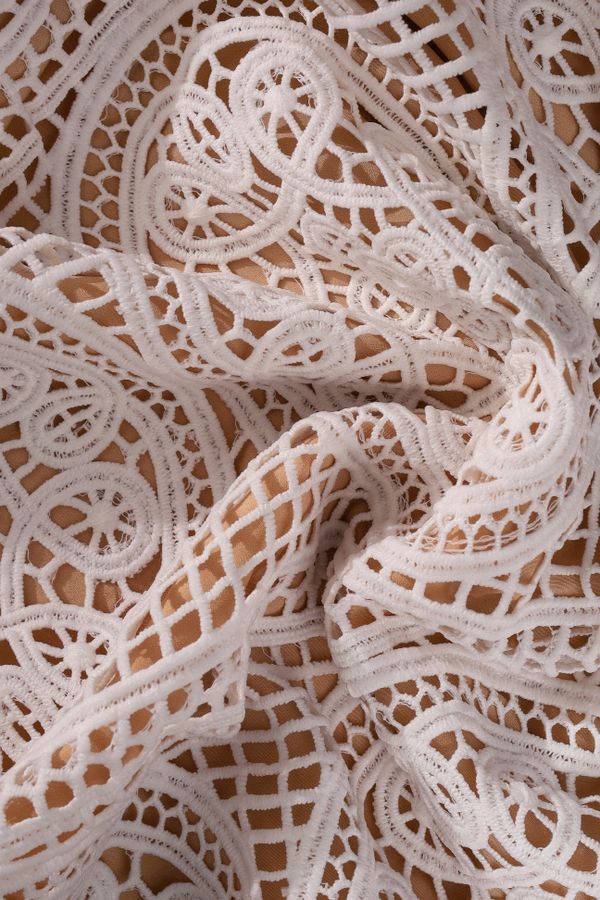
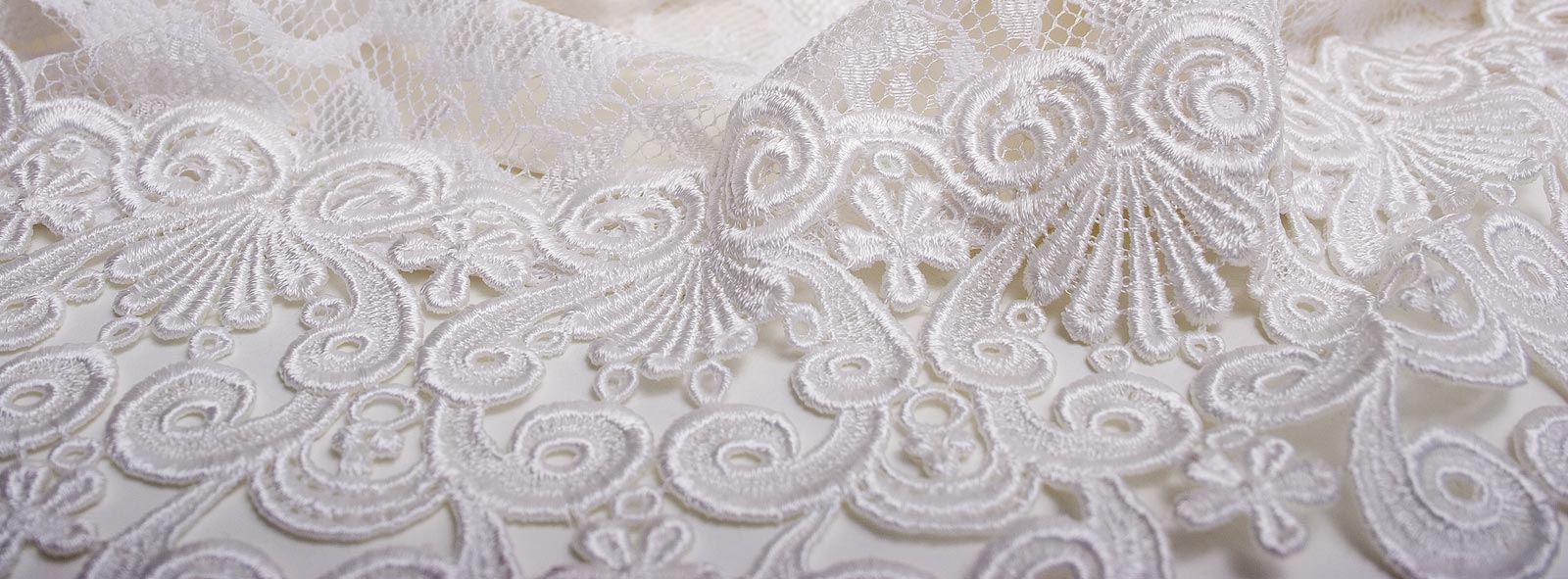
Buyers price a veil by its drop, the distance from comb to hem, and the drop is the smaller half of the cloth in it. A cathedral veil falling three metres behind a bride carries its lace edge around the sides and across that whole trailing end, so the edging metres outrun the tulle metres by a wide margin, and the edging is the expensive half by a factor of two or three. One carries a narrow lace with a short repeat. The other carries a wide floral edge whose motifs have to land unbroken around a corner, and corners are where lace stops being a strip and becomes a pattern that somebody has to place by hand, motif by motif, so the flowers turn the bend instead of being cut by it.
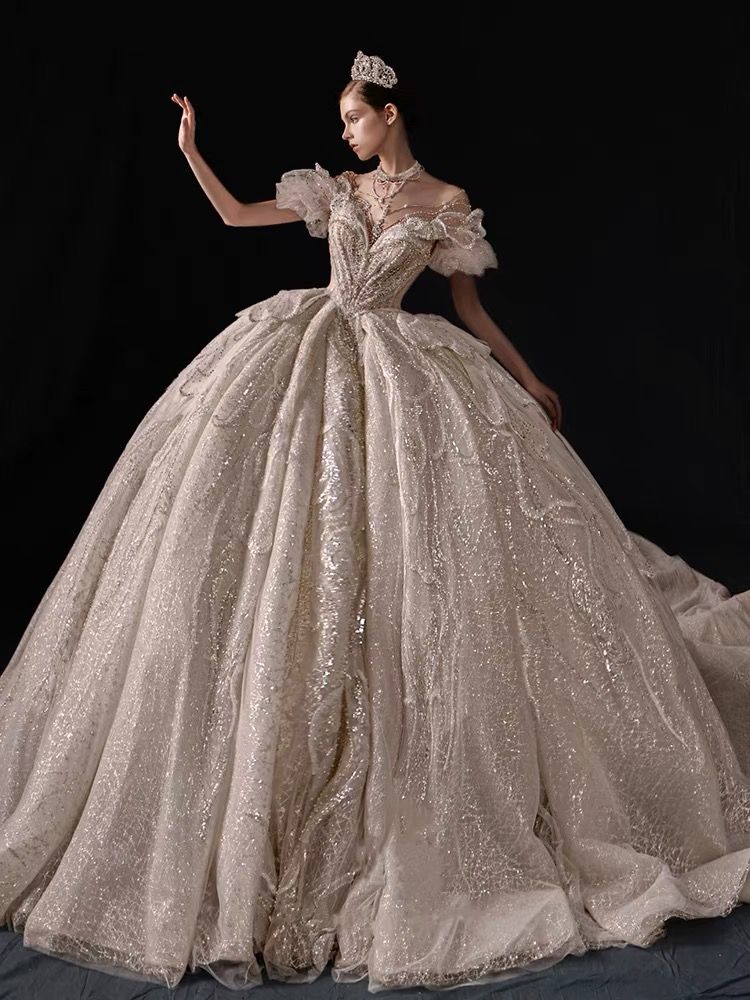
The middle of a long veil is where I tell factories to look, because the ends get checked and the middle gets trusted. A thin place in the embroidery density, a repeat that drifts half a motif out of step, a join in the edging that was meant to hide at the comb and wandered down the side instead: all of it lives in the unexamined middle metre. On a long one the checker has to walk the full edge under light, slowly, and walking slowly is a cost too, one that never appears as a line on the quote and always appears in the price.
The comb decides whether the lace gets seen
The smallest part of this product carries the whole wearing of it. A veil comb with rough teeth snags hair at the fitting, and a comb stitched to the tulle with a few loose passes lets go during the one walk the veil exists for. Sound work wraps and stitches the tulle gathering firmly to a smooth metal comb, so the weight of three metres of lace-edged tulle hangs from the hair instead of from a thread. No wait. Hangs from the comb, and the comb hangs in the hair, and I should keep that order straight because it is the order failures follow: thread first, then comb, then a bride holding her veil in her hands in the photographs. Shade is the other quiet failure. Ivory is not one colour at my counter, it is a family of warm whites that separate under daylight, and a veil matched to a gown under showroom tubes can read a full step yellower beside the dress outdoors.
Upstream, this long lace veil is costed beside the lace mantilla veil in seven colours, matched against the gowns in the sleeveless lace bridal gown file, and checked for shade next to the lace double V-neck bridal gown review, because a veil is bought as an edging, a shade and a length, and all three have to agree with a dress made somewhere else.
Questions buyers and stores actually ask
A cathedral veil carries about 3 metres of drop. Where does the money actually sit, the tulle or the lace edge?
The lace edge, by a wide margin. The tulle base is a few RMB a metre and the floral edging runs two to three times that per metre, and a long veil uses more metres of edge than of drop once the sides and the trailing end are counted. Add the placing of motifs around the corners and the slow check of the full edge, and the tulle is nearly the cheapest thing in the product.
Catalog bridal starts at 5 pieces per style. Does a veil really run on the same terms as a gown?
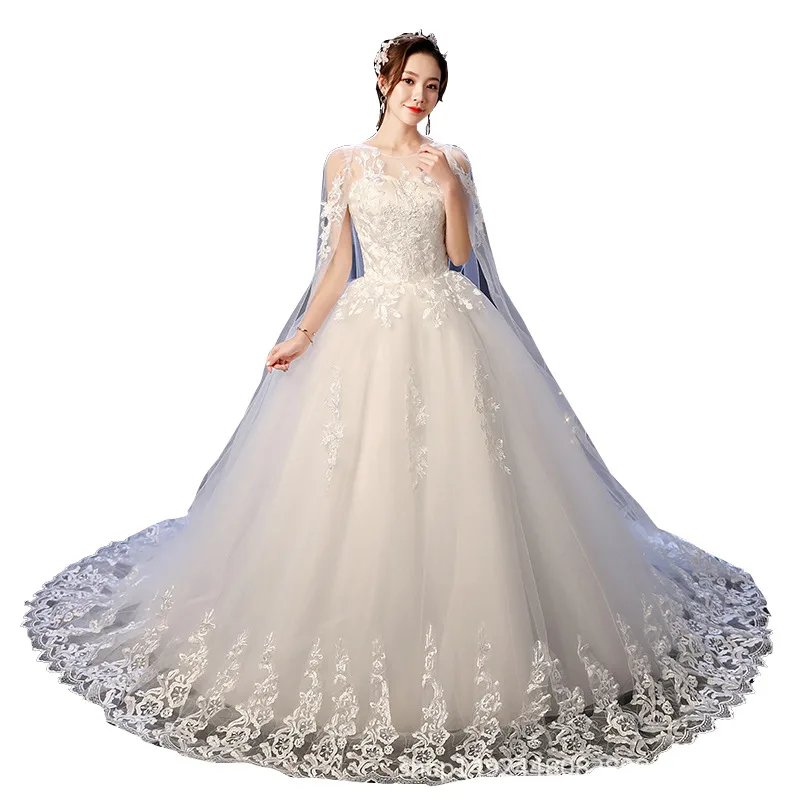
On the same terms, with a different weight of work behind them. Five pieces per style takes the veil as it is already patterned, in its listed lengths and ivory shades, which suits a boutique stocking against its gown rail. A private label run at 10 pieces per style is where lengths get adjusted and the edging lace gets swapped. The comb attachment and the edge check should read the same inside both routes. If a supplier builds the 5-piece route lighter at the comb, that sentence is worth more than the saving.
The sample veil matched the gown in the showroom and looked yellow beside it outdoors. What went wrong?
The light changed and the ivories separated, which they reliably do. Ivory is a family of warm whites, and two pieces that agree under showroom tubes can sit a full shade apart in daylight, the veil reading warmer because its tulle and lace take dye differently from the gown cloth. Nothing was mis-sewn. The match was simply made in the wrong light. Veil lace against gown lace, outdoors or at a bright window, is the only version of that check I trust, and I say that as the person who sells both sides of the mismatch.
I am asked, at the trim counter, whether a veil like this is worth its price when the materials sound so cheap in my own telling. The tulle is cheap. The lace is modest. What a buyer is actually paying for is three metres of edge with no visible join, motifs that turn two corners unbroken, a comb that stays where it was put, and a shade of ivory that agrees with a dress sewn in another building. The veil that floats in the photographs is mostly air. The price is mostly the walking of the edge, slowly, by somebody who knows where flaws hide.