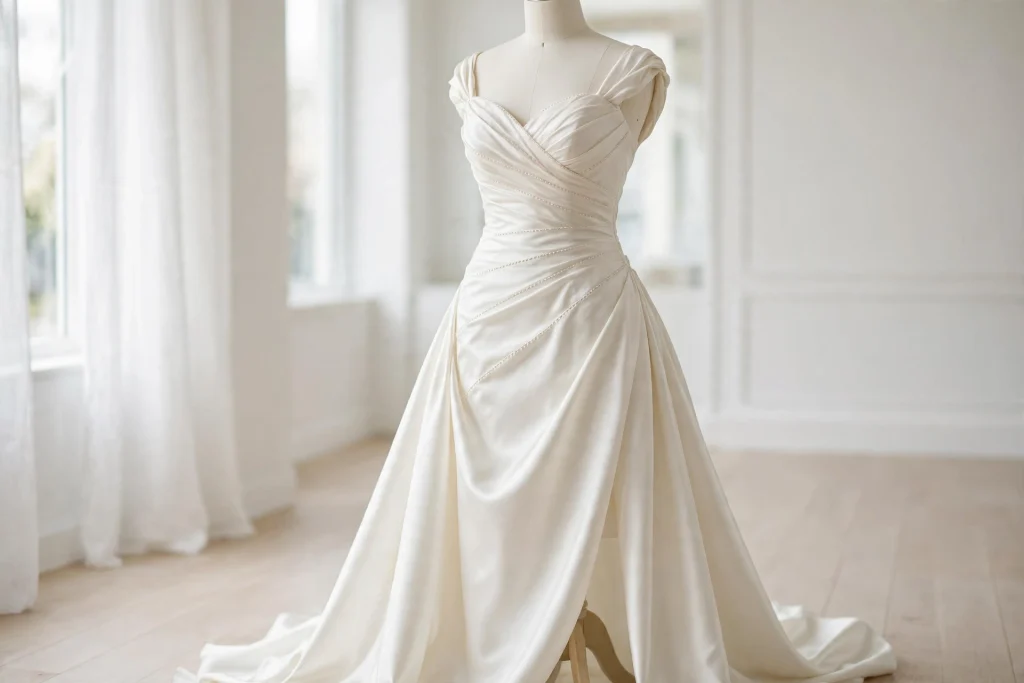
“The strap went at four o’clock,” she said. “Ceremony at five. Tell me what is in your kit that fixes a strap.” She was not panicking, which somehow made it worse. A bridesmaid who panics can be handed a chair and a glass of water. This one was doing inventory in her head, out loud, in my direction, while the bride stood very still in a dress that was deciding whether to stay up.
“Needle and thread,” I said. “White, ivory, and whatever color the dress actually is, which is never the color on the box.” She looked at me. “And if the thread snaps?” “Then the tape holds it while somebody finds a pin. And if the pin shows?” She smiled for the first time. “Then we turn her around for the photographs.” That conversation, in pieces, is the entire logic of a wedding emergency kit for a bride. Nothing in the bag is impressive. Everything in the bag is there because a specific small failure, at a specific bad hour, is only small if the fix is within arm’s reach.
Production people judge kits differently from brides. On a line, a fix that takes forty minutes is a rework statistic. At a wedding, a fix that takes forty minutes is a delay the whole room can see. The kit is a sample room shrunk into a pouch. Thread that matches, needles that can pass through layered fabric without bending into a hook, pins that close properly, tape that holds skin and fabric apart without giving up at the first dance. Every item earns its place by being boring in advance so the day does not have to be interesting.
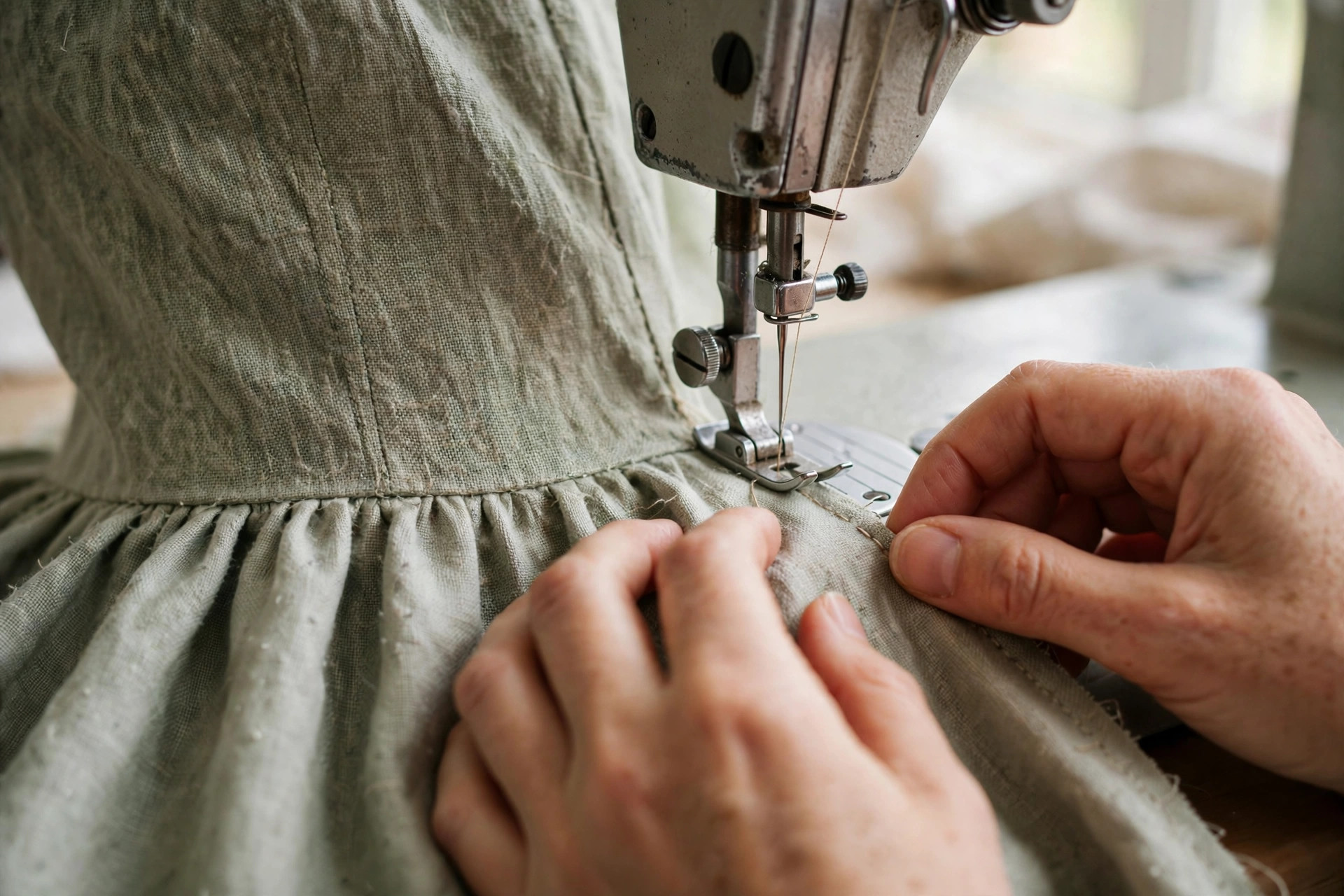
The thread question is not a detail, it is the whole ballgame, and it is the one kits get wrong most cheaply. Beading work taught the trade this the hard way. Regular polyester thread snaps under sustained load and movement, and loosened decoration two weeks after delivery traces back to thread choice again and again. A strap repair lives under the same physics as a beaded bodice, just faster. The thread in a good kit is there to hold a working seam under movement for six hours, not to look right in the pouch. If the kit thread feels like the stuff in a hotel sewing card, it is decoration, not equipment.
The conversation continues, because it always does
“What about a stain?” she asked. “Red wine, white dress, you know somebody will.” Everybody knows somebody will. The honest answer production people give is that a stain kit is a holding action, not a cure. Blot, never rub, keep the mark damp and away from heat, and let a proper cleaner meet the dress on Monday with the stain still young. What the kit can do is stop a small mark becoming a spread one in the first five minutes, when the instinct to scrub does the real damage. The wipe in the bag is not there to make the dress clean. It is there to make the dress cleanable, later, by somebody with steam and patience and chemicals a pouch cannot carry.
“And zips,” she said. She had clearly made a list before she found me. Zips fail at the waist more than anywhere, the pull angle goes sideways, a helper tugs from behind, and the slider leaves the teeth or the teeth part under the slider. A kit cannot replace a zip. What it can carry is the workaround that has saved more ceremonies than any zipper ever sewn. Safety pins in two sizes, pinned from inside so the metal hides, plus a strip of fashion tape above and below the pinned section so the fabric does not gape between pins. It is not elegant. From three meters, in photographs, it reads as a dress. Elegance is a distance game and weddings are mostly played at a distance.
She asked about pain next, which surprised me until I thought about shoes. A bride’s kit that ignores feet is a kit designed by somebody who sat through the wedding. Blister coverings weigh nothing and decide whether the first dance happens on the dance floor or at a table with shoes off under it, which the photographs will find either way. The same goes for the small pharmacy corner of a serious kit, headache tablets where local rules allow them sold as such, mints, a straw so lipstick survives a drink. None of this is glamorous. The glamorous version of the kit is the one in styled photographs, all pastel and calligraphy, and it usually omits the pins, which tells you who styled it and who has actually stood behind a bride at four o’clock with a strap in their hand.
Rework rates on beaded bodices run 12 to 18 percent after a first quality pass, mostly loose centers and small fixable things, and that number should calm brides rather than worry them. It means small failures are normal in complex garments, expected by the people who make them, planned for. A wedding dress is among the most complicated garments a person will ever wear, boning, layers, closures, decoration, a train with its own weather system. Planning for a loose thread or a tired zip is not pessimism. It is the same respect for the garment that the workshop showed when it spot-checked one piece in twenty and pulled each cluster with a measured tug before the dress was allowed to leave.
“So who carries it?” That was her last question and the best one. The kit fails most often by address, not by contents. It sits in a hotel room while the wedding is in a garden. It rides in the bride’s car while the bride is in the venue’s car. It is complete, labeled, photographed for the planning album, and forty minutes away when the strap goes. The shops that sell dresses alongside kits, the kind listed in the wedding dress wholesale catalog where bridal styles move at five pieces per style wholesale and single custom pieces are made one at a time, hear the same story from stockists every season. The kit was perfect. The kit was elsewhere. Put it in the bridesmaid’s bag, the one bag that follows the bride from room to room, and half the emergencies in the world quietly stop being emergencies.
There is also a version question nobody raises. Kits age. Tape loses its grip in a warm drawer over a summer. Wipes dry out sealed, which feels like a betrayal of physics but happens anyway. Thread is immortal, pins rust slowly if the pouch ever got damp, elastic gives up quietly. A kit bought for a wedding that was postponed, or handed down from an older sister’s wedding with love, deserves a ten-minute audit before it is trusted. Open everything. Bend the needles. Pull the tape off its backing once. The audit is dull and that dullness is the entire difference between a kit and a souvenir.
Brides ask whether to build their own or buy one assembled, and the honest production answer is that the assembled kit wins on the items nobody thinks of and loses on the one item that matters most, thread matched to the actual dress. A seller cannot know your shade. Ivory alone runs across a dozen card variants in the dye trade, and under warm venue light two ivories can read as different colors entirely. So buy the pouch for the pins, the tape, the wipes, the blister covers, then add your own thread, snipped from the dress’s own seam allowance or matched at a fabric counter in daylight, plus a spare button or bead set if the dress came with one in a tiny bag that somebody, at some point, nearly threw away.
No wait. I told her the pins should be two sizes, and standing there I would have said three if the dress had a train, because a failed bustle is a pinning job of a different scale. Bustle points carry the whole weight of a train on a loop and a button, and when one lets go the fix is not delicate, it is structural, big pin, inside, through more layers than feels reasonable. Kits that include only small pins have never met a train at midnight. Add the large pins. The pouch will not notice the weight, and the bridesmaid on her knees behind the dress, working by phone light, will notice nothing else.
Studios that handle fittings every week tend to assemble their own bench version of the same pouch, thread cards matched to the dresses on their own rails, which is why the retail kit always looks slightly generic by comparison. The generic kit is a starting grid. The dresses in the OEMOD Factory wholesale catalog each come with their own closures, their own shades, their own tempers, and the kit that serves a shop floor is built dress by dress, not bought once in a pastel box. A bride can copy that logic at home scale. One pouch, audited, plus the three things matched to her one dress. That combination beats any deluxe edition ever photographed.
What she asked me afterwards
Thirty-odd pieces in the pouch. How many of them will an ordinary wedding actually use?
An ordinary wedding uses maybe five pieces, and usually the same five, pins, tape, a wipe, a blister cover, and the needle nobody expected to need. The rest is insurance, and insurance always looks like waste on the quiet days. I get anxious about couples who trim the kit down to what they expect to use, because the expected failures are the ones people can already improvise. The kit exists for the failure nobody rehearsed, the bustle, the zip, the strap at four o’clock. Keep the pieces you cannot improvise out of a handbag, that is the whole list that matters, honestly.
The dress shop offered a kit at the till for almost nothing. Is the cheap one a trap?
The cheap one is not a trap, it is a starting pouch with the two weak points cheap kits always have, thread that is more decorative than strong and tape that gives up early in warm weather. Both can be upgraded for pennies, which is exactly what I would do rather than paying five times more for a styled box with the same pins inside fancier cardboard. Check the needle quality while you are at it, a needle that bends on layered fabric is worse than no needle because it eats time. The trap is not the price. The trap is trusting any kit, cheap or grand, without opening it first.
Her wedding is in seven days. Is there still time to put a proper kit together?
Seven days is plenty of time, the audit and the additions take an evening, not a season. Match the thread in daylight, add large pins for the train, move the pouch into the bag that will follow the bride, and tell one bridesmaid, by name, that the kit is her job. That last part is the piece people skip and it is the piece that decides whether the pouch gets opened calmly or searched for in a panic across three hotel rooms. I still worry about the weddings where everybody owns the kit in general. Somebody has to own it in particular, or it belongs to nobody at four o’clock.
She fixed the strap, in the end, with the needle from the kit and a hand that only shook a little. The ceremony started six minutes late, which in wedding time is early. I think about that pouch more than I think about most dresses I have handled, because the dress got the applause and the pouch did the work, and nobody photographed the pouch. That ratio bothers me in a way I have not quite shaken.