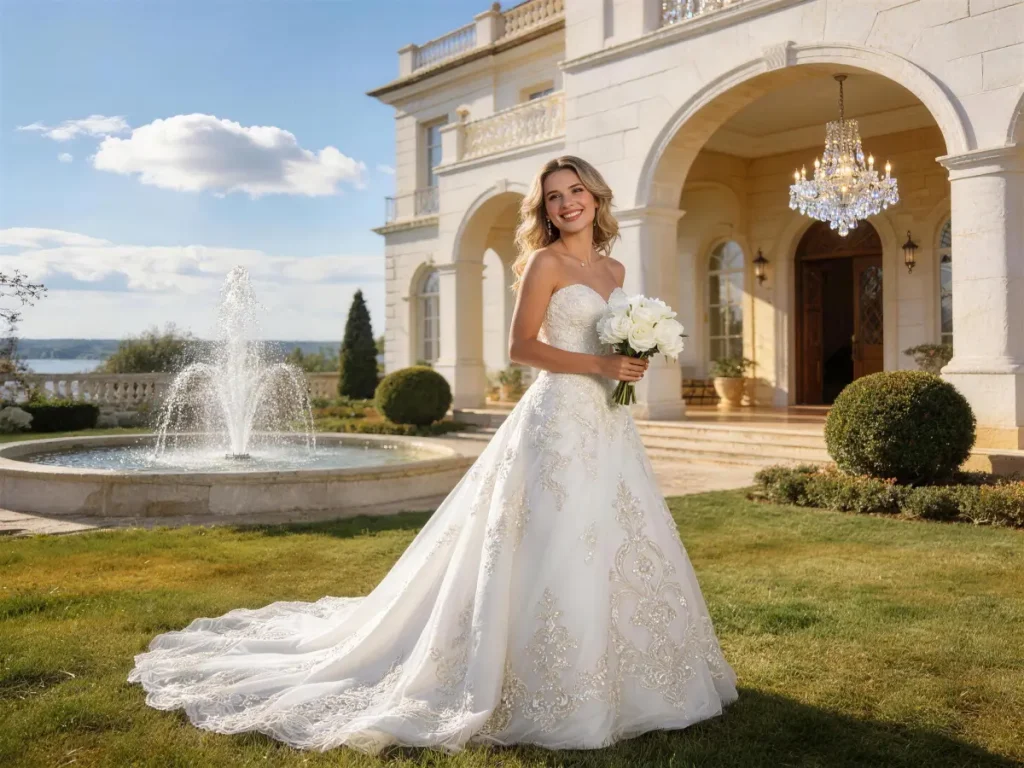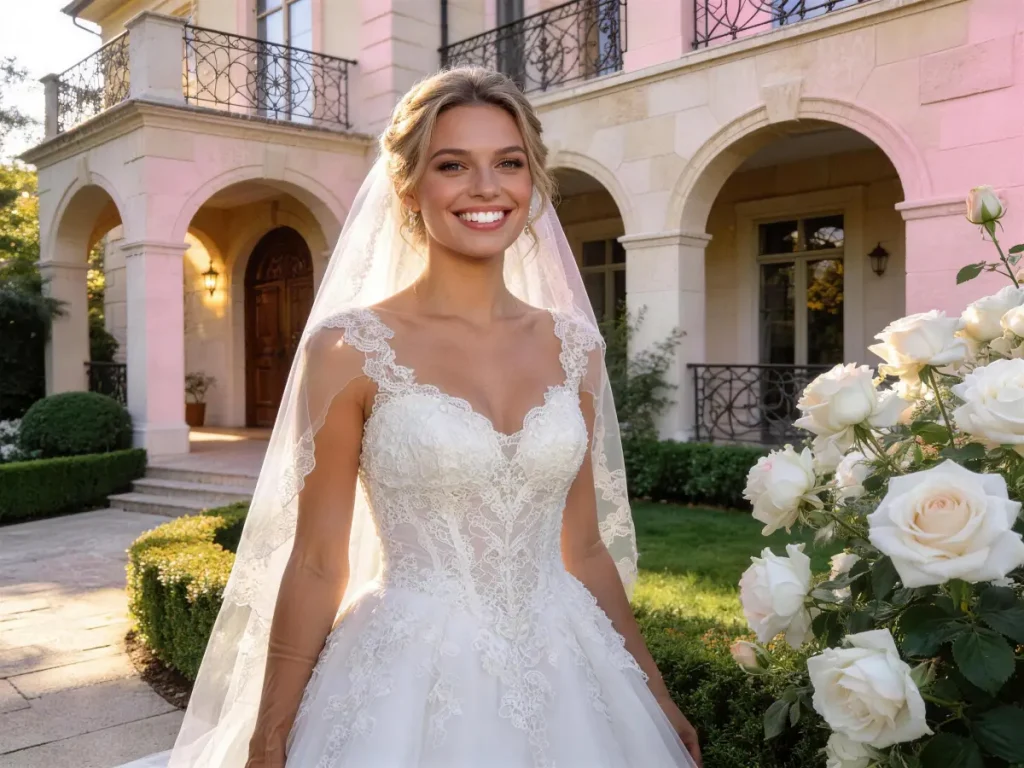
What does a faux fur wedding shawl actually cost, asked as a money question rather than a shopping question? The honest answer is a spread so wide it looks like an error. Across the major platforms, a wrap described with nearly identical words, faux fur, wedding, shawl, bridal, runs from under fifteen dollars to well past eighty, with the photographs at both ends showing a smiling woman in a soft ivory stole over a gown. The payment side of this trade watches spreads like that the way other people watch weather. A spread that wide means the product name is carrying several different products, and the money moving through the category is being divided by things the listing titles refuse to mention.
So what is the first thing the money knows that the title does not? Pile. Faux fur is not one material with one price. The soft, dense, expensive-feeling stoles are built on longer, finer fibers, often modacrylic blends, laid thick enough that you cannot find the backing cloth with a fingertip. The cheap end is a short acrylic pile on a thin woven backing, and the backing is the tell, because you can feel it the moment the shawl bends. Fiber cost per piece differs by a factor of three or four between those two builds, and the photograph difference between them rounds to nothing. A camera sees shape and color. It cannot see density, and density is where the money went.
Why do the ratings not sort this out, then? Because the rating distribution in this category has a shape the data side learns to distrust. The average sits comfortably above four stars at almost every price point, and the complaint clusters, not the averages, carry the information. On the budget builds the one-star language gathers around shedding, a chemical smell out of the bag, and the shawl looking thin from the side. On the higher builds the complaints change their subject entirely, to warmth being too much indoors, to the stole sliding off shoulders, to color, ivory reading warmer than the gown. Same category, two different products, two different arguments. The first product’s buyers are arguing about manufacture. The second product’s buyers are arguing about taste. Money can hear the difference even when a star average cannot.
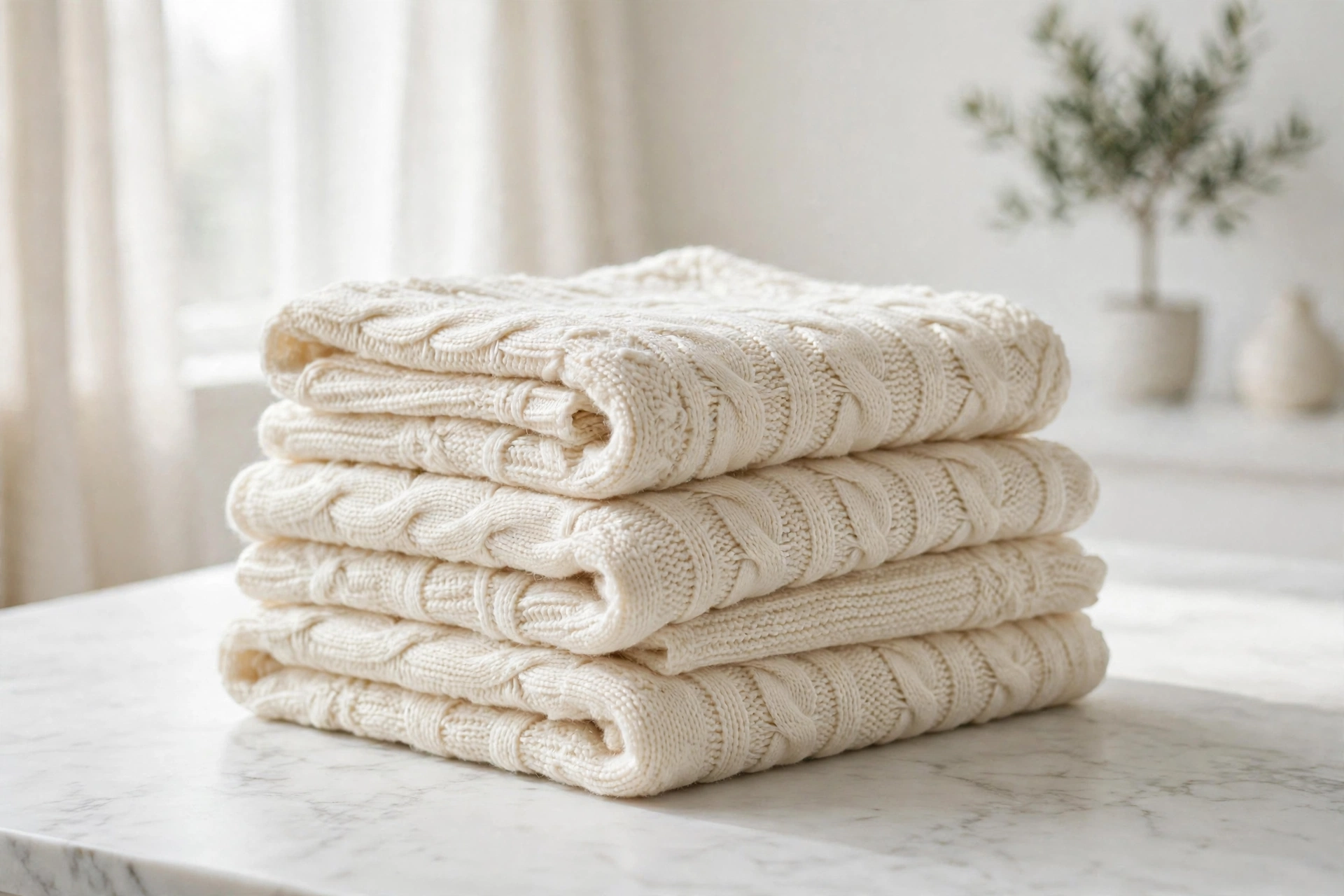
What does shedding actually cost, in ledger terms? A shawl that sheds onto a wedding gown creates a cost that never appears in any transaction record. It appears as a salon assistant with a lint tool, as a bride’s mother picking fibers off a bodice in a venue bathroom, as a photographer retouching. The buyer paid twelve dollars less for the wrap and the saving was spent by other people, in minutes, at the most expensive hourly rate in the entire wedding economy, which is the rate of time on the day itself. The finance side has no column for that. It is still the real price difference between the two builds, and everyone who works weddings knows it in their hands even though no invoice will ever confess it.
And the smell? The chemical note that reviewers mention on budget faux fur is a backing and finishing story, the adhesives and treatments on a thin base cloth, aired out of a sealed bag after weeks in transit. It fades with airing, usually, and a shawl bought a month ahead airs in a wardrobe and arrives at the wedding innocent. A shawl bought the week of the wedding carries the warehouse with it. This is why the same product can collect reviews saying no smell at all and reviews describing a gasp on opening, from buyers who did nothing differently except order on different dates. Timing is an ingredient. Nobody lists it in the materials, but the money side sees it in the return timestamps, which cluster cruelly in the last ten days before popular wedding dates.
What would the numbers say a store should stock?
Ask the question as a buyer and it sharpens. A boutique serving winter weddings does not need the whole spread. It needs to know which build its customers will judge kindly, and the data hints at an answer that feels wrong until you sit with it. The mid-priced builds, not the cheapest and not the dearest, tend to collect the calmest complaint profile, because their buyers’ expectations were set by a price that promised decent and delivered decent. The deepest disappointment in this category lives at the boundary where a budget build is priced like a mid build, photographed like a premium one, and reviewed like the fraud that combination is. Price is a promise before it is a number. The returns are just the promise being audited.
What about warmth, since a shawl is supposedly for warmth? Here the data and the body disagree in an interesting direction. Review language about being warm enough clusters on the mid and upper builds, but a share of wearers of even the densest stoles report cold shoulders at the exact moment the shawl matters most, outdoors, in wind, standing still for photographs. A stole covers the shoulders it touches. Wind treats it as a suggestion. The brides who report being genuinely warm tend to be wearing the wrap over sleeves, or standing in the short gap between a car and a door. The lesson the money side draws is that this product is bought as a photograph with a warmth alibi, and priced accordingly by everyone, which is not cynicism, it is just the category admitting what it is. Sellers in the wedding dress wholesale catalog trade move wraps as companions to gowns for exactly this reason, an accessory completing a look, with the cold kept at bay for the twenty minutes it truly threatens.
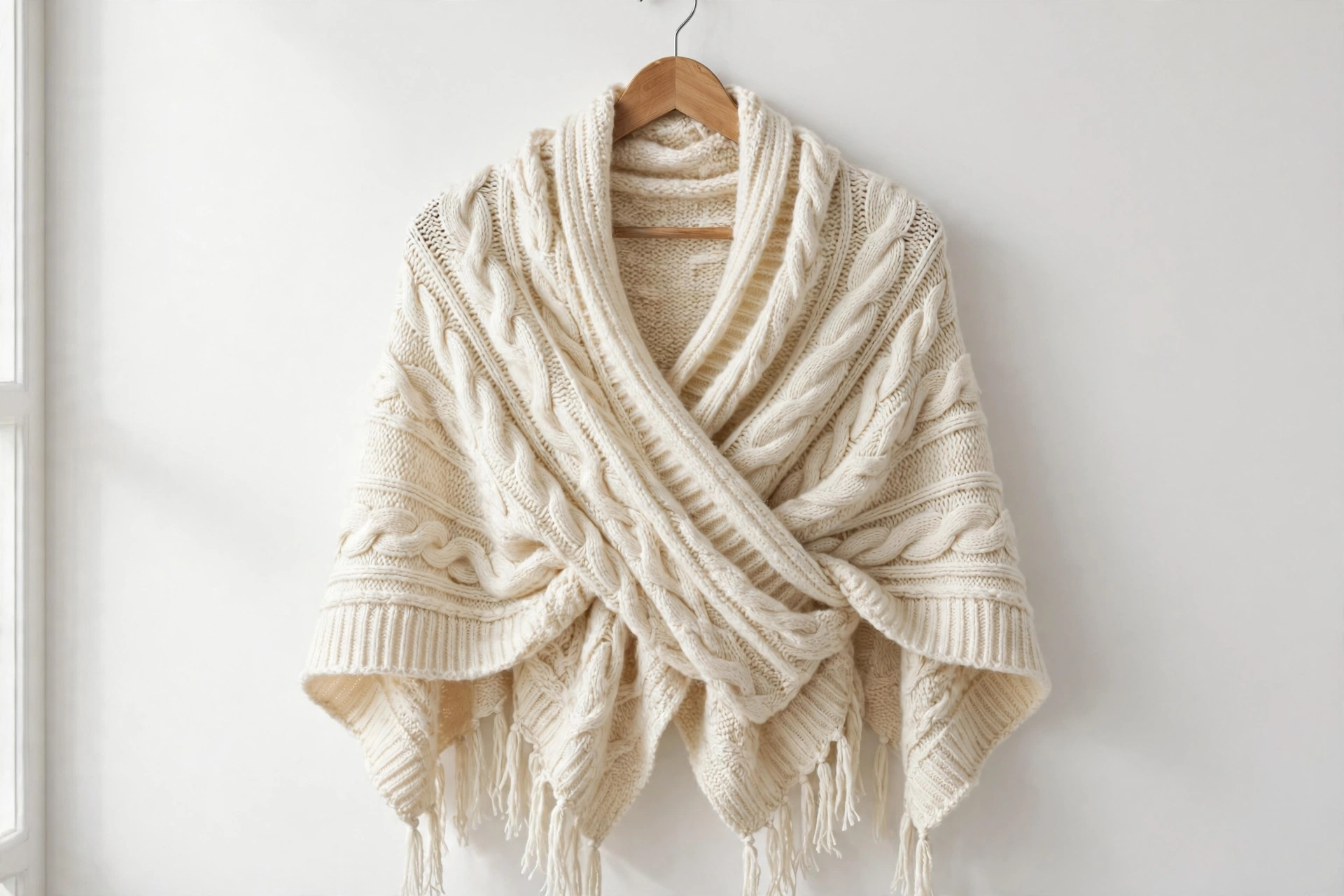
Is there a version of this purchase that the finance side would call genuinely well made? Yes, and it has a recognizable shape. The buyer chooses the build by fiber and backing, by touching one or reading reviews for the words dense and thick rather than soft, because soft is free to claim and density is expensive to fake. The order is placed with airing time in it. The color is chosen against the actual gown, in daylight, because faux fur ivories drift warm and a gown’s ivory is a specific country, not a continent. And the piece is bought where a return is possible without a quarrel. That is not a romantic way to buy a wedding accessory. It is merely the way that survives arithmetic.
No, I am leaving something out, and it is the wholesale shape of the thing. A store buying wraps for a season faces the same spread as a bride, one level up, with minimums attached. Wedding range accessories ride along with the gown trade’s habits, where catalog wedding styles open at five pieces per style for wholesale with colors and sizes mixed, and a wrap bought in a small run like that can be checked piece by piece for the backing tell before it ever meets a customer. Five shawls can be inspected in four minutes. Five hundred cannot, not really, they can only be sampled, and the piece that sheds onto a gown will not be in the sample. Small runs are not just a convenience in this category. They are a quality system disguised as an order size, and the finance side, which usually argues for volume, makes an exception here without being asked twice.
And what does the shawl cost per wearing, in the end?
Run the number the way the money side runs everything and the category flips again. A wedding shawl is worn once by its buyer, mostly. Cost per wearing equals the price, all of it, which makes an eighty dollar stole an eighty dollar hour of warmth and a twelve dollar wrap a twelve dollar one. By that math the budget build wins and it is not close. But the math is lying by omission, because the expensive wrap gets lent. It goes to a sister, a friend, a daughter, it appears in other people’s photographs for a decade, because a dense faux fur stole reads as an heirloom object in a way a thin one never will. Cost per wearing across a family can drop under the cheap wrap’s single outing. The ledger has no family column either. The shawl does not care. It just keeps turning up in photographs, warm side out, while the payment side of the trade keeps insisting the transaction ended at the checkout, and keeps being wrong in the same direction every winter.
The same mispricing shows up wherever this category touches the wider women’s range, in the wraps and cover-ups sitting alongside dresses in the factory catalog of ready women’s styles, where existing styles open at ten pieces per style and the accessory pieces are forever being judged as afterthoughts by people holding spreadsheets. An afterthought that photographs on the bride’s shoulders in every picture is not an afterthought. It is the frame.
Three money questions this shawl always raises
The cheap one and the dear one look the same in photos. Where did the money actually go?
Into fiber length, fiber density, and the backing cloth, in that order of expense. A longer, finer pile costs more per piece before anyone sews a seam, a dense lay of it costs more again, and a backing with enough body to drape instead of crackle is a third cost hiding under both. What the money did not go into, at any price, is the photograph, which is why the photographs tie. If you can only check one thing on a sample, push a fingertip down through the pile and hunt for the base cloth. Finding it instantly is the budget build confessing. Having to search is the dear one explaining itself, quietly, in the only language it has.
It shed on the gown during the first wear. Is that a defect or just the product?
Some loose fiber on a first wear is the product settling, and a gentle shake and air before the day takes most of it away from any build. Shedding that continues through the event, fibers transferring every time the stole moves, is the budget backing letting go of a short pile it never held properly, and that I would call a defect in everything but the seller’s description. The distinction matters to a store deciding whether to reorder, because the first kind disappears after one wear and the second kind writes reviews forever. Brides, reasonably, do not care about the distinction at all, and the finance side notes that the refund argument is usually won by whichever side kept the packaging, which is a sad little sentence about how this trade settles truth.
Five pieces wholesale for a wrap a store might sell twice a month. Does that math ever work?
It works when the wrap is sold as part of the gown conversation rather than as a lonely accessory waiting for a stranger. A winter bride already in the store, already cold at the thought of the photographs, converts at a rate no passing trade matches, and the five pieces sit beside the gowns doing quiet work as props in fittings even when they are not sold, showing a bride her own shoulders finished. Stock that helps sell other stock earns its shelf in a way a spreadsheet isolates badly. Whether five is the right number for a given store depends on its winter calendar, and I notice the stores that ask this question in October have usually already answered it too late for December, which is its own kind of data.
What remains unresolved, after all the spreads and clusters and per-wearing arithmetic, is embarrassingly simple. Nobody in this category, at any price, is selling warmth. They are selling the look of being cared for, a soft weight across the shoulders that says someone thought about the cold on her behalf. The money side can price fiber and backing and freight to the cent and still not touch that, and on balance I have stopped finding that frustrating. Some line items are honest about being feelings. The shawl, at least, is warm while it pretends, which is more than can be said for most of the wedding budget, starting with the flowers, which are not even pretending.