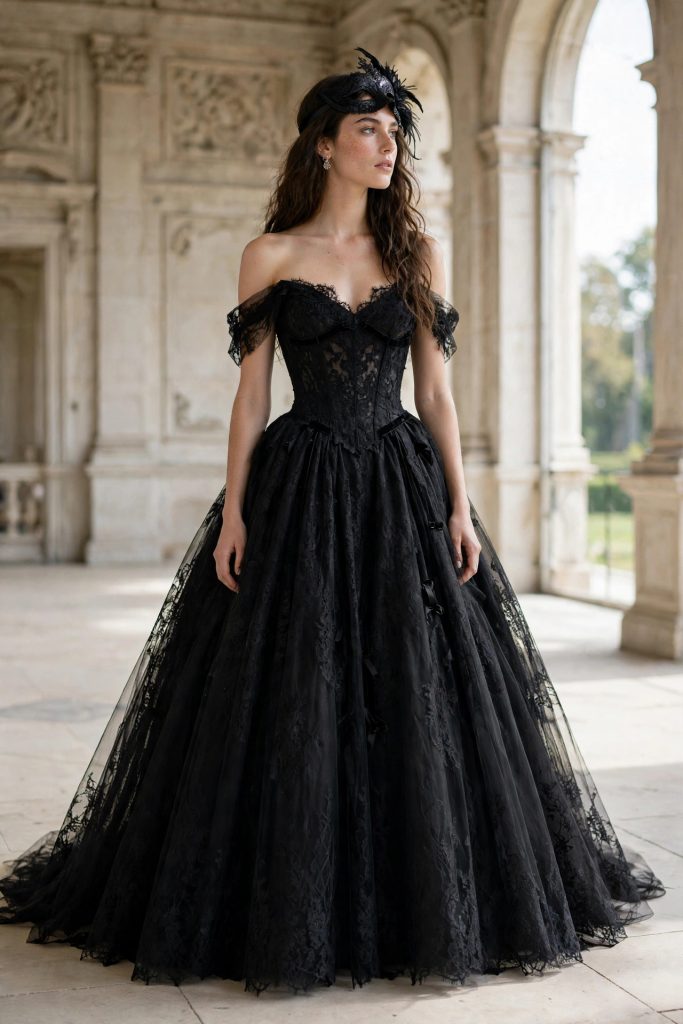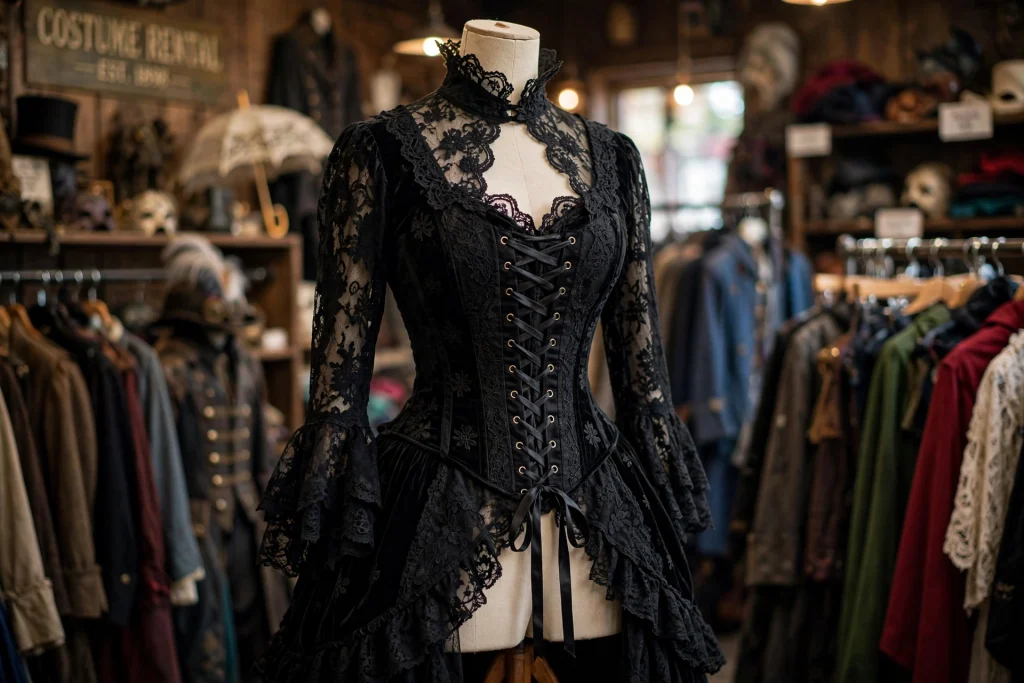
Every October the same thing happens to black tiaras, and I have watched it from the returns side often enough to find it funny, mostly at myself. A piece that sells politely all year as a bridal accessory becomes, for about five weeks, a costume anchor, and the buyers change completely. The bride wanted weight, finish and a comb that grips. The Halloween buyer wants silhouette at two metres in bad light. The reviews written by each group about the identical tiara read like reports from two different products, because they are. Same crown, different job.
The finish is where the two jobs collide. Black tiaras are rarely black metal all the way through; they are plated or coated, and the coating’s behaviour at the comb teeth and the band ends decides whether the piece survives a season or a single evening. Bridal buyers discover wear slowly, at the points where the band meets hair product and handling. Costume buyers discover it immediately, because a costume tiara gets packed in a bag with shoes. A finish that photographs identically in both listings can be two different thicknesses of coating, and the only honest product information in the whole category is what happens at the edges after a month. Nobody photographs the edges. I photograph the edges. It is less a philosophy than a scar.
It belongs on the same gothic-bridal rail as the short two-tier bridal veil review and the darker end of the wedding dress wholesale catalog, where black accessories do the work that ivory does elsewhere, and it should be merchandised with those pieces rather than with the fine jewellery it imitates.

Sizing is the category’s quiet fraud, and I include my own past listings in the indictment. One size, in tiara language, means the band fits the head it was moulded on and negotiates with everyone else. A crown’s comfort is decided in the last centimetre, where the band ends either float, grip, or dig, and that centimetre interacts with hairstyle more than with head size: an updo lifts the band, loose hair lets it slide, and the comb placement that saves one arrangement ruins the other. The reviews that say it would not stay on are rarely about a defective tiara. They are about a band meeting a hairstyle it was never measured against, in October, at a party, where the wearer had one hand for adjustments and a drink in the other.
None of this makes the pieces bad. A black tiara is a dramatic object that costs little, photographs far above its price, and does a job, gothic bridal, Halloween, stage, that almost nothing else in the accessories drawer can do. The mistake is buying it as jewellery when it is sold as millinery, or the other way round. Read the listing for the band construction and the comb, not the stones; the stones are glass or crystal-effect and their sparkle is the one thing every price point gets right. Read the reviews by season, and weight the October ones for durability and the June ones for comfort, because each crowd tested the half of the product the other crowd forgives.
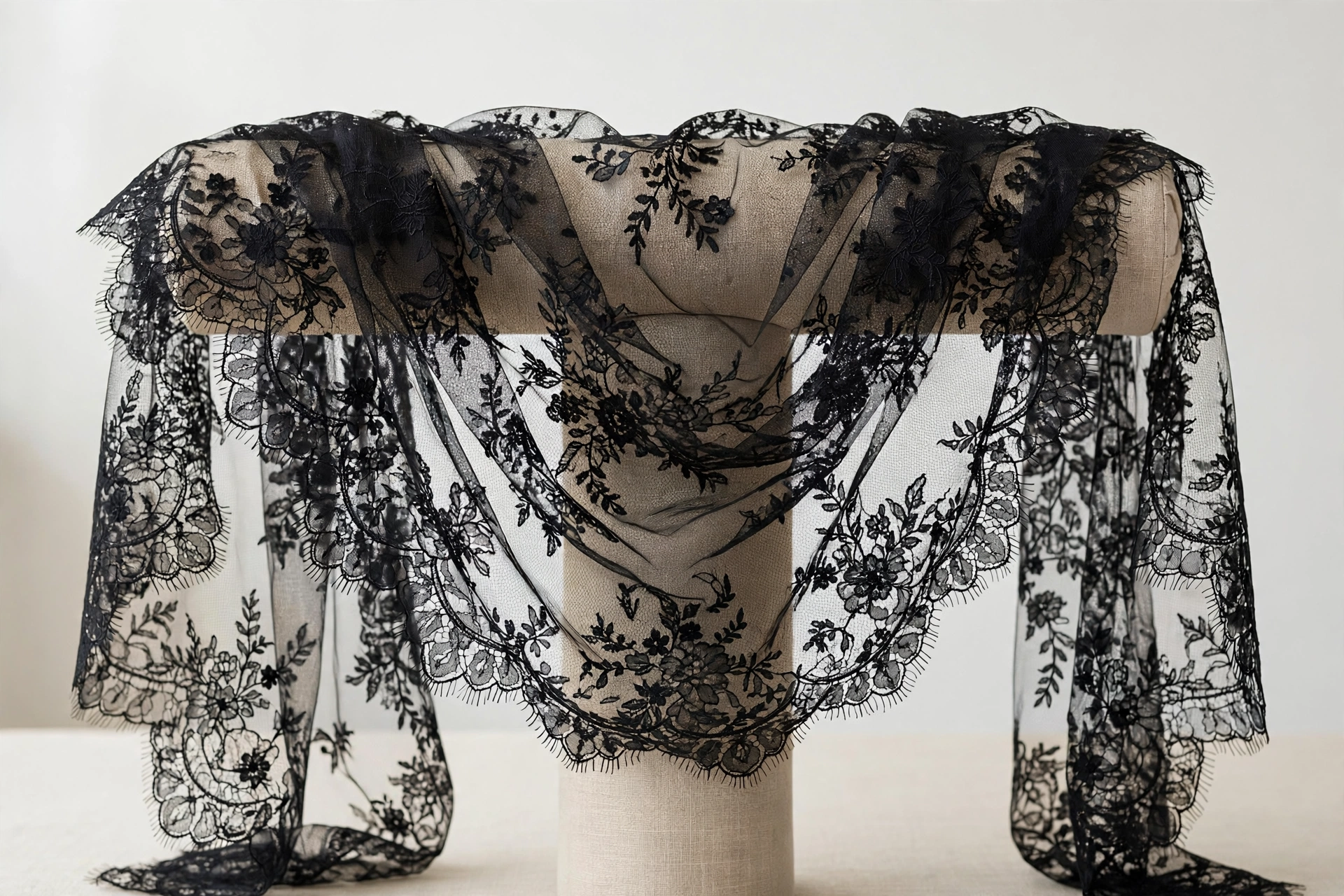
If I ran the wall, and some seasons I effectively have, I would stock two blacks and no more: one honest costume piece priced to be worn hard for a month, and one better-finished bridal piece with a real comb and a coating that survives handling, and I would let the shelf talker say which is which. The category’s disappointments are nearly all expectation errors, a costume budget spent hoping for bridal finish, or a bridal budget spent on a piece built for five weeks of glory. Both errors are preventable at the listing, which is another way of saying the listing is where they are caused.

Frequently Asked Questions
Why do black tiaras lose their finish so quickly?
Because most are coated or plated rather than black metal throughout, and the coating wears first where it is thinnest and most handled: the comb teeth, the band ends and any point that rubs against hair product, skin or a storage bag. A piece worn for one careful wedding can look new for years; the same piece packed loose with costume accessories can show bright metal at the edges within a month. Storage decides as much as manufacture. Kept in its box, separated from harder objects, a mid-range finish lasts. The listing photographs will never show you the edges, which is precisely where to look when the piece arrives.
How do I keep a tiara from sliding or digging in?
Fit it against the hairstyle, not the head. An updo lifts and anchors a band differently than loose hair, and most one-size bands are moulded to a single compromise position. Use the comb as the anchor and the band as the frame: seat the comb first, then settle the band, and add two crossed pins through the band ends if the style allows. Digging usually means the band ends are carrying weight they should share with the comb; sliding usually means the comb has nothing to grip, which a little backcombing at the anchor point fixes. Test the full arrangement for an hour at home. A tiara that survives an hour of housework survives a reception.
Are Halloween tiaras and bridal tiaras the same product?
Often the same factory output, sold into two expectations. The construction overlaps heavily: a band, a comb, glass or crystal-effect stones, a black coating. What differs is the finish thickness, the comb quality and the price the channel can bear, and those differences are invisible in listing photographs. October reviews test durability under rough handling; bridal reviews test comfort over long wear. If you want one piece to do both jobs, buy the better-finished bridal version and handle it like jewellery, rather than buying the costume version and hoping. The price gap between the two is mostly coating and comb, which is to say, mostly the things that fail.