Twenty inches of tulle is the smallest bill of materials in the bridal industry, which is exactly why a short veil is the purest pricing lesson in it. The fabric in a short veil costs very little; the comb costs a little more; so when one short veil sells for nine and another for forty, the buyer is not paying for material — she is paying for the cut, the gathering, and how honestly the work was done. The brief tulle veil assessed here, the standard short style often sold under the Nanchor name, is as simple as the category gets: a shaped piece of soft tulle, gathered onto a comb, worn for courthouse weddings, city ceremonies and brides who want the outline of tradition without the train of it.
Where the money goes in twenty inches
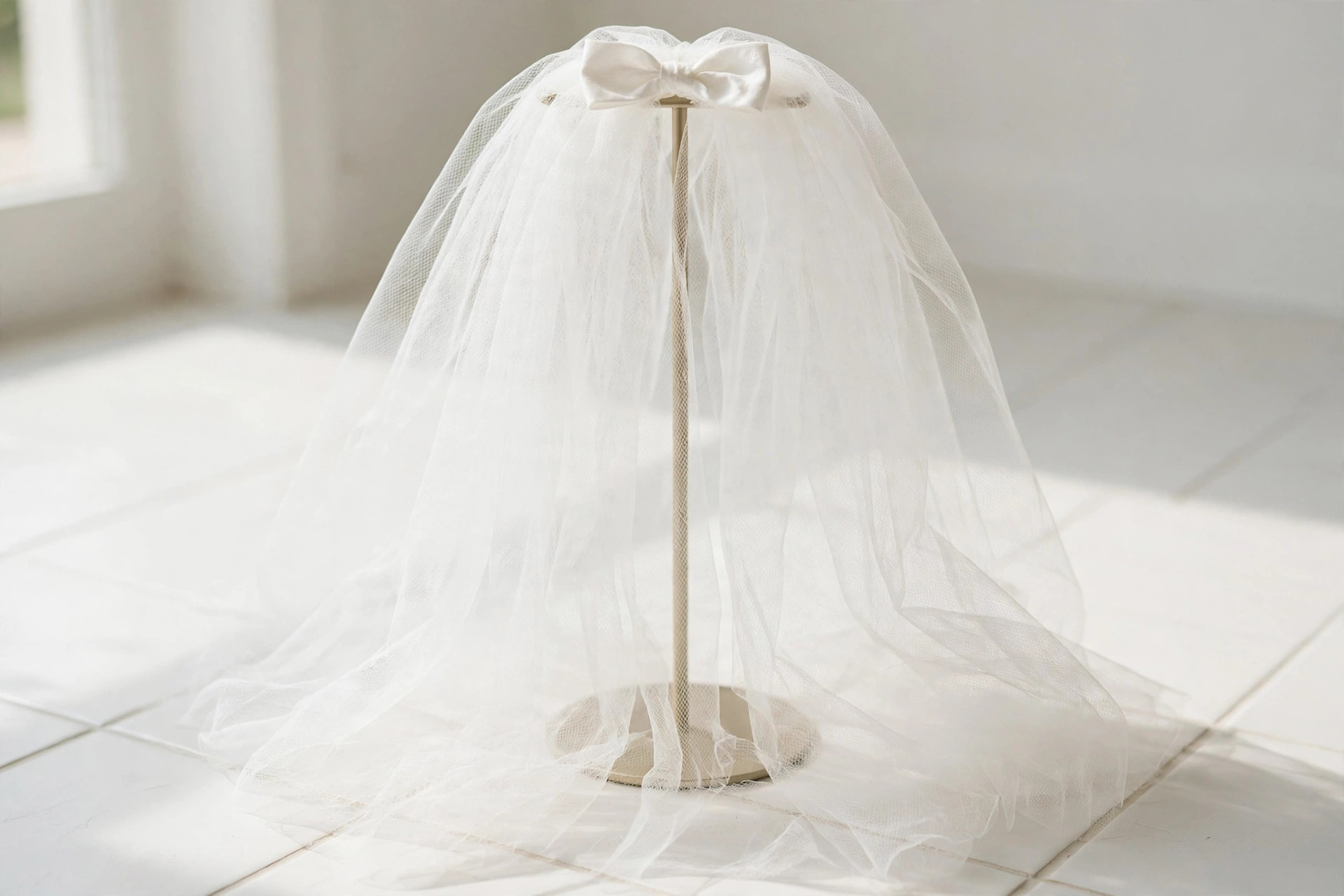
Start with the edge, because on a short veil the edge is the product. There is so little fabric that the bottom curve is the silhouette, and it is either cut clean — a smooth line that holds its shape when the veil moves — or it is cut wavy and curls at the corners, a flaw that shows in every profile photograph. A cut edge should also be honest tulle all the way: some cheap veils are edged with a stiff binding that photographs like a wire. Second is the gathering. The tulle is bunched onto a comb roughly eight to ten centimetres wide, and even gathering gives the veil its soft bell; bunched gathering gives it a lopsided puff on one side that no steaming fully corrects. Third is the comb itself. Metal combs grip and can be sewn in firmly; plastic combs flex, slip in fine hair, and snap at the teeth — and a veil that slides during the ceremony is a veil in the bride’s hands in the photographs.
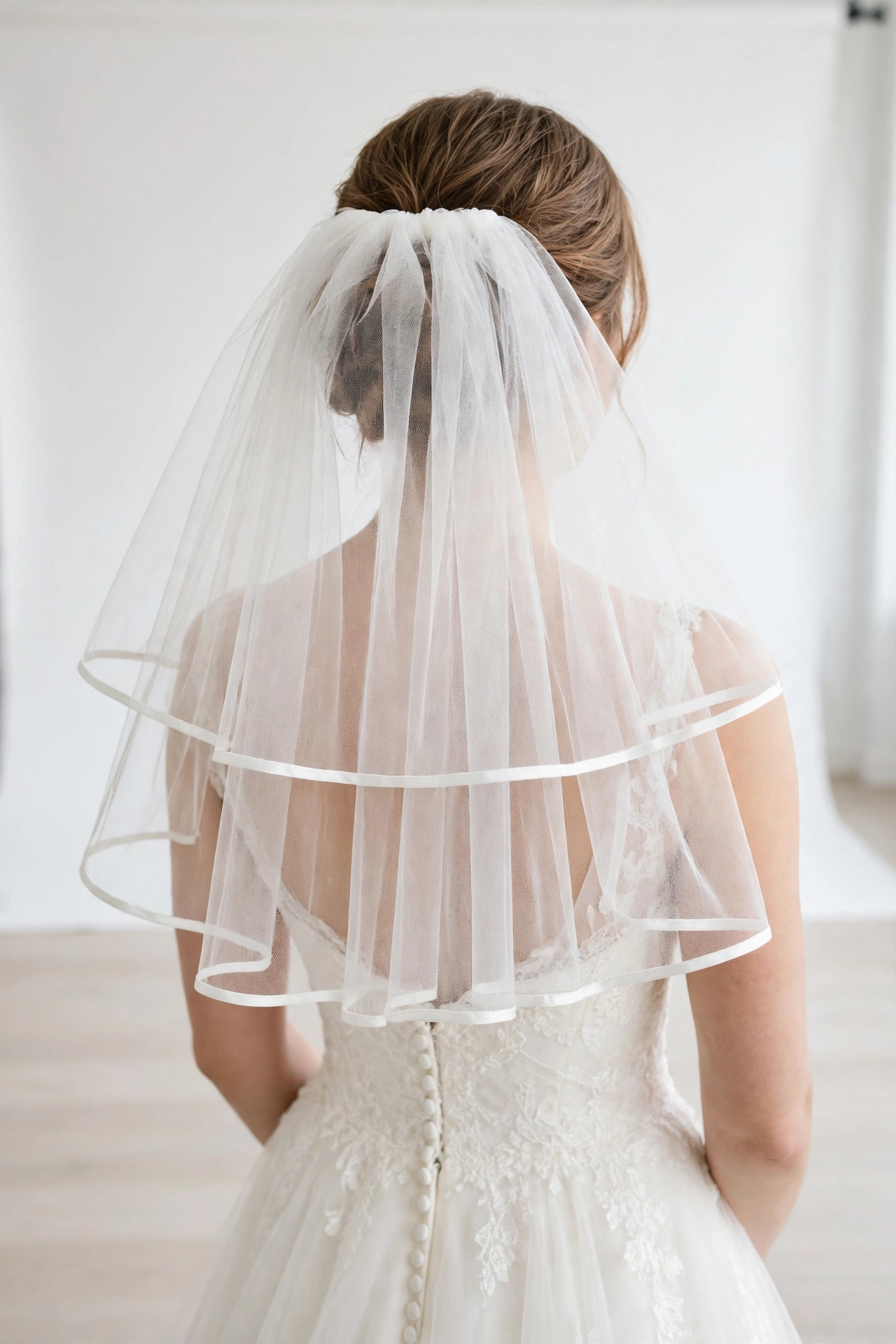
The tulle grade is the quiet fourth item. Bridal tulle should be soft and matte, falling rather than standing. Stiff, shiny net is cheaper by the roll and reads cheaper in daylight, holding a veil out at an angle like a lampshade. Rub a corner between finger and thumb: soft tulle is nearly silent and drapes back flat; stiff net crackles and keeps the fold. None of these four things — edge, gathering, comb, tulle grade — costs much individually. Together they are the entire difference between the nine and the forty, which is a fair spread when the work is real and a pure markup when it is not.
The Black Friday lens: what a discount can and cannot change
Sale season rearranges veil pricing in a way worth understanding. A short veil’s costs are mostly labour and handling, not fabric, so a genuine discount usually means a maker clearing a length or a colour — the white that did not move, the blush that did. That is the good kind of sale: the same work, a lower margin. The bad kind is the quiet spec change, where the sale version ships with the plastic comb or the stiffer net and the listing photos never change. The defence is the same four checks on arrival, done while the return window is open: edge line against a window’s light, gathering symmetry held at arm’s length, comb material by a gentle flex, tulle by the rub test.
Length honesty is the last line item. Twenty inches should be measured from the comb, and it should land at the shoulders as described. A veil that arrives at seventeen inches was not cut short by accident — at this scale, three inches is fifteen percent of the product. Measure on arrival. It takes ten seconds and it is the difference between the veil in the photographs she planned and a smaller one she settled for.
The comb on this veil is the same hardware graded in the pearl and rhinestone hair accessory set, where the weld check decides whether an accessory survives its own removal — and the audit-on-arrival habit behind the four checks here is the same one that keeps a store’s emergency stock honest in the JUNING portable sewing kit review piece.

Questions buyers and stores actually ask
Why do short veils vary so much in price when they use so little fabric?
Because the fabric is the smallest cost in the product. The price difference sits in the work: a cleanly cut edge that holds its line, even gathering onto the comb, a metal comb that grips, and soft matte bridal tulle instead of stiff shiny net. A nine and a forty veil can use near-identical yardage. What separates them is whether those four jobs were done, and all four can be checked in a minute on arrival.
Is a metal or plastic comb better on a short veil?
Metal, for almost every wearer. A metal comb grips, can be sewn in firmly, and survives being repositioned by a stylist. Plastic combs flex and slip in fine hair, and their teeth can snap — usually discovered during the ceremony. If a veil arrives with a plastic comb, that single part tells you where the maker chose to save money, and it is the part the whole product hangs from.
How do I check a veil bought on sale before the return window closes?
Four checks. Hold the edge against window light and look for a smooth, uncurled line. Hold the veil at arm’s length and confirm the gathering falls symmetrically. Flex the comb gently to confirm it is metal. Rub the tulle between finger and thumb — soft bridal tulle is quiet and drapes flat, while stiff net crackles and keeps a fold. Finally measure from the comb: a twenty-inch veil should arrive at twenty inches.
What length is a short bridal veil, and who does it suit?
Short veils run roughly twenty inches from the comb, landing around the shoulders. The length suits courthouse and city ceremonies, shorter dresses, and brides who want the outline of a veil without managing a train. Because there is so little fabric, every detail is visible — which is why the edge, gathering and comb checks matter more on a short veil than on a long one, where length forgives flaws.
A short veil is a fair product when its four small jobs are done properly, and an overpriced one when they are not, whatever the season’s banner says. Check the edge, the gathering, the comb and the hand of the tulle — the price will explain itself after that.