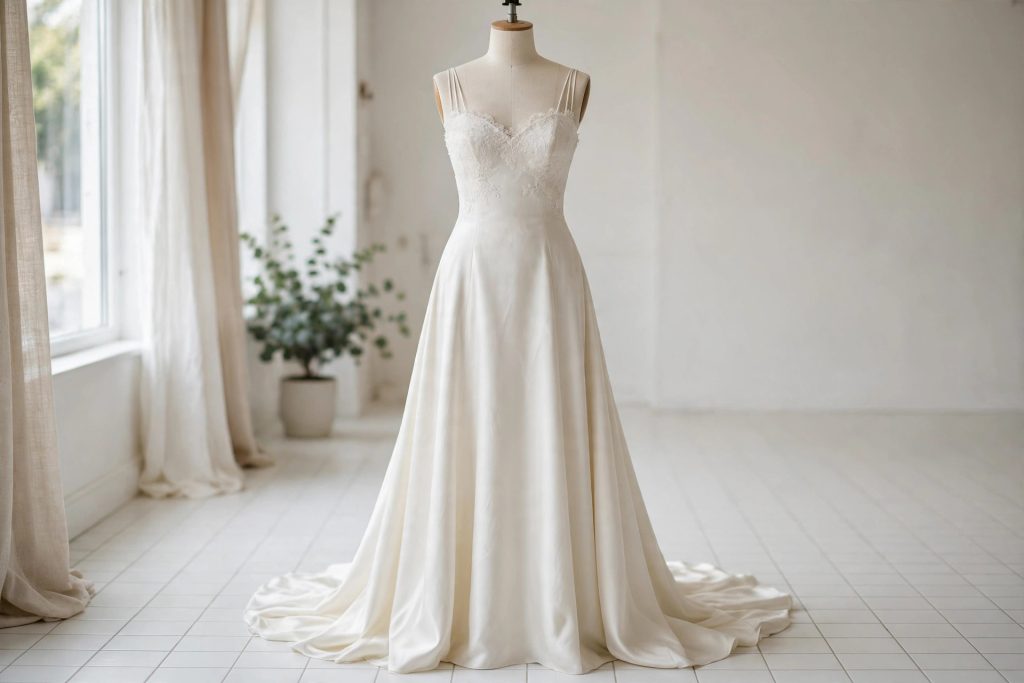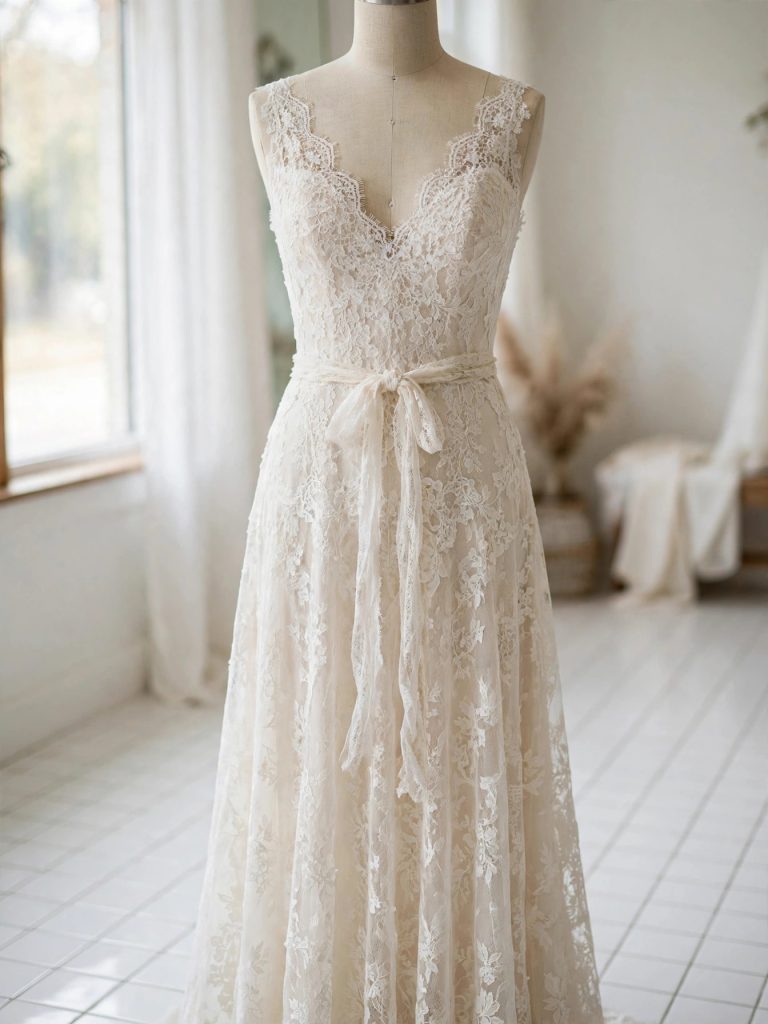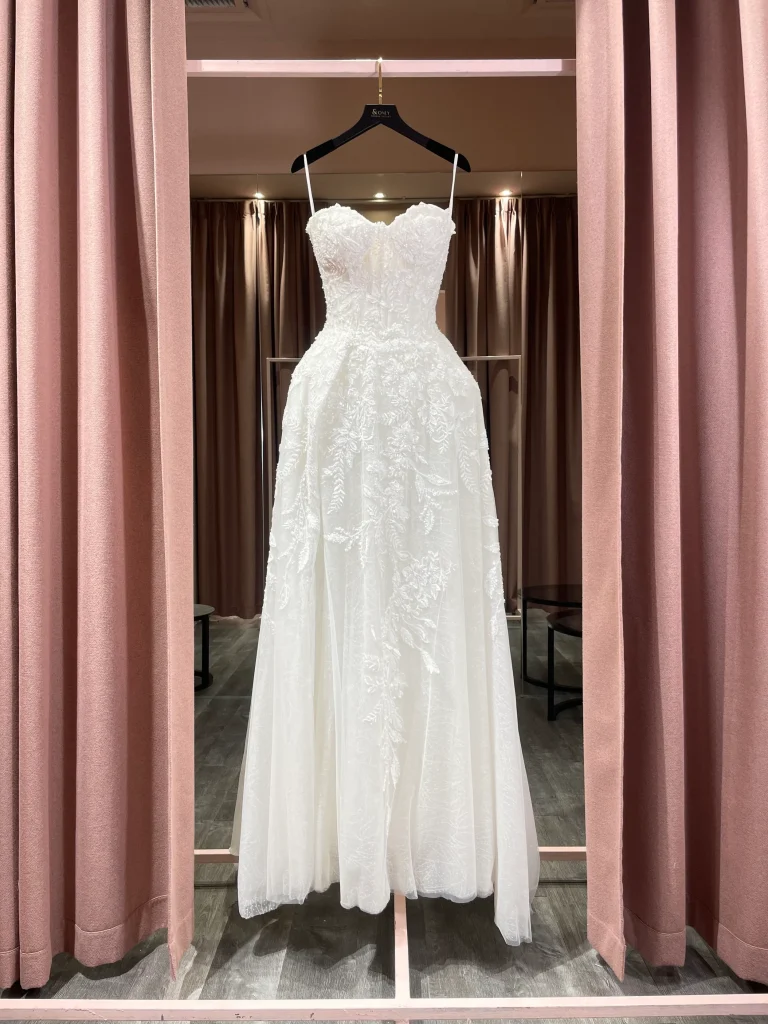
A corset dress is a load-bearing garment, and the supply chain prices it like one — or quietly doesn’t, which is where the trouble starts. The KUTUMAI Bardot maxi on this page combines three structures that each cost money to do properly: an off-shoulder Bardot neckline that has to stay up without straps, a corset bodice that has to shape without collapsing, and ruching across the front that hides the engineering. Ruched corsets are the most forgiving style in this family and the most lied-about, because the gathers let a maker skimp on exactly the parts a wearer cannot see. The checks below are the ones that separate the two versions, and every one of them can be done in a fitting room.
Grommets, boning channels, and the sound a corset should not make
Start at the back. A corset laces through metal eyelets — grommets — set into a reinforced panel. The reinforcement is the point: an eyelet punched into fashion fabric alone will oval, then tear, under lacing tension, sometimes on the first wear. The panel underneath should feel doubled and stiffened when you pinch it; if the fabric around the eyelets feels like the rest of the dress, the eyelets are living on borrowed time. Boning is the second check. Run a palm down the bodice: you should feel regular vertical channels, firm but flexible, ending before the top and bottom edges so nothing pokes. A bodice with boning only at the front is a photograph, not a structure — the sides are where a corset earns its name.

The Bardot neckline adds its own bill. Off-shoulder sleeves stay in place through elastication or gripper tape along the top edge, and the cheap failure is a sleeve that rides up to the shoulder every time the wearer hugs somebody — at a wedding, roughly every four minutes. Raise both arms, then drop them, three times. A well-built Bardot edge returns to the same line each time. A weak one migrates, and the wearer spends the evening doing the small tug that shows in every candid photograph.
What the ruching is hiding, in numbers
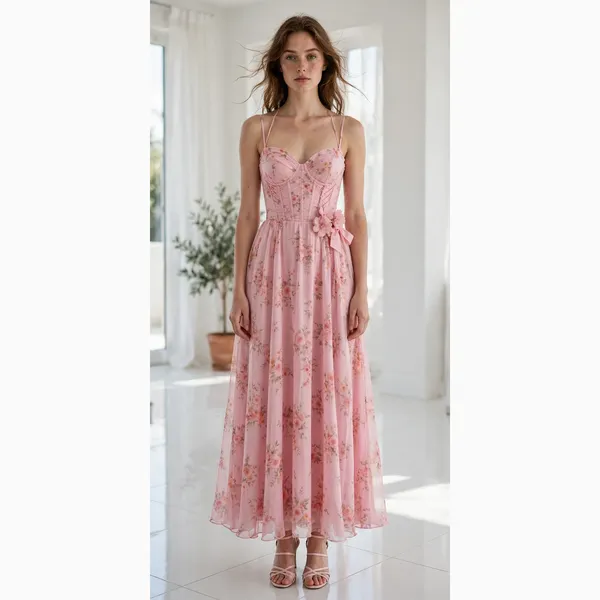
Ruching gathers fabric across the bodice, and gathers forgive fit sins — a seam a few millimetres off disappears into the folds. That forgiveness is why the style suits wedding guests: it adjusts across the day, across dinner, across bodies that do not match a size chart’s opinion. But ruching also hides skipped structure, so the data to collect is weight and symmetry. The dress should feel heavier than a plain maxi of the same fabric, because boning, lining and interfaced panels weigh something. And the gathers should be even — measure the spacing at three points across the front. Even spacing means the ruching was set on a table by a person following a pattern; wandering spacing means it was gathered by eye at speed, and it will sit the same way it was made: approximately.
None of this asks the dress to be couture. It asks the price to match the build. A corset maxi at a guest-dress price with real eyelets reinforcement, full boning and a behaved neckline is a good buy by any measure. The same silhouette with punched eyelets and front-only boning is a one-evening dress, and it should be priced and purchased as one.
Structure checks travel well across this catalogue — the single-seam load problem in the ANRABESS one-shoulder midi dress review is the corset’s problem with fewer parts, and the sixty-second audit habit behind the grommet pinch is the same one applied to the smaller goods in the artisan white 3D almond press-ons for gothic weddings piece.

Questions buyers and stores actually ask
How can I tell if a corset dress is properly boned?
Run a palm slowly down and around the bodice. You should feel regular vertical channels at the front, sides and ideally the back, firm but flexible, with the boning ending just short of the top and bottom edges so nothing pokes through. Boning only at the front means the sides collapse into folds within an hour of wear. Also pinch the eyelet panel at the back: it should feel doubled and stiffened. Eyelets punched into single fabric tear out under lacing tension.
Why do off-shoulder Bardot sleeves keep riding up?
The neckline is held by elastication or gripper tape along the top edge, and weak elastic loses the fight every time the wearer raises her arms. Test it in the fitting room: raise both arms and drop them three times. A well-built edge returns to the same line each time. If it migrates upward, no styling trick fixes it — the wearer will spend the event tugging it back down, and candid photographs will record every tug.
Does ruching on a corset bodice mean lower quality?
Not by itself. Ruching is a legitimate design that forgives small fit differences and stays comfortable through a long event, which is why it suits wedding guests. The risk is that gathers can hide skipped structure, so judge what is underneath: the dress should feel heavier than a plain maxi in the same fabric, and the gather spacing should be even at three points across the front. Even spacing means the ruching was set to a pattern, not gathered by eye.
Pinch the eyelet panel, palm the boning, raise your arms three times, measure the gathers. Four checks, and the supply chain’s opinion of this dress stops mattering — you will have your own, and it will be the right one.