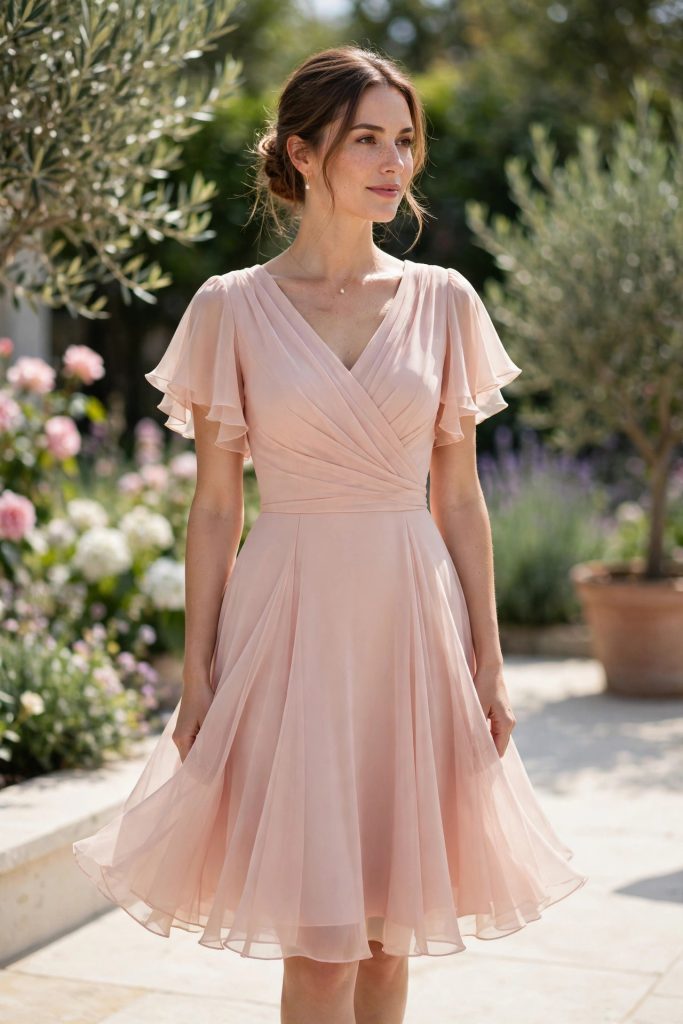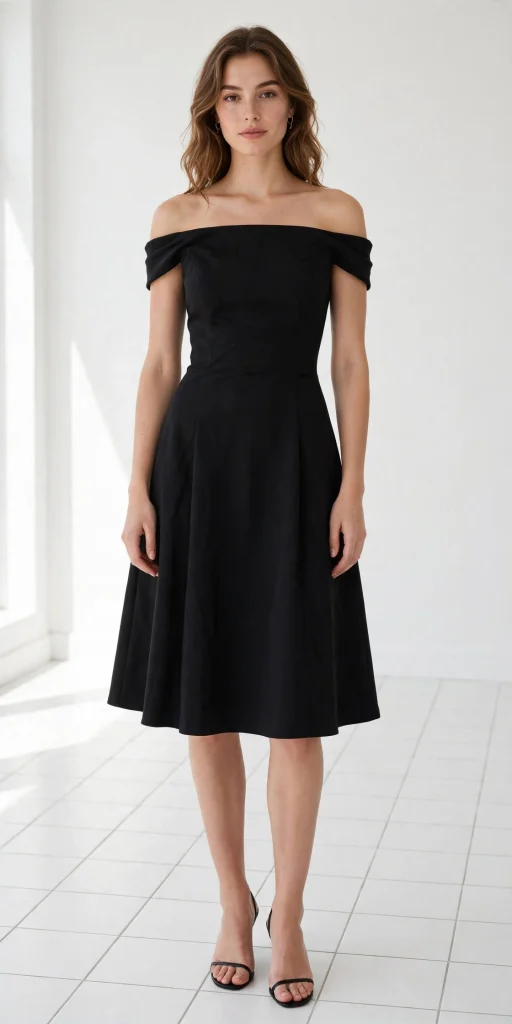
From the upstream end, a spring lace cocktail dress is decided months before any guest wears it, in a lace mill’s order book. The Spring 2025 lace cocktail range reviewed here, sold to wedding guests on a Black Friday deal ticket, looks like a retail story. It is really a cloth story: which lace was booked early, which was bought as leftover stock in a hurry, and how much of the pattern repeat the cutter was allowed to waste. Guests see a pretty dress. The fabric stall sees the three decisions that made it pretty or made it cheap, and they were all taken before a single seam was sewn.
Lace is bought by the repeat, and the repeat is the dress
A lace pattern repeats at a set interval, and a dress front needs the motif placed, not merely present. When a factory buys lace by price alone, it buys whatever repeat the mill has, and the cutter then has to fit bodices around motifs that were drawn for curtains or for a wider dress. The results are the familiar ones: a flower cut in half at the centre front, a scalloped edge that lands mid-thigh on one size and at the knee on another, a bodice where the pattern crowds the neckline. None of these are sewing faults. They are purchasing faults with a time lag, and they cannot be inspected out at the end of the line. A buyer reviewing this category should ask one question early: was the lace chosen for this dress, or was this dress chosen for the lace that was cheap that month?

Spring makes the question sharper, because spring lace is ordered in the autumn rush when every factory wants the same light grounds and floral motifs at once. Mills sell out of the good repeats, and the late buyer chooses between paying up, waiting, or sewing the leftover. The Black Friday ticket on this range is part of that story: heavy discounting in November is how the leftover-lace dresses leave the building before the new season’s cloth arrives.
Ground, motif, and the lining that decides both

Lace is a pattern held together by a ground net, and the ground does as much work as the flowers. A soft ground drapes and photographs gently; a stiff ground stands away from the body and turns a cocktail dress into a lampshade at exactly the length where this style lives. Under it, the lining colour sets the reading of the whole dress: a lining matched close makes the lace quiet and dear, a lining a shade lighter makes the pattern shout, and a lining chosen from stock rather than dyed to match can shift a blush dress grey in photographs. Upstream, lining is sold as a commodity. On the guest, it is half the colour of the dress.
Stretch belongs in this conversation too. A lace with a little give forgives a season of wedding dinners; a rigid lace on a fitted cocktail cut splits its seams at the first sit-down, usually at the back waist, usually in the photographs. The mill knows the stretch content. The listing rarely says. Asking is the whole remedy.
What the cloth side would check before reordering
Motif placement on the centre front of the smallest and largest sizes. Ground softness against the skin of the inner arm. Lining colour under the lace in daylight and under flash. Stretch content in writing. Four checks, all of them cloth checks, all of them possible before a single dress is cut, and every one of them cheaper than the returns they prevent.
From the cloth side, this lace season is quoted alongside the red formal dresses for wedding guests orders, planned against the multi-occasion formal dresses range, and checked against the black tie-wrap cocktail dresses grading notes before any price is promised.

Questions buyers and stores actually ask
Why does the lace pattern look cut off or crowded on some cocktail dresses?
The lace was likely bought by price rather than chosen for the dress, so its pattern repeat does not fit the bodice. The cutter then has to place motifs wherever they fall, halving flowers at centre front or crowding the neckline. It is a purchasing fault, not a sewing fault.
What does the lining do to a lace dress?
Half its colour. A close-matched lining keeps lace quiet and expensive-looking; a lighter lining makes the pattern shout; an off-tone stock lining can turn a blush dress grey in photographs. Lining should be matched under the actual lace, in daylight.
Why are spring lace dresses discounted so hard in November?
Spring lace is ordered in the autumn rush. Dresses sewn from leftover or late-bought lace are cleared on deal tickets before the new season’s cloth arrives, which is why the discount often says more about the cloth than about the dress.
Does stretch matter in a lace cocktail dress?
Yes. A rigid lace on a fitted cut splits seams at the back waist when the wearer sits. A small stretch content forgives a long dinner. The mill can state the stretch content; buyers should ask for it in writing.
What should a buyer check on lace before ordering dresses?
Motif placement at both ends of the size range, ground softness, lining colour under the lace in daylight and flash, and stretch content. All four are cloth checks that happen before cutting, when they are still cheap to fix.
By the time a guest is holding the dress up in a fitting room, the lace has already told its whole story. The only part of the tale still unwritten is whether the store bothered to read it at the mill, back when reading it was cheap.