One style number, four occasions. The DRESSTELLS 2026 range reviewed here is offered for formal events, cocktails, Christmas, and weddings, as if an occasion were a colour option. From the sourcing chair, that sentence is a warning label. Each of those four rooms judges a dress by a different rule, buys it on a different calendar, and returns it for a different reason, and a single specification quietly serves the average of four buyers, which is to say it serves none of them on purpose. This review takes the range apart occasion by occasion, because that is how it will be judged in the wild, whatever the listing says.
Four occasions means four specifications wearing one label
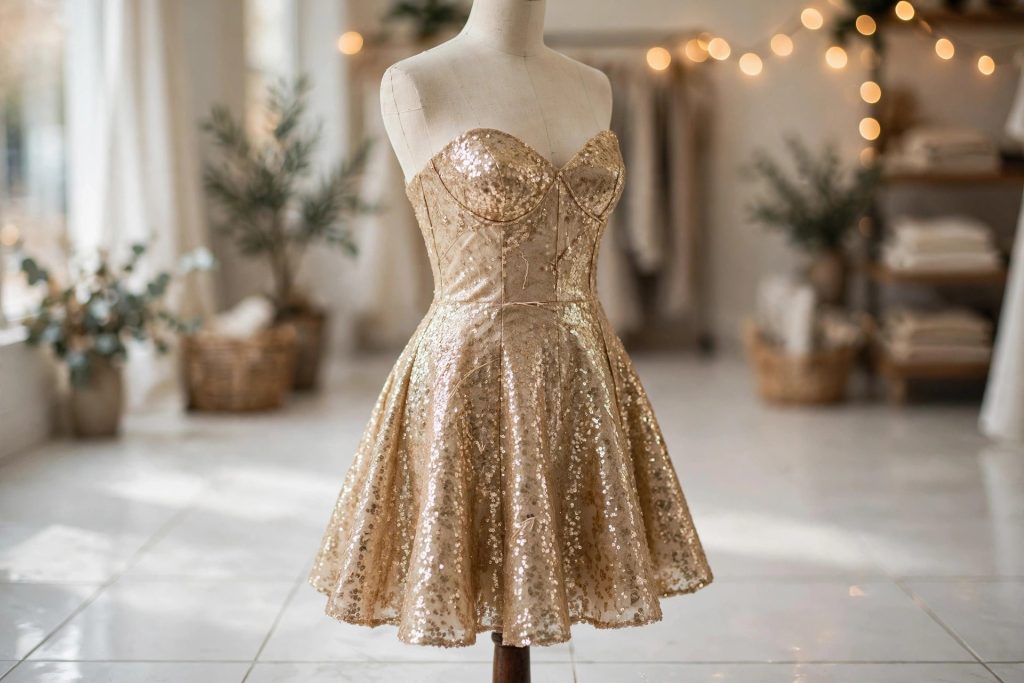
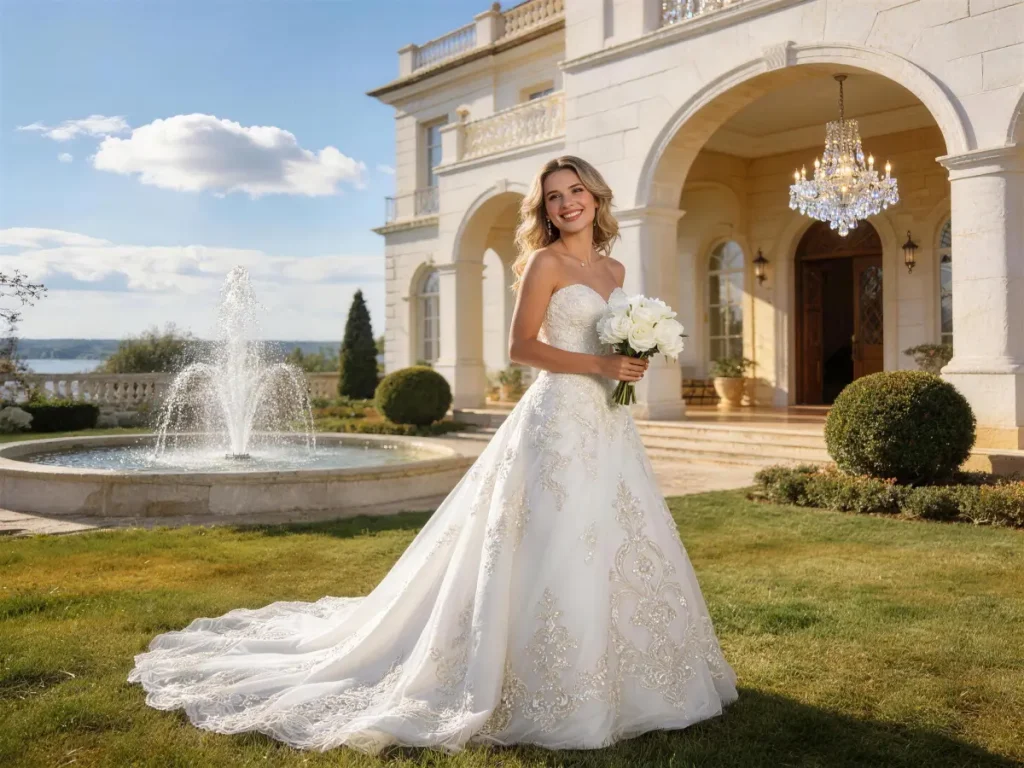
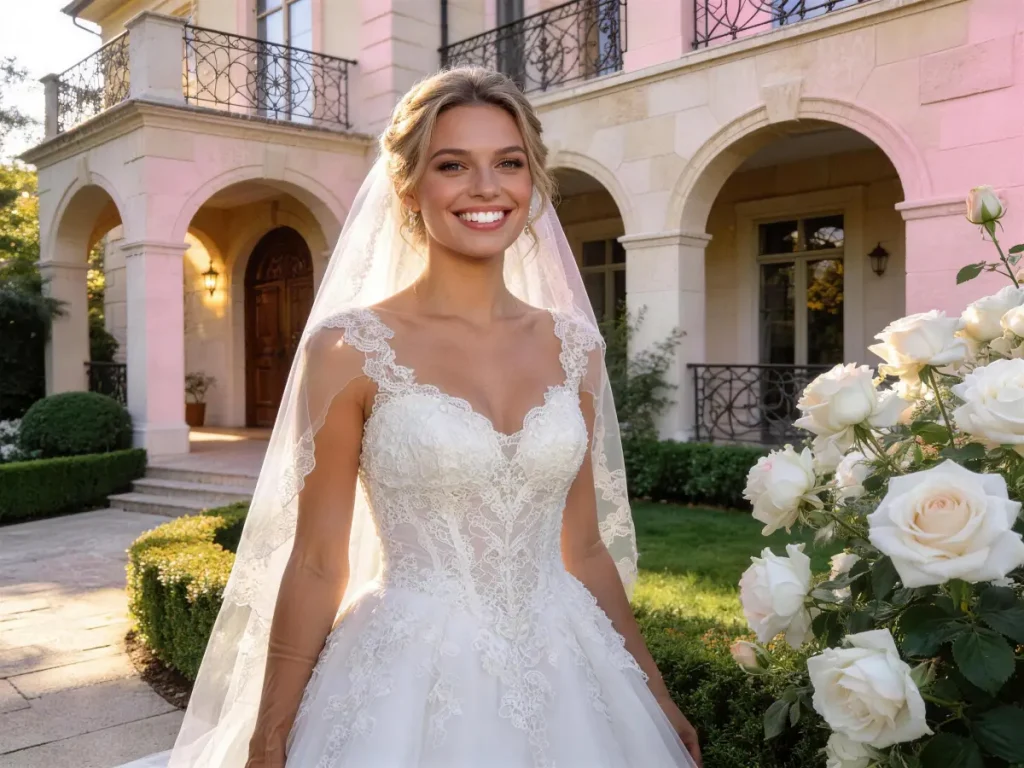
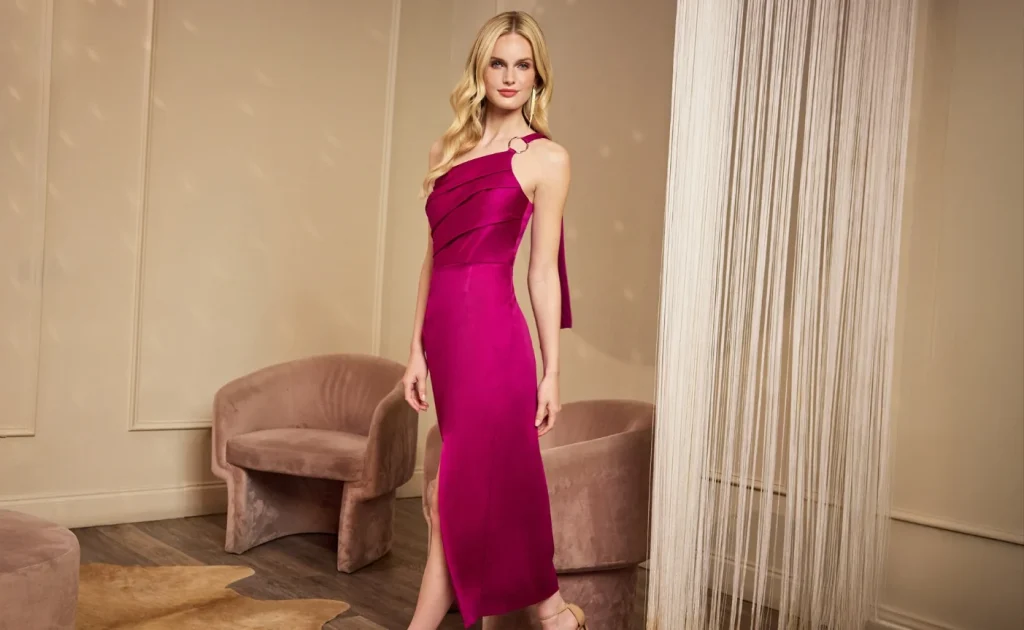
Formal wants structure and length discipline. Cocktail wants movement and a hem that survives a bar stool. Christmas wants sparkle that reads in warm, dim light and photographs well against red and gold. A wedding guest wants to be beautiful in somebody else’s photographs without being memorable in the wrong way, which is the most specific brief of the four and the one a loud dress fails first. A fabric and finish that scores well in three rooms can fail the fourth outright: sequins that make the Christmas version also make the wedding version unwearable in half the venues it will be booked for. Sourcing’s job is to say which room the style is actually for, in writing, before the order, and to let the other three rooms be served by other styles. A range that admits its main room sells deeper in it.
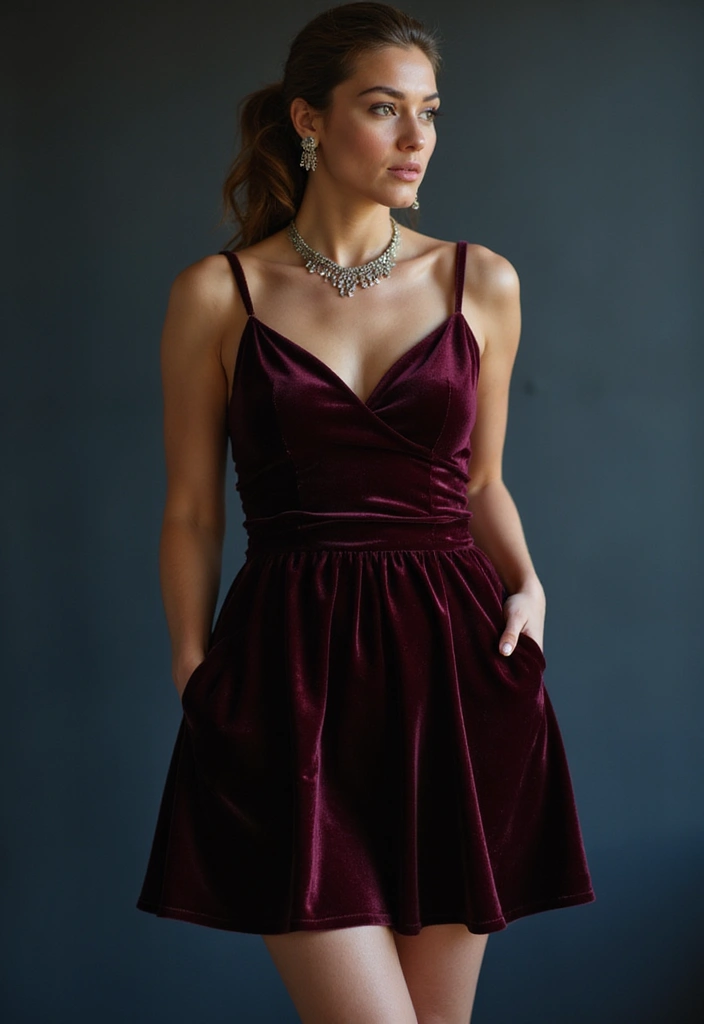
The calendars refuse to merge as well. Christmas stock is dead by the second week of January. Wedding guest stock peaks in late spring. A single buy planned across both either strands the festive version or starves the wedding one, and the markdown taken in January is often just the cost of pretending one style has one season.
What the data on the label cannot say
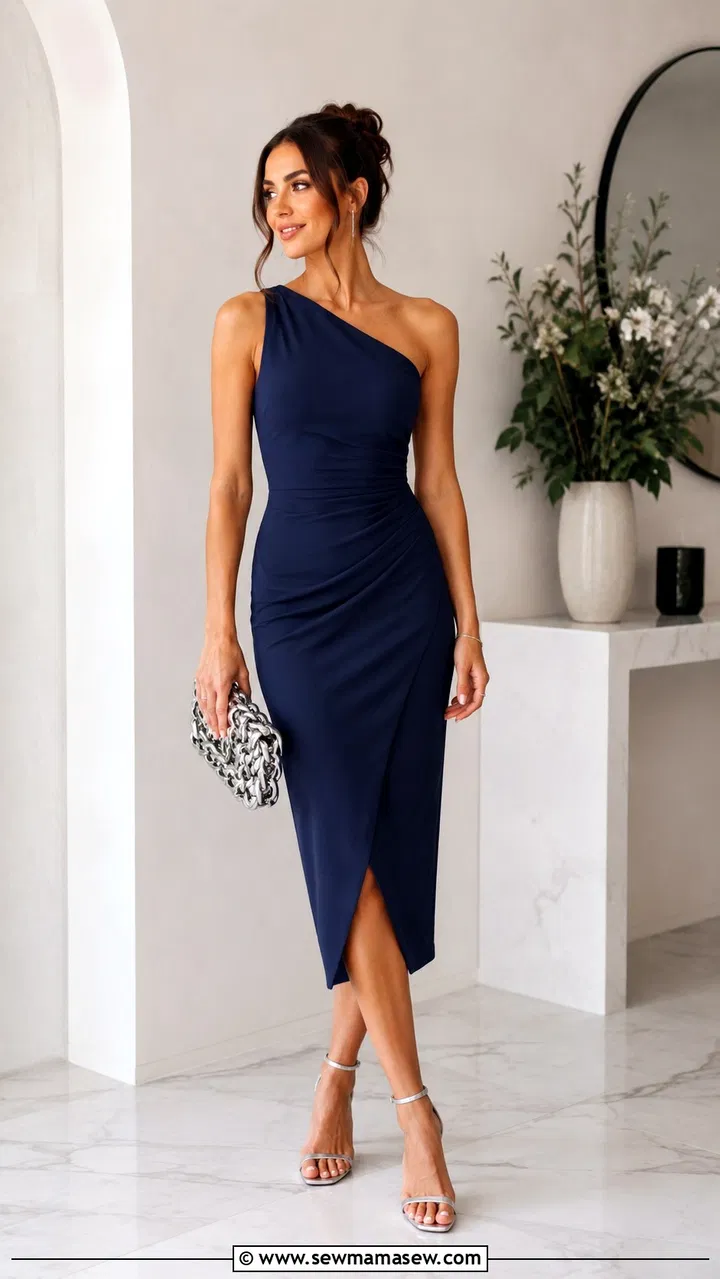
Multi-occasion listings collect multi-occasion reviews, and the reviews then poison the data for everyone. A two-star review that says too plain turns out to be a formal buyer; the one that says too much turns out to be a wedding guest reviewing the Christmas version of herself. Read raw, the style looks inconsistent. Read by occasion, each version is consistent and one of them is simply being sold to the wrong room. Stores that tag reviews and returns by the occasion on the order learn this in a season. Stores that read the average learn nothing slowly.
Fit grading carries the same split. The cocktail buyer wants the dress close; the formal buyer wants it structured; the guest wants to sit through a dinner in it. One pattern, graded one way, picks a side whether the buyer names it or not. Naming it is the entire improvement available here, and it costs a sentence in the sourcing file.
How a store should actually buy this range
Pick the lead occasion. Spec the cloth, finish, and grading for that room. Buy the festive version as a short, dated run with its own exit price already agreed. Then let the listing say what the dress is for, plainly, and watch the returns change their wording from complaint to mismatch, which is a cheaper kind of return and often not a return at all, just a buyer self-sorting earlier.
In the sourcing file this range sits with the red formal dresses for wedding guests comparison, the spring lace cocktail dresses cloth notes, and the bachelorette and bridal party gear party-season plan, because one style number is being asked to do the work of four.
Questions buyers and stores actually ask
Can one dress style really cover formal, cocktail, Christmas, and wedding-guest use?
One cut can be worn to all four, but each occasion judges by different rules for sparkle, structure, and how much attention the dress may draw. A single specification ends up serving an average buyer who does not exist; stores do better picking a lead occasion.
Why do multi-occasion dresses collect contradictory reviews?
Because buyers from four different rooms review one listing. Too plain and too much can both be accurate, from a formal buyer and a wedding guest respectively. Tagging returns and reviews by occasion separates the signal from the noise.
How should a boutique buy a range like this?
Spec cloth, finish, and grading for the lead occasion, run the festive version as a short dated buy with an agreed exit price, and write the listing for the main room. Self-sorting buyers return less, and for cheaper reasons.
A dress for everything is a sentence written by a listing, not by a pattern maker. The pattern maker made a dress for one room and made it well. The store’s whole job is to find that room and put the dress in it.
Seasonal ranges all share the same trap, and the red one is the clearest version of it: a Valentine red range that was two dresses by February did not fail on fit or sewing, it failed on a dye lot and a date.