Ten hangers in a box is the smallest line on a bridal order and the one that generates a strange amount of argument. The 10-pack of personalised bridal hangers reviewed here, sold for custom wedding gowns and bridal party sets, looks like a gift item. From the sourcing chair it is a trim purchase with a dress hanging off it, and the dress does not care that the hanger was cheap. A gown with any weight in the skirt pulls down on two shoulder points for weeks in a stockroom before it is worn for a day, and what those two points are made of decides whether the dress arrives at the fitting with its shoulders shaped like itself.
The number that matters is the load, not the count
A pack count of ten tells a buyer nothing. The working numbers are the weight of the heaviest gown in the set and the width of the hanger’s shoulders. A beaded or layered skirt can put several kilos through a hanger that was shaped for a blouse, and a narrow wire frame answers by bending at the neck hook first and then by letting the dress slide its weight onto the strap loops, which stretch. Sourcing people who handle this category ask for the hanger material and the shoulder width before they ask about the name script across the front, because the script is the photograph and the frame is the product. Get those two backwards and the set photographs beautifully on delivery day and fails slowly in the stockroom.
Personalisation carries its own quiet fault line. Names are set from a file the buyer sends, and a spelling that is wrong in that file will be wrong ten times, identically, with the order paperwork agreeing with the hangers. Trim suppliers work from the file as given; checking the file is the buyer’s job and it is a five-minute job that gets skipped because the order feels too small to check. The returns conversation afterwards is not small at all, because a named hanger cannot be resold to anyone else on earth.
One set, two different jobs
Half of these sets are bought as working stock for a salon rail and half as gifts that will be photographed on the morning of a wedding and kept. Those two buyers need different things from the same box. The salon needs the frame to survive a season of dresses coming on and off it daily, clips and hooks included. The gift buyer needs the finish to read well in a close photograph and the name to be spelled the way the bride spells it. A set specced for the photograph, thin frame and pretty script, disappoints the salon by spring. A set specced for the rail, plain and strong, disappoints the gift buyer in the one picture she bought it for. Listings that blur the two jobs collect both complaints.
Packing is where the sets quietly lose money. Hangers nest badly, personalised bars snag on each other, and a ten-pack shipped loose arrives with the script scratched on the bars that rubbed. It is a low-value, awkward-shape parcel, the kind where freight and damage together eat the margin that made the line look easy. The sellers who keep this category wrap the named bar, every time, and treat that minute of packing as part of the product.
What the order form should ask
Heaviest dress weight. Shoulder width. The name file, read back letter by letter before it is sent. And which job the set is for, rail or photograph, written on the order so the specification follows it. Four plain items, none of them about the script style, which is the one thing buyers happily spend twenty minutes choosing.
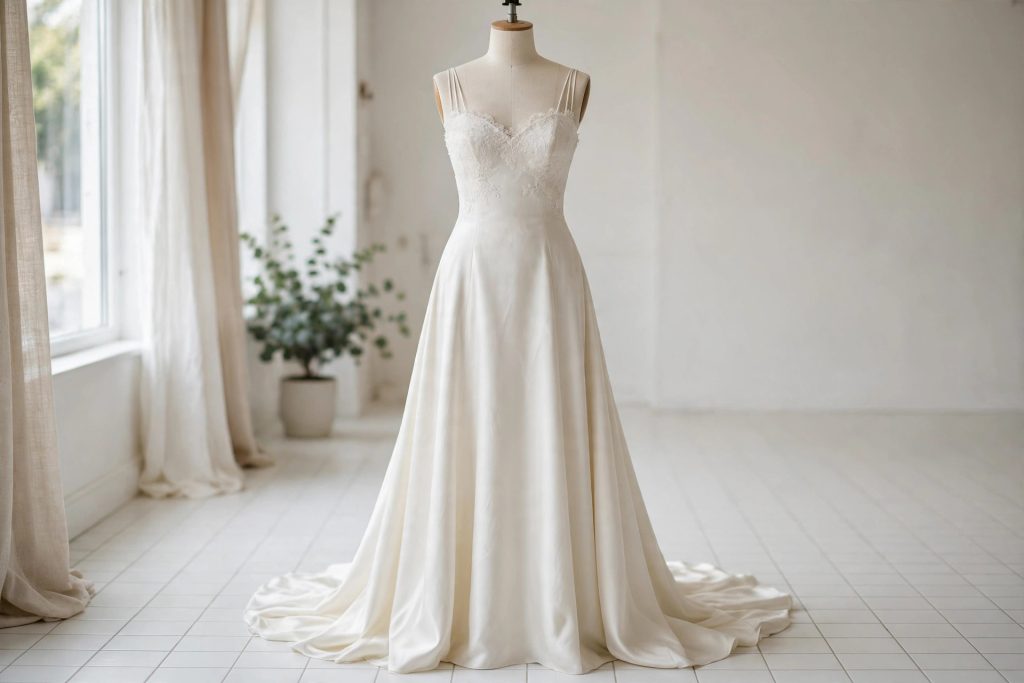
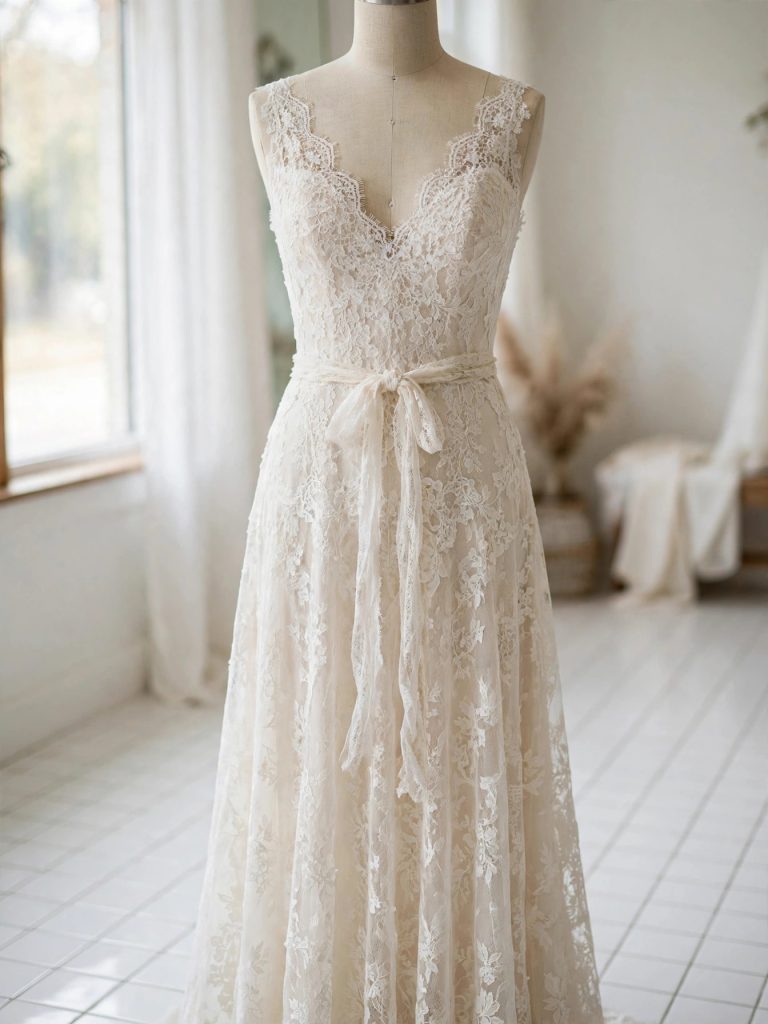
In the sourcing file this hanger line sits with the lace wedding dresses orders it will hang beside, the faux wrap wedding dresses range that shares its rail, and the white satin bridal veils checks, because a hanger is quoted as an accessory and judged as part of the dress.
Questions buyers and stores actually ask
Ten hangers for ten dresses. Why do salons still run short?
Because the count was never the working number. Sets split across rails, a few leave with sold dresses, and the heaviest gowns take the strongest hangers out of the pool first. Salons that order by count alone reorder within a season; the weight and shoulder width of the set decide how long the ten actually last.
A name spelled wrong on all ten. Whose fault is that, really?
Usually the file the buyer sent. Personalisation is set from that file exactly as given, so an error in it repeats ten times with paperwork to match. Reading the names back letter by letter before sending the file is a five-minute check, and it is the one step small orders skip.
Wire or wood for a heavy beaded gown?
The frame that holds its shoulder shape under the dress weight, which on heavy skirts is rarely the thin wire gift frame. Wire bends at the hook first and shifts the load onto the strap loops, and the loops stretch. Match the hanger to the heaviest dress in the set, not the average one.
Why do personalised bars arrive scratched?
The bars rub against each other in transit because hangers nest badly and named bars snag. It is a packing fault, not a making fault, and it is fixed by wrapping the bar. On a low-price awkward parcel, that minute of packing is the difference between a kept set and a refund.
The hanger is the only part of a wedding outfit that is bought by the dozen and kept for years, and it is still the line on the order nobody reads twice. The dresses remember what it was made of long after everyone has forgotten what it cost.