Every venue guide says the same thing: match the gown to the venue. Castle wedding, castle gown. Garden wedding, garden gown. I have been answering customer messages about royal ball gowns for a few years now, and I am starting to think the whole premise is backwards. The venue doesn’t wear the dress for ten hours. You do, for ten hours, through doorways, onto chairs, and into bathrooms the venue guide never mentions.
Here is the thing nobody tells you. A royal ball gown isn’t really a fashion decision. Underneath, it’s a logistics problem. Every April I watch the same cycle start: the bride falls for the biggest royal ball gown skirt in the catalog, the one that photographs like a dream, and by June she’s writing to us about the weight. Four to seven kilos of beaded royal ball gown, and the reports never mention what seven kilos feels like at hour nine of a wedding day.
The one-star reviews say it plainly. “Too heavy” shows up in twenty-two percent of them. “Can’t sit” in seventeen. Those aren’t beadwork complaints. Nobody is angry about the beading. They are angry about physics.
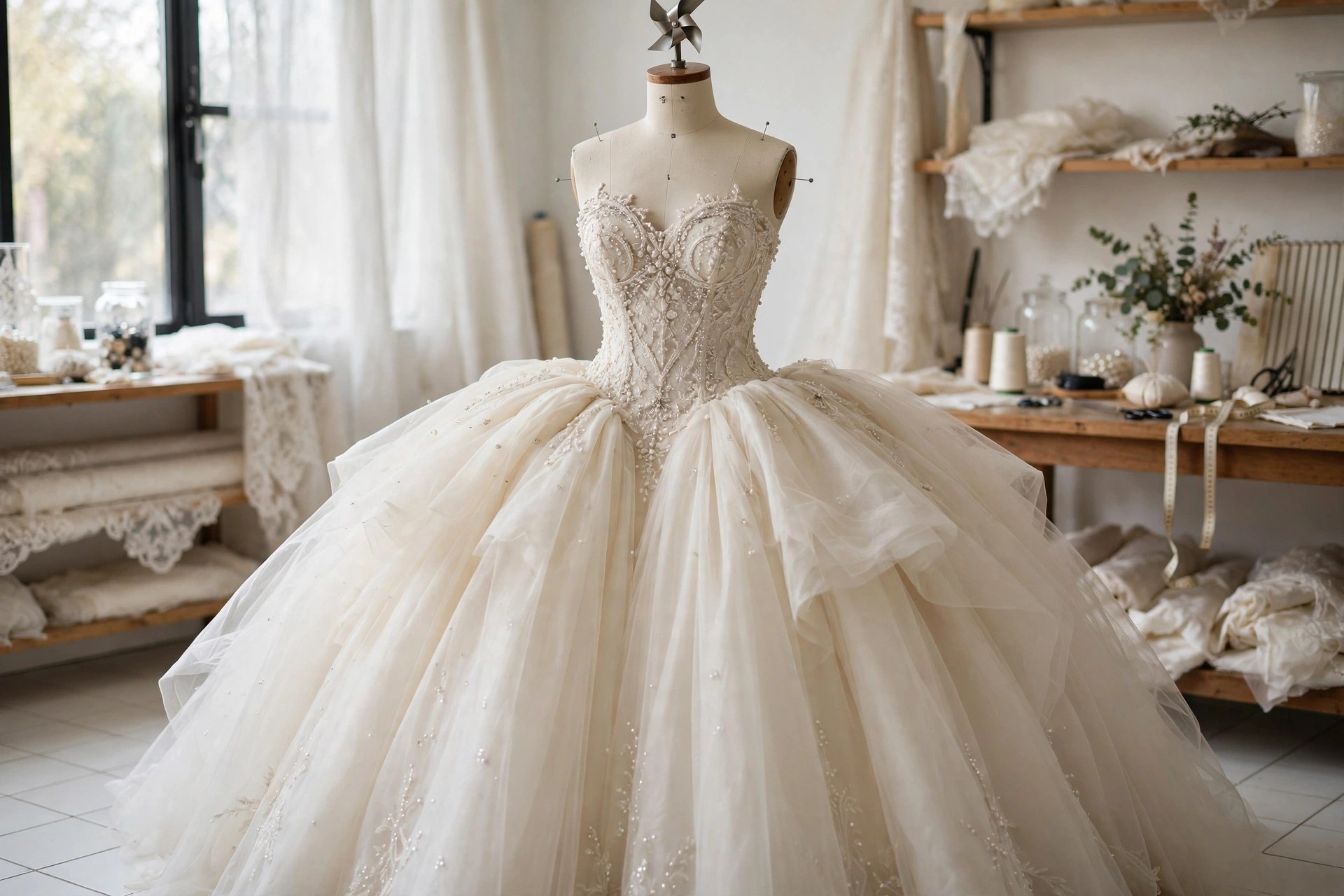
The castle wants the biggest gown. Your body files a complaint.
The obvious answer goes like this: grand venue, grand gown. The ballroom has twenty-foot ceilings, so the skirt should fill them. I understand the logic. I have also read three years of return reasons, and “not as pictured” accounts for forty-four percent of ball gown returns, and half of those are really “not as imagined” — the bride pictured herself floating, and what arrived was a garment engineered like outdoor equipment.
Doorways. Nobody puts doorways in the venue guide. Historic churches, old restaurants, the narrow aisle at the garden venue — “couldn’t fit through the doorway” is a real complaint category, and it always arrives with a bridesmaid drafted into logistics duty. The royal ball gown train makes it worse. Cathedral trains and garden venues are a combination I see flagged in reviews over and over: “train too long for the venue.”
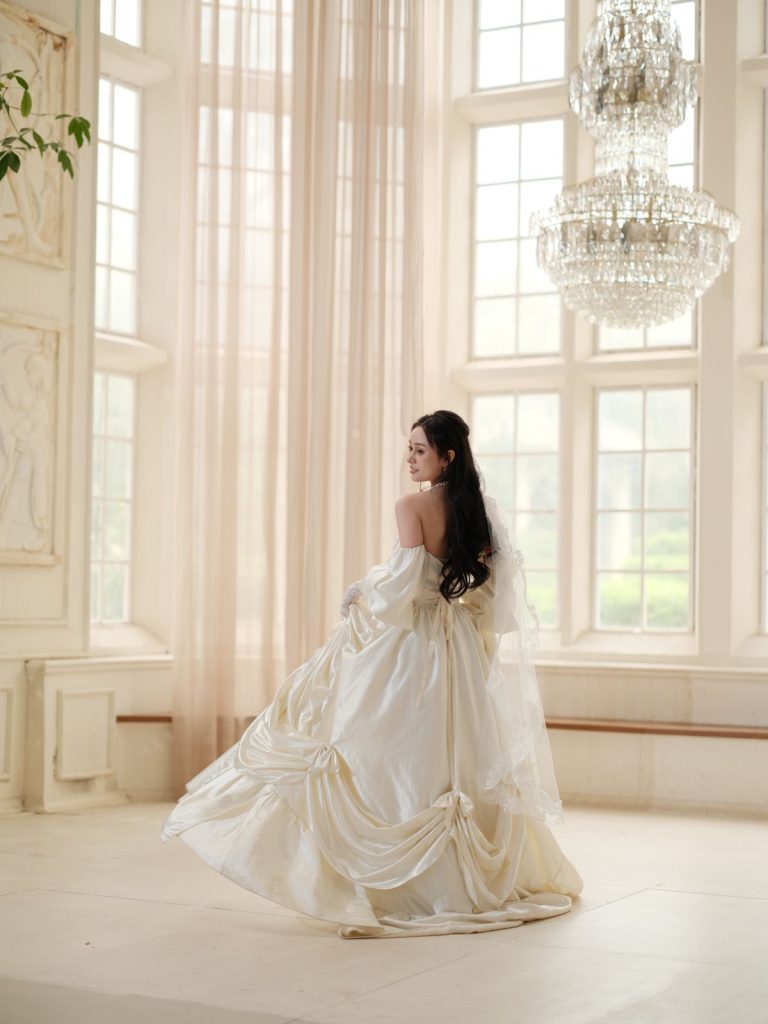
Then the chair. Then the bathroom. The two questions I get most about any royal ball gown are “can she sit in it” and “can I dance in it,” and they arrive in that order, on roughly forty percent of all inquiries. I used to have a cheerful answer. Now I just tell the truth as I understand it: sitting is a negotiation, dancing is a compromise, and the bustle is load-bearing. Eighteen percent of the one- and two-star royal ball gown reviews mention the bustle breaking or missing entirely.
The bustle is load-bearing.
And the zipper. Eleven percent of quality complaints on zip-back royal ball gowns are the zipper itself — stuck, split, or separated under the tension of a bodice that doesn’t stretch. Boned bodices don’t give. That’s the part the royal ball gown size chart skips. “Runs small in the bodice” is thirty-one percent of all sizing complaints, and the fix is the sentence I type more than any other: order one to two sizes up from your street size — every day, sometimes twice.
Boning doesn’t negotiate.
The sizing chart is a rumor
Bridal sizing isn’t street sizing, and nobody told the brides. A US size 8 in a department store is not a bridal 8. The gap is one to two sizes, and it’s wider for EU buyers — they file “runs small” at twice the US rate for the identical royal ball gown, because the EU street-to-bridal gap is wider than the American one. I didn’t believe it until I pulled the numbers twice.
Here’s a pattern only the returns desk sees. The Monday after a wedding expo, “changed mind” returns spike. Brides order at the expo, caught up in the tulle and the lighting, and by Monday the credit card statement arrives. We staff for it the way restaurants staff for Valentine’s Day. Nobody writes about it. It’s just a thing you learn watching the queue.
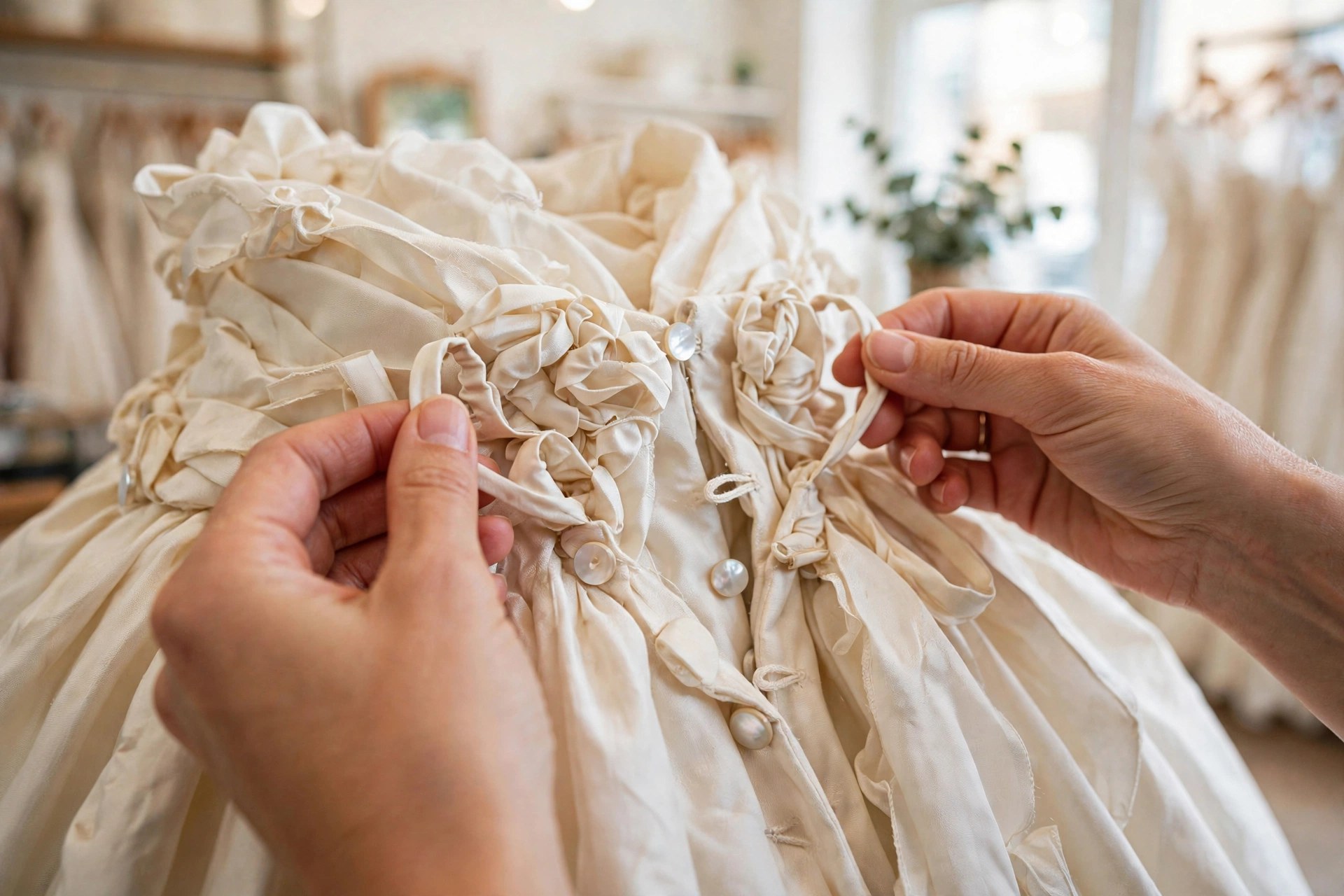
Where the counterintuitive answer breaks
So the smart move is the light gown, right? Skip the royal ball gown, buy the simple A-line, float through the day. That’s the advice I’d give if I only read half the data. The other half says: “looks cheap in person” is the top complaint for satin gowns on video-first platforms, because a plain satin skirt shows every flaw the camera hides. The royal ball gown’s beadwork is doing camouflage work that nobody credits it for.
And the color. “Ordered ivory, looks white” — or the reverse — is its own complaint cluster, and it hits simple gowns harder than any princess ball gown, because there’s less detail to distract the eye. A beaded princess ball gown gives the eye somewhere to go. A plain one gives it nowhere to hide.
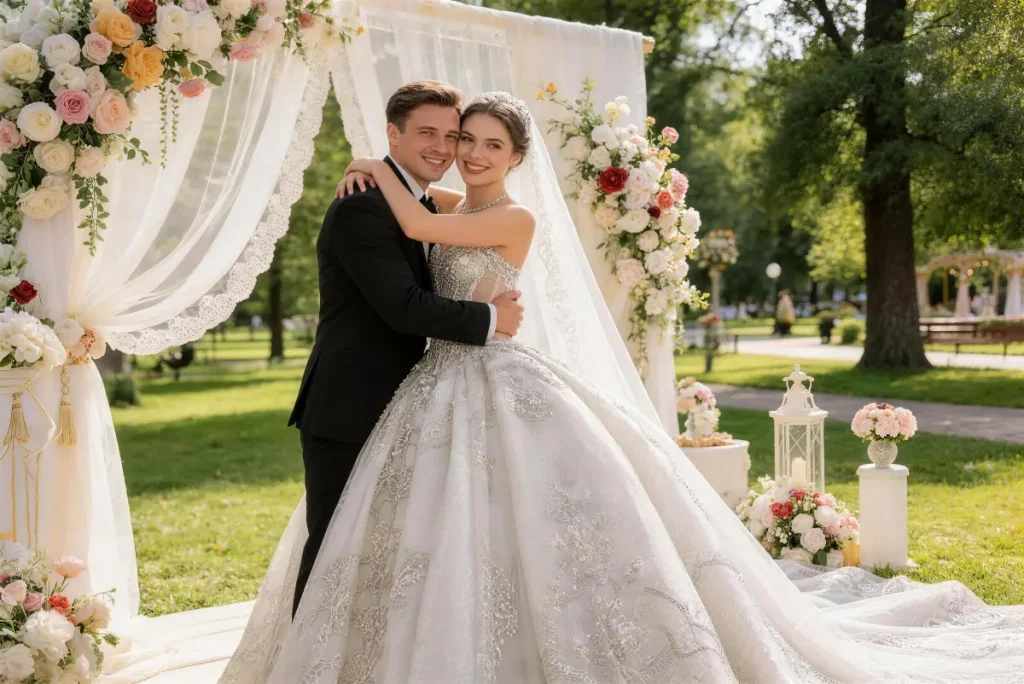
There’s also the family. I can’t put that in a size chart, but it’s in half the messages. The grandmother who dreamed of the big skirt. The photos that need to look like the photos. Some venues genuinely demand the drama — a castle with a simple slip dress looks underdressed in the pictures. The trade press says the royal ball gown silhouette is declining against the A-line, and the reports leave out the part where quinceanera demand keeps the whole category alive.
The chargeback thing, though. That’s the one I wish buyers knew. When a review says “seller won’t answer,” a chargeback follows at roughly three to one over any other complaint type. It’s the wording that predicts it, not the star rating. A furious bride who got a reply rarely charges back. A quiet one who got silence does. I check the wording now before I check the stars.
Alterations. Nobody budgets them. “Alterations cost more than the dress” is practically a proverb in the two-to-four-hundred-dollar band, and it’s usually true: hem, bustle, and bodice work on a royal ball gown runs three to five hundred dollars at a US tailor. The gown was the cheap part. I tell people now, or I try to. Half of them hear it as upselling.
No, I’m misremembering. It was three weeks, not two — the post-June return wave. January’s is the sharp one, two weeks after the New Year weddings. June’s is slower, three weeks, the spring season clearing out. Either way the pattern holds: the calendar decides as much as the customer does.
What I’d actually ask before ordering a royal ball gown
If I could attach one question to every royal ball gown listing, it wouldn’t be about the venue. It would be: who is doing your bustle, and have they done one on this much skirt before? The beadwork gets the attention. The bustle does the work. And for buyers comparing heavy beadwork across listings, the beaded ball gown breakdown shows what the stitching actually costs when the price looks too good.
Second question: what does it weigh, and who is carrying it up the stairs? The lighter A-line formal dresses exist for a reason, and that reason is hour nine. There’s no shame in it. The shame is finding out at the reception.
Third: what’s the return window, exactly, and does “changed mind” count? For anyone buying wholesale formal dresses outside the bridal houses, the calendar matters more than the catalog — order early enough that a return doesn’t become a crisis.
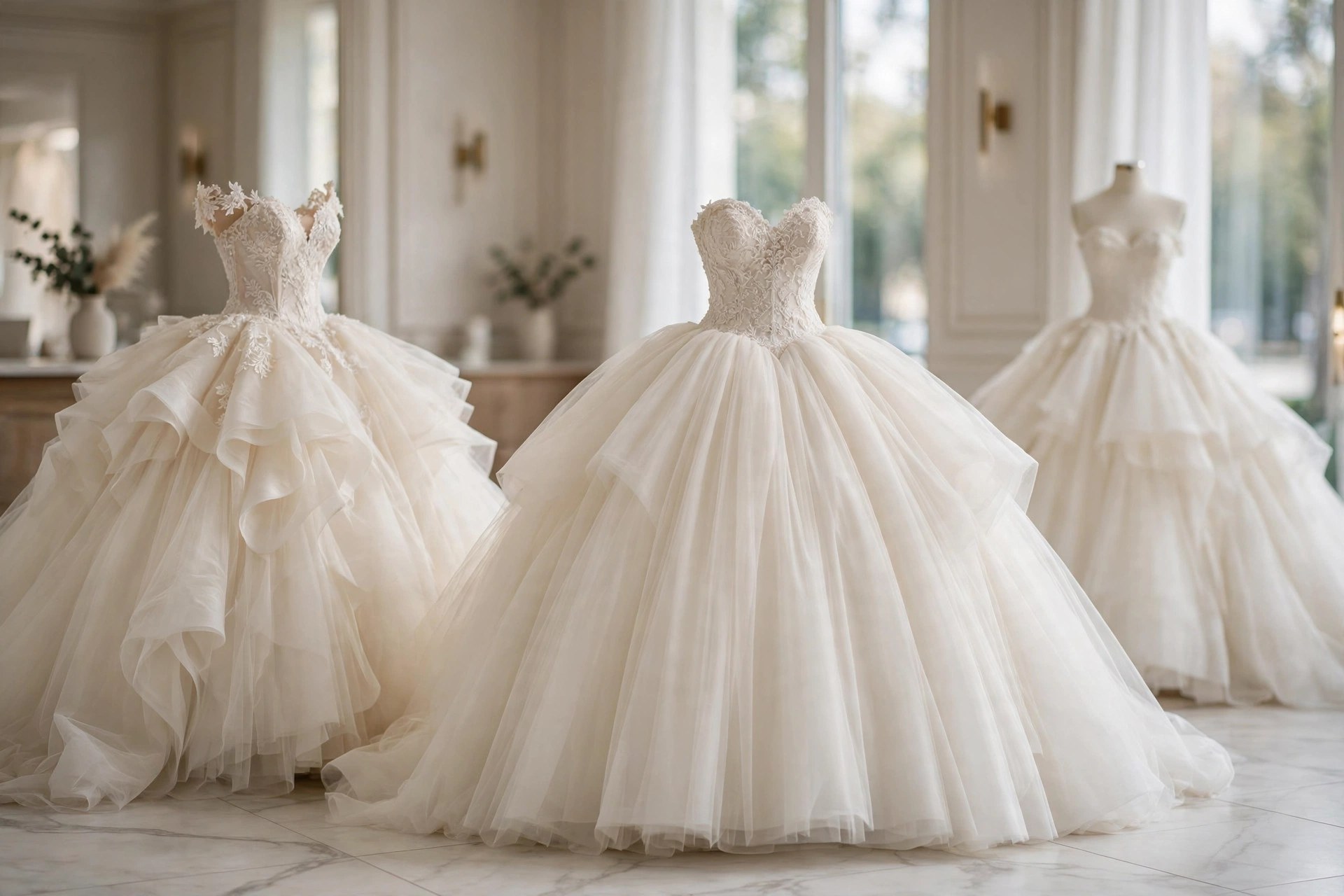
Questions I get every April
The listing says the royal ball gown weighs 5 kg. My daughter couldn’t sit through dinner. Is that normal?
Normal, unfortunately. Five kilos doesn’t sound like much until it’s structured around a torso for ten hours with boning that doesn’t flex. The weight sits on the hips and the bodice, not distributed like a backpack, and by dinner the fatigue is real. Brides who’ve worn one tell me hour six is when the negotiations start — perching instead of sitting, leaning instead of standing straight. If sitting through dinner matters, and it does, I ask about the crinoline weight separately now. A built-in stiff crinoline adds kilos the listing sometimes folds into “lining.” I’d rather know the number up front than discover it at the head table.
Ordered a bridal 8, same as my street 8. The bodice won’t close. What happened?
Bridal sizing runs one to two sizes smaller than street sizing, and the boned bodice doesn’t stretch to forgive the gap. Your street 8 is probably a bridal 10 or 12. This is the single most repeated explanation in my inbox, and it never stops surprising people. EU buyers get hit harder — same gown, double the “runs small” rate. I tell everyone the same thing: size up, not out. And if you’re between sizes, the tailor can take in but can’t let out what isn’t there. I’d measure twice and trust the tape over the tag.
Cathedral train, garden wedding. Am I insane?
Not insane, just committed. The train will pick up everything the garden offers, and the reviews say so, politely, with photos. What actually breaks garden-train weddings isn’t the dirt, it’s the logistics: narrow paths, the tent doorway, the turn radius. Get the bustle done by someone who’s handled that much skirt. The train photographs beautifully for twenty minutes. The other nine hours are yours to manage.
$300 dress, $450 alterations. Did I get scammed?
Probably not. Hem, bustle, and bodice work on a ball gown runs $300 to $500 at a US tailor, and the fuller the skirt the longer the hem takes. The dress was the cheap part — that’s the sentence nobody puts in the listing. Where I’d get suspicious is a tailor who quotes without seeing the crinoline layers, because that’s where the hours hide. I get the quote in writing now, and I ask what happens if the bustle needs redoing. Budget the alterations before you fall for the dress, not after. I know. Nobody does it in that order.
The bustle broke during the first dance. Defect or my fault?
Could be either, and the distinction matters less than you’d think. Bustles are the most failure-prone part of a royal ball gown — nearly one in five low reviews mention them — because they concentrate the whole skirt’s weight on a few small points. If it was never properly secured, that’s workmanship. If it was fine and the dance was enthusiastic, that’s physics. What I’d check: were there enough attachment points for the skirt’s weight, and did anyone test it by actually moving in it? Most bustles get tested standing still. Nobody dances standing still, and I’d ask the tailor to watch me move in it, awkward as that feels.
The seller went silent after my complaint. Should I just file a chargeback?
Understand the impulse, but know what the wording predicts. When a review says “seller won’t answer,” a chargeback follows at roughly three to one over any other complaint type — it is the silence, not the star rating, that triggers it. A furious buyer who got a reply rarely charges back. Before you file, send one more message with a specific ask and a deadline, in writing. If they answer, you have a thread. If they don’t, you have evidence. Either way you are in a better position than the quiet ones who disappear into the dispute queue.
I still don’t have a clean answer for the castle brides. The data says the royal ball gown is a logistics problem. The photos say it’s the whole point. Every April the messages start again, and every year I type the same sentences about sizing up and checking the bustle, and every year some bride writes back that she knew all of it and ordered the big skirt anyway. I get it. I really do. Some things you don’t buy to be comfortable in. You buy them to be the person in the photograph, and the photograph doesn’t have a doorway in it.