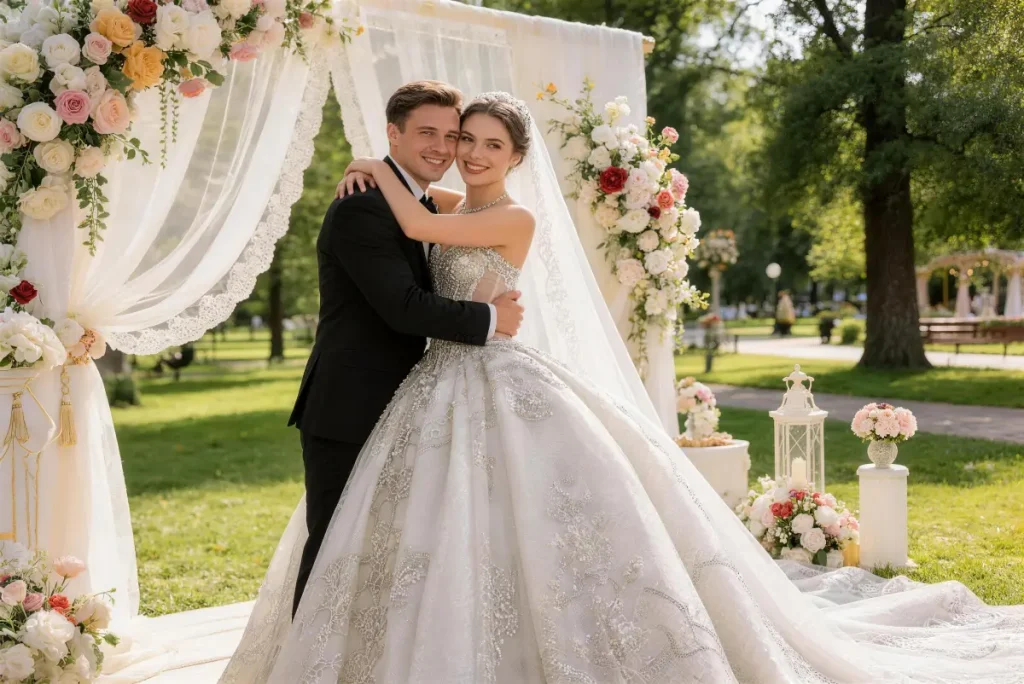
2026 Inventory Analysis: Is This Eyekepper Bridal Gown Worth Your Floor Space?
Alright, let’s cut the fluff. It’s 2026. Brides aren’t settling for off-the-rack compromises anymore. They want custom-fit, sustainable options, and they want them yesterday. Meanwhile, your margins are getting squeezed tighter than a corset on a size zero mannequin. You’re looking at this Eyekepper bridal gown listing — the “Double Shoulder Floor Length” style — and wondering if there’s any ROI left in it. My job, after two decades navigating Guangzhou’s textile jungle, is to tell you straight: most of what you see on generic B2B directories for a style like this is a liability, not an asset.
This listing, with its 2015 debut, is a prime example of what you’re up against. A basic “Double Shoulder Floor Length” gown. On paper, it sounds classic. In reality, sourced poorly, it’s a fast track to discount racks and disgruntled customers. The data here offers nada on actual specs, just boilerplate about department and a decent 4.3-star consumer rating from 409 reviews. That’s for a direct-to-consumer product likely sold on a marketplace – a different ball game entirely from what your boutique needs.
The Middleman Problem: What You’re Really Buying (or Not)
Generic B2B directories in 2026 are still crawling with trading agents using AI-generated deepfake factory videos. They copy-paste descriptions like the “Product summary” button you see here – completely devoid of actionable data. Ask them about the carbon footprint of their satin or the tensile strength of the seams, and they go silent. At oemod, we don’t just list products; we engineer them.
For a gown like this “Eyekepper” model, let’s break down the realities for the 2026/27 season:
Fabric Specs: Beyond “Satin” and “Lace”
- The Shell Fabric: A “double shoulder” implies some structure, likely a poly satin or a similar synthetic. A generic vendor? You’ll get whatever 75D polyester satin they have stockpiled from 2022. It’s stiff. It doesn’t drape. It yellows after a year in storage.
- OEMOD Standard: We’re talking 100D recycled poly charmeuse, 150 GSM, with a soft hand-feel and verifiable supply chain for your eco-conscious brides. Or, if the aesthetic demands, a premium mikado with a slight stretch for comfort. We’ll give you actual certifications, not just pretty pictures.
- The Lining: The invisible killer of bridal quality. Generic B2B sellers will use a scratchy, static-prone 30D poly. It pulls, it tears, it breathes like a plastic bag.
- OEMOD Standard: We specify a 40D stretch comfort lining. It moves with the bride, prevents static cling, and holds its shape. If we say 40D stretch, that’s exactly what hits your shipping container. No excuses about “supply chain disruptions.”
- Lace (if applicable): Assuming some lace detailing for this style, generic vendors throw on whatever cheap, rough synthetic lace is in their sample books. No character, no depth.
- OEMOD Standard: Brides in 2026 ask where their lace comes from. We provide high-density recycled Guipure or Chantilly options, with full traceability. We’ll discuss pattern repeats, density per square inch, and attachment methods (appliqué vs. overlaid).
Construction: The Hidden Costs of Cutting Corners
- Internal Architecture: The “built-in bra” mentioned in many generic descriptions? To a professional in 2026, that’s amateur talk. It means a couple of foam cups stitched into the lining. Zero support. Zero shape.
- OEMOD Standard: We’re talking a 3D-mapped 14-bone internal corset structure. Spiral steel boning, not plastic. It builds a silhouette, supports the bust, and allows for precise alterations. Most B2B sellers skip the labor-intensive boning to save $7 on cost. We don’t. That $7 saves your boutique hours of rework and prevents returns.
- Seam Allowance: This is where the Directory Gamble bites hard. If you order this Eyekepper Double Shoulder Floor Length Bridal Gown from a generic vendor, you’ll get a gown with zero seam allowance. Alterations become a nightmare.
- OEMOD Standard: We build our 2026 ODM samples with a 1-inch seam allowance. Why? Because in 2026, brides demand custom-fit precision, and your boutique survives on perfect in-house alterations. You can let it out, take it in. It’s expected.
- Zippers & Fastenings: Another point of failure. Cheap, exposed zippers that snag and break.
- OEMOD Standard: YKK invisible zippers. Always. Double-stitched, properly integrated. No snags, no embarrassing malfunctions. (By the way, if a supplier on a big directory quotes you 2024 prices for this level of 2026 beading or hardware, they’re using plastic beads that will yellow before the wedding day, or zippers that will fail before the ceremony.)
- Hemming & Finishing: Sloppy machine hems are common with generic mass production.
- OEMOD Standard: We discuss options: horsehair braid for structure, hand-rolled hems for delicate fabrics. Clean finishing, inside and out. These details matter for the final fit and feel.
2026 Lead Times & Your Margins (ROI, Not Poetry)
The “Date First Available: September 22, 2015” for this Eyekepper gown tells you this style has been around. Don’t confuse longevity with current relevance or reliable sourcing. Generic B2B sellers are notorious for “Sample vs. Bulk” bait-and-switch. In 2026, raw material prices fluctuate weekly. If you’re chasing the lowest price for a “double shoulder floor length gown” on a public directory, expect delays, quality compromises, and headaches.
- Lead Times: For a decent quality ODM bridal gown in 2026, expect 8-10 weeks for production after fabric sourcing and sample approval. Add 3-4 weeks for shipping. So, you’re looking at a 3-month turnaround minimum from order confirmation to your receiving dock. Any vendor promising faster without proof of stock or direct factory control is lying.
- MOQ: For a custom ODM program, don’t expect single-digit MOQs. We’re typically looking at 30-50 pieces per style for initial runs to make it worthwhile for fabric mills and ensure batch consistency. This is how you lock in your fabric sourcing and negotiate better unit costs.
- ROI & Markup: You’re not just buying a dress; you’re buying a reputation. The cost difference between a generic gown with zero seam allowance, stiff lining, and cheap boning, versus an OEMOD gown with precision construction and quality materials, is minimal at the wholesale level. But the impact on your boutique’s profitability through fewer returns, easier alterations, and happier brides? That’s significant. You can command a healthy markup when you deliver quality, not just a price point.
Batch Consistency: Your Reputation on the Line
We lock in our fabric sourcing. This means if you approve a sample with a particular hand-feel and weight, your bulk order matches it. This isn’t a given with generic sellers. One batch might use a 40D lining, the next a 30D. That inconsistency kills your brand trust and leads to costly chargebacks.
The Bottom Line
The “Eyekepper Double Shoulder Floor Length Bridal Gown” title, when stripped of its consumer-facing metadata, represents a foundational bridal style. But its potential for your 2026/27 inventory hinges entirely on who you partner with. Are you looking for a throwaway piece, or a reliable core collection item that supports your hyper-personalization strategy and yields solid margins?
Tired of the “directory gamble” in 2026? Drop us a message for the raw factory footage, actual fabric swatches, and our tiered wholesale pricing for core 2026/27 bridal gown collections. Let’s talk real production.
#Eyekepper #Double #Shoulder #Floor #Length #Bridal #Gown
Keep reading: Sparkling Crystal Off-Shoulder Mermaid Wedding Gown Review and Yuxin’s Modest Long-Sleeve Wedding Gown Review.