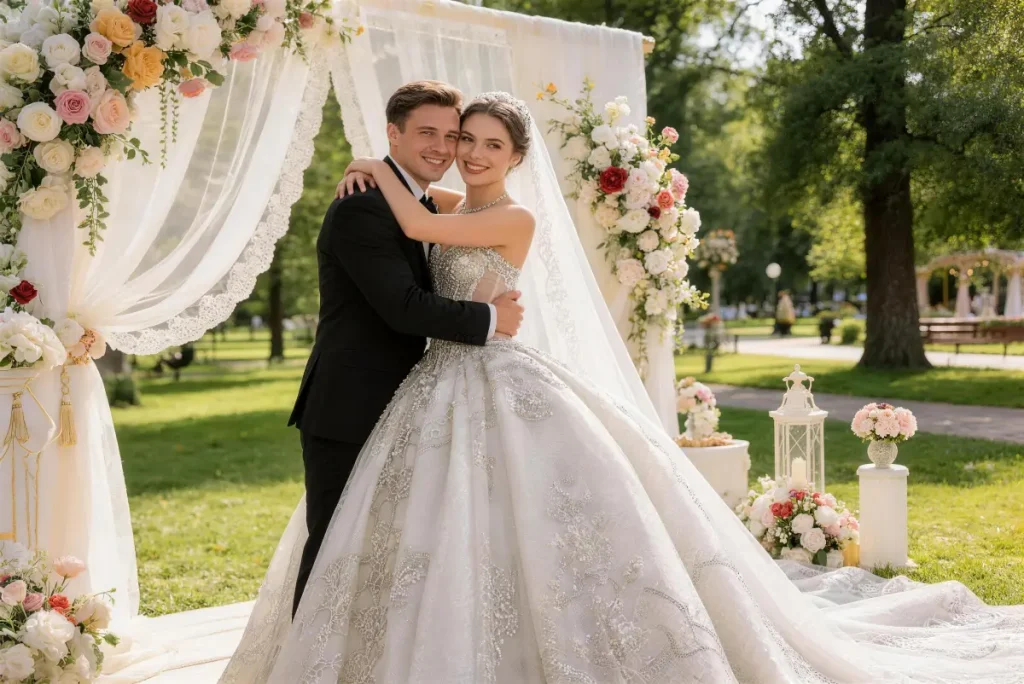
The Findlovewedding “Wedding Dresses for Bride with Lace” sells on Amazon as a budget answer to the custom wedding dress cost question — but the true cost of a wedding dress is never just the price tag. It’s the price tag plus whatever a seamstress charges to fix the fit. This review looks at the dress purely through fit and sizing, so you can get the order right the first time.
The one-sentence verdict: The soft A-line silhouette and sash closure make this a forgiving fit across body types, but order by your largest measurement and plan for minor alterations — because taking a dress in is always easier than letting it out.
A soft A-line that forgives at the waist and hips
Conclusion: the A-line shape is the most forgiving bridal silhouette for pear shapes and anyone carrying weight at the hips and thighs. Unlike a fitted mermaid or sheath, the skirt skims outward from the waist without clinging, so small gaps between your measurements and the size chart matter less below the waist. The lace bodice and V-neckline draw the eye upward, which helps balance a fuller lower half. If your bust and hips fall into different sizes on the chart, this silhouette lets you fit the top and let the skirt take care of the rest.
No zipper, sash closure: how it changes your size choice
Conclusion: the sash closure gives you more sizing flexibility than a zippered gown, but less bust support — so the bodice fit and your undergarments matter more. The product description notes that “no zipper means more flexibility,” and that checks out: a self-tie or lace-up style back can be loosened or tightened across roughly a size range, while a fixed zipper either closes or it doesn’t. The trade-off is support. Without a rigid zipper closure, the bodice depends on the tie and whatever internal structure is built in to hold everything in place. If you need significant bust support, treat your undergarments — or sewn-in cups added by a seamstress — as part of the fit decision, not an afterthought.
Between sizes: always size up
Conclusion: if your measurements straddle two sizes, order the larger one. The listing itself says it plainly: “It is much easier to take a dress in than to let it out.” Taking in a seam is routine, inexpensive work for any bridal seamstress. Letting a dress out depends entirely on how much extra fabric was left inside the seams — on a budget dress, that margin is usually minimal. Ordering up gives your seamstress material to work with. Ordering down gives you nothing to work with at all.
What alterations realistically cover — and what they don’t
Conclusion: budget for a hem and a bodice tweak, not a rebuild. For this style, the standard alteration list is short: hemming the skirt to your heel height, taking in the bodice through the side seams, and adjusting the sash length. Those are ordinary jobs. What a seamstress generally cannot do cheaply is add structure the dress doesn’t have, reshape the neckline, or let out a bodice that has no seam allowance to spare. Get the fundamentals right when you order, and the alterations stay simple and affordable.
Frequently Asked Questions
Is the Findlovewedding lace wedding dress true to size? Treat the size chart as a starting point, not a promise. Measure your bust, waist, and hips, match the chart’s largest relevant measurement, and size up if you fall between sizes.
Should I order a size up or down? Up. The listing advises that taking a dress in is easier than letting it out, and with a sash closure you can always tie the waist in tighter.
Can a local seamstress alter this dress? Yes, for routine work: hems, taking in the bodice, adjusting the sash. Major restructuring or letting it out significantly is limited by the seam allowances left inside the garment.
How does the sash closure affect the fit? It makes the waist and back more adjustable across sizes, but it provides less rigid support than a zipper. Expect to fine-tune the tie on the day, and choose undergarments that do some of the support work.
When you compare the real cost of a wedding dress — purchase price plus alterations — getting the size right on the first order is where you save the most money. For wholesale or made-to-measure inquiries on lace bridal styles, contact us for sizing guidance and tiered pricing.
#Findlovewedding #Wedding #Dresses #Bride #Lace
Keep reading: Elegant Lace Fishtail Bodycon Dress Review and Sparkling Crystal Off-Shoulder Mermaid Gown Review.