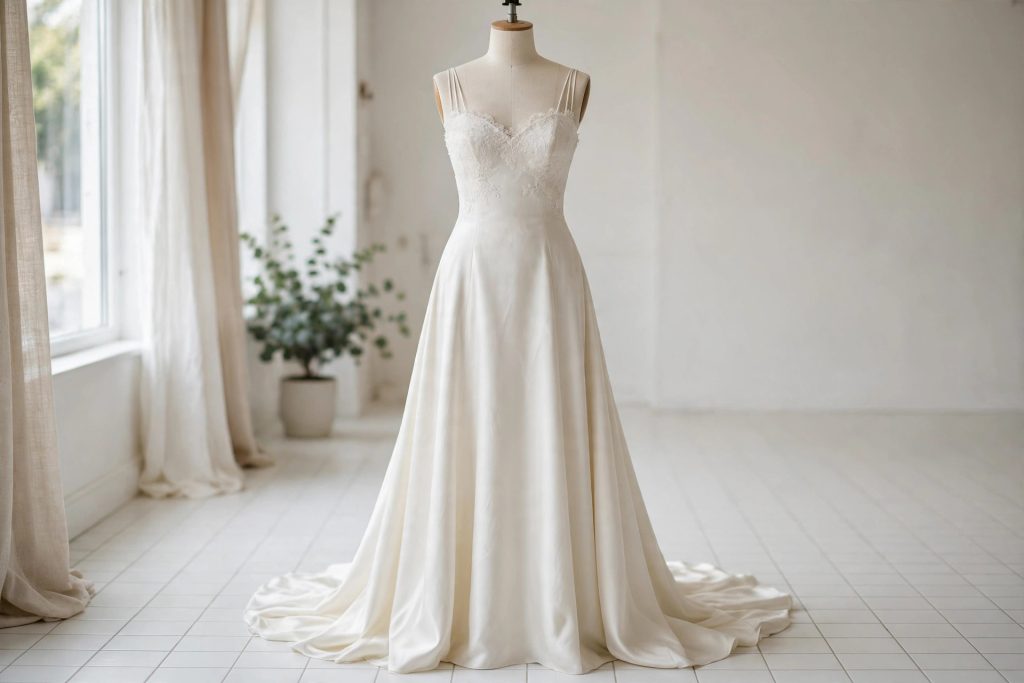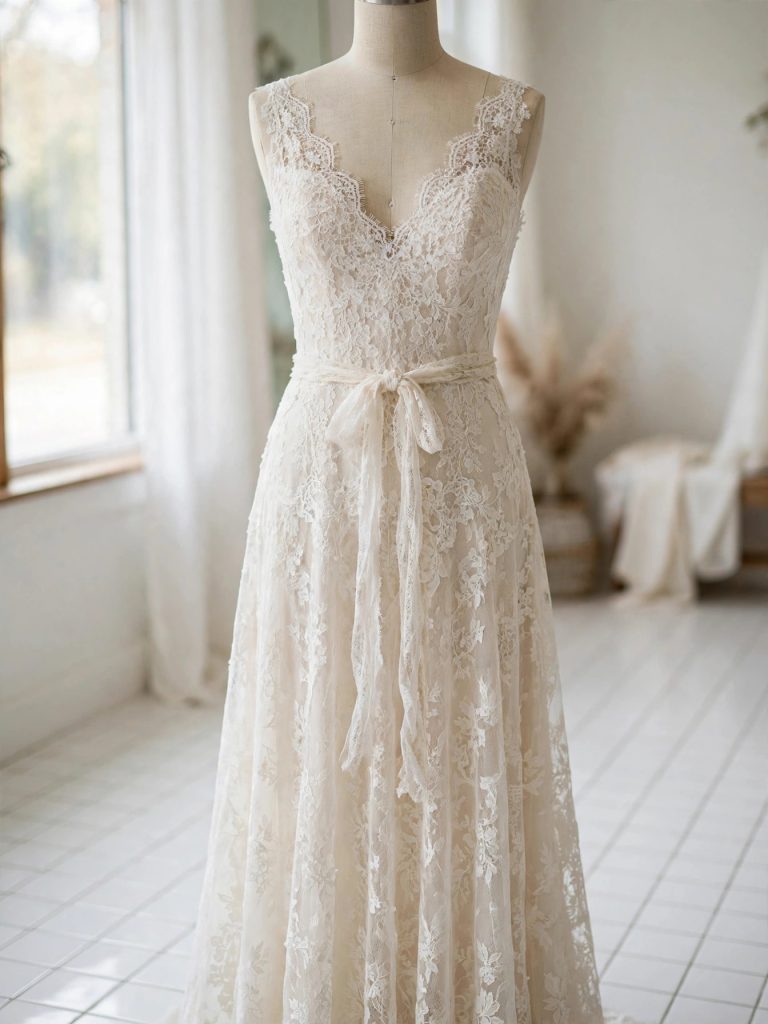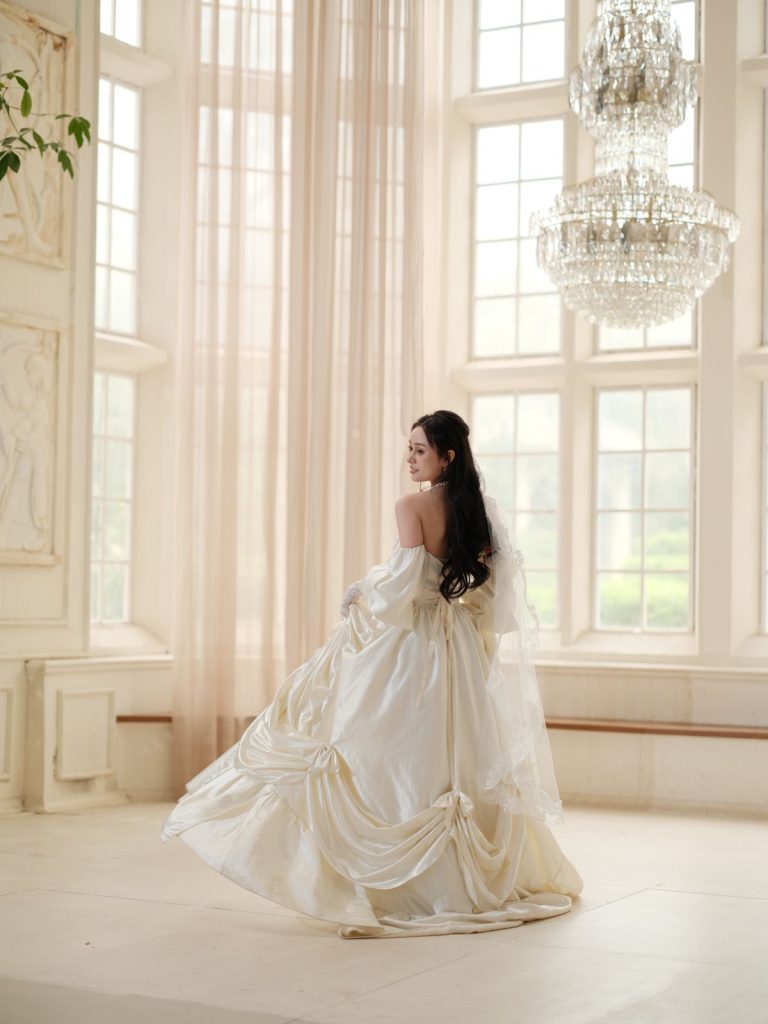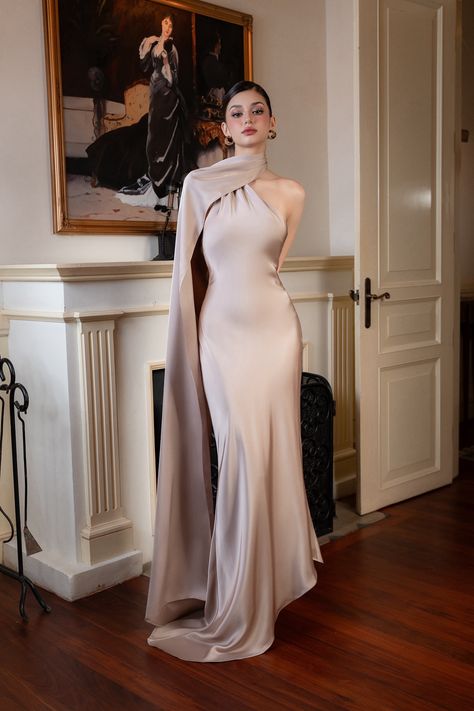
Lace is bought by the eye and judged by the hand, and the gap between those two is where this gown lives. The elegant lace V-neck dresses reviewed here, sold across bridal and evening use, hang on one decision made far upstream: which lace, at which motif size, edged which way, over which base cloth. A fabric stall can show you twenty laces that photograph as the same dress. Spread them on a table and run a palm across them and they become twenty different garments, some soft enough to drape into a V, some stiff enough to fight it, and the gown’s whole character follows from that table, months before a bride sees it.
A V-neck is a lace placement problem
The V is not cut so much as arranged. Lace arrives as a repeating motif, and a deep neckline asks that motif to finish gracefully along two diagonal edges that meet at a point. Better makers place the lace by hand at the neckline, turning a scallop or a flower to follow the edge, and the cost of that handwork is the quiet difference between a gown that reads expensive and one that reads printed. Cheaper runs cut the V straight through the repeat, and the motif ends mid-flower at the point, which the wearer notices at mirror distance even if she cannot name what she is seeing.
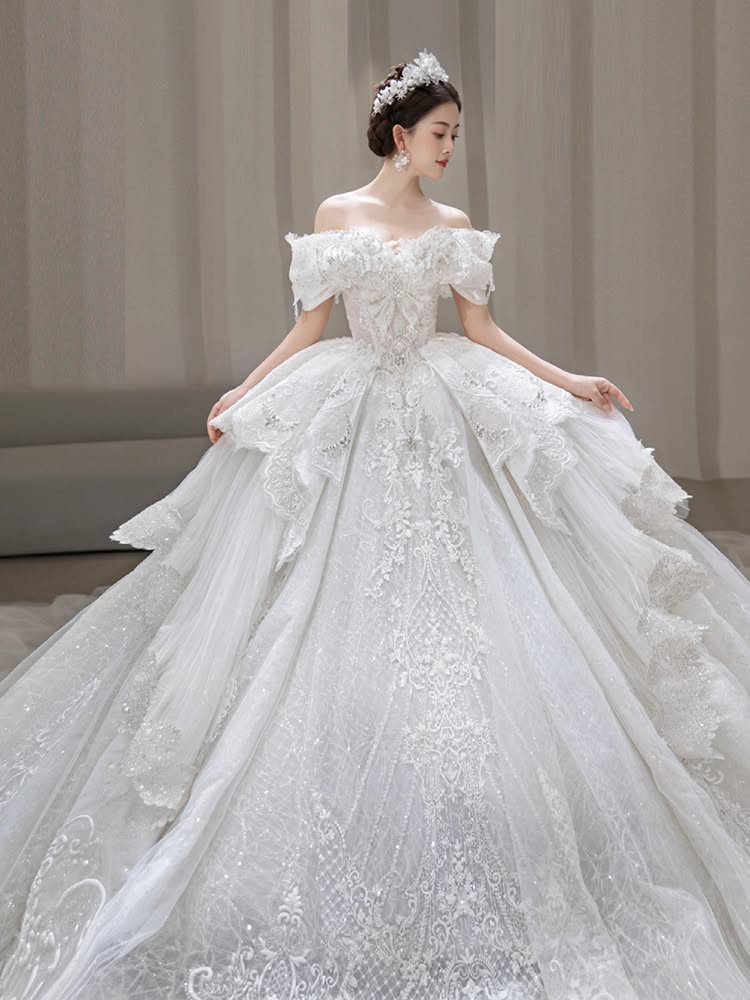
The depth of the V carries a second, duller problem: support. A V-neck bodice holds itself from the shoulders and the waist, with the centre front open, so the lace and its base cloth have to keep their shape without a closed front to lean on. A soft lace over a soft base relaxes through the day and the V wanders wider. The stalls that supply bridal regularly keep a firmer base cloth spec for V styles, not as an upgrade but because the returns arithmetic taught them that a wandering neckline comes back as a fit complaint with their lace blamed inside it.
Bridal lace and evening lace are not the same cloth
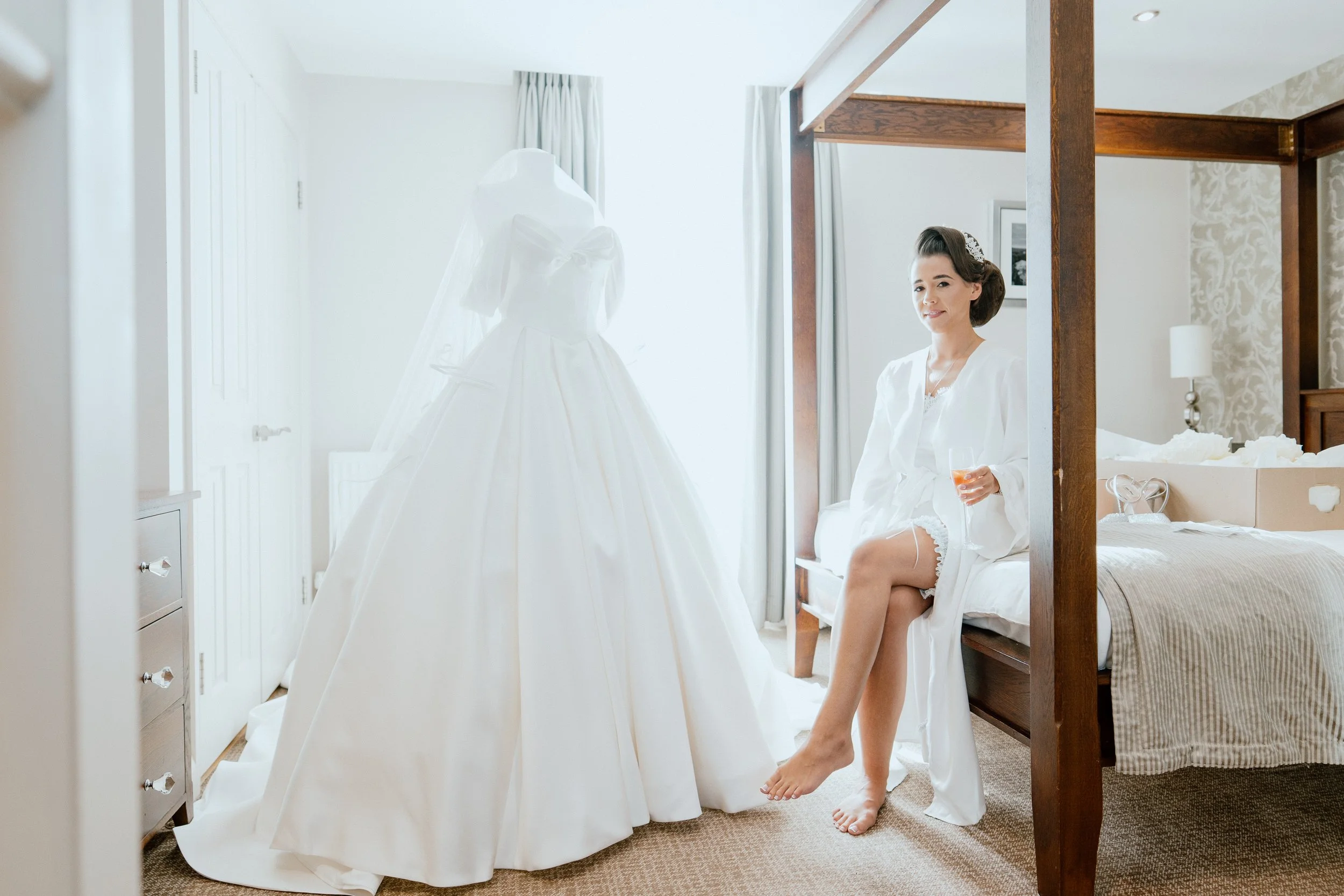
One style name serving two occasions invites one cloth to do two jobs. Bridal lace is judged in daylight, at close range, for hours, against skin and against the memory of every other gown in the shop. Evening lace is judged at distance, in warm light, for an evening. A lace with a slightly coarse motif and a bit of shine can pass the evening test handsomely and fail the bridal one in the first fitting, which is why reviews of dual-use gowns split in a way that looks like inconsistency and is really two juries grading two different exams. Upstream knows the split well. The cloth was honest. The listing asked it to sit both exams at once.
Weight writes the rest of the story. A heavier lace bodice over a full skirt asks the waist seam to carry both, and the seam’s setting, fine at the sample size, gets tested at the larger sizes where both lace and skirt hold more cloth. No wait, the test arrives earlier than that. It arrives at the first sitting, when the V bodice folds at the waist and the lace either recovers or keeps the crease for the photographs.
What the cloth side tells a buyer to check
Run a palm across the bodice lace and feel for the base cloth behind it; a V-neck wants a firm hand there. Look at the point of the V and see whether the motif finishes or is cut through. Then hold the gown at the waist and lift, because the seam that carries the skirt will tell you in two seconds whether the larger sizes were thought about or merely added.
At the cloth end of the trade this lace gets quoted beside the off-shoulder gothic cape gowns file, argued over next to the tailored lace mermaid bridal gowns grading notes, and compared with the short off-shoulder satin bridal gowns range, because all three live or die on what sits at the neckline.
Questions buyers and stores actually ask
Why does the lace motif look cut in half at the point of the V?
The neckline was cut straight through the lace repeat instead of placed. Better makers turn the motif by hand so a scallop or flower finishes along the V edges. It costs handwork at the bodice, and its absence shows at mirror distance even when the rest of the gown is well made.
The V-neck widens as the day goes on. Is the dress stretching or badly made?
A little of both, decided upstream. A soft lace over a soft base cloth relaxes with warmth and movement, and an open V front has no closed seam to hold its shape. V styles need a firmer base cloth spec, and gowns built without one will wander by evening however carefully they were sewn.
Why is the same gown praised as an evening dress and criticised as a wedding dress?
Two juries. Evening wear is judged at a distance in warm light for one night; bridal is judged close up, in daylight, for hours. A coarser or shinier lace can pass the first test and fail the second, so dual-use listings collect both verdicts on what is honestly the same cloth.
What should a bridal store ask a wedding dress manufacturer about a lace V-neck style?
Three things. Whether the neckline motif is placed by hand or cut through, what base cloth weight sits under the lace at the bodice, and whether that spec holds at the largest sizes. A garment factory that answers all three in numbers is usually the one whose samples match its bulk production.
The gowns that earn their names in this category are rarely the ones with the prettiest lace in the photograph. They are the ones whose lace was placed, not just purchased, whose base cloth was chosen for a neckline with no front to lean on, and whose maker understood that bridal and evening are two juries. Upstream sees the cloth leave the stall identical in both cases. What differs is everything decided after it, which is a comforting thought if you are the one deciding, and less comforting if you are only the one paying.