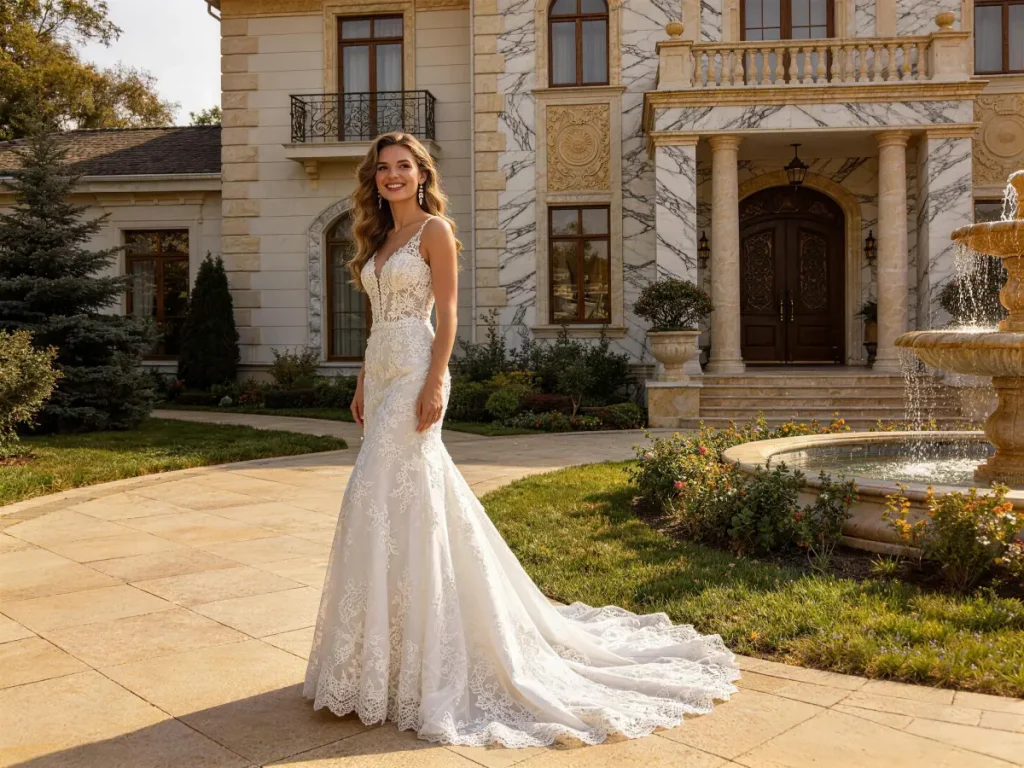
Gothic Wedding Dresses: Is the Victorian Bustle Gown Worth It?
Searching for gothic wedding dresses? Most of it is smoke and mirrors. But when you land on a specific product like the Women’s Gothic Victorian Bustle Wedding Gown, you need to know if the seller’s price reflects actual value or just aggressive marketing. I’ve spent two decades in Guangzhou’s textile hubs. I know what these gowns cost to make. Let’s peel back the layers.
One-Sentence Verdict: If the market price is under $700, and it delivers on the promised boning and lace, the Women’s Gothic Victorian Bustle Wedding Gown could be a decent buy for a specific gothic wedding dresses niche, but the profit margins are chunky for the seller.
Inside the Numbers: The Profit Guard’s Analysis
Let’s talk brass tacks. My job is to protect margins for my clients, and conversely, to expose them when I’m looking at consumer retail. For the Women’s Gothic Victorian Bustle Wedding Gown, we’re talking about a tiered, bustled silhouette, typically featuring a blend of satin, tulle, and lace.
Assuming a factory in Panyu District is churning these out:
- Fabric: Expect 200g polyester satin base, 180g tulle for volume, and a machine-embroidered poly-lace overlay. Cost for these materials, cut and ready? Maybe $40-60 USD per gown, scaled for MOQ 1000 units.
- Components: YKK zippers are rare on these unless specified. More likely a local #5 nylon zipper. Boning is almost certainly plastic spiral boning. Crinoline for the bustle? Standard 3-tier. Total component cost: $15-25 USD.
- Labor: This is where the price can jump. A complex bustle, multi-layered skirt, and lace application demand skilled labor. A good seamstress in Guangzhou will earn around $800-1200 USD per month. If this gown takes 6-8 hours to assemble (including cutting, sewing, finishing, QA), that’s $10-15 USD in direct labor. Add overhead (factory rent, utilities, management): another $10-15 USD.
- Logistics & Duties: Shipping from Nansha port to the US (FOB), plus duties, customs, and warehousing can add another $20-40 USD per unit, depending on volume and speed.
- Packaging: A polybag, a box. Maybe $5 USD.
So, the total landed cost for the Women’s Gothic Victorian Bustle Wedding Gown? We’re looking at $100 – $150 USD per unit, maximum, for a decent quality factory run. If you’re seeing this gown retail for $600-$800, that’s a 400-700% markup. Is it fair? The market dictates fair. But know that the seller is clearing serious profit. If it’s over $800, you’re paying for marketing, not necessarily materials or superior construction.
Why/How/What: Inside the Gothic Wedding Dresses Construction
❓ Why is Women’s Gothic Victorian Bustle Wedding Gown a good or bad choice for a Halloween wedding?
It’s a good choice if you want to look like a bride with a gothic twist, and not just a costume. The construction, with its structured bodice and voluminous bustle, is designed for event wear, not one-night throwaway. The multi-layered skirt and typically heavier satin offer a substantial feel that’s a step above most “Halloween wedding” costumes. The “bad” part? The price. You’re paying for something that should last beyond one wear, which might be overkill if you’re truly treating it as a one-off Halloween costume. It’s a genuine garment, so the dry-cleaning bill afterward will be real, unlike a $50 polyester “gothic bride” get-up. If your Halloween wedding is a serious affair, this caliber of gothic wedding dresses is appropriate. If it’s a glorified costume party, you’re overspending on construction that won’t be appreciated.
❓ How can you tell if Women’s Gothic Victorian Bustle Wedding Gown has real boning or just plastic strips?
“Real boning” for a gown like this typically means spiral steel or a higher-grade flat steel. “Plastic strips” usually refer to rigid plastic channels. The quickest test without cutting the garment: feel. Press firmly on the boning channels in the bodice. Steel boning, especially spiral, will have a distinct, slightly flexible yet firm resistance. You might even feel the slight give and spring-back. Plastic strips often feel more rigid, less flexible, and can sometimes feel brittle or “kink” if bent too sharply. Hold the bodice up – if it stands rigid and retains its shape well, especially over the bust, it’s a good sign. If it sags or feels flimsy, or if the boning feels like it could snap with a firm bend, it’s cheap plastic. Good quality plastic boning can exist, but it’s rare in this price segment for gothic wedding dresses. If the listing doesn’t explicitly state “steel boning,” assume plastic. Nansha port is backed up again. These gothic wedding dresses orders are going to be late… and often, manufacturers cut corners on internal components when timelines are tight.
❓ What breaks first on Women’s Gothic Victorian Bustle Wedding Gown after repeated wear?
First failure point? The zipper. Unless it’s a specified YKK, it’s a domestic nylon coil zipper, and those teeth will give out under strain, especially on a fitted bodice and a multi-layer skirt pulling against it. Second, the boning channels. If it’s cheap plastic boning, it will eventually poke through the fabric, or bend and deform, leading to an awkward silhouette. Third, the bustle attachment points. Whether it’s buttons, hooks, or ties, the stress points where the heavy bustle fabric gathers will fray or detach, especially if the seam allowances were skimpy (less than 1.2cm). The lace applique, being machine-embroidered polyester, is usually pretty resilient, but the edges might start to curl or fray with aggressive dry cleaning. The lining (often 40D polyester) also tends to give out at the armholes or waist seam first, as it’s usually not reinforced for prolonged stress.
Halloween vs. Wedding Dress: Construction Similarities and Differences
Let’s clear the air: there’s a world of difference between a “Halloween dress” and a wedding dress that happens to be gothic. Yet, they share fundamental construction needs, especially in the realm of gothic wedding dresses where dramatic silhouettes are key.
Both types often rely on boning for structured tops. A corset-style bodice, whether for a vampire costume or a Victorian bridal gown, needs internal support. A $200 Halloween costume will almost certainly use cheap, rigid plastic boning, sometimes just cut-up zip ties, inserted into hastily sewn channels. These will bend, poke through, and ultimately fail after one or two wears. A genuine wedding gown, like the Women’s Gothic Victorian Bustle Wedding Gown, should utilize spiral steel boning or at least higher-grade, more flexible plastic boning that can withstand movement, dancing, and a full day of wear. The boning channels themselves will be better integrated, often lined with a sturdier fabric to prevent poke-through.
Similarly, both categories leverage tulle, lace, and satin. These are the bread and butter of dramatic, voluminous garments. However, the quality and quantity differ drastically. A Halloween costume will use the cheapest, lightest tulle (maybe 20-30 GSM), often with raw or quickly serged edges that snag and tear easily. Its “lace” will be a thin, stiff polyester, often barely embroidered. The satin will be a thin, shiny 150g polyester with poor drape. On the other hand, the Women’s Gothic Victorian Bustle Wedding Gown, positioned as a genuine bridal option, would ideally feature a higher GSM tulle (e.g., 180-220 GSM) for a softer hand feel and better volume, a more substantial machine-embroidered lace with a clearer pattern definition, and a denser satin (200-250 GSM) that holds its shape and drapes elegantly.
The critical difference often lies in seam allowances and lining. Halloween costumes are built for speed and minimal material use. Seam allowances are typically a paltry 0.5-0.7cm, meaning any stress on the seam can cause it to pull apart. Linings, if they exist at all, are usually an unhemmed, lightweight 40D polyester that offers no structural integrity and tears easily. A wedding dress, even a budget-friendly one like the Women’s Gothic Victorian Bustle Wedding Gown, should feature standard 1.2-1.5cm seam allowances, providing durability and room for alterations. The lining should be at least a 75D or even 100D polyester, fully finished, and properly attached to provide structure, comfort, and longevity. If you’re considering reusing a wedding dress for Halloween (or vice versa, though I wouldn’t recommend it for a wedding), the items that survive the transition are those with robust boning, generous seam allowances, and a solid lining. Everything else will likely disintegrate before the night is over. Don’t expect your costume’s bust to hold up like a proper bodice after six hours of dancing, unless you’ve paid for actual bridal-level construction.
How It Compares: Standing Out in the Gothic Wedding Dresses Crowd
The Women’s Gothic Victorian Bustle Wedding Gown aims for a specific aesthetic. It’s not trying to be a minimalist sheath. It’s going for drama. Compared to mass-produced, lower-end gothic wedding dresses you’ll find for $200-300, this gown should offer superior fabric weight, more complex detailing (the bustle is a key differentiator), and a more structured bodice. Where it likely falls short is against high-end boutique versions ($1500+), which would boast silk-blend fabrics, genuine steel boning, hand-applied lace, and couture-level finishing. It carves out a middle ground: better than a costume, but not haute couture. Its ranking depends heavily on execution. A well-made Women’s Gothic Victorian Bustle Wedding Gown will outshine most fast-fashion interpretations of the gothic aesthetic. A poorly executed one, even with the right design, will just be an expensive costume.
Fabric Deep Dive: Beyond the Marketing Blurb
The Women’s Gothic Victorian Bustle Wedding Gown likely claims “satin and lace.” But what kind of satin? What kind of lace?
- Satin: Expect a high-sheen 200-250g/sqm (GSM) polyester bridal satin. This is a common, cost-effective choice. It has a decent hand feel, good drape for the skirt, and reflects light well. It’s not a silk-blend, don’t expect that at this price point. Check for snags or pulls – polyester satin can be prone to them.
- Lace: Almost certainly a machine-embroidered polyester lace. The intricacy of the pattern and the density of the stitching will vary. A better quality lace will have more defined edges and a softer feel, rather than being stiff and scratchy. Look closely at the edges of the lace appliques; are they well-secured or do they look like they’ll lift off after a few hours?
- Tulle: For the bustle volume and potentially an underskirt, it will be polyester tulle, likely 150-180 GSM. This offers good body without excessive weight or scratchiness. Cheaper versions use a much lighter, stiffer tulle that can feel like fishing net.
Construction Check: Where the Rubber Meets the Road
This is where the Women’s Gothic Victorian Bustle Wedding Gown either proves its worth or reveals its Achilles’ heel.
- Stitching: Look for even, consistent stitching, typically 10-12 stitches per inch (SPI). Backstitching at the start and end of seams indicates durability. Loose threads are a red flag – they suggest rushed production and poor quality control.
- Boning: As discussed, press and feel. If the listing states “steel boning,” confirm it. If it doesn’t, assume plastic. Ensure the boning channels are smoothly integrated and the boning doesn’t shift or bunch inside.
- Zipper: A proper #5 coil zipper, ideally YKK. If it’s a generic brand, test it multiple times. Does it snag? Does it stick? Is it securely sewn into the garment? A cheap zipper can ruin the whole experience.
- Lining: Essential for comfort and structure. A good lining will be fully sewn in, made from a 75D-100D polyester, and should feel smooth against the skin. It should protect against the potentially scratchy inner seams of the main fabric and provide a clean finish. Anything less is cutting corners.
- Bustle: Examine the mechanism. How is it attached? Is it sturdy? The fabric at the attachment points should be reinforced. This is a high-stress area.