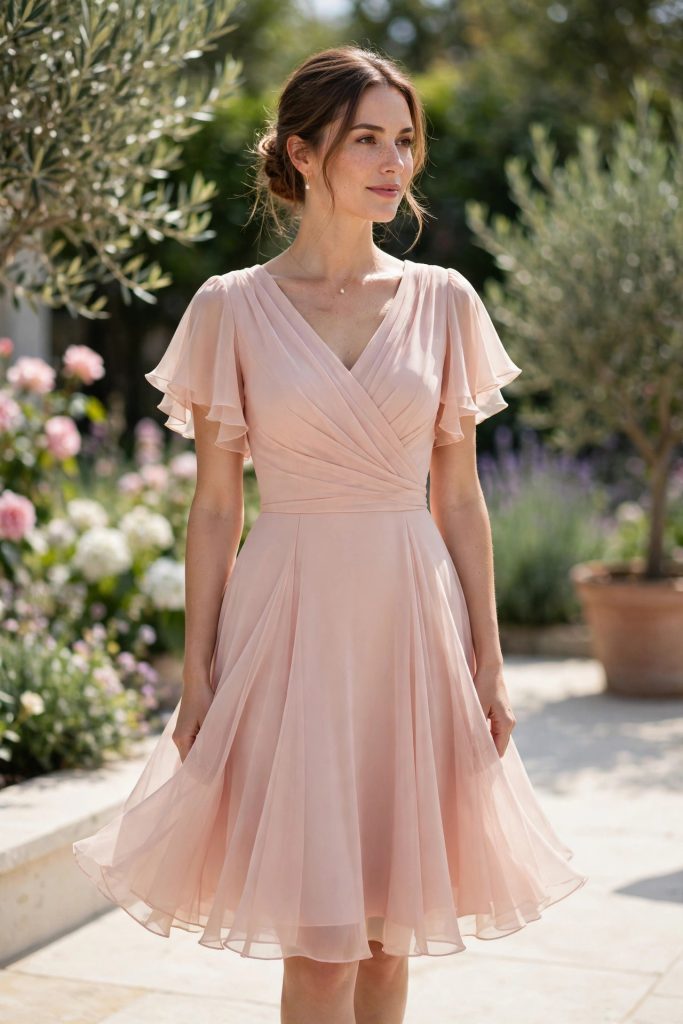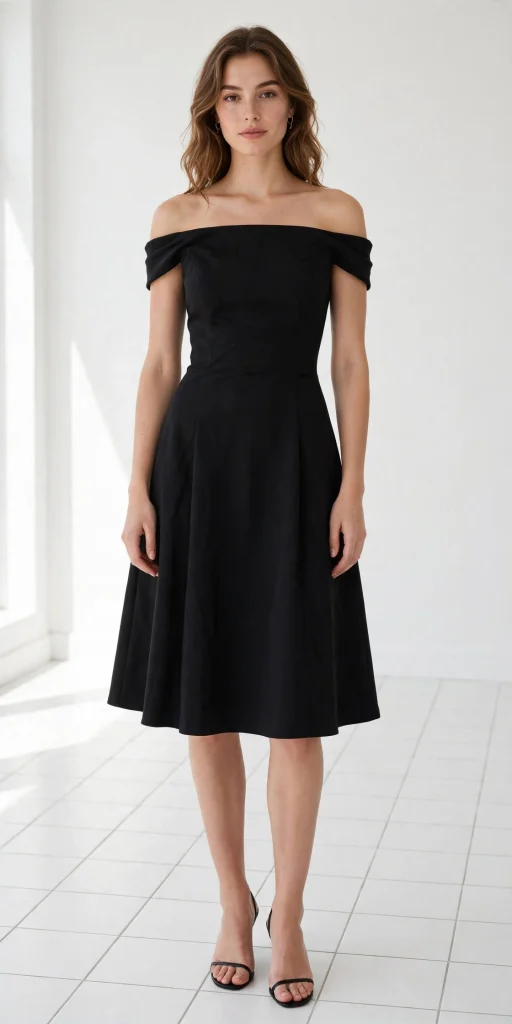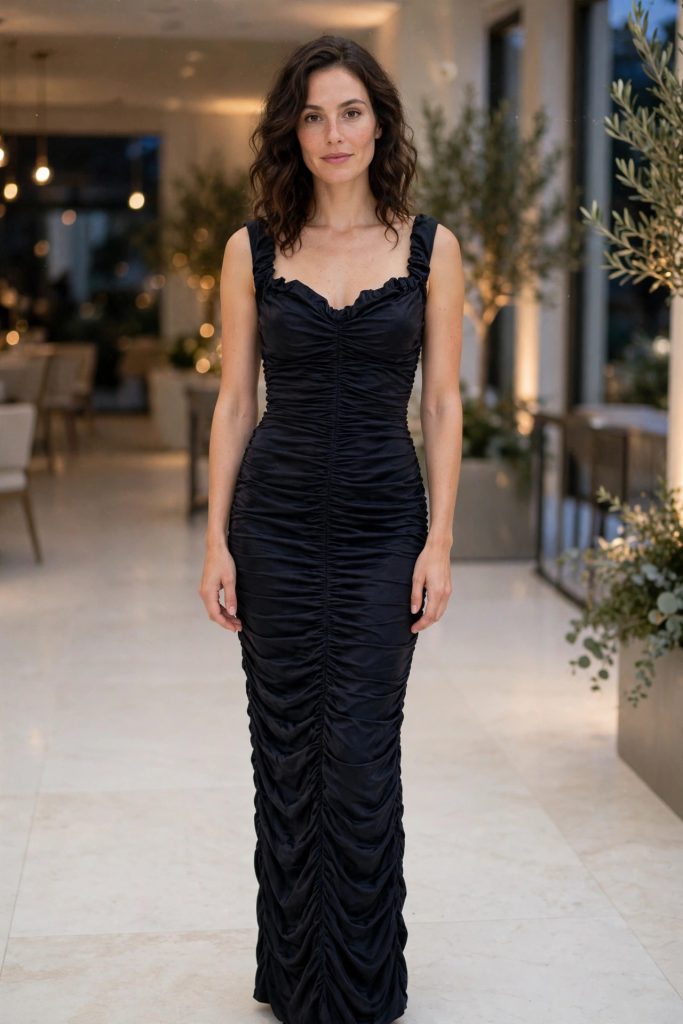
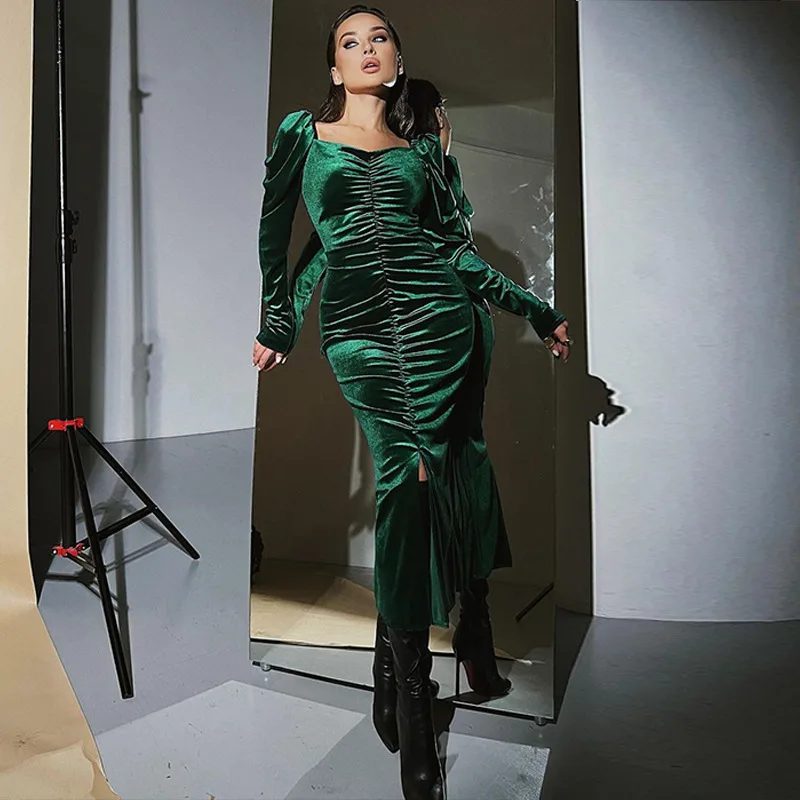
It begins with a price that ends the conversation early. A square neck ruched bodycon maxi at a Black Friday number low enough that the buyer stops asking the questions she would ask at twice the money, and December fills with a dress bought quickly for events that allow no second attempt. This review is written from the distribution side of that movement, where the same dress is seen in cartons, in size curves, and later in the small, telling trickle of what comes back and what, more interestingly, does not.
A low price does not remove the fit questions, it postpones them
Ruching is a forgiving construction with a time limit on its forgiveness. Gathered knit shapes itself around a body without hard structure, which is why this style serves wedding guests who do not want boning or a tailor in their week. The gathering hides small differences between the dress as graded and the body as lived. What it cannot do is hold that service at every size equally. At the ends of the curve the gathers either pull flat, and the dress loses the texture it was bought for, or bunch in the wrong places. The middle sizes carry the photographs. The end sizes carry the risk.

The square neck has its own quiet arithmetic. A straight neckline line reads clean and current, and avoids the depth arguments a V-neck starts in every size. Its honesty is also its exposure: a square neck that gaps when the wearer sits, because the knit has relaxed across the chest, shows the flaw in a straight, well-lit line with nowhere for the eye to go instead. A neckline measured on a new sample is a neckline at its best behaviour. The distribution side learns to ask how the same edge sits after the dress has hung in a warm stockroom for a month, since hanging is what maxi dresses do between the carton and the customer.
Black Friday buying is a calendar decision wearing a discount
The November buyer of this dress is mostly buying December: office parties, winter weddings, the compressed season where a dress is needed by a date that will not negotiate. Forward ordering against fixed dates changes what a flaw costs. A neckline gap found in October is an exchange. The same gap found on the afternoon of the event is a different dress bought in a panic at full price. Stock that lands late falls off a cliff into January, where the event rail empties and the same dress has to be argued for rather than reached for.
Returns tell the other half of the calendar story, and they are oddly quiet for this style. A low-priced dress generates fewer returns than its fit alone would predict, because returning a bargain asks effort out of proportion to the refund, and many quietly keep, gift, or alter instead. Quiet returns are not the same as satisfied customers. They are customers whose complaint never became data. A store building its reorder on the return rate alone will reorder the end sizes with confidence the middle sizes earned, and will meet the missing complaints in person, at the rail, in January.
No, that is too harsh on the dress itself. At its intended job, one December evening, a body that sits inside the forgiving middle of the size curve, it performs, and the photographs from those evenings are warm. The trouble is never the single happy wearing. It is the accumulation around it: the curve ends, the relaxed neckline, the late carton, the unreturned disappointment. Distribution is the business of accumulations, and this dress accumulates kindly in some places and carelessly in others, sometimes inside the same carton.
How a careful store orders this style
Sample the end sizes, not only the middle, and hang the samples for a week before judging the neckline, since the knit tells the truth about relaxation only after hanging under its own weight. Write the size curve deliberately, and keep a small buffer of middle sizes for December exchange traffic. For a bulk order, a garment factory can hold the ruching density and neckline band construction steady across the run when those two points are named in the order; unnamed, they drift toward the cheaper habit. Stock timing deserves the same plainness: a dress for fixed December dates should be in the building while November still has room in it.
The forward stock sheet for this dress is read against the ruched bodycon maxi dress wholesale guide, the black short sleeve wedding guest dress review size notes, and the red floral V-neck dress review holiday file, because a November price decision tends to borrow its logic from all three.

Questions buyers and stores actually ask
The return rate on this dress is low. Does that mean the fit is good?
Not by itself. At a low price, many unhappy buyers never return the dress, because the effort outweighs the refund, so the complaint never enters the data. Read the reviews and the in-store comments alongside the return rate, especially anything mentioning the largest and smallest sizes. A quiet returns file on a bargain dress is a measurement of the price as much as of the fit.
Why check the square neckline after the sample has hung for a week?
Knit relaxes under its own weight, and a maxi dress spends its life hanging. A neckline band that sits flat on a fresh sample can gap slightly after a month in a stockroom, and the straight square line shows that gap plainly. Hanging the sample is a free test of the dress the customer will actually meet, rather than the dress the factory photographed on day one.
Which sizes should a store sample before a bulk order?
The two ends of the curve as well as the middle. Ruching gathers behave differently where the body fills them least and most, and the middle size, the one in every photograph, is the least informative of the three. A wholesale order sampled at the ends costs two extra samples. A size curve bought blind costs a season of quiet disappointment at exactly the sizes a store can least afford to get wrong twice.
When is Black Friday stock of an event dress too late?
When it lands without exchange time before the December dates it was bought for. Event dresses are bought against fixed days, and a late dress cannot be marked down into usefulness the way a general style can. In the building during November, the same stock is a bargain. In the building in mid-December, it is a January markdown waiting for a rail, and the difference between those two outcomes is a shipping week nobody wanted to pay for in October.
The bargain at the centre of this style is real. A well-bought ruched maxi at a sharp price is exactly what a December rail needs. The desk just keeps a private list of what the price did not buy: time to exchange, forgiveness at the curve ends, a neckline tested after hanging. Buyers who know the list enjoy the dress more, because they stop asking it to be a different garment. The ones who never see the list meet it anyway, one December afternoon at a time.