A high neck and a high slit is a dress arguing with itself, and production enjoys the argument. The WOOSEA style reviewed here covers the throat, keeps the body long and close, and then opens one leg nearly to the hip, and every decision on the pattern has to serve both halves of that sentence at once. A neckline that high has no forgiveness in it. There is nowhere for a fitting error to hide, no drape to blame, and the slit below adds a moving part to a dress that otherwise asks to be read as one clean column. Benches that sew wholesale women’s dresses know this shape well. It is honest work when it is done properly, and it shows its seams when it is not.
The neck is a fit measurement, not a style note
Most necklines forgive a centimetre. A high neck spends it. The collar band on this style has to sit close without pulling, which means its length is graded against the neck and the shoulder slope together, and a wearer whose torso runs long feels the error as a tug every time she sits, while a shorter torso gets a band that stands away from the skin. Careful pattern work grades the band slowly, slower than the bust. Rooms that scale the whole bodice by one percentage and let the neck follow get a dress that fits the middle sizes beautifully and argues with both ends of the run, and the returns wording then says the sizing is inconsistent, which is true, and also not quite where the fault lives.
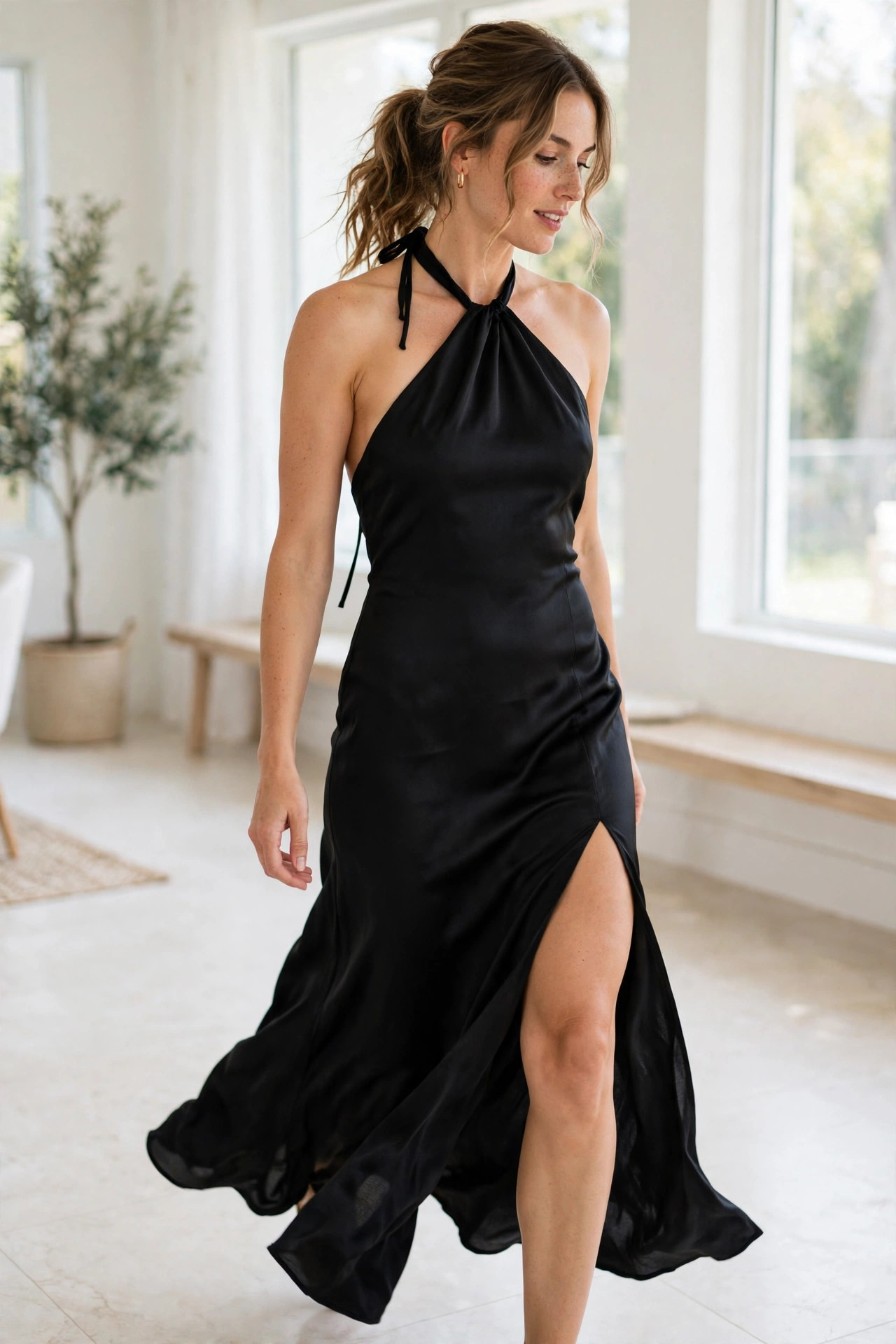
Closure is the neck’s second problem. A high neck needs an opening somewhere, usually a back zip running into the band, and that joint, where a moving zip meets a standing collar, is the fiddliest ninety seconds on the whole garment. Get the band a fraction short and the zip strains at the top of its travel for the life of the dress. Get it long and the collar ripples. A buyer reading quotes for this style can learn a lot by asking one plain question: how does the neck close, and who sews the join. The answer comes back either as a method or as a shrug, and the shrug is information too.
A slit is a walking mechanism
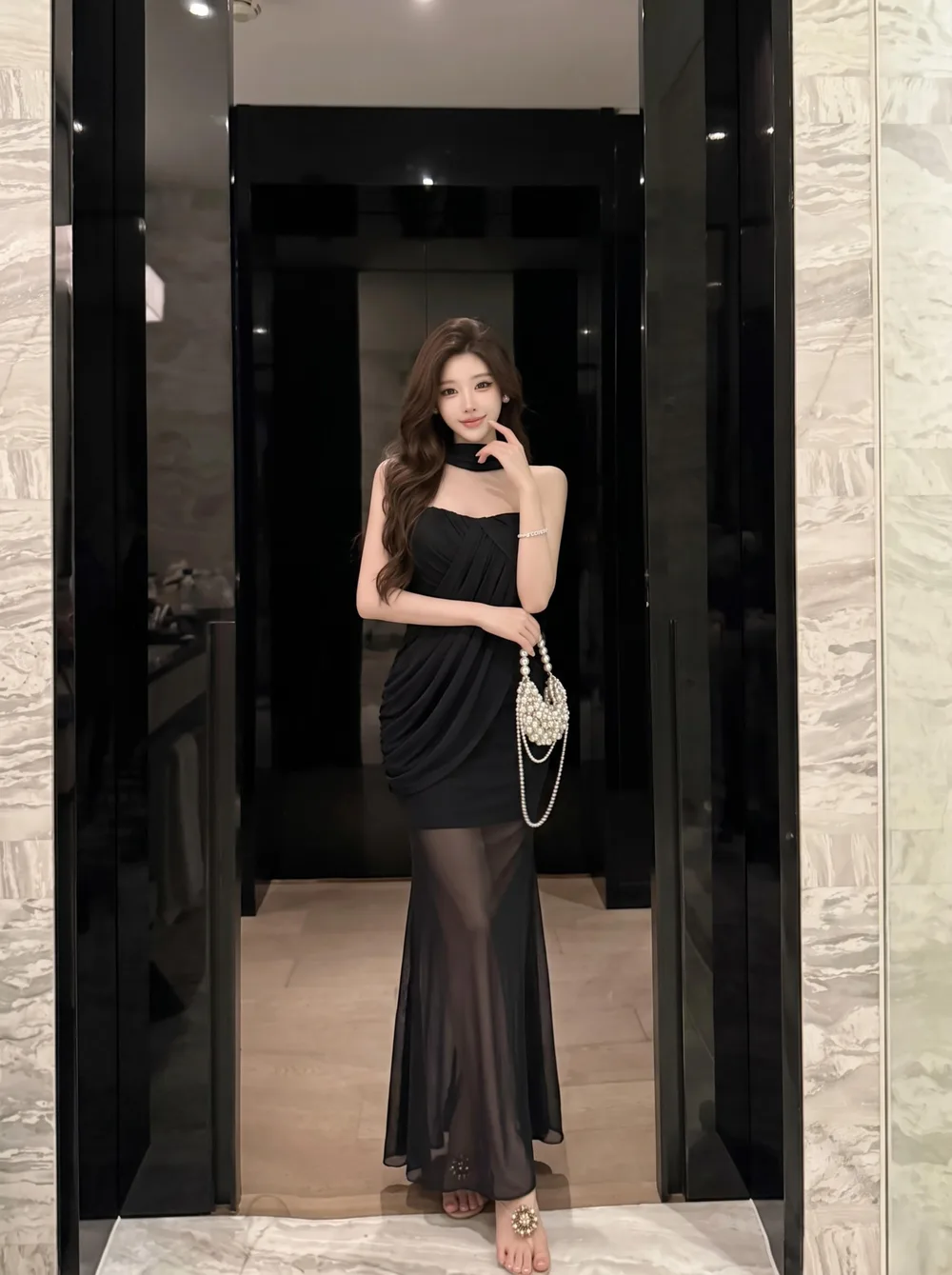
Below the waist the dress changes jobs. The slit is not decoration, it is the stride. A fitted skirt without an opening walks in small steps, so the slit height is set by movement, and then it has to be defended in production, because slit height drifts. One operator’s eye sits a centimetre higher than another’s, and across a bulk order the same dress can arrive with openings that differ enough for two wearers in the same size to have different evenings. Sound lines mark the slit stop on the pattern so it cannot wander, and reinforce it, because a slit is a tear that was invited, and an unreinforced invitation keeps travelling the first time the wearer lunges for a taxi. No wait, travelling is too kind a word. It runs, upward, in public, and it takes the dress’s reputation with it.
Cloth choice ties the two halves together. This shape wants a fabric with some body and a little give: enough structure for the neck band to stand, enough ease in the skirt for the slit to be a stride and not a strain. A cloth too soft lets the collar wilt by the second hour. A cloth with no give turns every sit into a negotiation with the hip seam. Sampling is where that balance is honestly tested, a pre-production sample worn sitting, standing, and climbing stairs, and factories that build that worn test into sample development ship a different dress from the ones that approve this shape off a hanger.
On the factory calendar this high neck run is sewn beside the black short sleeve guest dress file, checked against the square neck ruched bodycon notes, and finished ahead of the Christmas halter cocktail range, because all three live or die on how a neckline and an opening behave once a body is moving inside them.
Questions buyers and stores actually ask
The collar tugs when the wearer sits down. Is the dress too small, or is something else off?
Usually the neck grading, not the size. A high band graded at the same rate as the bust ends up short on longer torsos, and sitting lengthens the back, so the tug arrives exactly then. Going up a size widens everything except the real problem. Makers who grade the band slowly ship collars that sit quiet through a whole dinner, which is the test this neckline actually has to pass.
Two dresses, same size, slits at different heights. How does that happen on one order?
The slit stop was left to the operator’s eye instead of being marked on the pattern. A centimetre of drift per bench is normal hand variation, and a fitted skirt shows it because the opening is the dress’s moving part. A marked, reinforced stop holds the height across a run, and buyers can ask whether the stop is marked or judged.
A high neck with a back zip. What breaks first on this style?
The top of the zip, where it meets the collar band, if the band was cut even slightly short. That joint takes strain every time the dress is closed. A sample checked by opening and closing it twenty times, not twice, shows whether the joint was engineered or just assembled.
Can a store trial this dress at 10 pieces per style and learn anything useful?
Yes, if the ten are spread across the size run, because this style’s lessons live at the ends of the run, in the collar on the longest torso and the slit on the fullest hip. Ten middle sizes will come back lovely and teach nothing. A spread trial, worn and sat in, tells the store whether the neck grading and the slit stop were done properly.
Private label buyers ask for this shape in their own colours. What should the tech pack pin down?
Three things, in writing: the collar band length per size, the slit stop position measured from the waist, and the closure method at the neck. Colour is the easy part of a custom order. The fit arguments on this dress all live in those three numbers, and a tech pack that names them turns a photograph into a repeatable garment.
Done well, the style earns its complicated keep. It gives a boutique one dress that reads evening, cocktail, bridesmaid and after-dark party without changing a seam, and it reorders cleanly under a private label because the pattern, once the neck and the slit are settled, is stable work. Done carelessly it gives the same boutique a collar that argues and a size run that only agrees with the women in the middle of it. The photograph cannot tell those two dresses apart. The pattern table already has.