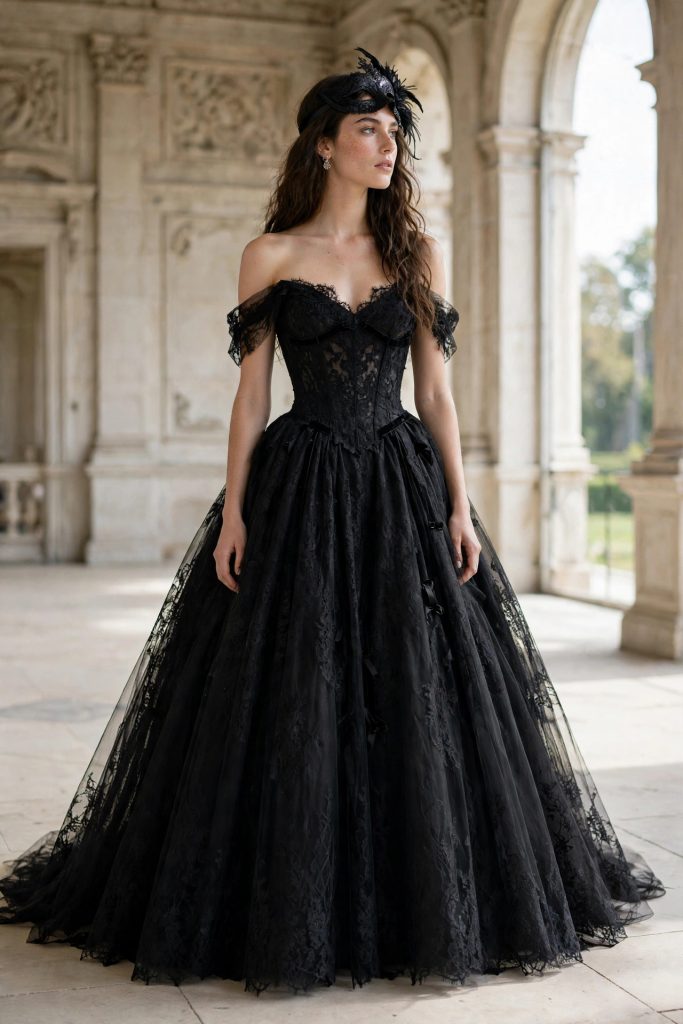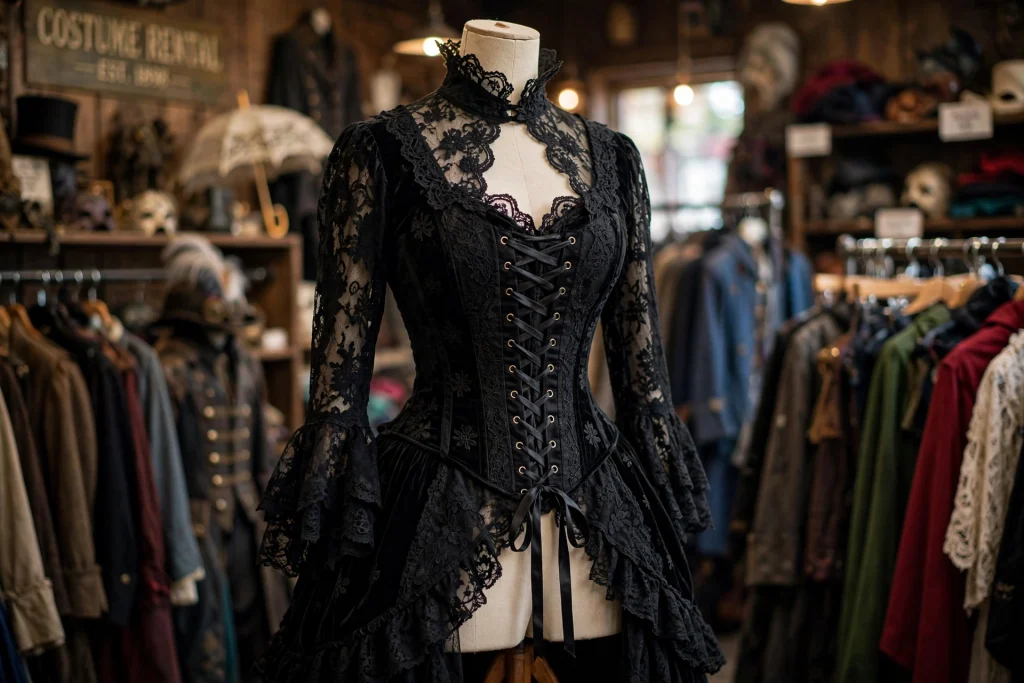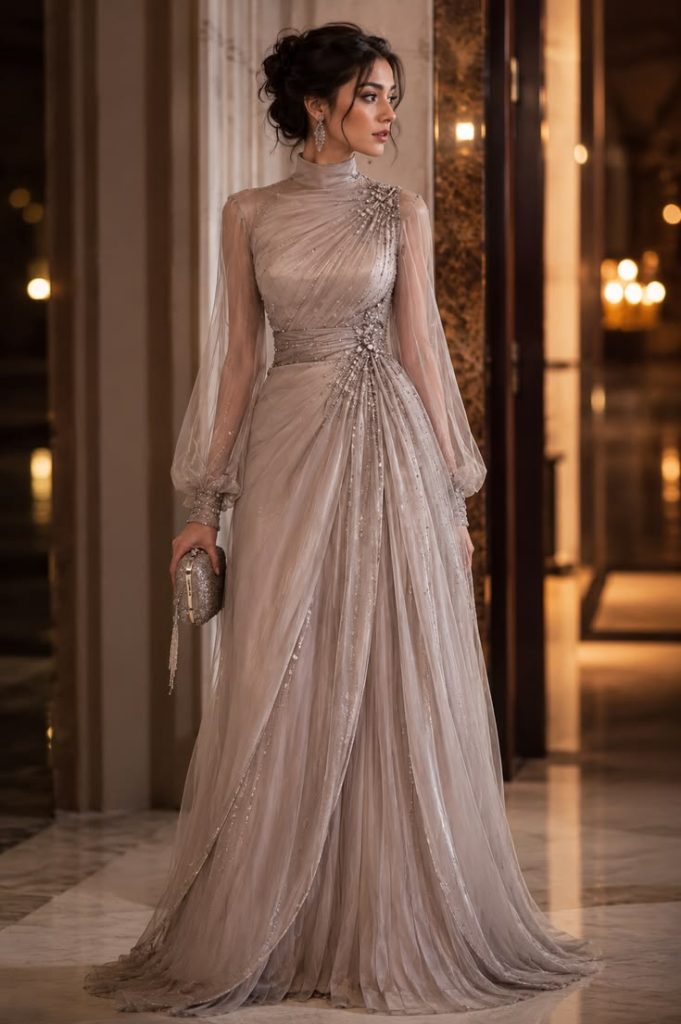
Dear anyone planning to stock this dress: it is four dresses. I move garments for a living, freight and warehousing and the deadstock end of the trade, and I am writing this as a letter because a report would pretend the 1950s vintage dress, the goth and swing and cocktail kind, is one product with one buyer. On paper it is. Full skirt, fitted waist, prints or black, tea length or just under. In the building it is four products that happen to share a carton, and they sell in four different months to four different shops for four different reasons, and the trouble starts when a buyer orders it as one.
One dress, four calendars
The swing version sells on the dance and retro calendar, steady through spring and summer, forgiving about timing. The cocktail version sells into the party season and behaves like ordinary occasion stock. The goth version is a Halloween product wearing a dress’s name, and Halloween is the hardest deadline in this trade, a date that does not negotiate, after which the same dress is worth a fraction of itself until next year. The gothic wedding version sells all year in a thin, steady line to themed weddings that plan far ahead and forgive nothing about shade or finish. A distributor reading an order for this style asks which calendar the buyer is on before asking how many pieces. The answer changes the freight, the packing, and whether the order should exist at all.
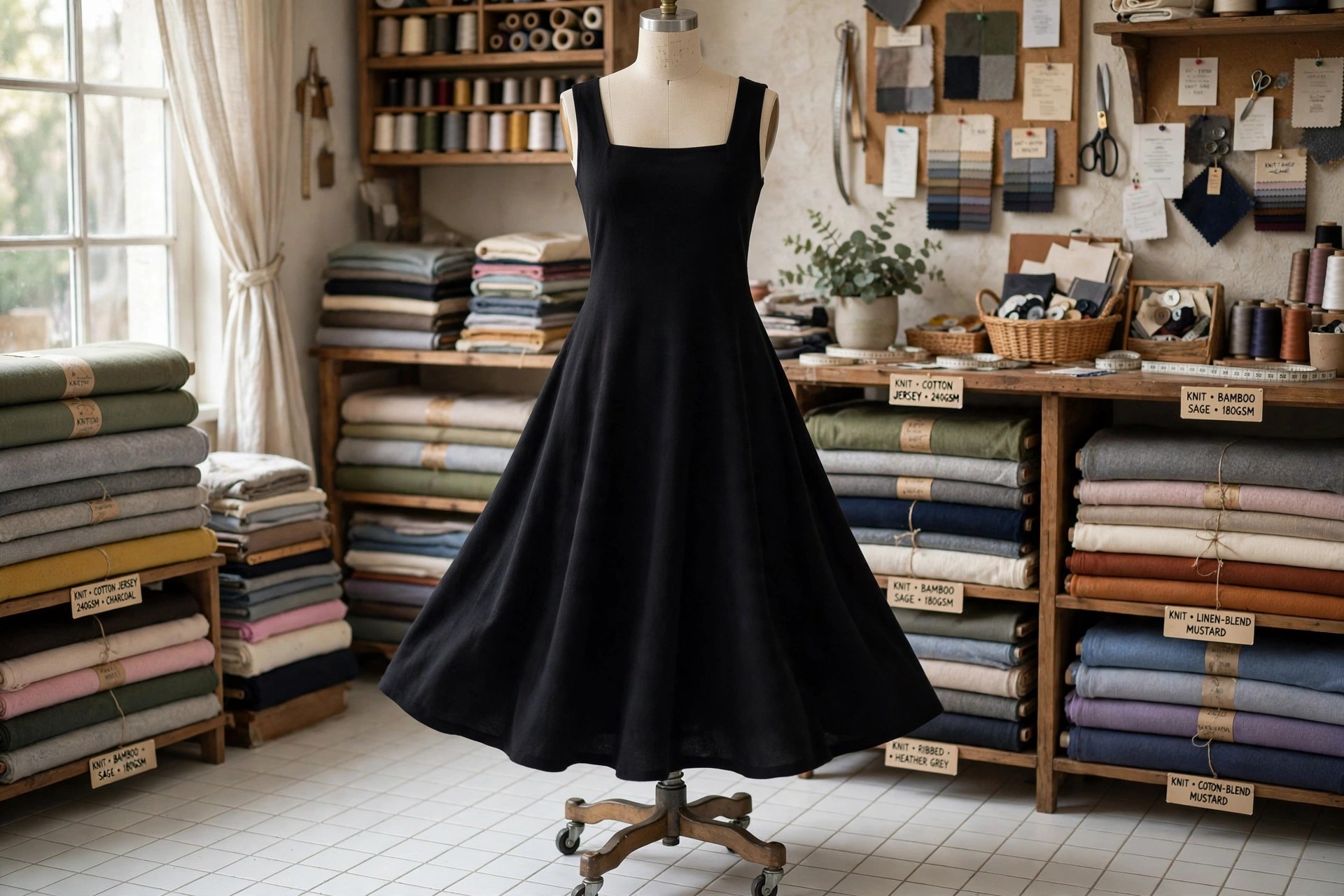
Full skirts punish lazy logistics. A swing skirt wants air around it, and a carton packed tight to save freight arrives with the flare pressed out of it and the hem creased in places a steamer only partly forgives. The per-piece freight on this dress is worse than on a straight dress of the same weight, every time, because volume is the bill. Buyers comparing two quotes on this style should compare the packed cube as well as the piece price. The cheaper garment in the heavier-compressed carton has a habit of arriving as the more expensive dress, once the steaming labor and the first-week markdowns are counted by somebody honest.

What the channels teach you
Deadstock taught me the sharpest lesson here. When a mixed order of this dress misses, it does not miss evenly. The black goth pieces clear eventually, discounted, because black has a second and third life. The floral swing pieces clear to a different buyer entirely, at a different season. The piece that strands is whatever was bought for the themed wedding channel in the wrong shade of almost-right, too specific to discount gracefully and too late to return to its moment. A garment factory can sew all four versions beautifully and the order can still fail in a warehouse, on a date, in a shade. Distribution is where good dresses go to be judged by calendars instead of mirrors.
My working rules for this style are boring and they hold. Split the order by channel on paper before it is placed, even when the pieces share a cutting table. Ship the Halloween-bound stock a full season early and let it sit, because sitting is cheaper than flying. Keep the wedding-channel pieces out of the compressed cartons entirely. And when a buyer wants one mixed trial order, keep it at the MOQ level, 10 pieces per style, spread across the versions they actually plan to sell, not a sampler of all four. A sampler teaches a shop what each version looks like on a rail. It teaches nothing about which calendar will pay for it.
In the warehouse this dress is planned on the same calendar as the steampunk strap dresses for the Halloween calendar, shelved near the gothic summer floral mesh maxi dresses through the summer, and cross-read against the Spanish lace for vintage themed weddings whenever a themed wedding order lands, because all four sell a version of the past to a different buyer.

Questions buyers and stores actually ask
One mixed order of 200 pieces across all four versions. What is wrong with that plan?
The mix hides four different selling calendars inside one delivery date. The Halloween pieces need to land a season early, the wedding pieces need shade-perfect handling, and the swing pieces could have shipped any time, so a single shipment forces one calendar’s discipline onto all of them or none of them. Split the plan on paper first, even if production still runs together. The shops that do this reorder calmly. The ones that do not tend to discover their four dresses in October, at four different levels of regret, usually.
Why is the freight quote on a full-skirt dress higher than on a straight dress of the same weight?
Because the skirt ships as volume. A flared skirt either travels with air around it and keeps its shape, or travels compressed and pays for steaming and handling at the other end. Carriers charge for the space either way. When you compare quotes, ask how the dresses are packed and what the carton dimensions are, not just the rate per kilo. I have watched the cheaper freight quote lose to the dearer one on total cost so many times that I now ask for the carton before I ask for the price.
Ten pieces per style for a trial across versions. How should a shop split them?
Split them by the channel the shop will actually sell, not evenly across all four versions for the look of the thing. A shop with a themed wedding clientele should weight the trial toward that version and its real shades. A party shop should weight the cocktail cut. Ten pieces spread with intent teaches sell-through, which is the only lesson a trial order owes you. Ten pieces spread evenly teaches photography, and the shop already has photographs, in my experience.
The goth version missed Halloween. Is the stock dead until next year?
Not dead, just discounted and slower, and black helps it here. A black full-skirt dress has lives outside Halloween, in themed parties and winter events, that a seasonal print does not. What usually strands is not the goth version but the shade-specific wedding version bought for one theme. So the honest triage after a missed date is to move the black on its second life, hold the swing stock for spring, and write the lesson into next year’s order date rather than into a markdown on everything at once.
I started this letter meaning to warn you off the dress, I think. Reading it back, that is not what I believe. It sells, in four directions at once, which is more than most dresses manage. What I believe is narrower and less helpful as a headline. The dress is fine and the order is usually wrong, written as one line when it was always four, and I have unloaded the proof of that sentence too many Octobers in a row to argue it gently anymore.