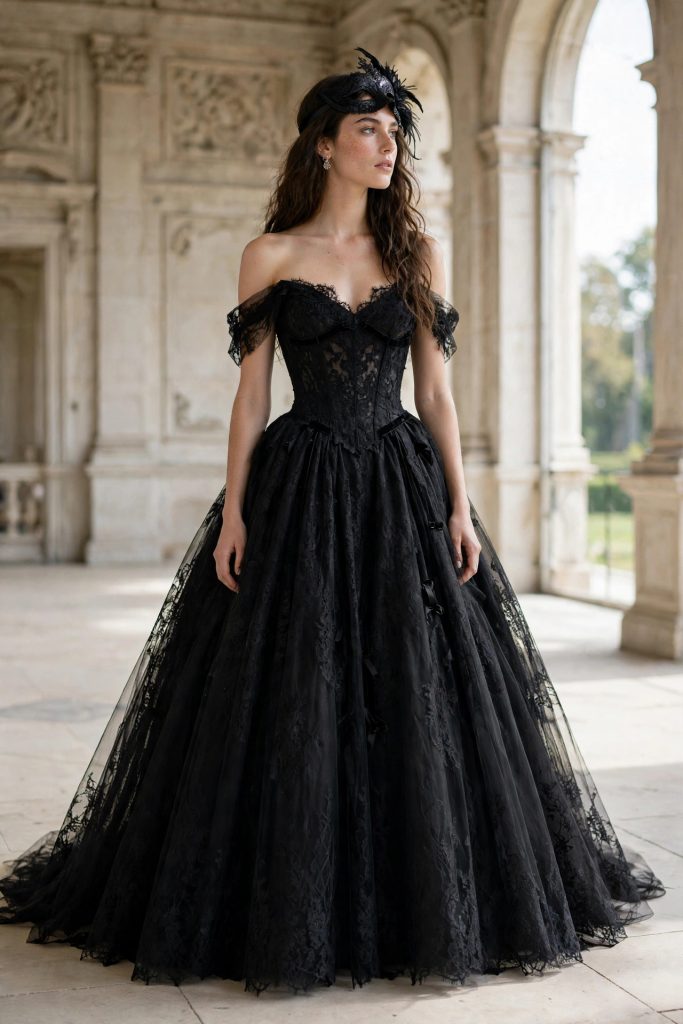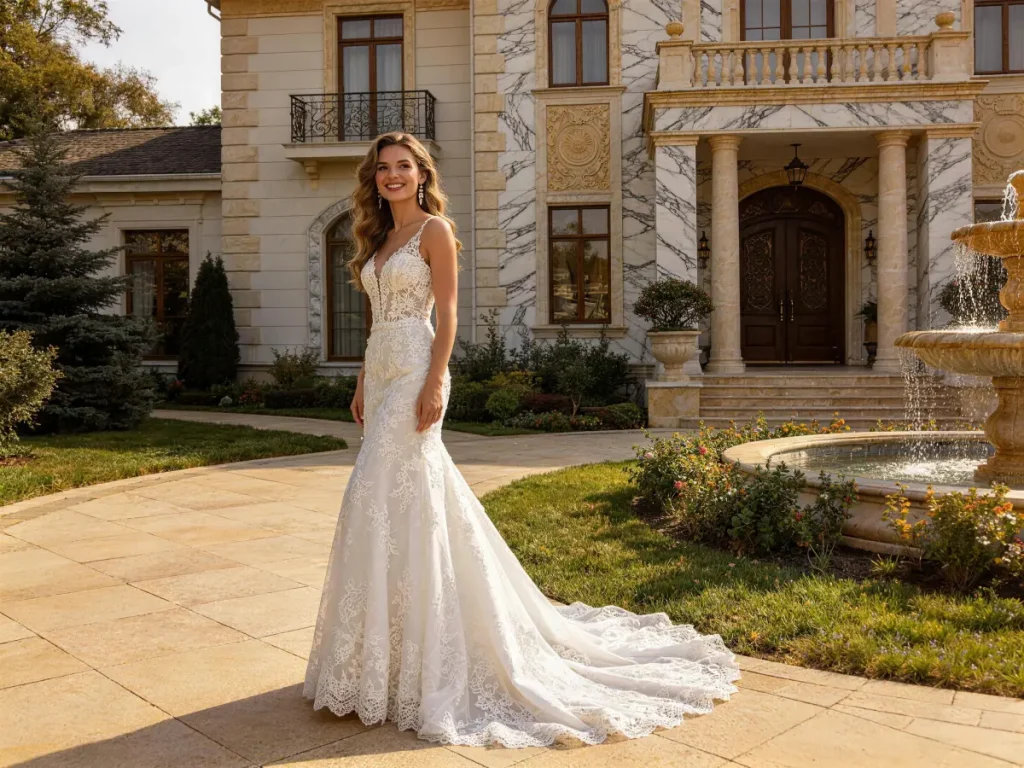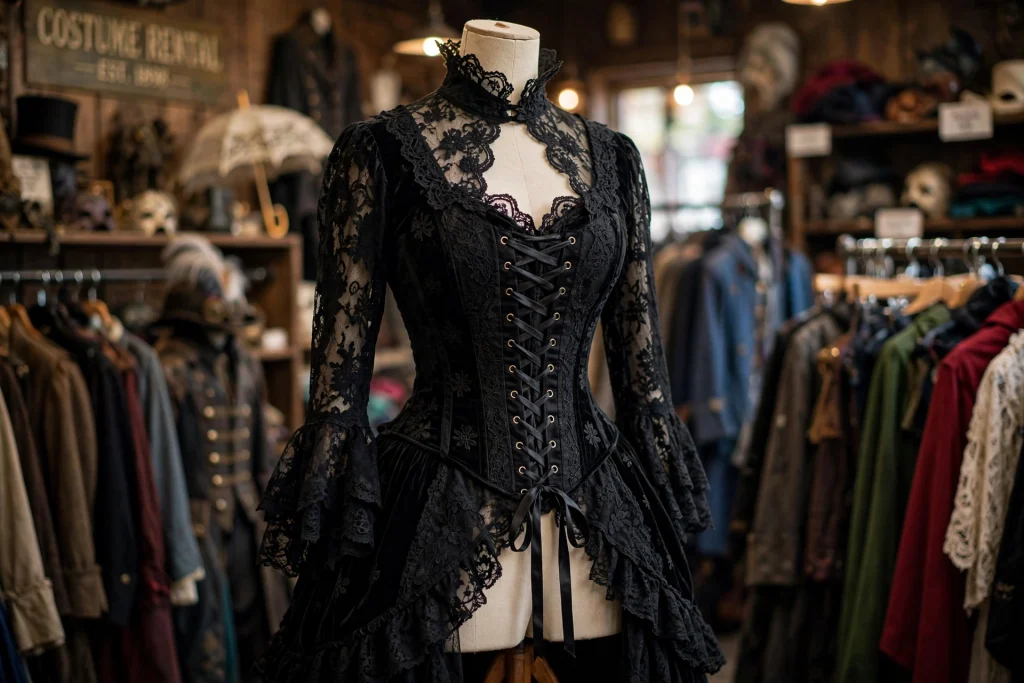
Work backwards with me, the way the returns desk has to. The parcel comes back on a Monday, the gown folded with the care of somebody who wore it for six hours and thought about the refund for five of them, and the reason code says too revealing. I read return reasons for a living, and that code, on this floral plunge V-neck ruched black formal gown, is the start of the story rather than the end of it. Too revealing is what a customer writes when the dress she received is not the dress in the photograph in one specific way: the V she got is deeper than the V she ordered, and the difference was put there by arithmetic, long before the parcel was packed.
A V that is copied gets deeper on its own
A plunge neckline is a point on the body, not a shape to be photocopied. If a pattern is graded by scaling everything in proportion, the V point travels down as the sizes go up, because a bigger bust in the scaled drawing pulls the whole geometry with it. A size that fit the sample’s intent at a medium can arrive at the top of the run several centimetres lower, lower than the wearer chose, lower than the listing photograph shows, low enough to change what the dress is. Sound grading for a plunge style treats the neckline depth as its own number per size: the point is placed deliberately, sometimes shallower on the larger sizes to land at the same place on the body, and the ruching is re-spaced to meet it. None of that shows in a size chart. It shows in the returns wording, where the top sizes say too revealing and the middle sizes say nothing at all, and a brand reading only its average rating will never see the pattern the desk can see by Friday.
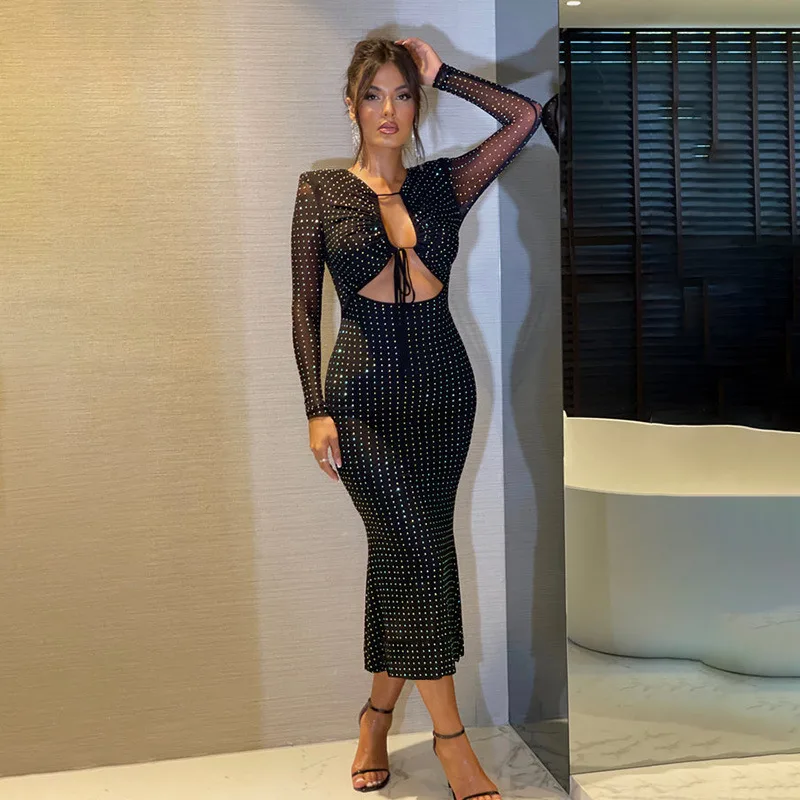
The ruching and the floral print conspire in a quieter way. Ruching across the midsection is this gown’s kindness: it gives a body fullness with somewhere to go and breaks up the long black line so the eye reads shape instead of a column. But a floral motif printed on black, then gathered, does not stay the motif in the photograph. Gathers fold the flowers into themselves, a bloom that sat flat on the sample can land half swallowed at the waist on one size and whole on the next, and the customer who chose the dress for that bloom reads the difference as a different dress. Black carries some of the blame unfairly here. The print placement was a cutting decision, and cutting decisions are invisible until a body is inside the dress, moving, which is the one state a listing never shows.
Standing is not the test this dress has to pass
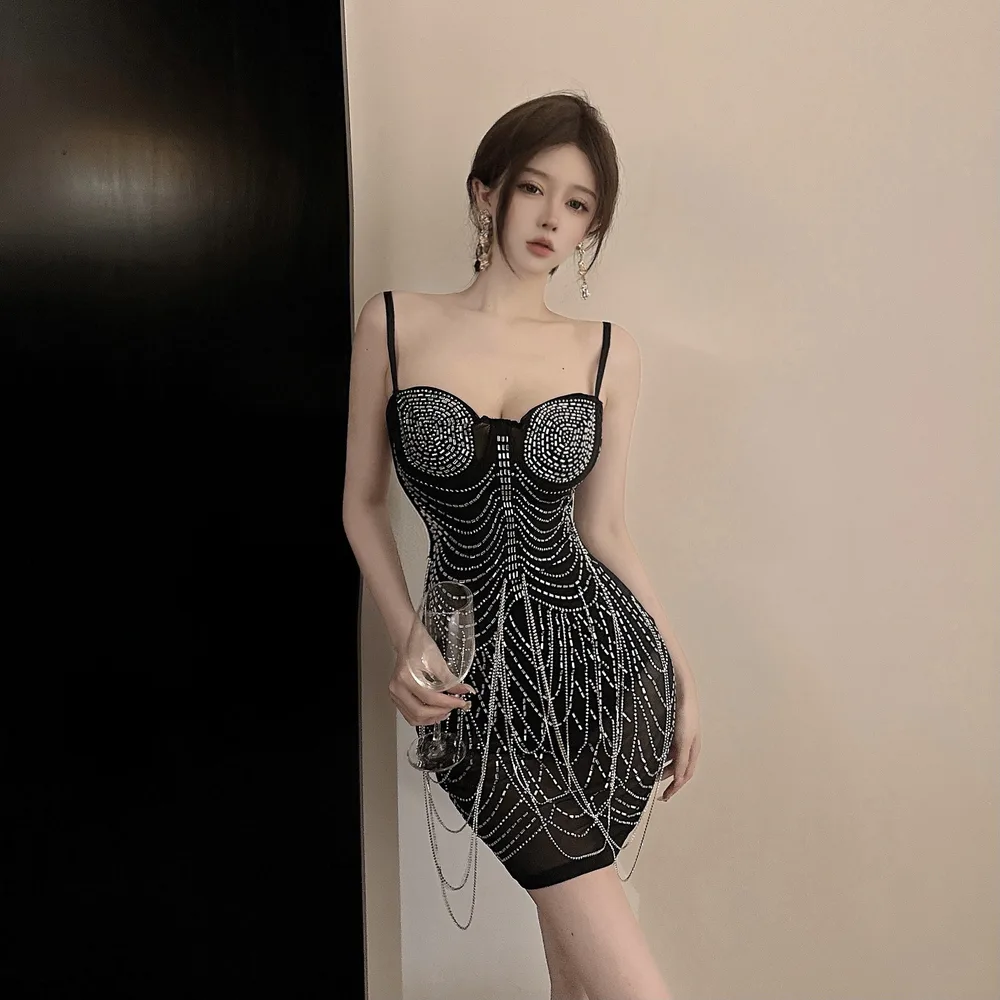
Then there is the part of the evening nobody photographs for a listing: sitting. A plunge front and a long skirt behave one way standing in a mirror and another way entirely in a chair, because a seated torso shortens, the bodice settles, and a V that was held by posture standing starts to gape at exactly the height of a dinner table. Add the ruching relaxing as the evening warms up and the dress a woman checked at six o’clock is a slightly different dress by ten, looser at the waist, freer at the neckline. No wait, looser is not quite it either. The dress has not changed size. The wearer has stopped holding it where it was designed to be held, which is a design assumption, not a customer failure. Reviews that say it was fine all night and reviews that say it would not stay put are both telling the truth about the same gown on different evenings, and the returns desk learns to read the event before it reads the dress.
The returns desk reads this gown beside the slit maxi evening gown review, files it with the elegant formal dresses range, and cross-checks its larger sizes against the plus size formal maxi dress review, because a plunge neckline and a size run fail together or not at all.
Questions buyers and stores actually ask
The medium fit like the photograph and the large came back as too revealing. Same dress, so what changed?
The grading changed it. If the neckline was scaled up with the rest of the pattern instead of being placed per size, the V point sits lower on the larger body than it did on the sample, and lower reads as a different intention. The customer is not describing a taste problem. She is describing a geometry problem that only exists at her end of the run. A chart will not show it. Measuring the V depth on two sizes side by side will.
It held fine standing in the fitting room and gaped all through dinner. Did she buy the wrong size?
Probably not, and the fitting room is the misleading part. Standing posture holds a plunge front where the designer put it. Sitting shortens the torso, the bodice settles downward, and the opening frees itself at table height. A size up makes the gape worse, not better, because there is more cloth with nowhere to go. The honest test for this style is a chair, five minutes, and a lean forward, done before the tags come off.
The flowers on her dress sat differently from the listing. Is print placement just luck?
Mostly it is cutting, which feels like luck from the customer’s side of the parcel. On a ruched style the motif is folded by the gathers after cutting, so where a bloom lands depends on both the cut and how the ruching was spaced for that size. It will never be identical dress to dress. What a buyer can hold a brand to is the general scale and density of the print. A bloom twice the size of the photographed one is not variation. It is a different print run.
I do not think this gown is a dishonest product. In the middle of its size run, worn standing and dancing by the body it was sampled on, it does what its photograph promises, and the floral on black is prettier in person than the listing manages. What I no longer trust is the assumption that a graded run is one dress in several sizes. With a neckline like this one it is several dresses sharing a name, and the ones at the ends of the run have their own opinions. The parcel will keep coming back on Mondays until the V gets graded like it matters. Mondays are patient. They can wait longer than a product line can.