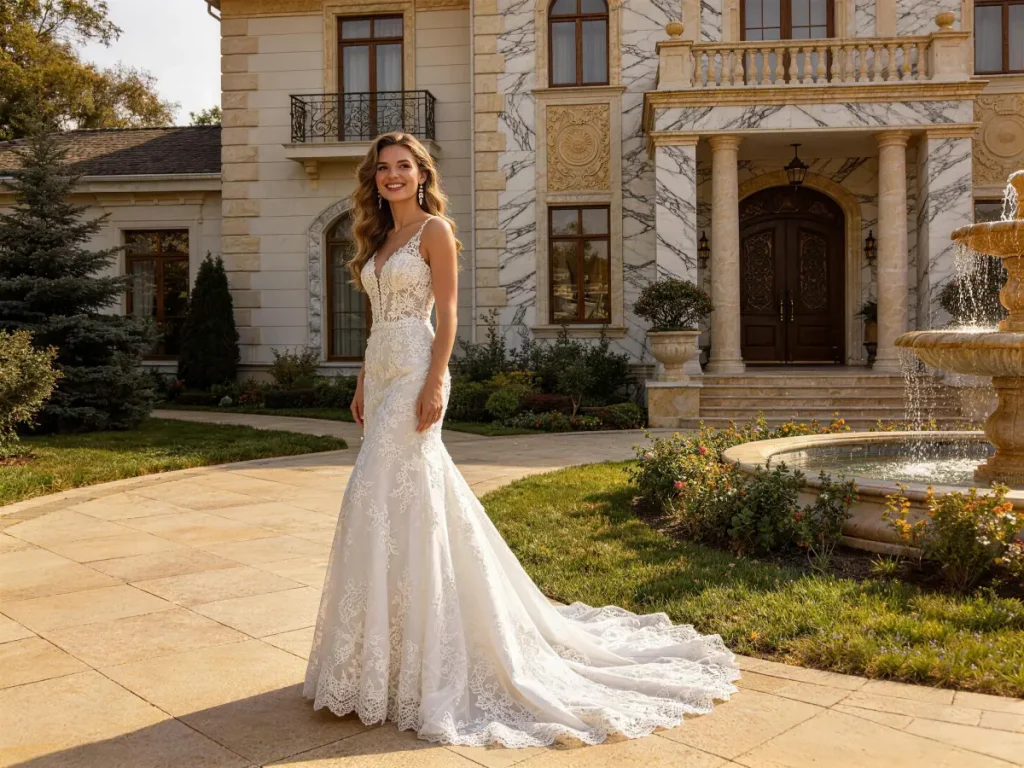
Buying a 1950s-style vintage dress online — goth, swing, cocktail, or Halloween bridal — fails most often on one thing: sizing. Vintage-inspired cuts don’t follow modern sizing logic, and product photos hide every construction shortcut. This guide covers how to measure, how to read size charts, what can and can’t be altered, and the quality checks to run the moment the dress arrives.
The Bottom Line: Measure Yourself and Compare to the Size Chart — Never Order Your Usual Size
Your usual dress size is meaningless for 1950s-style dresses. These cuts run trim through the waist by design, vanity sizing varies wildly between sellers, and “vintage sizing” on some listings refers to actual 1950s measurements — which run one to two sizes smaller than modern equivalents. Take fresh measurements, compare them to that specific listing’s size chart, and size to your largest measurement, usually the waist or bust. A dress that’s slightly large can be taken in; a dress that’s slightly small usually can’t be let out.
How to Take Your Measurements
Use a soft tape measure over undergarments, standing relaxed — don’t suck in. Measure three points: bust at the fullest point, waist at the natural waistline (the narrowest point, usually an inch or two above the belly button — this is the critical measurement for 50s cuts), and hips at the fullest point. Write all three down in both inches and centimeters. Then compare against the size chart on the specific product page, not the seller’s generic chart — they often differ. If you fall between sizes, size up: taking in a waist is a simple alteration, but there’s rarely enough seam allowance to let one out.
Vintage Sizing vs. Modern Sizing
This is the trap. A dress labeled with “vintage size 12” follows 1950s sizing, which corresponds roughly to a modern size 6–8. Many reproduction sellers use modern sizing but style the listing with vintage language, and some mix both. Check whether the listing provides actual garment measurements (bust/waist/hip in inches) — that’s the only reliable signal. If a listing gives only S/M/L with no measurements, treat it as a red flag; serious sellers of structured vintage-style dresses always publish numbers because they know the fit is the selling point.
Alterations: What Can Be Fixed
Hemming is almost always easy and cheap — tea-length and knee-length 50s styles are routinely shortened. Taking in the waist is straightforward if there’s at least a centimeter of seam allowance, which most decent reproductions have. Taking in the bust is harder on boned bodices because the boning channels complicate the alteration. Letting out is the risky one: budget dresses are cut with minimal seam allowance, so there’s often nothing to let out to. Beading, lace appliqués, and corset lacing all add alteration cost and complexity — factor that into the price before you buy, not after.
Construction Checks When the Dress Arrives
Run this five-point check before you remove any tags:
- Seams: Look inside. You want visible seam allowance beyond the stitching — at least a centimeter at the waist and side seams. Seams trimmed to the stitching line mean no alteration room and a higher blowout risk.
- Zipper: Run it up and down three times. It should glide smoothly without catching. A zipper that sticks on arrival will fail under stress — this is the most common failure point on reproduction dresses.
- Boning: Press the bodice. If it holds its shape when held up, the boning is doing its job. If the bodice collapses or the boning bends and pokes, expect comfort problems within hours of wear.
- Lining: A proper dress is lined through the bodice at minimum; a full lining is better. Unlined skirts cling, ride up, and show every undergarment line.
- Lace and trims: Edges should feel soft, not scratchy. Trims should be stitched, not glued — pull gently at one edge; if it lifts, it was glued and it will peel.
If the dress fails two or more of these checks, return it rather than hoping tailoring will save it. Tailoring fixes fit; it doesn’t fix fundamentally cheap construction.
Lead Time and Returns: Order Earlier Than You Think
For a Halloween event, order made-to-order or custom-size dresses by June or July at the latest — autumn is peak season for both bridal and costume production, and shipping delays compound. Off-the-rack standard sizes typically ship in 2–4 weeks, but that assumes no port or carrier delays. Before buying, read the return policy: check the return window, whether return shipping is on you, and whether “custom size” orders are final sale (they often are). A seller with no clear return policy is a seller planning not to need one.
Price Tiers: What to Expect
Roughly speaking, under $100 gets you costume-grade construction: thin fabric, minimal lining, glued trims. The $150–300 range is where wearable reproduction dresses live — real linings, better fabric weight, and seams a tailor can work with. Above $400–500 you’re in boutique territory with heavier fabrics, proper boning, and finished interiors. These are typical ranges, not rules — a $200 dress with failed construction checks is worse value than a $90 dress you only need for one night. Judge the garment in your hands, not the price tag.
Keep reading: Halloween ‘Til Death Do Us Part’ Wedding Decor Review · Sparkling Full Drill Crystal Art Review: Twilight Bella Vampire Wedding Style.
Frequently Asked Questions
Should I order my normal size in a 1950s-style dress?
No. Take fresh bust, waist, and hip measurements and compare them to the specific listing’s size chart. 1950s-inspired cuts run trim through the waist, and vintage-labeled sizing runs one to two sizes smaller than modern sizing.
What if I’m between sizes?
Size up. Taking in a waist is a simple, cheap alteration; letting out a dress with minimal seam allowance is often impossible.
How much do alterations usually cost for these dresses?
It varies by market and complexity, so get a quote from a local tailor before buying if the budget is tight. Simple hemming is the cheapest job; altering a boned bodice or moving beaded appliqués costs significantly more.
Can a tailor fix a dress with bad construction?
Tailors fix fit, not construction. If the zipper fails, the boning collapses, or the seams are trimmed to nothing, no amount of tailoring turns it into a good dress. Return it instead.
How far in advance should I order for an October wedding or Halloween event?
For custom or made-to-order, order by early summer. For standard sizes, allow at least 6–8 weeks before the event to leave room for shipping delays and alterations.